127 books match the query 'Sexual behavior' and 5 start with r

cover of Rape in Chicago: Race, Myth, and the Courts

Rape in Chicago

Race, Myth, and the Courts

Dawn Rae Flood

University of Illinois Press, 2018
Spanning a period of four tumultuous decades from the mid-1930s through the mid-1970s, this study reassesses the ways in which Chicagoans negotiated the extraordinary challenges of rape, as either victims or accused perpetrators. Drawing on extensive trial testimony, government reports, and media coverage, Dawn Rae Flood examines how individual men and women, particularly African Americans, understood and challenged rape myths and claimed their right to be protected as American citizens--protected by the State against violence, and protected from the State's prejudicial investigations and interrogations. Flood shows how defense strategies, evolving in concert with changes in the broader cultural and legal environment, challenged assumptions about black criminality while continuing to deploy racist and sexist stereotypes against the plaintiffs.
 
Uniquely combining legal studies, medical history, and personal accounts, Flood pays special attention to how medical evidence was considered in rape cases and how victim-patients were treated by hospital personnel. She also analyzes medical testimony in modern rape trials, tracing the evolution of contemporary "rape kit" procedures as shaped by legal requirements, trial strategies, feminist reform efforts, and women's experiences.
[more]
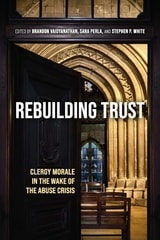
cover of Rebuilding Trust: Clergy Morale in the Wake of the Abuse Crisis

Rebuilding Trust

Clergy Morale in the Wake of the Abuse Crisis

Brandon Vaidyanathan

Catholic University of America Press, 2025
While much attention has rightly been given to abuse survivors and institu­tional accountability, less has been said about how the sexual abuse crisis has shaped the experience of clergy themselves. Drawing on findings from the National Study of Catholic Priests (NSCP)—the most comprehensive survey of American priests in over 50 years—Rebuilding Trust explores how the abuse crisis and the Church’s institutional response have affected priestly well-be­ing and morale, perceptions of episcopal leadership, and the culture of the presbyterate more broadly. The study reveals a striking breakdown in trust between priests and their bishops, exacerbated by concerns over due process in the wake of an abuse allegation, inconsistent application of abuse preven­tion policies, and a widening ideological divide between younger and older clergy. The book combines sociological analysis with theological, psycholog­ical, historical, canonical, and pastoral perspectives to contextualize these findings. Contributors from various fields examine shifts in the priesthood over the past few decades, assess the implementation of the 2002 Charter for the Protection of Children and Young People (the “Dallas Charter”) and explore practical strategies for strengthening clergy formation, fostering fra­ternity, and improving bishop-priest relationships. By integrating empirical research with theological reflection, this volume offers a timely and neces­sary addition to the discussion of how the Church can rebuild trust, support priests, and cultivate a healthier presbyterate. It will be essential reading for Church leaders, seminary formators, scholars of Catholicism, and anyone concerned with the future of the priesthood in the United States.
[more]
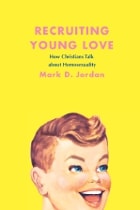
cover of Recruiting Young Love: How Christians Talk about Homosexuality

Recruiting Young Love

How Christians Talk about Homosexuality

Mark D. Jordan

University of Chicago Press, 2011

In the view of many Christians, the teenage years are simultaneously the most dangerous and the most promising. At the very moment when teens are trying to establish a sense of identity and belonging, they are beset by temptation on all sides—from the pressure of their peers to the nihilism and materialism of popular culture. Add the specter of homosexuality to the mix, and you’ve got a situation ripe for worry, sermonizing, and exploitation.


In Recruiting Young Love, Mark D. Jordan explores more than a half century of American church debate about homosexuality to show that even as the main lesson—homosexuality is bad, teens are vulnerable—has remained constant, the arguments and assumptions have changed remarkably. At the time of the first Kinsey Report, in 1948, homosexuality was simultaneously condemned and little discussed—a teen struggling with same-sex desire would have found little specific guidance. Sixty years later, church rhetoric has undergone a radical shift, as silence has given way to frequent, public, detailed discussion of homosexuality and its perceived dangers. Along the way, churches have quietly adopted much of the language and ideas of modern sexology, psychiatry, and social reformers—deploying it, for example, to buttress the credentials of anti-gay “deprogramming” centers and traditional gender roles.


Jordan tells this story through a wide variety of sources, including oral histories, interviews, memoirs, and even pulp novels; the result is a fascinating window onto the never-ending battle for the teenage soul.
[more]
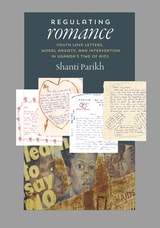
cover of Regulating Romance: Youth Love Letters, Moral Anxiety, and Intervention in Uganda’s Time of AIDS

Regulating Romance

Youth Love Letters, Moral Anxiety, and Intervention in Uganda’s Time of AIDS

Shanti Parikh

Vanderbilt University Press, 2016

Drawing on ten years of ethnographic research, two hundred fifty interviews, and over three hundred youth love letters, author Shanti Parikh uses lively vignettes to provide a rare window into young people's heterosexual desires and practices in Uganda. In chapters entitled "Unbreak my heart," "I miss you like a desert missing rain," and "You're just playing with my head," she invites readers into the world of secret longings, disappointments, and anxieties of young Ugandans as they grapple with everyday difficulties while creatively imagining romantic futures and possibilities.

Parikh also examines the unintended consequences of Uganda's aggressive HIV campaigns that thrust sexuality and anxieties about it into the public sphere. In a context of economic precarity and generational tension that constantly complicates young people's notions of consumption-based romance, communities experience the dilemmas of protecting and policing young people from reputational and health dangers of sexual activity. "They arrested me for loving a school girl" is the title of a chapter on controlling delinquent daughters and punishing defiant boyfriends for attempting to undermine patriarchal authority by asserting their adolescent romantic agency. Sex education programs struggle between risk and pleasure amidst morally charged debates among international donors and community elders, transforming the youthful female body into a platform for public critique and concern. The many sides of this research constitute an eloquently executed critical anthropology of intervention.
[more]
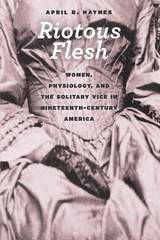
cover of Riotous Flesh: Women, Physiology, and the Solitary Vice in Nineteenth-Century America

Riotous Flesh

Women, Physiology, and the Solitary Vice in Nineteenth-Century America

April R. Haynes

University of Chicago Press, 2015

Nineteenth-century America saw numerous campaigns against masturbation, which was said to cause illness, insanity, and even death. Riotous Flesh explores women’s leadership of those movements, with a specific focus on their rhetorical, social, and political effects, showing how a desire to transform the politics of sex created unexpected alliances between groups that otherwise had very different goals.

As April R. Haynes shows, the crusade against female masturbation was rooted in a generally shared agreement on some major points: that girls and women were as susceptible to masturbation as boys and men; that “self-abuse” was rooted in a lack of sexual information; and that sex education could empower women and girls to master their own bodies. Yet the groups who made this education their goal ranged widely, from “ultra” utopians and nascent feminists to black abolitionists. Riotous Flesh explains how and why diverse women came together to popularize, then institutionalize, the condemnation of masturbation, well before the advent of sexology or the professionalization of medicine.
[more]