Results by title
52 books match the query 'Social problems' and 4 start with r
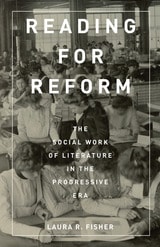
Reading for Reform
The Social Work of Literature in the Progressive EraLaura R. Fisher
University of Minnesota Press, 2019
An unprecedented examination of class-bridging reform and U.S. literary history at the turn of the twentieth century
Reading for Reform rewrites the literary history of late nineteenth and early twentieth century America by putting social reform institutions at the center of literary and cultural analysis. Examining the vibrant, often fractious literary cultures that developed as part of the Progressive mandate to uplift the socially disadvantaged, it shows that in these years reformers saw literature as a way to combat the myriad social problems that plagued modern U.S. society. As they developed distinctly literary methods for Americanizing immigrants, uplifting and refining wage-earning women, and educating black students, their institutions gave rise to a new social purpose for literature.
Class-bridging reform institutions—the urban settlement house, working girls’ club, and African American college—are rarely addressed in literary history. Yet, Laura R. Fisher argues, they engendered important experiments in the form and social utility of American literature, from minor texts of Yiddish drama and little-known periodical and reform writers to the fiction of Edith Wharton and Nella Larsen. Fisher delves into reform’s vast and largely unexplored institutional archives to show how dynamic sites of modern literary culture developed at the margins of social power.
Fisher reveals how reformist approaches to race, class, religion, and gender formation shaped American literature between the 1880s and the 1920s. In doing so, she tells a new story about the fate of literary practice, and the idea of literature’s practical value, during the very years that modernist authors were proclaiming art’s autonomy from concepts of social utility.
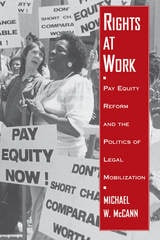
Rights at Work
Pay Equity Reform and the Politics of Legal MobilizationMichael W. McCann
University of Chicago Press, 1994
Rights at Work explores the political strategies in more than a dozen pay equity struggles since the late 1970s, including battles of state employees in Washington and Connecticut, as well as city employees in San Jose and Los Angeles. Relying on interviews with over 140 union and feminist activists, McCann shows that, even when the courts failed to correct wage discrimination, litigation and other forms of legal advocacy provided reformers with the legal discourse—the understanding of legal rights and their constraints—for defining and advancing their cause.
Rights at Work offers new insight into the relation between law and social change—the ways in which grass roots social movements work within legal rights traditions to promote progressive reform.

Roads to Dystopia
Sociological Essays on the Postmodern ConditionStanford Lyman
University of Arkansas Press, 2001
Routing the Opposition
Social Movements, Public Policy, and DemocracyDavid S. Meyer
University of Minnesota Press, 2005