Results by title
165 books match the query 'Social sciences' and 10 start with r
RSF
The Russell Sage Foundation Journal of the Social SciencesJennifer Lee
Russell Sage Foundation, 2026
Stereotyped as “model minorities” who excel in the classroom, Asian Americans are more highly educated than all other U.S. groups. Once in the labor market, they outearn White Americans. Some believe this is evidence that White privilege, racial bias, and gender discrimination are fictitious narratives of a liberal “woke” agenda. Others use it as proof that confirms their stereotypes that Asian Americans are inherently smarter and harder working than other groups. While much attention has focused on Asian Americans’ academic achievement, far less research considers whether their later careers mirror their early success. In this issue of RSF, sociologists Jennifer Lee, Kimberly Goyette, Xi Song, and Yu Xie, management scholar Jackson G. Lu, and an interdisciplinary group of contributors examine how Asian Americans fare in the workplace.
The ten articles in this issue examine the ways in which Asian Americans, due to geographic clustering, are advantaged at a national level but disadvantaged at the regional level, how gender, family, and marriage impact Asian Americans in the workplace, and the different ways Asian Americans strategically adapt to the labor market. Robert Manduca and Jane Furey reveal that while, on average, Asian Americans outearn White Americans at a national level, when compared to Whites living in the same metropolitan area, Asians earn only 88 percent as much. Sharon Sassler and Gabrielle Sorresso find that among computer science professionals, Indian women have a larger gender wage gap than White and Chinese women and experience larger marriage and parenthood penalties in earnings. Sojung Lim and Wonjeong Jeong show that Asian women are more likely to live with extended family than White women, leading to higher rates of employment among Asian women with children. Angelina Grigoryeva finds that while Asian Americans are more likely to receive stock-based compensation than White Americans, this is because they are more likely to work in jobs where stock options are provided. Asians and Whites working in the same types of jobs are equally likely to receive stock-based compensation and in similar amounts. Shih-Chun Chien and colleagues find that despite being the fastest-growing racial minority group entering the legal profession, Asian Americans are underrepresented in leadership positions. They find this pattern is attributed, in part, to employers’ pervasive stereotypes that Asian Americans lack traits typically associated with leadership, such as creativity and assertiveness.
This issue of RSF reveals that the perception of the Asian American advantage in the workplace is illusory and sheds light on the lived experiences of the “model minority” when they go to work.
RSF
The Russell Sage Foundation Journal of the Social Sciences: A Half a Century of Change in the Lives of American WomenMartha J. Bailey
Russell Sage Foundation, 2016
The contributors examine trends in women’s participation in the labor market, focusing on how working both shapes and is shaped by women’s roles within their families. Tanya Byker investigates the so-called “opt-out revolution” and finds that, surpringly, the rate of “opting out” has been constant for the last twenty years even as women’s labor-force participation and pay has increased. Ipshita Pal and Jane Waldfogel show that the “motherhood penalty” is shrinking and may even reversing for mothers who are married, white, or highly educated. And while marriages in which women out-earned their husbands were once more susceptible to divorce, Christine Schwartz and Pilar Gonalons-Pons show that this relationship has essentially disappeared, suggesting that the growing economic advantage of a high-earning wife has facilitated a revolution in traditional gender roles. Despite these gains, Kim Weeden and co-authors show that the growth of jobs requiring more than 50 hours of work per week, which are disproportionately filled by men, has played an increasing role in perpetuating the gender pay gap. Similarly, Katherine Michelmore and Sharon Sassler find that within STEM fields, a gender pay gap persists partly because women are still more likely to work in lower-paid occupations.
The rapid advancement of women in education and the workforce was a distinguishing feature of the twentieth century, even though barriers to opportunities for women still exist. . Together, the articles in this issue of RSF provide insightful context for these achievements and describe women’s evolving status in society.
RSF
The Russell Sage Foundation Journal of the Social Sciences: The Social and Political Impact of the Covid-19 PandemicBeth Redbird
Russell Sage Foundation, 2022
The 11 articles in this issue examine how information about the pandemic was disseminated, the disparate impacts of COVID-19 on different groups, and the government’s response to the pandemic. Courtney Page-Tan and colleagues find that people who relied on information from close social networks and trusted formal institutions, such as the CDC, were more likely to engage in behavior aimed at curbing the spread of COVID-19, such as staying home and avoiding crowded areas. Laura E. Evans and colleagues find that while Native Americans were disproportionately impacted by COVID-19, states in which Native Americans had greater representation and political power in state politics saw fewer COVID-19 cases on tribal lands. They also find that there were fewer COVID-19 cases on tribal lands with strong networks of community-based and tribally controlled health facilities. Claire Kamp Dush and colleagues find that individuals who identify as non-White or non-heterosexual experienced higher levels of COVID-19 stress and racial trauma stress, both of which are associated with poorer mental health outcomes. Sarah James and colleagues find that state variation in the collection and publication of COVID-19 data reflected state capacity. Yet the main driver of variation in state policy response and implementation of mitigation measures was primarily partisanship. Elizabeth Suhay and colleagues find that trust in federal, state, and local government all fell during the first year of the pandemic. However, individuals with more trust in state government and local health officials were more likely to engage in protective health behaviors, while those with higher trust in the federal government were less likely to engage in such behaviors.
While the impacts of the COVID-19 pandemic will continue for years to come, this volume of RSF begins the investigation into how the pandemic has altered social, cultural, and political dynamics in American society.
RSF
The Russell Sage Foundation Journal of the Social Sciences: The Social, Political, and Economic Effects of the Affordable Care ActAndrea Campbell
Russell Sage Foundation, 2020
This journal issue explores the political dimensions of the rollout of the ACA and the attendant backlash. Contributors Helen Levy, Andrew Ying, and Nicholas Bagley argue that despite repeated efforts at repeal, over 80 percent of the Act has been implemented as it was originally intended. Julianna Pacheco, Jake Haselswerdt, and Jamila Michener show that when Republican governors support Medicaid expansion, Republican voters become more favorable toward the ACA, and polarization between Republican and Democrat voters decreases. Yet Charles Courtemanche, James Marton, and Aaron Yelowitz find little impact of the ACA on voter participation. Lisa Beauregard and Edward Miller examine states’ adoption of the ACA’s home and community-based care services for the elderly and people with disabilities, finding that states with more liberal elected officials and more fiscal capacity were more likely to adopt these provisions. Paul Shafer, David Anderson, Seciah Aquino, Laura Baum, Erika Franklin Fowler, and Sarah Gollust probe the role of different types of health insurance and political advertising on insurance enrollment. Richard Fording and Dana Patton explain the emergence of contentious Medicaid work requirements and patient co-pays that limit access to Medicaid.
Other contributors address how the ACA affects marginalized populations. Carrie Fry, Thomas McGuire, and Richard Frank link Medicaid expansion to lower rates of recidivism among the formerly incarcerated. Radhika Gore, Ritu Dhar, Sadia Mohaimin, Priscilla Lopez, Anna Divney, Jennifer Zanowiak, Lorna Thorpe, and Nadia Islam study primary care practices serving South Asian immigrants in New York City and highlight the importance of social context and organizational constraints in designing population health interventions. The issue also examines the economic effects of the ACA, especially on access to private and public health insurance. Both Mark Hall and Jean Abraham study instability in ACA health insurance markets, with Hall focusing on uncertainty arising from political factors and Abraham examining the factors that lead local markets to face high premiums and low insurer participation. Philip Rocco and Andrew Kelly explore the mechanisms included in the ACA to try to spur innovations in care delivery that both improve health and generate long-term cost savings.
As the COVID-19 pandemic affects healthcare in unprecedented ways, affordable healthcare access is critical. This RSF journal issue offers a timely, thoughtful consideration of one of the most pressing issues in American life.
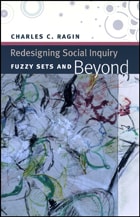
Redesigning Social Inquiry
Fuzzy Sets and BeyondCharles C. Ragin
University of Chicago Press, 2008
Redesigning Social Inquiry provides a substantive critique of the standard approach to social research—namely, assessing the relative importance of causal variables drawn from competing theories. Instead, Ragin proposes the use of set-theoretic methods to find a middle path between quantitative and qualitative research. Through a series of contrasts between fuzzy-set analysis and conventional quantitative research, Ragin demonstrates the capacity for set-theoretic methods to strengthen connections between qualitative researchers’ deep knowledge of their cases and quantitative researchers’ elaboration of cross-case patterns. Packed with useful examples, Redesigning Social Inquiry will be indispensable to experienced professionals and to budding scholars about to embark on their first project.
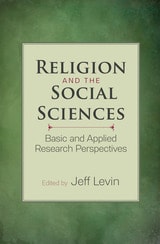
Religion and the Social Sciences
Basic and Applied Research PerspectivesJeff Levin
Templeton Press, 2018
To give this research the attention it deserves, editor Jeff Levin assembled a panel of preeminent social scientists and gave them a single directive: write the ultimate statement on religion from within their respective social science discipline or field. The result is this single volume, “state-of-the-science” compendium—a first of its kind for the study of religion.
Composed of ten essays, this book details the study of religion within nine basic and applied areas of social science. Along with a critical introduction to this subject, these essays include the expert contributions of:
- Kenneth I. Pargament & Julie J. Exline on psychology
- Anthony Gill on political science
- Charles M. North on economics
- Barry Hankins on history
- Annette Mahoney on family studies
- Byron R. Johnson on criminology
- Linda K. George on gerontology
- William H. Jeynes on education
- Jeff Levin on epidemiology
- An introduction to the history of the discipline’s or field’s religious research, as well as its most important people and published works.
- A comprehensive overview of key research findings and theories.
- A detailed research agenda to guide future scholars.
- An annotated bibliography of seminal works for the reader’s further consideration.
Reporting of Social Science in the National Media
Carol Weiss
Russell Sage Foundation, 1988
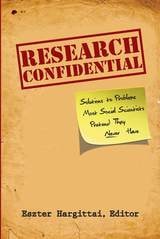
Research Confidential
Solutions to Problems Most Social Scientists Pretend They Never HaveEszter Hargittai
University of Michigan Press, 2009
"We all know that the actual process of empirical research is a messy, complicated business that at best only approximates the models we impart to students. Research Confidential pulls back the curtain on this process, laying bare the sordid details of the research process, but doing so in a way that respects the ideals of social research and that provides useful lessons for young scholars. It should be required reading for our research methods courses."
---Michael X. Delli Carpini, Dean, Annenberg School for Communication, University of Pennsylvania
"In this impressive volume, some of the brightest young lights in social research have taken us backstage to share what they learned from their innovative projects. Besides providing a wealth of help with methodological concerns, the book includes theoretical and career issues to consider when doing research. Anyone doing research should benefit from reading it."
---Caroline Hodges Persell, Professor of Sociology, New York University
"Research Confidential complements existing methods literature by providing refreshingly honest accounts of key challenges and decision forks-in-the-research-road. Each chapter enlightens and entertains."
---Kirsten Foot, Associate Professor of Communication, University of Washington
"A must-read for researchers embarking on new projects. Rather than the abstract descriptions of most methods textbooks, this volume provides rich accounts of the firsthand experiences of actual researchers. An invaluable resource of practical advice. Critically, it will make new researchers aware of the actual challenges that they are likely to face in their work."
---Christopher Winship, editor of Sociological Methods and Research and Professor of Sociology, Harvard University
This collection of essays aims to fill a notable gap in the existing literature on research methods in the social sciences. While the methods literature is extensive, rarely do authors discuss the practical issues and challenges they routinely confront in the course of their research projects. As a result, editor Eszter Hargittai argues, each new cohort is forced to reinvent the wheel, making mistakes that previous generations have already confronted and resolved. Research Confidential seeks to address this failing by supplying new researchers with the kind of detailed practical information that can make or break a given project. Written in an informal, accessible, and engaging manner by a group of prominent young scholars, many of whom are involved in groundbreaking research in online contexts, this collection promises to be a valuable tool for graduate students and educators across the social sciences.
Eszter Hargittai is Associate Professor of Communication Studies at Northwestern University and Fellow at the Berkman Center for Internet & Society at Harvard University.
Cover art courtesy of Dustin Gerard
Rise Of Social Theory
Johan Heilbron
University of Minnesota Press, 1995
Risk Acceptability According to the Social Sciences
Mary Douglas
Russell Sage Foundation, 1985