Results by title
501 books match the query 'South' and 16 start with r
Race and Schooling in the South, 1880-1950
An Economic HistoryRobert A. Margo
University of Chicago Press, 1990
"A concise, lucid account of the bases of racial inequality in the South between Reconstruction and the Civil Rights era. . . . Deserves the careful attention of anyone concerned with historical and contemporary race stratification."—Kathryn M. Neckerman, Contemporary Sociology
"Margo has produced an excellent study, which can serve as a model for aspiring cliometricians. To describe it as 'required reading' would fail to indicate just how important, indeed indispensable, the book will be to scholars interested in racial economic differences, past or present."—Robert Higgs, Journal of Economic Literature
"Margo shows that history is important in understanding present domestic problems; his study has significant implications for understanding post-1950s black economic development."—Joe M. Richardson, Journal of American History
Reading the East India Company 1720-1840
Colonial Currencies of GenderBetty Joseph
University of Chicago Press, 2003
Drawing on the British East India Company's records as well as novels, memoirs, portraiture and guidebooks, Joseph shows how the company's economic and archival practices intersected to produce colonial "fictions" or "truth-effects" that strictly governed class and gender roles—in effect creating a "grammar of power" that kept the far-flung empire intact. And while women were often excluded from this archive, Joseph finds that we can still hear their voices at certain key historical junctures. Attending to these voices, Joseph illustrates how the writing of history belongs not only to the colonial project set forth by British men, but also to the agendas and mechanisms of agency—of colonized Indian, as well as European women. In the process, she makes a valuable and lasting contribution to gender studies, postcolonial theory, and the history of South Asia.
Recasting Women
Essays in Indian Colonial HistorySangari, Kumkum
Rutgers University Press, 1990
The political and social life of India in the last decade has given rise to a variety of questions concerning the nature and resilience of patriarchal systems in a transitional and post-colonial society. The contributors to this interdisciplinary volume recognize that every aspect of reality is gendered, and that such a recognition involves a dismantling of the ideological presuppositions of the so-called gender neutral ideologies, as well as the boundaries of individual disciplines.
The first set of essays seeks to analyze the patriarchal discourses of a colonial society and includes an analysis of the shaping of Hindu-Aryan identity, the parameters of the discourse on widow-immolation, the "defeminization" of popular culture in nineteenth-century urban Calcutta, the nature of the reforms proposed by early women's journals in Hindi, and the implications of the nationalist movement and of Indo-Anglian leterature on middle-class patriarchal norms.
The second set of articles relates to women of the productive classes--the reconstitution of patriarchies in the agrarian transition in Haryana, in the Oudh peasant movement, in the armed peasant struggle in Telangana, and among the working class in Bengal. The contributors explore the interrelation of patriarchies with political economy, law, religion, and culture, and suggest a different history of "reform" movements, and of class and gender relations.
Red Tape
Bureaucracy, Structural Violence, and Poverty in IndiaAkhil Gupta
Duke University Press, 2012
Gupta conducted ethnographic research among officials charged with coordinating development programs in rural Uttar Pradesh. Drawing on that research, he offers insightful analyses of corruption; the significance of writing and written records; and governmentality, or the expansion of bureaucracies. Those analyses underlie his argument that care is arbitrary in its consequences, and that arbitrariness is systematically produced by the very mechanisms that are meant to ameliorate social suffering. What must be explained is not only why government programs aimed at providing nutrition, employment, housing, healthcare, and education to poor people do not succeed in their objectives, but also why, when they do succeed, they do so unevenly and erratically.
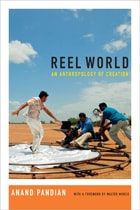
Reel World
An Anthropology of CreationAnand Pandian
Duke University Press, 2015
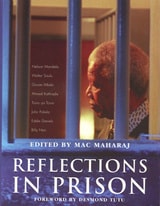
Reflections in Prison
Voices From the South African Liberation StruggleMac Maharaj
University of Massachusetts Press, 2002
Written by Mandela, Walter Sisulu, Ahmed Kathrada, Govan Mbeki, and four other leaders of the anti-apartheid movement, these essays provide a rare view of their thinking at a critical point in the liberation struggle, on the eve of the 1976 Soweto Uprising. The leaders describe their philosophies, strategies, and hopes. They debate such crucial issues as violent versus nonviolent forms of struggle, diversity and unity, the ideological challenge of the Black Consciousness movement, and how to accommodate different interpretations of African nationalism.
The book begins with a foreword by Desmond Tutu and a contextualizing introduction by Maharaj. Then come two essays by Mandela and one each by Sisulu, Kathrada, Mbeki, Billy Nair, John Pokela, Eddie Daniels and Andimba Toivo Ya Toivo. Each essay is preceded by a short biography of the author, a description of his life in prison, and a pencil sketch by a black South African artist.
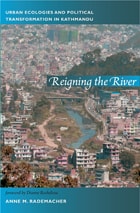
Reigning the River
Urban Ecologies and Political Transformation in KathmanduAnne M. Rademacher
Duke University Press, 2011
Rademacher conducted research during a volatile period in Nepal’s political history. As clashes between Maoist revolutionaries and the government intensified, the riverscape became a site of competing claims to a capital city that increasingly functioned as a last refuge from war-related violence. In this time of intense flux, efforts to ensure, create, or imagine ecological stability intersected with aspirations for political stability. Throughout her analysis, Rademacher emphasizes ecology as an important site of dislocation, entitlement, and cultural meaning.
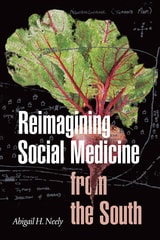
Reimagining Social Medicine from the South
Abigail H. Neely
Duke University Press, 2021
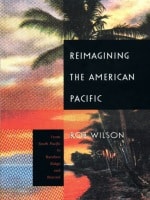
Reimagining the American Pacific
From South Pacific to Bamboo Ridge and BeyondRob Wilson
Duke University Press, 2000
Wilson begins by tracing the arrival of American commerce and culture in the Pacific through missionary and imperial forces in the nineteenth century and the parallel development of Asia/Pacific as an idea. Using an impressive range of texts—from works by Herman Melville, James Michener, Maori and Western Samoan novelists, and Bamboo Ridge poets to Baywatch, films and musicals such as South Pacific and Blue Hawaii, and native Hawaiian shark god poetry—Wilson illustrates what it means for a space to be “regionalized.” Claiming that such places become more open to transnational flows of information, labor, finance, media, and global commodities, he explains how they then become isolated, their borders simultaneously crossed and fixed. In the case of Hawai’i, Wilson argues that culturally innovative, risky forms of symbol making and a broader—more global—vision of local plight are needed to counterbalance the racism and increasing imbalance of cultural capital and goods in the emerging postplantation and tourist-centered economy.
Reimagining the American Pacific leaves the reader with a new understanding of the complex interactions of global and local economies and cultures in a region that, since the 1970s, has been a leading trading partner of the United States. It is an engaging and provocative contribution to the fields of Asian and American studies, as well as those of cultural studies and theory, literary criticism, and popular culture.
Reinventing the South
Versions of a Literary RegionMark Royden Winchell
University of Missouri Press, 2006
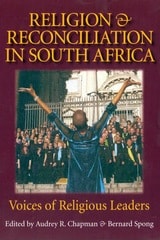
Religion & Reconciliation in South Africa
Voices of Religious LeadersBernard Spong
Templeton Press, 2003
Postapartheid South Africa's efforts to come to terms with its past, particularly its Truth and Reconciliation Commission's emphasis on forgiveness and reconciliation, is of special interest to many in the world community. The Truth and Reconciliation Commission (TRC), led by Archbishop Desmond Tutu, was mandated to go beyond truth-finding and to "promote national unity and reconciliation in a spirit of understanding which transcends the conflict and divisions of the past." In contrast with other truth commissions, the TRC was led by clerics rather than lawyers and judge, and the TRC's approach to reconciliation was shaped by and imbued with religious content. The TRC submitted its final report to the Mandela administration in October 1998.
Over the next two years, the Rev. Bernard Spong, former communications director of the South African Council of Churches, conducted a series of in-depth interviews about the TRC with thirty-three key religious figures. In this volume, they discuss and evaluate the following issues:
•How should we understand the concept of national or political reconciliation and its requirements?•What are the differences and similarities between religious and political approaches to reconciliation?
•Does national or political reconciliation require forgiveness between former victims and perpetrators?
•What is the appropriate role of religious representatives in a truth commission process? And is it recommended that other countries emulate the South African model?
•How do religious leaders assess the contributions and limitations of the TRC?
•What kind of initiatives are contemporary religious communities taking to promote reconciliation among their members and in the wider society?
The conversations presented in this volume, and the essays interpreting them, seek to illuminate issues and questions raised by the TRC model, including how to conceptualize reconciliation and the differences between political and religious approaches.
Remaking the Citizen for New Times
History, Pedagogy and the Amar Chitra KathaDeepa Sreenivas
Seagull Books, 2024
How does orthodoxy maintain its power over culture? In Remaking the Citizen for New Times, Deepa Sreenivas explores how the Amar Chitra Katha, a widely read comic series started in 1967 in India, influenced the historical and national consciousness of young readers in a conservative direction. Tacitly blaming Nehruvian welfarism of the time for the moral decline of the nation, the Amar Chitra Katha emerged as a literary articulation of the Indian right’s Hindu-nationalist ideology in a modern, bourgeois guise. To renew Hindutva hegemony, the comic series gave orthodox ideas a new sheen, both in its form and content, merging Western comic styles with Indian visual storytelling traditions on the one hand, and combining mythological characters with political figureheads into harmonious narratives on the other—making it difficult to sift history from myths and legends. Sreenivas deftly argues that these mythological-political tales emphasized the instructive rather than the informative potential of history, encouraging neoliberal values such as merit and hard work while ignoring caste or class as systemic issues.
Rewriting Buddhism
Pali Literature and Monastic Reform in Sri Lanka, 1157–1270Alastair Gornall
University College London, 2020
Riotous Deathscapes
Hugo ka Canham
Duke University Press, 2023

Road Sides
An Illustrated Companion to Dining and Driving in the American SouthBy Emily Wallace
University of Texas Press, 2019
An illustrated glovebox essential, Road Sides explores the fundamentals of a well-fed road trip through the American South, from A to Z. There are detours and destinations, accompanied by detailed histories and more than one hundred original illustrations that document how we get where we’re going and what to eat and do along the way.
Learn the backstory of food-shaped buildings, including the folks behind Hills of Snow, a giant snow cone stand in Smithfield, North Carolina, that resembles the icy treats it sells. Find out how kudzu was used to support a burgeoning highway system, and get to know Edith Edwards—the self-proclaimed Kudzu Queen—who turns the obnoxious vine into delicious teas and jellies. Discover the roots of kitschy roadside attractions, and have lunch with the state-employed mermaids of Weeki Wachee Springs in Florida.
Road Sides is for everyone—the driver in search of supper or superlatives (the biggest, best, and even worst), the person who cannot resist a local plaque or snack and pulls over for every historical marker and road stand, and the kid who just wants to gawk at a peach-shaped water tower.
Roll With It
Brass Bands in the Streets of New OrleansMatt Sakakeeny
Duke University Press, 2013