247 books match the query 'South Africa' and 10 start with r
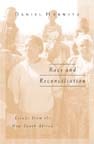
cover of Race And Reconciliation: Essays From The New South Africa

Race And Reconciliation

Essays From The New South Africa

Daniel Herwitz

University of Minnesota Press, 2003

A meditation on the lessons to be learned from South Africa’s transformation in the wake of apartheid

Justice, truth, and identity; race, society, and law—all come into dramatic play as South Africa makes the tumultuous transition to a post-apartheid democracy. Seeking the timeless through the timely and trying to find the deeper meaning in the sweep of events, Daniel Herwitz brings the vast resources of the philosophical essay to bear on the new realities of post-apartheid South Africa—from racial identity to truth commissions, from architecture to film and television.

A public intellectual’s reflections on public life, Herwitz’s essays question how the new South Africa has constructed its concepts of reconciliation and return and how its historical emergence has meant a rethinking, reimagining, reexperiencing, relabeling, and repoliticizing of race. Herwitz’s purpose is to give a philosophical reading of society—a society already relying on implicitly philosophical concepts in its social and political agendas. Working through these concepts, testing their relevance for reading society, his book itself becomes a part of the politics of definition and description in the new South Africa.
[more]
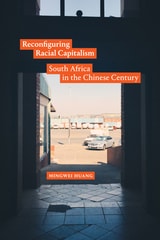
cover of Reconfiguring Racial Capitalism: South Africa in the Chinese Century

Reconfiguring Racial Capitalism

South Africa in the Chinese Century

Mingwei Huang

Duke University Press, 2024

In Reconfiguring Racial Capitalism, Mingwei Huang traces the development of new forms of racial capitalism in the twenty-first century. Through fieldwork in one of the “China malls” that has emerged along Johannesburg’s former mining belt, Huang identifies everyday relations of power and difference between Chinese entrepreneurs and African migrant workers in these wholesale shops. These relations, Huang contends, replicate and perpetuate global structures of white supremacy, anti-Blackness, capitalism, and colonialism, even when whiteness is not present. Huang argues that this dynamic reflects the sedimented legacies and continued operation of white supremacy and colonialism, which have been transformed in the shift of capitalism’s center of gravity toward China and the Global South. These new forms of racial capitalism and empire layer onto and extend histories of exploitation and racialization in South Africa. Taking a palimpsestic approach, Huang offers tools for understanding this shift and decentering contemporary Western conceptions of race, empire, and racial capitalism in the Chinese Century.
[more]
cover of Recording Memories from Political Violence: A Film-maker's Journey

Recording Memories from Political Violence

A Film-maker's Journey

Cahal McLaughlin

Intellect Books, 2010

Based on work the author has carried out with survivor groups in Northern Ireland and South Africa, Recording Memories from Political Violence draws on written and audiovisual texts to describe and analyze the use of documentary filmmaking in recording experiences of political conflict. A variety of issues relevant to the genre are addressed at length, including the importance of ethics in the collaboration between the filmmaker and the participant and the effect of location on the accounts of participants. Cahal McLaughlin draws on the diverse fields of film and cultural studies, as well as nearly twenty years of production experience, in this informed and instructive contribution to documentary filmmaking and post-conflict studies.
[more]
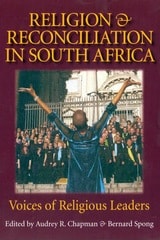
cover of Reimagining Social Medicine from the South

Reimagining Social Medicine from the South

Abigail H. Neely

Duke University Press, 2021
In Reimagining Social Medicine from the South, Abigail H. Neely explores social medicine's possibilities and limitations at one of its most important origin sites: the Pholela Community Health Centre (PCHC) in South Africa. The PCHC's focus on medical and social factors of health yielded remarkable success. And yet South Africa's systemic racial inequality hindered health center work, and witchcraft illnesses challenged a program rooted in the sciences. To understand Pholela's successes and failures, Neely interrogates the “social” in social medicine. She makes clear that the social sciences the PCHC used failed to account for the roles that Pholela's residents and their environment played in the development and success of its program. At the same time, the PCHC's reliance on biomedicine prevented it from recognizing the impact on health of witchcraft illnesses and the social relationships from which they emerged. By rewriting the story of social medicine from Pholela, Neely challenges global health practitioners to recognize the multiple worlds and actors that shape health and healing in Africa and beyond.
[more]
cover of Religion & Reconciliation in South Africa: Voices of Religious Leaders

Religion & Reconciliation in South Africa

Voices of Religious Leaders

Bernard Spong

Templeton Press, 2003


Postapartheid South Africa's efforts to come to terms with its past, particularly its Truth and Reconciliation Commission's emphasis on forgiveness and reconciliation, is of special interest to many in the world community. The Truth and Reconciliation Commission (TRC), led by Archbishop Desmond Tutu, was mandated to go beyond truth-finding and to "promote national unity and reconciliation in a spirit of understanding which transcends the conflict and divisions of the past." In contrast with other truth commissions, the TRC was led by clerics rather than lawyers and judge, and the TRC's approach to reconciliation was shaped by and imbued with religious content. The TRC submitted its final report to the Mandela administration in October 1998.

Over the next two years, the Rev. Bernard Spong, former communications director of the South African Council of Churches, conducted a series of in-depth interviews about the TRC with thirty-three key religious figures. In this volume, they discuss and evaluate the following issues:

•How should we understand the concept of national or political reconciliation and its requirements?
•What are the differences and similarities between religious and political approaches to reconciliation?
•Does national or political reconciliation require forgiveness between former victims and perpetrators?
•What is the appropriate role of religious representatives in a truth commission process? And is it recommended that other countries emulate the South African model?
•How do religious leaders assess the contributions and limitations of the TRC?
•What kind of initiatives are contemporary religious communities taking to promote reconciliation among their members and in the wider society?

The conversations presented in this volume, and the essays interpreting them, seek to illuminate issues and questions raised by the TRC model, including how to conceptualize reconciliation and the differences between political and religious approaches.
 

[more]
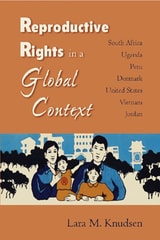
cover of Reproductive Rights in a Global Context: South Africa, Uganda, Peru, Denmark, United States, Vietnam, Jordan

Reproductive Rights in a Global Context

South Africa, Uganda, Peru, Denmark, United States, Vietnam, Jordan

Lara M. Knudsen

Vanderbilt University Press, 2006

A Choice Outstanding Academic Book of 2006

Traveling alone when she was between 17 and 22, with no institutional affiliation and no financial assistance, the author visited five developing countries and two developed ones on five continents. Her goal was to extend her own experience in an abortion clinic in Portland, Oregon. Lara Knudsen interviewed over 90 women's rights activists, health professionals, NGO workers, and government officials, gaining a sense of both official policies and the actual delivery of services in local clinics. The book places the experiences of women within the global context of how international population control agendas have influenced women's reproductive rights in the past, and how the changing international discourse on reproductive health continues to influence those rights today.
[more]
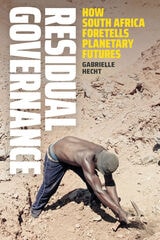
cover of Residual Governance: How South Africa Foretells Planetary Futures

Residual Governance

How South Africa Foretells Planetary Futures

Gabrielle Hecht

Duke University Press, 2023
In Residual Governance, Gabrielle Hecht dives into the wastes of gold and uranium mining in South Africa to explore how communities, experts, and artists fight for infrastructural and environmental justice. Hecht outlines how mining in South Africa is a prime example of what she theorizes as residual governance—the governance of waste and discard, governance that is purposefully inefficient, and governance that treats people and places as waste and wastelands. She centers the voices of people who resist residual governance and the harms of toxic mining waste to highlight how mining’s centrality to South African history reveals the links between race, capitalism, the state, and the environment. In this way, Hecht shows how the history of mining in South Africa and the resistance to residual governance and environmental degradation is a planetary story: the underlying logic of residual governance lies at the heart of contemporary global racial capitalism and is a major accelerant of the Anthropocene.
[more]
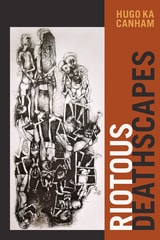
cover of Riotous Deathscapes

Riotous Deathscapes

Hugo ka Canham

Duke University Press, 2023
In Riotous Deathscapes, Hugo ka Canham presents an understanding of life and death based on indigenous and black ways of knowing that he terms Mpondo theory. Focusing on amaMpondo people from rural Mpondoland, in South Africa’s Eastern Cape, Canham outlines the methodologies that have enabled the community’s resilience and survival. He assembles historical events and a cast of ancestral and living characters, following the tenor of village life, to offer a portrait of how Mpondo people live and die in the face of centuries of abandonment, trauma, antiblackness, and death. Canham shows that Mpondo theory is grounded in and develops in relation to the natural world, where the river and hill are key sites of being and resistance. Central too, is the interface between ancestors and the living, in which life and death become a continuity and a boundlessness that white supremacy and neoliberalism cannot interdict. By charting a course of black life in Mpondoland, Canham tells a story of blackness on the African continent and beyond.
[more]
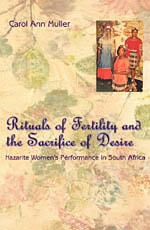
cover of Rituals of Fertility and the Sacrifice of Desire: Nazarite Women's Performance in South Africa

Rituals of Fertility and the Sacrifice of Desire

Nazarite Women's Performance in South Africa

Carol Ann Muller

University of Chicago Press, 1999

With close to one million members, the Church of the Nazarites (ibandla lamaNazaretha) is one of the most popular indigenous religious communities in South Africa. Founded in 1910 by Isaiah Shembe, it offers South Africans—particularly disadvantaged black women and girls—a way to remake and reconnect to ancient sacred traditions disrupted by colonialism and apartheid. Ethnomusicologist Carol Muller explores the everyday lives of Nazarite women through their religious songs and dances, dream narratives, and fertility rituals, which come to life both musically and visually on CD-ROM.

Against the backdrop of South Africa's turbulent history, Muller shows how Shembe's ideas of female ritual purity developed as a response to a regime and culture that pushed all things associated with women, cultural expression, and Africanness to the margins.

Carol Muller breaks new ground in the study of this changing region and along the way includes fascinating details of her own poignant journey, as a young, white South African woman, to the "other" side of a divided society.
[more]
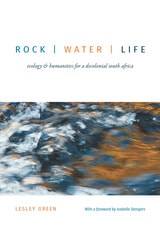
cover of Rock | Water | Life: Ecology and Humanities for a Decolonial South Africa

Rock | Water | Life

Ecology and Humanities for a Decolonial South Africa

Lesley Green

Duke University Press, 2020

In Rock | Water | Life Lesley Green examines the interwoven realities of inequality, racism, colonialism, and environmental destruction in South Africa, calling for environmental research and governance to transition to an ecopolitical approach that could address South Africa's history of racial oppression and environmental exploitation. Green analyzes conflicting accounts of nature in environmental sciences that claim neutrality amid ongoing struggles for land restitution and environmental justice. Offering in-depth studies of environmental conflict in contemporary South Africa, Green addresses the history of contested water access in Cape Town; struggles over natural gas fracking in the Karoo; debates about decolonizing science; the potential for a politics of soil in the call for land restitution; urban baboon management; and the consequences of sending sewage to urban oceans.
[more]