Results by title
260 books match the query 'Soviet Union' and 7 start with r
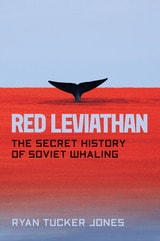
Red Leviathan
The Secret History of Soviet WhalingRyan Tucker Jones
University of Chicago Press, 2022
The Soviet Union killed over six hundred thousand whales in the twentieth century, many of them illegally and secretly. That catch helped bring many whale species to near extinction by the 1970s, and the impacts of this loss of life still ripple through today’s oceans. In this new account, based on formerly secret Soviet archives and interviews with ex-whalers, environmental historian Ryan Tucker Jones offers a complete history of the role the Soviet Union played in the whales’ destruction. As other countries—especially the United States, Great Britain, Japan, and Norway—expanded their pursuit of whales to all corners of the globe, Stalin determined that the Soviet Union needed to join the hunt. What followed was a spectacularly prodigious, and often wasteful, destruction of humpback, fin, sei, right, and sperm whales in the Antarctic and the North Pacific, done in knowing violation of the International Whaling Commission’s rules. Cold War intrigue encouraged this destruction, but, as Jones shows, there is a more complex history behind this tragic Soviet experiment. Jones compellingly describes the ultimate scientific irony: today’s cetacean studies benefited from Soviet whaling, as Russian scientists on whaling vessels made key breakthroughs in understanding whale natural history and behavior. And in a final twist, Red Leviathan reveals how the Soviet public began turning against their own country’s whaling industry, working in parallel with Western environmental organizations like Greenpeace to help end industrial whaling—not long before the world’s whales might have disappeared altogether.
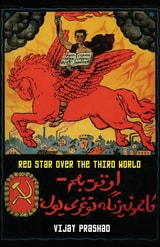
Red Star Over the Third World
Vijay Prashad
Pluto Press, 2019
From Cuba to Vietnam, China to South Africa, the October Revolution of 1917 inspired millions of people beyond the territory of Russia. It proved that the masses could not only overthrow autocratic governments, but that they could also form an opposing government in their own image.
The new idea that the working class and the peasantry could be allied, combined with the clear strength and necessity of a vanguard party, guided multiple revolutions across the globe. Here is much-needed antidote to all the glum histories written on the demise of the Soviet Union. Vijay Prashad throws a spotlight on the way the Russian Revolution was seen and received in the countries colonized by European empires. With Russia as an inspiration and providing support, suddenly workers and peasants, those left out of capitalist prosperity, organized and attempted to create for themselves real socialist revolution. Prashad’s chapters include:
*Eastern Graves
*Red October
*Follow the Path of the Russians
*The Lungs of Russia
*Soviet Asia
*Enemy of Imperialism
*Eastern Marxism
*Colonial Fascism
*Polycentric Communism
*Memories of Communism
The author writes in this Preface, “It has been a quarter-century since the demise of the USSR. And yet, the marks of the October Revolution remain—not just in the territories of the USSR but more so in what used to be known as the Third World. From Cuba to Vietnam, from China to South Africa, the October Revolution remains as an inspiration. After all, that Revolution proved that the working class and the peasantry could not only overthrow an autocratic government but it could form its own government.”
This book explains the power of the October Revolution in the Global South. From Ho Chí Minh to Fidel Castro, reflections on polycentric communism, and collective memories of communism, it shows how, for a brief moment, another world was possible.
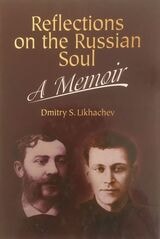
Reflections on the Russian Soul
A MemoirDmitry S. Likhachev
Central European University Press, 2000
This compelling and often traumatic book is the memoir of one of the most important figures in modern Russian history, Dmitry S. Likhachev, revered as ‘a guardian of national culture’. Reflections on the Russian Soul is an incredible account of an intellectual’s turbulent journey through twentieth century Russia. Likhachev re-counts the fortunes of people with whom he came into contact and reproduces the air of passed years in Russia.
Likhachev vividly portrays his childhood years in St. Petersburg and continues into his student life at Leningrad University that led to an agonizing period of imprisonment and near death. He describes how a harmless prank caught the attention of the Secret Police, resulting in his exile and confinement within the infamous prison island of Solovki. He describes his first-hand experience of brutality in prison during the early Stalin years and the incident that not only saved him but also haunted him for the rest of his life.
He reflects on the years after his release from prison and the events leading up to the Second World War. His powerful recollection of the blockade of Leningrad provides the reader with a horrific insight into the harsh effects of war, hunger and survival. Lichachev goes on to describe post-war Russia and how his own livelihood developed from literary editor to a return to Leningrad University as Professor of History. This compelling autobiography finishes with Likhachev’s poignant return to Solovki as a free man.
Religion and Jewish Identity in the Soviet Union, 1941–1964
Mordechai Altshuler
Brandeis University Press, 2012
Revolutionary Passage
From Soviet To Post-Soviet RussiaMarc Garcelon
Temple University Press, 2005
Rewriting the Break Event
Mennonites and Migration in Canadian LiteratureRobert Zacharias
University of Manitoba Press, 2013

Russia and the United States
Nikolai V. Sivachev and Nikolai N. Yakovlev
University of Chicago Press, 1979
Sivachev and Yakolev trace the course of the U.S.-Russian relations from the years preceding the American Revolution to the 1970s, when human rights issues began to cause friction. Those relations, the authors believe, were characterized by America's repeated failure to take advantage of opportunities to improve them. Recognizing the controversial nature of the book, Sivachev said in an interview with the New York Times: "We did not set out to please the American reader, nor did the University of Chicago Press ask us to. On the contrary, they recommended that we should feel free to present our own views."
"Scholars and students of American foreign policy . . . are likely to be alternatively interested, intrigued, angered, and sometimes illuminated by some of the interpretations found in this work."—Perspective
"An American reader should not prejudge this book as simply another dreary contribution to the rhetoric of Soviet propaganda. It is more than this. The book is an expression of a view of the world that is truly and strikingly different from an American one and it is important to understand that it is a theory of reality that is shared by most, if not all, Soviet intellectuals who study America and its foreign policy. It is not enough simply to establish the inaccuracies and misrepresentations contained in such a view. One must go further and understand that such a view of reality is sincerely deeply held and that it is a part of a larger belief system that gives the authors' scholarly work coherence and meaning."—Boston Sunday Globe