Results by title
129 books match the query 'Technique' and 7 start with r
Race and the Forms of Knowledge
Technique, Identity, and Place in Artistic ResearchBen Spatz
Northwestern University Press, 2024
Enacts a radically interdisciplinary intersectionality to position performance-based research in solidarity with decoloniality
This boldly innovative work interrogates the form and meaning of artistic research (also called practice research, performance as research, and research-creation), examining its development within the context of predominately white institutions that have enabled and depoliticized it while highlighting its radical potential when reframed as a lineage of critical whiteness practice.
Ben Spatz crafts a fluid yet critical new framework, explored via a series of case studies that includes Spatz’s own practice-as-research, to productively confront hegemonic modes of white writing and white institutionality. Ultimately taking jewishness as a paradigmatically “molecular” identity—variously configured as racial, ethnic, religious, or national—they offer a series of concrete methodological and formal proposals for working at the intersections of embodied identities, artistic techniques, and alternative forms of knowledge.
Race and the Forms of Knowledge: Technique, Identity, and Place in Artistic Research takes inspiration from recent critical studies of blackness and indigeneity to show how artistic research is always involved in the production and transformation of identity. Spatz offers a toolkit of practical methods and concepts—from molecular identities to audiovisual ethnotechnics and earthing the laboratory—for reimagining the university and other contemporary institutions.
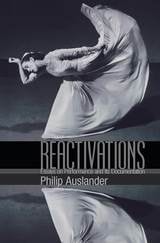
Reactivations
Essays on Performance and Its DocumentationPhilip Auslander
University of Michigan Press, 2018
performance from its documentation? What is the value of performance documentation?
The book treats performance documentation as a specific discursive use of media that arose in the middle of the 20th century alongside such forms of performance as the Happening and that is different, both discursively and as a practice, from traditional theater and dance photography. Philip Auslander explores the phenomenal relationship between the spectator who experiences the performance from the document and the document itself. The document is not merely a secondary iteration of the original event but a vehicle that gives us meaningful access to the performance itself as an artistic work.
Reading Novels
George Hughes
Vanderbilt University Press, 2002
Reading the Fascicles of Emily Dickinson
Dwelling in PossibilitiesEleanor Elson Heginbotham
The Ohio State University Press, 2020
We cannot know why Dickinson compiled the books or what she thought of them, but we can observe what she left in them. What she left is visible only by noting the way the poem answers in a dialogue across the pages, the way lines spilling onto a second page introduce the next poem, the way openings suggest image clusters so that each book has its own network of concerns and language—not a story or philosophical preachment but an aesthetic wholeness.
This book is the first to demonstrate that Dickinson’s poetic and philosophical creativity is most startling when the reader observes the individual lyric in the poet’s own, and only, context for them. For teacher, student, scholar, and poetry lover, Heginbotham creates an important new framework for understanding one of the most complex, clever, and profound U.S. poets.
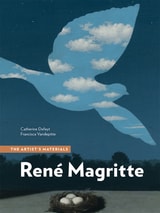
René Magritte
The Artist’s MaterialsCatherine Defeyt
J. Paul Getty Trust, The, 0
René Magritte (1898–1967) is the most famous Belgian artist of the twentieth century and a celebrated representative of the Surrealist movement. Much has been written about his practices, artistic community, and significance within the history of modernism, but little has been documented regarding his process.
This volume examines fifty oil paintings made by Magritte between 1921 and 1967, now held at the Royal Museums of Fine Arts of Belgium. This technical study of his works using noninvasive scientific imaging and chemical analysis reveals the artist’s painting materials, his habit of overpainting previous compositions, and the origins and mechanisms of surface and pigment degradation. Of interest to conservators, scientists, curators, and enthusiasts of twentieth-century art, this book expands our understanding of Magritte the artist and provides new and useful findings that will inform strategies for the future care of his works.
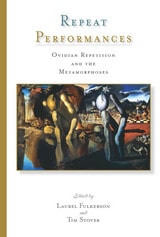
Repeat Performances
Ovidian Repetition and the <i>Metamorphoses<i/>Edited by Laurel Fulkerson and Tim Stover
University of Wisconsin Press, 2016
A shared vision of the possibilities of Latin epic poetry unites the essays, as does a series of attempts to realize those opportunities. Some of the pieces represent a traditional vein of allusion and intertextuality; others are more innovative in their approaches. Each, in a sense, stands as a placeholder for a methodology of theorizing the repetitive practices of poetry, of epic, and of Ovid in particular.
Contributors: Antony Augoustakis, Neil W. Bernstein, Barbara Weiden Boyd, Andrew Feldherr, Peter Heslin, Stephen Hinds, Sharon L. James, Alison Keith, Peter E. Knox, Darcy Krasne
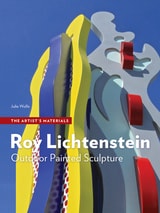
Roy Lichtenstein
Outdoor Painted SculptureJulie Wolfe
J. Paul Getty Trust, The, 0
Vibrant color was essential to the paintings of the American pop artist Roy Lichtenstein (1923–1997), and when he began exploring the creation of outdoor sculpture in the late 1970s, vivid hues remained an important part of his artistic vocabulary. Today, preserving these remarkable works after they have endured decades in outdoor environments around the world is an issue of pressing concern.
This abundantly illustrated volume is based on extensive archival research of Lichtenstein’s studio materials, interviews with his assistants, and a thorough technical analysis of the sculpture Three Brushstrokes. The book concludes with a chapter showing various options for the care, conservation, and restoration of his sculptural works, making this an essential resource for conservators, curators, and others interested both in the iconic artist and modern sculpture in general.