Results by title
67 books match the query 'Technology Studies' and 2 start with r
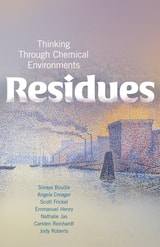
Residues
Thinking Through Chemical EnvironmentsSoraya Boudia
Rutgers University Press, 2022
Winner of the 2023 Merton Award from the Science, Knowledge, and Technology section of the American Sociological Association
Residues offers readers a new approach for conceptualizing the environmental impacts of chemicals production, consumption, disposal, and regulation. Environmental protection regimes tend to be highly segmented according to place, media, substance, and effect; academic scholarship often reflects this same segmented approach. Yet, in chemical substances we encounter phenomena that are at once voluminous and miniscule, singular and ubiquitous, regulated yet unruly. Inspired by recent studies of materiality and infrastructures, we introduce “residual materialism” as a framework for attending to the socio-material properties of chemicals and their world-making powers. Tracking residues through time, space, and understanding helps us see how the past has been built into our present chemical environments and future-oriented regulatory systems, why contaminants seem to always evade control, and why the Anthropocene is as inextricably harnessed to the synthesis of carbon into new molecules as it is driven by carbon’s combustion.
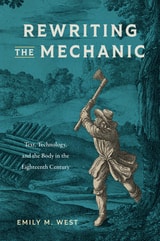
Rewriting the Mechanic
Text, Technology, and the Body in the Eighteenth CenturyEmily M. West
Bucknell University Press, 2027
In the eighteenth century, “technology” didn’t name a particular device or a process. It referred instead to written accounts of the mechanical arts, a now-obsolete category encompassing the wide range of work done by hand, from baking bread to building ships. Rewriting the Mechanic examines how these written descriptions, circulating across genres in eighteenth-century Britain, transformed certain mechanical arts by imagining them as newly innovative, authoritative, and able to make speculative possibilities real—as what we now call technological. Reversing the familiar story in which literature simply reflects technological change, West draws on the work of Robert Hooke, Aphra Behn, Daniel Defoe, Maria Edgeworth, and Jane Austen to demonstrate the influence of literary techniques on ideas about masculinity, power, and the body, and how these texts helped to bring the very idea of technological modernity into being.
Published by Bucknell University Press. Distributed worldwide by Rutgers University Press.