Results by title
61 books match the query 'Third Edition' and 5 start with r
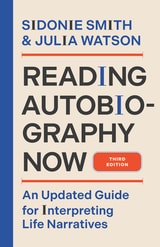
Reading Autobiography Now
An Updated Guide for Interpreting Life Narratives, Third EditionSidonie Smith
University of Minnesota Press, 2024
A user-friendly guide to reading, writing, and theorizing autobiographical texts and practices for students, scholars, and practitioners of life narrative
The boom in autobiographical narratives continues apace. It now encompasses a global spectrum of texts and practices in such media as graphic memoir, auto-photography, performance and plastic arts, film and video, and online platforms. Reading Autobiography Now offers both a critical engagement with life narrative in historical perspective and a theoretical framework for interpreting texts and practices in this wide-ranging field. Hailed upon its initial publication as “the Whole Earth Catalog of autobiography studies,” this essential book has been updated, reorganized, and expanded in scope to serve as an accessible and contemporary guide for scholars, students, and practitioners.
Sidonie Smith and Julia Watson explore definitions of life narrative, probe issues of subjectivity, and outline salient features of autobiographical acts and practices. In this updated edition, they address emergent topics such as autotheory, autofiction, and autoethnography; expand the discussions of identity, relationality, and agency; and introduce new material on autobiographical archives and the profusion of “I”s in contemporary works. Smith and Watson also provide a helpful toolkit of strategies for reading life narrative and an extensive glossary of mini-essays analyzing key theoretical concepts and dozens of autobiographical genres.
An indispensable exploration of this expansive, transnational, multimedia field, Reading Autobiography Now meticulously unpacks the heterogeneous modes of life narratives through which people tell their stories, from traditional memoirs and trauma narratives to collaborative life narrative and autobiographical comics.
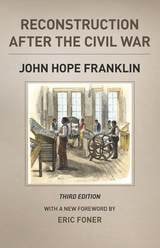
Reconstruction after the Civil War, Third Edition
John Hope Franklin
University of Chicago Press, 2012
Reconstruction after the Civil War explores the role of former slaves during this period in American history. Looking past popular myths and controversial scholarship, John Hope Franklin uses his astute insight and careful research to provide an accurate, comprehensive portrait of the era. His arguments concerning the brevity of the North’s occupation, the limited power wielded by former slaves, the influence of moderate southerners, the flawed constitutions of the radical state governments, and the downfall of Reconstruction remain compelling today. This new edition of Reconstruction after the Civil War also includes a foreword by Eric Foner and a perceptive essay by Michael W. Fitzgerald.
Records and Information Management
Third EditionPatricia C. Franks
American Library Association, 2025
Widely acknowledged as the benchmark text for both students and RIM professionals ("extremely comprehensive and accessible," raves Archival Issues) the new third edition updates its authoritative blend of theory and practice to reflect the field’s dynamically evolving environment, including the rapid rise of applications powered by AI/ML. Franks presents complete coverage of the records and information lifecycle model, encompassing paper, electronic (databases, office suites such as Microsoft 365, and email), and new media records (blogs, chat messages, and software as a service), while acknowledging the influence of emerging and developing technologies and encouraging new ways of meeting the resulting challenges. In this book, enhanced with supplemental contributions from a wide range of thought leaders and practitioners, readers will explore such keys topics as
- the latest advances in disruptive technologies, including blockchain, Web3, the metaverse, and evolving digital communication tools such as enterprise social media;
- an overview of the origins and development of records and information management;
- the discipline of information governance and the steps to develop a strategic records and information management plan;
- a completely new chapter that demystifies data governance, automation, and AI;
- strategies for the creation/capture and classification of records and information;
- approaches to retention strategies, inactive records management, archives, and long-term digital preservation;
- methods for access, storage, and retrieval of records and information;
- insight into electronic records and electronic records management systems;
- practices for safeguarding essential records, including disaster preparedness, recovery, and business continuity;
- approaches to monitoring, auditing, privacy, security, and risk management;
- fresh discussion of the leadership and management skills required of RIM professionals; and
- expert guidance on trendspotting, education, and training.

Religion
North American Style, Third EditionDowdy, Thomas
Rutgers University Press, 1996
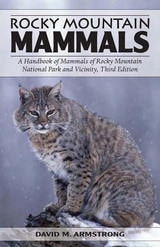
Rocky Mountain Mammals
A Handbook of Mammals of Rocky Mountain National Park and Vicinity, Third EditionDavid M. Armstrong
University Press of Colorado, 2008
Designed for quick reference and enjoyable reading, Rocky Mountain Mammals offers what most field guides don't - a wealth of fascinating information about each species. In seventy-two species accounts, David M. Armstrong describes each animal and its signs, habits, habitat, and natural history, noting times when seasonal events such as elk sparring occur.
Introductory materials and appendices offer rich context and wildlife-watching support, including a checklist with page numbers for quick field reference, an identification key, a glossary, derivations of scientific names, and advice on how, when, and where to watch mammals. Armstrong introduces mammalian evolution, anatomy, and distribution and offers perspective on how the local fauna fits into its geographical setting and into past and potential future faunas of the region.
This lavishly illustrated new edition will delight those who live in and visit the high country and foothills of the Southern Rockies and want to identify mammals and learn about their lives. Published in association with the Rocky Mountain Nature Association.