Results by title
155 books match the query 'Toward' and 10 start with r

REMEX
Toward an Art History of the NAFTA EraBy Amy Sara Carroll
University of Texas Press, 2017
REMEX presents the first comprehensive examination of artistic responses and contributions to an era defined by the North American Free Trade Agreement (1994–2008). Marshaling over a decade’s worth of archival research, interviews, and participant observation in Mexico City and the Mexico–US borderlands, Amy Sara Carroll considers individual and collective art practices, recasting NAFTA as the most fantastical inter-American allegory of the turn of the millennium. Carroll organizes her interpretations of performance, installation, documentary film, built environment, and body, conceptual, and Internet art around three key coordinates—City, Woman, and Border. She links the rise of 1990s Mexico City art in the global market to the period’s consolidation of Mexico–US border art as a genre. She then interrupts this transnational art history with a sustained analysis of chilanga and Chicana artists’ remapping of the figure of Mexico as Woman.
A tour de force that depicts a feedback loop of art and public policy—what Carroll terms the “allegorical performative”—REMEX adds context to the long-term effects of the post-1968 intersection of D.F. performance and conceptualism, centralizes women artists’ embodied critiques of national and global master narratives, and tracks post-1984 border art’s “undocumentation” of racialized and sexualized reconfigurations of North American labor pools. The book’s featured artwork becomes the lens through which Carroll rereads a range of events and phenomenon from California’s Proposition 187 to Zapatismo, US immigration policy, 9/11 (1973/2001), femicide in Ciudad Juárez, and Mexico’s war on drugs.
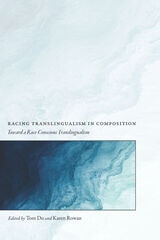
Racing Translingualism in Composition
Toward a Race-Conscious Translingualismedited by Tom Do and Karen Rowan
Utah State University Press, 2022
This collection extends the disciplinary conversations about translingualism by foregrounding the role race and racism play in the construction and maintenance of language differences. In doing so, the contributors examine the co-naturalization of race and language in order to theorize a race-conscious translingual praxis. The book begins by offering generative critiques of translingualism, centering on the ways in which the approach’s democratic orientation to language avoids issues of race, language, and power and appeals to colorblind racist tropes of equal opportunity. Following these critiques, contributors demonstrate the important intersections of race and translingualism by drawing upon voices typically marginalized by monolingual language ideologies and pedagogies. Finally, Racing Translingualism concludes by attending to the pedagogical implications of a race-conscious translingual praxis in writing and literacy education.
Making the case for race-conscious, rather than colorblind, theories and pedagogies, Racing Translingualism offers a unique take on how translingualism is theorized and practiced and moves the field forward through its direct consideration of the links between language, race, and racism.
Contributors: Lindsey Albracht, Steven Alvarez, Bethany Davila, Tom Do, Jaclyn Hilberg, Bruce Horner, Aja Martinez, Esther Milu, Stephanie Mosher, Yasmine Romero, Karen Rowan, Rachael Shapiro, Shawanda Stewart, Brian Stone, Victor Villanueva, Missy Watson

Rascuache Lawyer
Toward a Theory of Ordinary LitigationAlfredo Mirandé
University of Arizona Press, 2011
Every chapter presents an actual case from Mirandé’s experience (only the names and places have been changed). His clients have been charged with everything from carrying a concealed weapon, indecent exposure, and trespassing to attempted murder, domestic violence, and child abuse. Among them are recent Mexican immigrants, drug addicts, gang members, and the homeless. All of them are destitute, and many are victims of racial profiling. Some “pay” Mirandé with bartered services such as painting, home repairs, or mechanical work on his car. And Mirandé doesn’t always win their cases. But, as he recounts, he certainly works tirelessly to pursue all legal remedies.
Each case is presented as a letter to a fascinating (fictional) “Super Chicana” named Fermina Gabriel, who we are told is an accomplished lawyer, author, and singer. This narrative device allows the author to present his cases as if he were recounting them to a friend, drawing in the reader as a friend as well.
Bookending the individual cases, Mirandé’s introductions and conclusions offer a compelling vision of progressive legal practice grounded in rascuache lawyering.
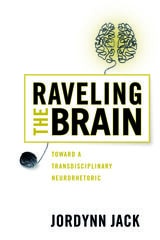
Raveling the Brain
Toward a Transdisciplinary NeurorhetoricJordynn Jack
The Ohio State University Press, 2019
Jack first looks at the problem of “neurohype”—exaggerated or oversimplified claims that essentialize brains and make them “uncritically real”—questioning some of the fundamental assumptions about the brain that experimental protocols and psychological concepts rely on. Then, through examples of research on sex and gender, political orientation, and affect, Jack demonstrates how a rhetorical-material approach can help to generate alternative approaches to studying the brain that might mitigate the problem of neurohype. By raveling out the roots of neurohype and raveling back its use through time, Raveling the Brain shows how rhetoric and neuroscience might be raveled together, or intertwined, to create a stronger transdisciplinary approach that might enrich our understanding of those issues of interest to neuroscientists and humanists alike.
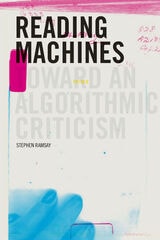
Reading Machines
Toward and Algorithmic CriticismStephen Ramsay
University of Illinois Press, 2011

Reading for the Planet
Toward a GeomethodologyChristian Moraru
University of Michigan Press, 2015
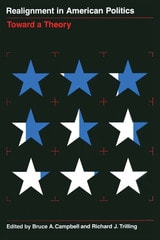
Realignment in American Politics
Toward a TheoryEdited by Bruce A. Campbell and Richard J. Trilling
University of Texas Press, 1980

Redescriptions
Toward a New Comparative ReligionRussell T. McCutcheon
Rutgers University Press, 2027
Although religion has long occupied the attention of scholars it has uniformly been assumed by them to be a special case, either to be nurtured and curated or explained away by developing theories specifically suited to it. This bracketing of our object of study has isolated the field and made it difficult for many to understand: Is religion a theological enterprise? Is it suited to the public university? Does it offend against some people’s sensibilities? Redescriptions: Toward a New Comparative Religion proposes a model for how to address this ambiguity by averring that the things scholars call religion are simply routine human doings that are therefore comparable to any other aspect of culture. The book offers a series of controlled experiments in which some novel conclusions about seemingly religious items—from myths of origins to memorials for the dead—are reached by placing them into some unexpected relationships of comparison.
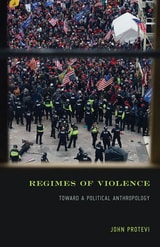
Regimes of Violence
Toward a Political AnthropologyJohn Protevi
University of Minnesota Press, 2025
A wide-ranging examination of the roots—and possible future—of violence in human societies
Is aggression inevitable among humans? In Regimes of Violence, John Protevi explores how human violence originates and exists in our societies. Taking humans as biocultural (that is, our social practices shape our bodies and minds), he shows how aggression does not arrive from any purely biological predisposition but rather occurs only in social regimes of violence that, by manipulating the ways in which culture can shape our biological inheritance of rage and aggression, condition the forms of violence able to be expressed at any one time.
Offering detailed insights into human aggression throughout history, Protevi’s analysis ranges from evolutionary psychology to affective ideology and finally to an alternate politics of joy. He examines a wide range of seemingly disparate topics, such as cooperation between early nomadic foragers, organized sports, berserkers and blackout rages, the experiences of maroons escaping slavery, the January 6 invasion of the United States Capitol building, and responses to the Covid-19 pandemic. As he entwines the philosophical with the anthropological, he asks readers to consider why humans’ capacity for cooperation and sharing is so persistently overlooked by stories that focus on aggression and warfare.
Regimes of Violence is an important contribution to studies of Deleuze and Guattari, uniquely combining cutting-edge investigations in psychology, history, evolutionary theory, cultural anthropology, and philosophy to examine the “political philosophy of the mind.” Presenting to readers a refreshingly optimistic perspective, Protevi demonstrates that we are not doomed to war and argues that humans can build a world based on antifascism, joy, and mutual empowerment.
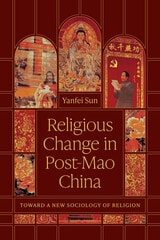
Religious Change in Post-Mao China
Toward a New Sociology of ReligionYanfei Sun
University of Chicago Press, 2026
In Religious Change in Post-Mao China, sociologist Yanfei Sun examines the transformation of major religions and the broader religious ecology in China in the wake of the death of Mao Zedong. Drawing on two decades of research that integrates ethnographic, historical, and comparative methods, this book explores the remarkable rise of Protestantism, the challenges faced by Catholicism, the revival of Chinese popular religion, the complex dynamics of Chinese Buddhism, and the unrealized potential of new religious movements. Why do some religions thrive and others struggle in post-Mao China? Sun describes both the internal institutional factors that allow some religions to flourish and the wider sociopolitical context that supports or discourages religious expansion. She thereby introduces an ambitious theoretical framework—one whose applicability extends beyond China, offering a template for analyzing religious dynamics in other parts of the world.
A must-read for scholars of religious studies, sociology, and China studies, Religious Change in Post-Mao China not only provides critical insights into China’s evolving religious landscape but also offers a powerful lens for examining the forces behind religious change, both past and present.