Results by title
81 books match the query 'Tradition' and 4 start with r

Radical Philosophy
Tradition, Counter-Tradition, PoliticsRoger Gottlieb
Temple University Press, 1993
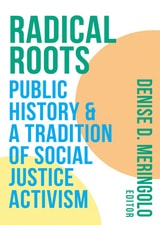
Radical Roots
Public History and a Tradition of Social Justice ActivismDenise D. Meringolo
Amherst College Press, 2021
"This is a much-needed recalibration, as professional organizations and practitioners across genres of public history struggle to diversify their own ranks and to bring contemporary activists into the fold." — Catherine Gudis, University of California, Riverside.
"Taken all together, the articles in this volume highlight the persistent threads of justice work that has characterized the multifaceted history of public history as well as the challenges faced in doing that work."—Patricia Mooney-Melvin, The Public Historian

Red River Blues
The Blues Tradition in the SoutheastBruce Bastin
University of Illinois Press, 1986
A Classic of Blues Literature inductee into the Blues Foundation's Blues Hall of Fame
Drawing on archives and interviews with musicians, Red River Blues remains an acclaimed work of blues scholarship. Bruce Bastin traces the origins of the music to the turn of the twentieth century, when African Americans rejected slave songs, worksongs, and minstrel music in favor of a potent new vehicle for secular musical expression. Bastin looks at the blues' early emerging popularity and its spread via the Great Migration, delves into a wealth of field recordings, and looks at the careers of Brownie McGhee, Blind Boy Fuller, Curly Weaver, Sonny Terry, and many other foundational artists.
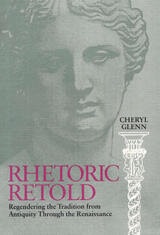
Rhetoric Retold
Regendering the Tradition from Antiquity Through the RenaissanceCheryl Glenn
Southern Illinois University Press, 1997
After explaining how and why women have been excluded from the rhetorical tradition from antiquity through the Renaissance, Cheryl Glenn provides the opportunity for Sappho, Aspasia, Diotima, Hortensia, Fulvia, Julian of Norwich, Margery Kempe, Margaret More Roper, Anne Askew, and Elizabeth I to speak with equal authority and as eloquently as Plato, Aristotle, Cicero, and Augustine. Her aim is nothing less than regendering and changing forever the history of rhetoric.
To that end, Glenn locates women’s contributions to and participation in the rhetorical tradition and writes them into an expanded, inclusive tradition. She regenders the tradition by designating those terms of identity that have promoted and supported men’s control of public, persuasive discourse—the culturally constructed social relations between, the appropriate roles for, and the subjective identities of women and men.
Glenn is the first scholar to contextualize, analyze, and follow the migration of women’s rhetorical accomplishments systematically. To locate these women, she follows the migration of the Western intellectual tradition from its inception in classical antiquity and its confrontation with and ultimate appropriation by evangelical Christianity to its force in the medieval Church and in Tudor arts and politics.