94 books match the query 'Transnationalism' and 5 start with r
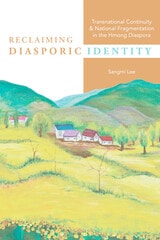
cover of Reclaiming Diasporic Identity: Transnational Continuity and National Fragmentation in the Hmong Diaspora

Reclaiming Diasporic Identity

Transnational Continuity and National Fragmentation in the Hmong Diaspora

Sangmi Lee

University of Illinois Press, 2024

The Hmong diaspora radiates from Southeast Asia to include far-flung nations like the United States, New Zealand, and Argentina. Sangmi Lee draws on the concept of diasporic identity to explore the contemporary experiences of Hmong people living in Vang Vieng, Laos, and Sacramento, California. Hmong form a sense of belonging based on two types of experiences: shared transnational cultural and social relations across borders; and national differences that arise from living in separate countries. As Lee shows, these disparate influences contribute to a dual sense of belonging but also to a transnational mobility and cultural fluidity that defies stereotypes of Hmong as a homogenous people bound to one place. Lee’s on-the-ground fieldwork lends distinctive detail to communities and individuals while her theoretically informed approach clarifies and refines what it means when already hybrid and dynamic identities become diasporic.

In-depth and interdisciplinary, Reclaiming Diasporic Identity blends ethnography and history to provide a fresh consideration of Hmong life today.

[more]
cover of Redefining Japaneseness: Japanese Americans in the Ancestral Homeland

Redefining Japaneseness

Japanese Americans in the Ancestral Homeland

Yamashiro, Jane H

Rutgers University Press, 2017

There is a rich body of literature on the experience of Japanese immigrants in the United States, and there are also numerous accounts of the cultural dislocation felt by American expats in Japan. But what happens when Japanese Americans, born and raised in the United States, are the ones living abroad in Japan? 
 
Redefining Japaneseness chronicles how Japanese American migrants to Japan navigate and complicate the categories of Japanese and “foreigner.” Drawing from extensive interviews and fieldwork in the Tokyo area, Jane H. Yamashiro tracks the multiple ways these migrants strategically negotiate and interpret their daily interactions. Following a diverse group of subjects—some of only Japanese ancestry and others of mixed heritage, some fluent in Japanese and others struggling with the language, some from Hawaii and others from the US continent—her study reveals wide variations in how Japanese Americans perceive both Japaneseness and Americanness. 
 
Making an important contribution to both Asian American studies and scholarship on transnational migration, Redefining Japaneseness critically interrogates the common assumption that people of Japanese ancestry identify as members of a global diaspora. Furthermore, through its close examination of subjects who migrate from one highly-industrialized nation to another, it dramatically expands our picture of the migrant experience.  
 
[more]
cover of Rekindling the Sacred Fire: Métis Ancestry and Anishinaabe Spirituality

Rekindling the Sacred Fire

Métis Ancestry and Anishinaabe Spirituality

Chantal Fiola

University of Manitoba Press, 2015
The Haudenosaunee, more commonly known as the Iroquois or Six Nations, have been one of the most widely written about Indigenous groups in the United States and Canada. But seldom have the voices emerging from this community been drawn on in order to understand its enduring intellectual traditions. Rick Monture’s We Share Our Matters offers the first comprehensive portrait of how the Haudenosaunee of the Grand River region have expressed their long struggle for sovereignty in Canada. Through careful readings of more than two centuries of letters, speeches, ethnography, poetry, fiction, nonfiction, and film, Monture argues Haudenosaunee core beliefs have remained remarkably consistent and continue to inspire ways to address current social and political realities.
[more]
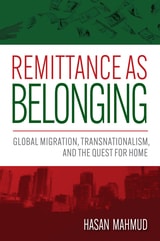
cover of Remittance as Belonging: Global Migration, Transnationalism, and the Quest for Home

Remittance as Belonging

Global Migration, Transnationalism, and the Quest for Home

Hasan Mahmud

Rutgers University Press, 2025
Remittance as Belonging: Global Migration, Transnationalism, and the Quest for Home argues that migrants' remittances express their  sense of belonging and connectedness to their home country of origin, making an integral part of both migrants’ ethnic identity and sense of what they call home. Drawing on three and a half years of ethnographic fieldwork with Bangladeshi migrants in Tokyo and Los Angeles, Hasan Mahmud demonstrates that while migrants go abroad for various reasons, they do not travel alone. Although they leave behind their families in Bangladesh, they move abroad essentially as members of their family and community and maintain their belonging to home through transnational practices, including remittance sending. By conceptualizing remittance as an expression of migrants’ belonging, this book presents detailed accounts of the emergence, growth, decline, and revival of remittances as a function of transformations in migrants’ sense of belonging to home.
[more]
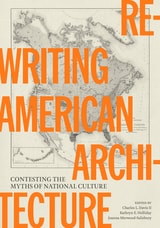
cover of Rewriting American Architecture: Contesting the Myths of National Culture

Rewriting American Architecture

Contesting the Myths of National Culture

Edited by Charles L. Davis II, Kathryn E. Holliday, and Joanna Merwood-Salisbury

University of Texas Press, 2026

A critical reassessment of nineteenth‑century American architecture that uncovers how race, settler colonialism, and contested national identities shaped the built environment and its historiography.

Rewriting American Architecture offers a revisionist riposte to the canonical story of nineteenth-century American architecture. Drawing on new archival research and revisionist historiography, the essays in this volume reveal how American architecture was shaped not by inevitable progress toward a unified national culture but by the turbulent realities of race, labor, settler colonialism, and territorial expansion. Rather than treating architecture as an apolitical aesthetic expression, the contributors expose it as an active arena in which the meanings of nationhood were constructed, contested, and often violently enforced. From Indigenous spatial practices and Black institutional building to transnational exchanges and the racial politics embedded in professionalization, this collection reframes the built environment as central to the competing cultural, political, and geographic claims that defined the United States during this period.

[more]