Results by title
141 books match the query 'Turkey' and 5 start with r

Reading Clocks, Alla Turca
Time and Society in the Late Ottoman EmpireAvner Wishnitzer
University of Chicago Press, 2015
Drawing on a wealth of archival and literary sources, Wishnitzer’s original and highly important work presents the shifting culture of time as an arena in which Ottoman social groups competed for legitimacy and a medium through which the very concept of modernity was defined. Reading Clocks, Alla Turca breaks new ground in the study of the Middle East and presents us with a new understanding of the relationship between time and modernity.
Reform, Recovery, and Growth
Latin America and the Middle EastEdited by Rudiger Dornbusch and Sebastian Edwards
University of Chicago Press, 1994
Among the questions addressed are: What are the requirements for a stabilization policy that reduces inflation in a reasonable amount of time at an acceptable cost? What are the effects of structural reforms, especially trade liberalization, deregulation, and privatization, on growth in the short and long runs? How do macroeconomic instability and adjustment policies affect income distribution and poverty? How does the specific design of structural adjustment efforts affect results?
In this companion to Macroeconomics of Populism in Latin America, the authors confirm that macroeconomic stability has a positive effect on income distribution. The volume presents case studies that describe in detail the stabilization experiences in Brazil, Israel, Argentina, and Bolivia, and also includes discussion of Chile, Mexico, Peru, and Turkey.
Religion, History, and Place in the Origin of Settled Life
Ian Hodder
University Press of Colorado, 2018
Contributors argue that the long-term social relationships characteristic of delayed-return agricultural systems must be based on historical ties to place and to ancestors. They define different forms of history-making, including nondiscursive routinized practices as well as commemorative memorialization. They consider the timing in the Neolithic of an emerging concern with history-making in place in relation to the adoption of farming and settled life in regional sequences. They explore whether such correlations indicate the causal processes in which history-making, ritual practices, agricultural intensification, population increase, and social competition all played a role.
Religion, History, and Place in the Origin of Settled Life takes a major step forward in understanding the adoption of farming and a settled way of life in the Middle East by foregrounding the roles of history-making and religious ritual. This work is relevant to students and scholars of Near Eastern archaeology, as well as those interested in the origins of agriculture and social complexity or the social role of religion in the past.
Contributors: Kurt W. Alt, Mark R. Anspach, Marion Benz, Lee Clare, Anna Belfer-Cohen, Morris Cohen, Oliver Dietrich, Güneş Duru, Yilmaz S. Erdal, Nigel Goring-Morris, Ian Hodder, Rosemary A. Joyce, Nicola Lercari, Wendy Matthews, Jens Notroff, Vecihi Özkaya, Feridun S. Şahin, F. Leron Shults, Devrim Sönmez, Christina Tsoraki, Wesley Wildman
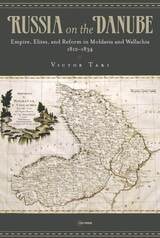
Russia on the Danube
Empire, Elites, and Reform in Moldavia and Wallachia, 1812–1834Victor Taki
Central European University Press, 2021
One of the goals of Russia’s Eastern policy was to turn Moldavia and Wallachia, the two Romanian principalities north of the Danube, from Ottoman vassals into a controllable buffer zone and a springboard for future military operations against Constantinople. Russia on the Danube describes the divergent interests and uneasy cooperation between the Russian officials and the Moldavian and Wallachian nobility in a key period between 1812 and 1834. Victor Taki’s meticulous examination of the plans and memoranda composed by Russian administrators and the Romanian elite underlines the crucial consequences of this encounter. The Moldavian and Wallachian nobility used the Russian-Ottoman rivalry in order to preserve and expand their traditional autonomy. The comprehensive institutional reforms born out of their interaction with the tsar’s officials consolidated territorial statehood on the lower Danube, providing the building blocks of a nation state.
The main conclusion of the book is that although Russian policy was driven by self-interest, and despite the Russophobia among a great part of the Romanian intellectuals, this turbulent period significantly contributed to the emergence, several decades later, of modern Romania.
Russian-Ottoman Borderlands
The Eastern Question ReconsideredEdited by Lucien J. Frary and Mara Kozelsky
University of Wisconsin Press, 2014
The contributors address ethnicity, religion, popular attitudes, violence, dislocation and mass migration, economic rivalry, and great-power diplomacy. Through a variety of fresh approaches, they examine the consequences of the Eastern Question in the lives of those peoples it most affected, the millions living in the Russian and Ottoman Empires and the borderlands in between.