Results by title
98 books match the query 'Urban renewal' and 5 start with r
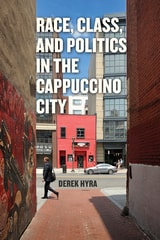
Race, Class, and Politics in the Cappuccino City
Derek S. Hyra
University of Chicago Press, 2017
Race, Class, and Politics in the Cappuccino City is an in-depth ethnography of this gilded ghetto. Derek S. Hyra captures here a quickly gentrifying space in which long-time black residents are joined, and variously displaced, by an influx of young, white, relatively wealthy, and/or gay professionals who, in part as a result of global economic forces and the recent development of central business districts, have returned to the cities earlier generations fled decades ago. As a result, America is witnessing the emergence of what Hyra calls “cappuccino cities.” A cappuccino has essentially the same ingredients as a cup of coffee with milk, but is considered upscale, and is double the price. In Hyra’s cappuccino city, the black inner-city neighborhood undergoes enormous transformations and becomes racially “lighter” and more expensive by the year.
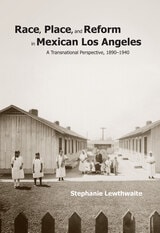
Race, Place, and Reform in Mexican Los Angeles
A Transnational Perspective, 1890-1940Stephanie Lewthwaite
University of Arizona Press, 2009
In Race, Place, and Reform in Mexican Los Angeles, Stephanie Lewthwaite presents evidence from a myriad of sources that these varied agendas of reform consistently supported the creation of racial, ethnic, and cultural differences across Los Angeles. Reformers simultaneously promoted acculturation and racialization, creating a “landscape of difference” that significantly shaped the place and status of Mexican immigrants and Mexican Americans from the Progressive era through the New Deal.
The book journeys across the urban, suburban, and rural spaces of Greater Los Angeles as it moves through time and examines the rural–urban migration of Mexicans on both a local and a transnational scale. Part 1 traverses the world of Progressive reform in urban Los Angeles, exploring the link between the region’s territorial and industrial expansion, early campaigns for social and housing reform, and the emergence of a first-generation Mexican immigrant population. Part 2 documents the shift from official Americanization and assimilation toward nativism and exclusion. Here Lewthwaite examines competing cultures of reform and the challenges to assimilation from Mexican nationalists and American nativists. Part 3 analyzes reform during the New Deal, which spawned the active resistance of second-generation Mexican Americans.
Race, Place, and Reform in Mexican Los Angeles achieves a full, broad, and nuanced account of the various—and often contradictory—efforts to reform the Mexican population of Los Angeles. With a transnational approach grounded in historical context, this book will appeal to students of history, cultural studies, and literary studies
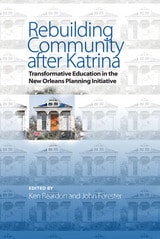
Rebuilding Community after Katrina
Transformative Education in the New Orleans Planning InitiativeKen Reardon
Temple University Press, 2015
Rebuilding Community after Katrina chronicles the innovative and ambitious partnership between Cornell University’s City and Regional Planning department and ACORN Housing, an affiliate of what was the nation’s largest low-income community organization. These unlikely allies came together to begin to rebuild devastated neighborhoods in New Orleans after Hurricane Katrina.
The editors and contributors to this volume allow participants’ voices to show how this partnership integrated careful, technical analysis with aggressive community outreach and organizing. With essays by activists, organizers, community members, and academics on the ground, Rebuilding Community after Katrina presents insights on the challenges involved in changing the way politicians and analysts imagined the future of New Orleans’ Ninth Ward.
What emerges from this complex drama are lessons about community planning, organizational relationships, and team building across multi-cultural lines. The accounts presented in Rebuilding Community after Katrina raise important and sensitive questions about the appropriate roles of outsiders in community-based planning processes.
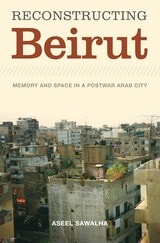
Reconstructing Beirut
Memory and Space in a Postwar Arab CityBy Aseel Sawalha
University of Texas Press, 2010
Once the cosmopolitan center of the Middle East, Beirut was devastated by the civil war that ran from 1975 to 1991, which dislocated many residents, disrupted normal municipal functions, and destroyed the vibrant downtown district. The aftermath of the war was an unstable situation Sawalha considers "a postwar state of emergency," even as the state strove to restore normalcy. This ethnography centers on various groups' responses to Beirut's large, privatized urban-renewal project that unfolded during this turbulent moment.
At the core of the study is the theme of remembering space. The official process of rebuilding the city as a node in the global economy collided with local day-to-day concerns, and all arguments invariably inspired narratives of what happened before and during the war. Sawalha explains how Beirutis invoked their past experiences of specific sites to vie for the power to shape those sites in the future. Rather than focus on a single site, the ethnography crosses multiple urban sites and social groups, to survey varied groups with interests in particular spaces. The book contextualizes these spatial conflicts within the discourses of the city's historical accounts and the much-debated concept of heritage, voiced in academic writing, politics, and journalism. In the afterword, Sawalha links these conflicts to the social and political crises of early twenty-first-century Beirut.
Renew Orleans?
Globalized Development and Worker Resistance after KatrinaAaron Schneider
University of Minnesota Press, 2018
Urban development after disaster, the fading of black political clout, and the onset of gentrification
Like no other American city, New Orleans since Hurricane Katrina offers powerful insight into issues of political economy in urban development and, in particular, how a city’s character changes after a disaster that spurs economic and political transition. In New Orleans, the hurricane upset an existing stalemate among rival factions of economic and political elites, and its aftermath facilitated the rise of a globally oriented faction of local capital.
In Renew Orleans? Aaron Schneider shows how some city leaders were able to access fragmented local institutions and capture areas of public policy vital to their development agenda. Through interviews and surveys with workers and advocates in construction, restaurants, shipyards, and hotel and casino cleaning, Schneider contrasts sectors prioritized during post-Katrina recovery with neglected sectors. The result is a fine-grained view of the way labor markets are structured to the advantage of elites, emphasizing how dual development produces wealth for the few while distributing poverty and exclusion to the many on the basis of race, gender, and ethnicity.
Schneider shows the way exploitation operates both in the workplace and the community, tracing working-class resistance that joins struggles for dignity at home and work. In the process, working classes and popular sectors put forth their own alternative forms of development.