Results by title
349 books match the query 'Violence' and 18 start with r
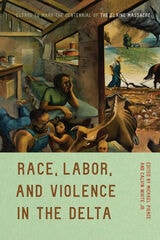
Race, Labor, and Violence in the Delta
Essays to Mark the Centennial of the Elaine MassacreMichael Pierce
University of Arkansas Press, 2022
Racial Blackness and the Discontinuity of Western Modernity
Edited by Justin A. Joyce, Dwight A. McBride, and John Carlos Rowe
University of Illinois Press, 2013
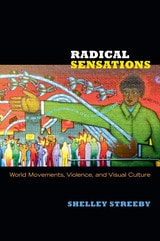
Radical Sensations
World Movements, Violence, and Visual CultureShelley Streeby
Duke University Press, 2013

Rage and Carnage in the Name of God
Religious Violence in NigeriaAbiodun Alao
Duke University Press, 2022
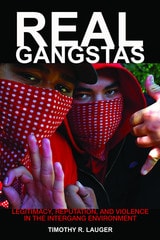
Real Gangstas
Legitimacy, Reputation, and Violence in the Intergang EnvironmentLauger, Timothy R
Rutgers University Press, 2012
Street gangs are a major concern for residents in many inner-city communities. However, gangs’ secretive and, at times, delinquent tendencies limit most people’s exposure to the realities of gang life. Based on eighteen months of qualitative research on the streets of Indianapolis, Real Gangstas provides a unique and intimate look at the lives of street gang members as they negotiate a dangerous peer environment in a major midwestern city.
Timothy R. Lauger interviewed and observed a mix of fifty-five gang members, former gang members, and non-gang street offenders. He spent much of his fieldwork time in the company of a particular gang, the “Down for Whatever Boyz,” who allowed him to watch and record many of their day-to-day activities and conversations. Through this extensive research, Lauger is able to understand and explain the reasons for gang membership, including a chaotic family life, poverty, and the need for violent self-assertion in order to foster the creation of a personal identity.
Although the book exposes many troubling aspects of gang life, it is not a simple descriptive or a sensationalistic account of urban despair and violence. Steeped in the tradition of analytical ethnography, the study develops a central theoretical argument: combinations of street gangs within cities shape individual gang member behavior within those urban settings. Within Indianapolis, members of rival gangs interact on a routine basis within an ambiguous and unstable environment. Participants believe that many of their contemporaries claiming gang affiliations are not actually “real” gang members, but instead are imposters who gain access to the advantages of gang membership through fraud and pretense. Consequently, the ability to discern “real” gang members—or to present oneself successfully as a real gang member—is a critical part of gangland Indianapolis.
Real Gangstas offers an objective and fair characterization of active gang members, successfully balancing the seemingly conflicting idea that they generally seem like normal teenagers, yet are abnormally concerned with—and too often involved in—violence. Lauger takes readers to the edge of an actual gang conflict, providing a rare and up-close look at the troubling processes that facilitate hostility and violence.

Reconsidering Gender, Violence, and the State
Lisa Arellano, Erica L. Ball and Amanda Frisken, special issue editors
Duke University Press, 2016
Contributors: Lisa Arellano, Erica L. Ball, Josh Cerretti, Jonathan Culleton, Amanda Frisken, Raphael Ginsberg, Deana Heath, Efeoghene Igor, Catherine Jacquet, Jessie Kindig, Benjamin N. Lawrance, Jen Manion, Xhercis Méndez, Luis Morán, Claudia Salamanca, Tomoko Seto, Carla Tsampiras, Jennifer Yeager
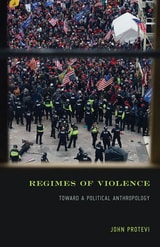
Regimes of Violence
Toward a Political AnthropologyJohn Protevi
University of Minnesota Press, 2025
A wide-ranging examination of the roots—and possible future—of violence in human societies
Is aggression inevitable among humans? In Regimes of Violence, John Protevi explores how human violence originates and exists in our societies. Taking humans as biocultural (that is, our social practices shape our bodies and minds), he shows how aggression does not arrive from any purely biological predisposition but rather occurs only in social regimes of violence that, by manipulating the ways in which culture can shape our biological inheritance of rage and aggression, condition the forms of violence able to be expressed at any one time.
Offering detailed insights into human aggression throughout history, Protevi’s analysis ranges from evolutionary psychology to affective ideology and finally to an alternate politics of joy. He examines a wide range of seemingly disparate topics, such as cooperation between early nomadic foragers, organized sports, berserkers and blackout rages, the experiences of maroons escaping slavery, the January 6 invasion of the United States Capitol building, and responses to the Covid-19 pandemic. As he entwines the philosophical with the anthropological, he asks readers to consider why humans’ capacity for cooperation and sharing is so persistently overlooked by stories that focus on aggression and warfare.
Regimes of Violence is an important contribution to studies of Deleuze and Guattari, uniquely combining cutting-edge investigations in psychology, history, evolutionary theory, cultural anthropology, and philosophy to examine the “political philosophy of the mind.” Presenting to readers a refreshingly optimistic perspective, Protevi demonstrates that we are not doomed to war and argues that humans can build a world based on antifascism, joy, and mutual empowerment.

Religion, Fundamentalism, and Violence
An Interdisciplinary DialogueEdited by Andrew L. Gluck
University of Scranton Press, 2010
In Religion, Fundamentalism, and Violence, Andrew Gluck brings together distinguished scholars to address a fiercely debated topic: the intersection of religion and violence. Among the contributions is an anthropological analysis of the violence associated with the Abrahamic monotheistic religions of the Middle East, a compelling essay accounting for the violence in Hindu religious traditions, an informative look at the Israeli-Palestinian tensions of more recent times, and an essay on the Catholic just war theory. Each chapter is followed by a commentary and reply, making this volume indispensable for students and scholars of the history of religions.

Reload
Rethinking Violence in American LifeChristopher B. Strain
Vanderbilt University Press, 2011
When incidents of extreme violence flare in America, all too often they are framed as isolated aberrations. Nothing could be further from the truth, as Christopher Strain argues in his new book, Reload: Rethinking Violence in American Life. The unpleasant fact, as he reveals in this highly readable study, is that American violence is inextricably woven into the fabric of our national heritage and experience.
In Reload, Strain traces our modern-day conception of violence from the struggle to survive on the American frontier, through evolving gender roles in recent centuries, to the hysteria surrounding video and role-playing games and the more recent disturbing phenomenon of school shootings. Strain shapes nothing less than a profound meditation on American violence and a "primer" on understanding what can often appear to be a profoundly dangerous nation.
In addition to serving as a comprehensive overview of the state of violence in America, Reload also suggests ways of combating the trends that lead to tragedy.

Remote Warfare
New Cultures of ViolenceRebecca A. Adelman
University of Minnesota Press, 2020
Considers how people have confronted, challenged, and resisted remote warfare
Drone warfare is now a routine, if not predominant, aspect of military engagement. Although this method of delivering violence at a distance has been a part of military arsenals for two decades, scholarly debate on remote warfare writ large has remained stuck in tired debates about practicality, efficacy, and ethics. Remote Warfare broadens the conversation, interrogating the cultural and political dimensions of distant warfare and examining how various stakeholders have responded to the reality of state-sponsored remote violence.
The essays here represent a panoply of viewpoints, revealing overlooked histories of remoteness, novel methodologies, and new intellectual challenges. From the story arc of Homeland to redefining the idea of a “warrior,” these thirteen pieces consider the new nature of surveillance, similarities between killing with drones and gaming, literature written by veterans, and much more. Timely and provocative, Remote Warfare makes significant and lasting contributions to our understanding of drones and the cultural forces that shape and sustain them.
Contributors: Syed Irfan Ashraf, U of Peshawar, Pakistan; Jens Borrebye Bjering, U of Southern Denmark; Annika Brunck, U of Tübingen; David A. Buchanan, U.S. Air Force Academy; Owen Coggins, Open U; Andreas Immanuel Graae, U of Southern Denmark; Brittany Hirth, Dickinson State U; Tim Jelfs, U of Groningen; Ann-Katrine S. Nielsen, Aarhus U; Nike Nivar Ortiz, U of Southern California; Michael Richardson, U of New South Wales; Kristin Shamas, U of Oklahoma; Sajdeep Soomal; Michael Zeitlin, U of British Columbia.
Resisting Extractivism
Peruvian Gold, Everyday Violence, and the Politics of AttentionMichael Wilson Becerril
Vanderbilt University Press, 2021
Peru is classified as one of the deadliest countries in the world for environmental defenders, where activists face many forms of violence. Through an ethnographic and systematic comparison of four gold-mining conflicts in Peru, Resisting Extractivism presents a vivid account of subtle and routine forms of violence, analyzing how meaning-making practices render certain types of damage and suffering noticeable while occluding others. The book thus builds a theory of violence from the ground up—how it is framed, how it impacts people’s lived experiences, and how it can be confronted. By excavating how the everyday interactions that underlie conflicts are discursively concealed and highlighted, this study assists in the prevention and transformation of violence over resource extraction in Latin America.
The book draws on a controlled, qualitative comparison of four case studies, extensive ethnographic research conducted over fourteen months of fieldwork, analysis of over nine hundred archives and documents, and unprecedented access to more than 250 semi-structured interviews with key actors across industry, the state, civil society, and the media. Michael Wilson Becerril identifies, traces, and compares these dynamics to explain how similar cases can lead to contrasting outcomes—insights that may be usefully applied in other contexts to save lives and build better futures.

Resisting State Violence
Radicalism, Gender, and Race in U.S. CultureJoy James
University of Minnesota Press, 1996
An incendiary critique of contemporary American society that also offers concrete solutions for the dilemmas facing progressive politics.
As the political climate of the United States moves rightward, effective and visionary voices from the left become both rarer and more essential. In Resisting State Violence, African American scholar-activist Joy James provides such a voice. Taking the convergence of race, gender, and class as fundamental trajectories, James offers a stimulating and iconoclastic account of a world in which the United States functions as the political-police center.
At its core, Resisting State Violence is about the many ways the current structure of American government and society is inimical to human rights. James examines the prevalence of racist violence in U.S. policies, making provocative connections between seemingly disparate themes and events, and always, insistently, linking global and U.S. domestic politics. She creates a picture of a nation that consistently uses dehumanization to normalize and rationalize violence in foreign policy, all the while creating a domestic climate that pathologizes blackness and sexuality, portraying those most vulnerable to violence as its carriers. In the systematic and ubiquitous nature of state violence, however, James sees a possibility of hope in the building of coalitions across race, class, gender, and national divides. She argues that the very commonality that makes the system seem so overpowering can serve as the basis for resistance-that the elements that hold together a web of oppression and misuse of power also mark its vulnerabilities, especially when confronted with an equally systematic resistance. James offers concrete solutions for the dilemmas facing progressive politics and the individuals who work to achieve social justice. Resisting State Violence is a clear-sighted and uncompromising guidebook for those who want to understand the forces that hinder social change, and to effectively move beyond them.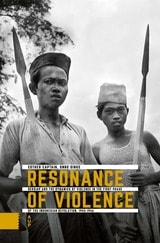
Resonance of Violence
Bersiap and the Dynamics of Violence in the First Phase of the Indonesian Revolution, 1945-1946Esther Captain
Amsterdam University Press, 2026
The authors expressly situate this terrifying period within the wider context of mutual Indonesian violence and the use of violence by the Japanese, British and Dutch against Indonesian citizens. Java, Sumatra, and other islands are discussed in the book, as well as the complex issue of the number of victims. Finally, they discuss the development of the term "bersiap" over the past 75 years, which grew into a key concept in the Netherlands to describe the earliest phase of the Indonesian War of Independence.
Resonant Violence
Affect, Memory, and Activism in Post-Genocide SocietiesKerry Whigham
Rutgers University Press, 2022
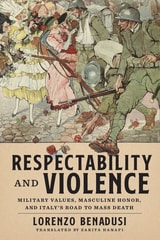
Respectability and Violence
Military Values, Masculine Honor, and Italy’s Road to Mass DeathLorenzo Benadusi
University of Wisconsin Press, 2021
In the aftermath of national unification in the 1860s, the Italian army was tasked with molding generations of men from warring regions and different social strata into obedient citizens of a centralized state. Integrating large numbers of the educated middle classes into the young kingdom’s armed forces proved decisive in establishing the army as the “main school” and backbone for mass nationalization. Lorenzo Benadusi examines the intersection of Italian military and civil society over the last century as they coalesced in the figure of the gentleman-officer—an idealized image of an altruistic, charming, and competent ruling class that could influence the choices, values, and behavior of the “new Italians.”
Respectability and Violence traces the relationship between civic virtues and military values from the post-Risorgimento period through the end of World War I, when the trauma of trench warfare made it necessary to again redefine ideas of chivalry and manliness and to accept violence as a necessary tool in defense of society and state. The language of conflict and attitudes about war forged in these decades—characterized by patriotism, heroism, and sacrifice—shaped the cultured bourgeoise into loyalists who ushered in Italy’s transition to a powerful Fascist political system. This unique study of the officer is crucial for understanding the military, social, and political history of Italy.

Revenant Ecologies
Defying the Violence of Extinction and ConservationAudra Mitchell
University of Minnesota Press, 2024
Engaging a broad spectrum of ecological thought to articulate the ethical scale of global extinction
As global rates of plant and animal extinctions mount, anxieties about the future of the earth’s ecosystems are fueling ever more ambitious efforts at conservation, which draw on Western scientific principles to manage species and biodiversity. In Revenant Ecologies, Audra Mitchell argues that these responses not only ignore but also magnify powerful forms of structural violence like colonialism, racism, genocide, extractivism, ableism, and heteronormativity, ultimately contributing to the destruction of unique life forms and ecosystems.
Critiquing the Western discourse of global extinction and biodiversity through the lens of diverse Indigenous philosophies and other marginalized knowledge systems, Revenant Ecologies promotes new ways of articulating the ethical enormity of global extinction. Mitchell offers an ambitious framework—(bio)plurality—that focuses on nurturing unique, irreplaceable worlds, relations, and ecosystems, aiming to transform global ecological–political relations, including through processes of land return and critically confronting discourses on “human extinction.”
Highlighting the deep violence that underpins ideas of “extinction,” “conservation,” and “biodiversity,” Revenant Ecologies fuses political ecology, global ethics, and violence studies to offer concrete, practical alternatives. It also foregrounds the ways that multi-life-form worlds are actively defying the forms of violence that drive extinction—and that shape global efforts to manage it.
Retail e-book files for this title are screen-reader friendly with images accompanied by short alt text and/or extended descriptions.
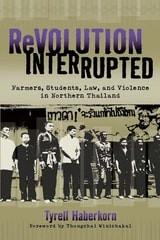
Revolution Interrupted
Farmers, Students, Law, and Violence in Northern ThailandTyrell Haberkorn; Foreword by Thongchai Winichakul
University of Wisconsin Press, 2011
In October 1973 a mass movement forced Thailand’s prime minister to step down and leave the country, ending nearly forty years of dictatorship. Three years later, in a brutal reassertion of authoritarian rule, Thai state and para-state forces quashed a demonstration at Thammasat University in Bangkok. In Revolution Interrupted, Tyrell Haberkorn focuses on this period when political activism briefly opened up the possibility for meaningful social change. Tenant farmers and their student allies fomented revolution, she shows, not by picking up guns but by invoking laws—laws that the Thai state ultimately proved unwilling to enforce.
In choosing the law as their tool to fight unjust tenancy practices, farmers and students departed from the tactics of their ancestors and from the insurgent methods of the Communist Party of Thailand. To first imagine and then create a more just future, they drew on their own lived experience and the writings of Thai Marxian radicals of an earlier generation, as well as New Left, socialist, and other progressive thinkers from around the world. Yet their efforts were quickly met with harassment, intimidation, and assassinations of farmer leaders. More than thirty years later, the assassins remain unnamed.
Drawing on hundreds of newspaper articles, cremation volumes, activist and state documents, and oral histories, Haberkorn reveals the ways in which the established order was undone and then reconsolidated. Examining this turbulent period through a new optic—interrupted revolution—she shows how the still unnameable violence continues to constrict political opportunity and to silence dissent in present-day Thailand.
Righteous Revolutionaries
Morality, Mobilization, and Violence in the Making of the Chinese StateJeffrey A. Javed
University of Michigan Press, 2022
Righteous Revolutionaries argues that the Chinese Party-state simultaneously removed perceived threats to its authority at the grassroots and bolstered its legitimacy through a process called moral mobilization. This mobilization process created a moral boundary that designated a virtuous ingroup of “the masses” and a demonized outgroup of “class enemies,” mobilized the masses to participate in violence against this broadly defined outgroup, and strengthened this symbolic boundary by making the masses complicit in state violence. Righteous Revolutionaries shows how we can find traces of moral mobilization in China today under Xi Jinping’s rule. In an era where states and politicians regularly weaponize moral emotions to foment intergroup conflict and violence, understanding the dynamics of violent mobilization and state authority are more relevant than ever before.