Results by title
67 books match the query 'War and society' and 3 start with r
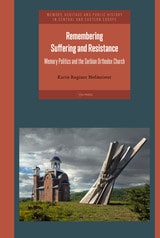
Remembering Suffering and Resistance
Memory Politics and the Serbian Orthodox ChurchKarin Roginer Hofmeister
Central European University Press, 2024
Assessing issues related to the Orthodox Church from an academic, secular point of view is a sensitive matter. However, by tracing and interpreting the engagement of the Serbian Church with the memory of Serbian heroic victimhood in World War II through a kind of “methodological agnosticism,” this volume has managed to tackle the subtle topic in a very delicate and value-neutral way. Arguing that the search for a collective memory is particularly urgent in the face of societal uncertainty and that religious institutions often use their memory potential to reaffirm their public relevance, the book examines the motivations, forms, strategies, and outcomes of a wide range of mnemonic activities the Serbian Orthodox Church engaged in following the upheavals caused by the collapse of Yugoslav socialism, the violent dissolution of the country, and the fall of the Milošević regime. These activities, taking place within the memory fields framed by the post-socialist, post-conflict, and post-secular horizons, took liturgical and non-liturgical forms, often involving a hybrid fusion of the two. As a result of this mnemonic endeavor, the author argues, the Church was successful in reasserting its power and legitimacy in the public sphere of post-2000 Serbia.
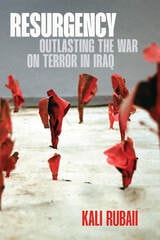
Resurgency
Outlasting the War on Terror in IraqKali Rubaii
Duke University Press, 2026
In Resurgency, Kali Rubaii offers detailed ethnographic insight into how decades of war have affected everyday life in Iraq. Drawing on fieldwork in Anbar province and Iraqi Kurdistan in 2014–15 and 2021–24, Rubaii foregrounds the practices of displaced people who stubbornly outlast their occupiers, returning to homes that feel estranging, repairing war-damaged land, and surviving into futures to which they have been disinvited. Following Anbari farmers in their struggle to counter the social and environmental fallout from toxic military waste, depleted ecosystems, and transformed political economies, Resurgency expands the temporal and descriptive categories of what war is—and what resistance looks like. By asking what actions and dispositions make sense when conditions of survival are diminished, and when today may be better than tomorrow, Rubaii offers new methods and insights to those concerned about the possibilities of life amid environmental devastation, mass displacement, and the slow violence of the forever wars.
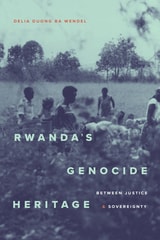
Rwanda's Genocide Heritage
Between Justice and SovereigntyDelia Duong Ba Wendel
Duke University Press, 2025