Results by title
130 books match the query 'Women's rights' and 4 start with r
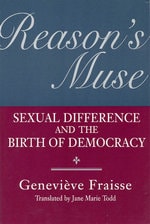
Reason's Muse
Sexual Difference and the Birth of DemocracyGeneviève Fraisse
University of Chicago Press, 1994
Through an analysis of literary, religious, legal, philosophical, and medical texts, Fraisse links a range of positions on women's proper role in society to specific historical and rhetorical circumstances. She shows how the Revolution marked a sharp break in the way women were represented in language, as traditional bantering about the "war of the sexes" gave way to serious discussions of the political and social meanings of sexual difference. Following this discussion on three different planes—the economical, the political, and the biological—Fraisse looks at the exclusion of women against the backdrop of democracy's inevitable lie: the affirmation of an equality so abstract it was impossible to concretely apply.
This study of the place of sexual equality in the founding moment of democracy offers insight into a persistent question: whether female emancipation is to be found through the achievement of equality with men or in the celebration of female difference.

Reign of Virtue
Mobilizing Gender in Vichy FranceMiranda Pollard
University of Chicago Press, 1998
Drawing on governmental archives, historical texts, and propaganda, Pollard explores what most historians have ignored: the many ways in which Vichy's politicians used gendered images of work, family, and sexuality to restore and maintain political and social order. She argues that Vichy wanted to return France to an illustrious and largely mythical past of harmony, where citizens all knew their places and fulfilled their responsibilities, where order prevailed. The National Revolution, according to Pollard, replaced the ideals of liberty, equality, and fraternity with work, family, and fatherland, making the acceptance of traditional masculine and feminine roles a key priority. Pollard shows how Vichy's policies promoted the family as the most important social unit of a new France and elevated married mothers to a new social status even as their educational, employment, and reproductive rights were strictly curtailed.
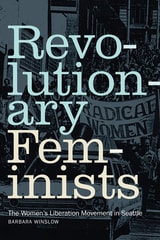
Revolutionary Feminists
The Women's Liberation Movement in SeattleBarbara Winslow
Duke University Press, 2023
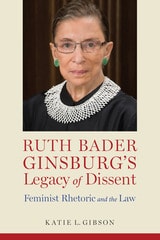
Ruth Bader Ginsburg’s Legacy of Dissent
Feminist Rhetoric and the LawKatie L. Gibson
University of Alabama Press, 2018
A rhetorical analysis of Justice Ruth Bader Ginsburg’s feminist jurisprudence.
Ruth Bader Ginsburg’s lifelong effort to reshape the language of American law has had profound consequences: she has shifted the rhetorical boundaries of jurisprudence on a wide range of fundamental issues from equal protection to reproductive rights. Beginning in the early 1970s, Ginsburg led a consequential attack on sexist law in the United States. By directly confronting the patriarchal voice of the law, she pointedly challenged an entrenched genre of legal language that silenced the voices and experiences of American women and undermined their status as equal citizens. On the United States Supreme Court, Justice Ginsburg continues to challenge the traditional scripts of legal discourse to insist on a progressive vision of the Constitution and to demand a more inclusive and democratic body of law.
This illuminating work examines Justice Ruth Bader Ginsburg’s contributions in reshaping the rhetoric of the law (specifically through the lens of watershed cases in women’s rights) and describes her rhetorical contributions—beginning with her work in the 1970s as a lawyer and an advocate for the ACLU’s Women’s Rights Project through her tenure as a Supreme Court justice. Katie L. Gibson examines Ginsburg’s rhetoric to argue that she has dramatically shifted the boundaries of legal language. Gibson draws from rhetorical theory, critical legal theory, and feminist theory to describe the law as a rhetorical genre, arguing that Ginsburg’s jurisprudence can appropriately be understood as a direct challenge to the traditional rhetoric of the law.
Ruth Bader Ginsburg stands as an incredibly important figure in late twentieth- and early twenty-first-century feminism. While a growing number of admirers celebrate Justice Ginsburg’s voice of dissent today, Ginsburg’s rhetorical legacy reveals that she has long articulated a sharp and strategic voice of judicial dissent. This study contributes to a more complete understanding of her feminist legacy by detailing the unique contributions of her legal rhetoric.