272 books match the query 'Work' and 8 start with r
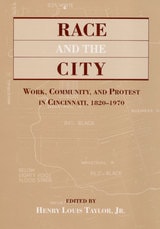
cover of RACE & THE CITY: Work, Community, and Protest in Cincinnati, 1820-1970

RACE & THE CITY

Work, Community, and Protest in Cincinnati, 1820-1970

Edited by Henry Louis Taylor, Jr.

University of Illinois Press, 1993

"Provides a rich prism through which to explore the social, economic, and political development
of black Cincinnati. These studies offer insight into both the dynamics of racism and a
community's changing responses to it." -- Peter Rachleff, author of Black Labor in
Richmond
 
[more]
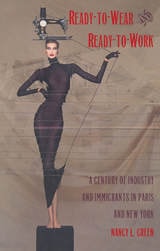
cover of Ready-to-Wear and Ready-to-Work: A Century of Industry and Immigrants in Paris and New York

Ready-to-Wear and Ready-to-Work

A Century of Industry and Immigrants in Paris and New York

Nancy L. Green

Duke University Press, 1997

Nancy L. Green offers a critical and lively look at New York’s Seventh Avenue and the Parisian Sentier in this first comparative study of the two historical centers of the women’s garment industry. Torn between mass production and "art," this industry is one of the few manufacturing sectors left in the service-centered cities of today. Ready-to-Wear and Ready-to-Work tells the story of urban growth, the politics of labor, and the relationships among the many immigrant groups who have come to work the sewing machines over the last century.

Green focuses on issues of fashion and fabrication as they involve both the production and consumption of clothing. Traditionally, much of the urban garment industry has been organized around small workshops and flexible homework, and Green emphasizes the effect this labor organization had on the men and mostly women who have sewn the garments. Whether considering the immigrant Jews, Italians, Puerto Ricans, Dominicans, and Chinese in New York or the Chinese-Cambodians, Turks, Armenians, and Russian, Polish, and Tunisian Jews in Paris, she outlines similarities of social experience in the shops and the unions, while allowing the voices of the workers, in all their diversity to be heard.

A provocative examination of gender and ethnicity, historical conflict and consensus, and notions of class and cultural difference, Ready-to-Wear and Ready-to-Work breaks new ground in the methodology of comparative history.
[more]
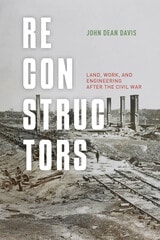
cover of Reconstructors: Land, Work, and Engineering After the Civil War

Reconstructors

Land, Work, and Engineering After the Civil War

John Dean Davis

University of Chicago Press, 2026

Explores the institutional and environmental transformations that occurred during the Reconstruction Era. 

While the Reconstruction Era in America saw a paradigmatic realignment of the country’s core institutions and values, there was a physical quality to Reconstruction as well: the country was not only rebuilding the South after the Civil War, but flat-out building as it expanded westward. 

In Reconstructors, John Dean Davis details how the Army Corps of Engineers and its subcontractors designed and redesigned the infrastructural landscape to support the republic’s rebirth. The Corps’ projects not only transformed the landscape; they created markets, fostered a distinctive expansionist culture, and—for a time—enacted a less discriminatory economic and social agenda across the South and West. Davis aims to bring federal power, environmentalism, and capitalism into a frame that reveals the landscape's power to further ideology. 
[more]
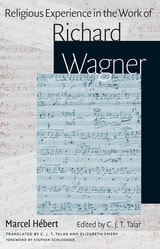
cover of Religious Experience in the Work of Richard Wagner

Religious Experience in the Work of Richard Wagner

Marcel Hebert

Catholic University of America Press, 2015
Philosopher Marcel Hébert developed his Religious Experience in the Work of Richard Wagner (1895) from this background of sustained popular interest in Wagner, an interest that had intensified with the return of his operas to the Paris stage. Newspaper debates about the impact of Wagner's ideas on French society often stressed the links between Wagner and religion. These debates inspired works like Hébert's, intended to explain the complex myth and allegory in Wagner's work and to elucidate it for a new generation of French spectators.
[more]
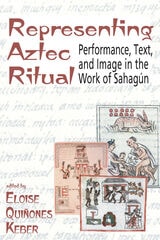
cover of Representing Aztec Ritual: Performance, Text, and Image in the Work of Sahagun

Representing Aztec Ritual

Performance, Text, and Image in the Work of Sahagun

Eloise Quiñones Keber

University Press of Colorado, 2020

Arriving in Mexico less than a decade after the Spanish conquest of 1521, the Franciscan missionary Bernardino de Sahagún not only labored to supplant native religion with Christianity, he also gathered voluminous information on virtually every aspect of Aztec (Nahua) life in contact-period Mexico. His pioneering ethnographic work relied on interviews with Nahua elders and the assistance of a younger generation of bicultural, missionary-trained Nahuas. Sahagún's remarkably detailed descriptions of Aztec ceremonial life offer the most extensive account of a non-Western ritual system recorded before modern times.

Representing Aztec Ritual: Performance, Text, and Image in the Work of Sahagún uses Sahagún's corpus as a starting point to focus on ritual performance, a key element in the functioning of the Aztec world. With topics ranging from the ritual use of sand and paper to the sacrifice of women, contributors explore how Aztec rites were represented in the images and texts of documents compiled under colonial rule and the implications of this European filter for our understanding of these ceremonies. Incorporating diverse disciplinary perspectives, contributors include Davíd Carrasco, Philip P. Arnold, Kay Read, H. B. Nicholson, Eduardo Matos Moctezuma, Guilhem Olivier, Doris Heyden, and Eloise Quiñones Keber.
[more]
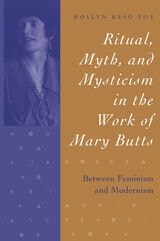
cover of Ritual, Myth, and Mysticism in the Work of Mary Butts: Between Feminism and Modernism

Ritual, Myth, and Mysticism in the Work of Mary Butts

Between Feminism and Modernism

FOY ROSLYN

University of Arkansas Press, 2000
Mary Butts wrote and lived among notable modernist writers such as T.S. Eliot, Ford Madox Ford, Jean Cocteau, H.D., and Ezra Pound, and was on her way to becoming one of the most respected British female writers of the twentieth century. Yet, after her death in 1937 at the age of forty-six, her reputation suffered a decline. Butt's idiosyncratic spirituality did not lend itself to easy critical examination, modernism was generally considered a masculine endeavor, and her papers were not made public for over fifty years. The recent acquisition of those papers by the Beinecke Library at Yale University, however, has brought about a resurgence of interest in her unique writings. Mary Butts confronts and reinterprets reality in extraordinary ways, and her modernist vision recalls the natural origins and powers of the female divine. Her intense dedication to ancient rites and myth, and her dabbling in the occult, became embedded in her fiction and led to her own brand of mysticism. Indeed, the Butts heroine is at once, healer, sacred priestess, earth goddess, lover, and daimon/demon. In presenting her characters this way, Butts valorizes what she calls "the soul living at its fullest capacity." Roslyn Reso Foy gives us the first sustained critical study of Butts, exploring the signficance of feminism, mysticism, and magic in her life and writings. Foy's thoughtful analysis, combining scholarship with straightforward discussion, will serve as an introduction to, and foundation for, further critical studies of this remarkable female modernist whose work coincides with contemporary concerns and who can no longer be ignored.
[more]
cover of Robert Lowell's Life and Work: Damaged Grandeur

Robert Lowell's Life and Work

Damaged Grandeur

Richard Tillinghast, Editor

University of Michigan Press, 1995
Robert Lowell was regarded by many as the greatest American poet of his generation. "Somehow or other...in the middle of our worst century so far," his contemporary and friend Elizabeth Bishop wrote, "we have produced a magnificent poet." The scion of a distinguished New England family, Lowell crafted his poetry to comment on the nation's fate and even to influence the course of American politics. Along with Anne Sexton, John Berryman, and Sylvia Plath, he was a pioneer in the movement later known as Confessional Poetry, and his political gestures were often timely and controversial: his refusal of President Johnson's invitation to the White House came to symbolize the opposition of writers and intellectuals to the Vietnam War. Since Lowell's death in 1977, his reputation has suffered a decline; yet arguably no poet living today writes with the same authority, the same sense of grandeur.
Robert Lowell's Life and Work: Damaged Grandeur is a critical memoir by acclaimed poet Richard Tillinghast, a friend and student of Lowell's in the 1960s. Tillinghast shows how Lowell's gift for the grand gesture was tragically intertwined with the manic-depressive illness that afflicted him throughout his adult life- hence the "damaged grandeur" of the title. This book offers a radical re- examination of Lowell's poetic career and argues for the restoration of this complex and troubled poet to a pre-eminent position in American letters.
 
Richard Tillinghast's books of poetry include Our Flag was Still There, Sewanee in Ruins, The Knife and Other Poems, and Sleep Watch. He writes regularly for The New York Times, Atlantic Monthly, and The New Republic. He is Professor Emeritus of English, University of Michigan, and is the recipient of a fellowship from the John Simon Guggenheim Foundation.
[more]
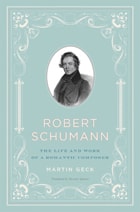
cover of Robert Schumann: The Life and Work of a Romantic Composer

Robert Schumann

The Life and Work of a Romantic Composer

Martin Geck

University of Chicago Press, 2012

Robert Schumann (1810–56) is one of the most important and representative composers of the Romantic era. Born in Zwickau, Germany, Schumann began piano instruction at age seven and immediately developed a passion for music. When a permanent injury to his hand prevented him from pursuing a career as a touring concert pianist, he turned his energies and talents to composing, writing hundreds of works for piano and voice, as well as four symphonies and an opera. Here acclaimed biographer Martin Geck tells the fascinating story of this multifaceted genius, set in the context of the political and social revolutions of his time.
 
The image of Schumann the man and the artist that emerges in Geck’s book is complex. Geck shows Schumann to be not only a major composer and music critic—he cofounded and wrote articles for the controversial Neue Zeitschrift für Musik­­—but also a political activist, the father of eight children, and an addict of mind-altering drugs. Through hard work and determination bordering on the obsessive, Schumann was able to control his demons and channel the tensions that seethed within him into music that mixes the popular and esoteric, resulting in compositions that require the creative engagement of reader and listener.
 
The more we know about a composer, the more we hear his personality in his music, even if it is above all on the strength of his work that we love and admire him. Martin Geck’s book on Schumann is not just another rehashing of Schumann’s life and works, but an intelligent, personal interpretation of the composer as a musical, literary, and cultural personality.
[more]