Results by title
476 books match the query 'World War, 1939-1945' and 16 start with r
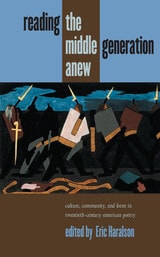
Reading the Middle Generation Anew
Culture, Community, and Form in Twentieth-Century American PoetryEric Haralson
University of Iowa Press, 2006
In addition to having worked during the broad middle of the last century, these poets constitute the center of twentieth-century American poetry in the larger sense, refuting invidious connotations of “middle” as coming after the great moderns and being superseded by a proliferating postmodern experimentation. This middle generation mediates the so-called American century and its prodigious body of poetry, even as it complicates historical and aesthetic categorizations.
Taking diverse formal and thematic angles on these poets—deconstructionist, biographical-historical, and more formalist accounts—this book re-examines their between-ness and ambivalence: their various positionings and repositionings in aesthetic, political, and personal matters. The essays study the interplay between these writers and such shifting formations as religious discourse, consumerism, militarism and war, the ideology of America as “nature’s nation,” and U.S. race relations and ethnic conflicts. Reading the Middle Generation Anew also shows the legacy of the middle generation, the ways in which their lives and writings continue to be a shaping force in American poetry. This fresh and invigorating collection will be of great interest to literary scholars and poets.
Reconstruction Fiction
Housing and Realist Literature in Postwar BritainPaula Derdiger
The Ohio State University Press, 2020
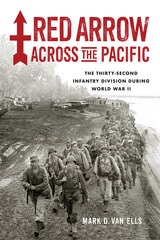
Red Arrow across the Pacific
The Thirty-Second Infantry Division during World War IIMark D. Van Ells
Wisconsin Historical Society Press, 2024
Red Arrow across the Pacific reveals the long-overdue story of the renowned Thirty-Second "Red Arrow" Infantry Division. Discover how this National Guard unit—which originated in Wisconsin and Michigan but soon evolved to include soldiers from California to New England—became one of the first US military units deployed overseas in World War II, eventually logging more combat hours than any other US Army division.
Far more than a traditional battle narrative, Red Arrow across the Pacific offers a cultural history of the Red Arrow's wartime experience, from its mobilization in 1940, to its deployment across New Guinea, Australia, and the Philippines, to its postwar occupation of Japan. Drawing from letters, memoirs, and interviews, author Mark D. Van Ells lets the soldiers speak for themselves, describing in their own words the terror of combat, their impressions of foreign lands, the struggle to maintain their own humanity, and the many ways the war profoundly changed them.
Nuanced and remarkably thorough, this book explores the dramatic evolution of the Thirty-Second Infantry Division and reveals how the story of the Red Arrow reflects the experience of the US military during World War II.
“Exceptionally well researched and engagingly written. This book is a must read for any student of military history.”
—Capt. Florian L. Waitl, Command Historian, Wisconsin Army National Guard
“A superb divisional history. . . . Highly recommended for a general audience, as well as readers interested in the Second World War.”
—Mary Louise Roberts, Lucie Aubrac Distinguished Professor Emerita of History, University of Wisconsin–Madison, and author of Sheer Misery: Soldiers in Battle in WWII
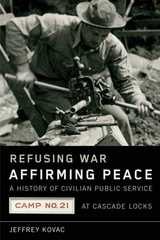
Refusing War, Affirming Peace
The History of Civilian Public Service Camp #21 at Cascade LocksJeffrey Kovac
Oregon State University Press, 2009
Reign of Virtue
Mobilizing Gender in Vichy FranceMiranda Pollard
University of Chicago Press, 1998
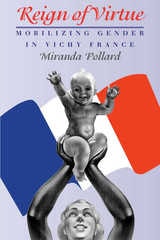
Drawing on governmental archives, historical texts, and propaganda, Pollard explores what most historians have ignored: the many ways in which Vichy's politicians used gendered images of work, family, and sexuality to restore and maintain political and social order. She argues that Vichy wanted to return France to an illustrious and largely mythical past of harmony, where citizens all knew their places and fulfilled their responsibilities, where order prevailed. The National Revolution, according to Pollard, replaced the ideals of liberty, equality, and fraternity with work, family, and fatherland, making the acceptance of traditional masculine and feminine roles a key priority. Pollard shows how Vichy's policies promoted the family as the most important social unit of a new France and elevated married mothers to a new social status even as their educational, employment, and reproductive rights were strictly curtailed.
Remaking Chinese America
Immigration, Family, and Community, 1940-1965Zhao, Xiaojian
Rutgers University Press, 2001
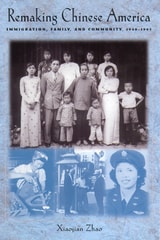
In Remaking Chinese America, Xiaojian Zhao explores the myriad forces that changed and unified Chinese Americans during a key period in American history. Prior to 1940, this immigrant community was predominantly male, but between 1940 and 1965 it was transformed into a family-centered American ethnic community. Zhao pays special attention to forces both inside and outside of the country in order to explain these changing demographics. She scrutinizes the repealed exclusion laws and the immigration laws enacted after 1940. Careful attention is also paid to evolving gender roles, since women constituted the majority of newcomers, significantly changing the sex ratio of the Chinese American population.
As members of a minority sharing a common cultural heritage as well as pressures from the larger society, Chinese Americans networked and struggled to gain equal rights during the cold war period. In defining the political circumstances that brought the Chinese together as a cohesive political body, Zhao also delves into the complexities they faced when questioning their personal national allegiances. Remaking Chinese America uses a wealth of primary sources, including oral histories, newspapers, genealogical documents, and immigration files to illuminate what it was like to be Chinese living in the United States during a period that—until now—has been little studied.
Remembering Suffering and Resistance
Memory Politics and the Serbian Orthodox ChurchKarin Roginer Hofmeister
Central European University Press, 2024
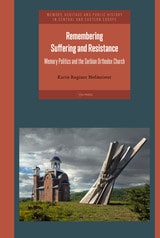
Assessing issues related to the Orthodox Church from an academic, secular point of view is a sensitive matter. However, by tracing and interpreting the engagement of the Serbian Church with the memory of Serbian heroic victimhood in World War II through a kind of “methodological agnosticism,” this volume has managed to tackle the subtle topic in a very delicate and value-neutral way. Arguing that the search for a collective memory is particularly urgent in the face of societal uncertainty and that religious institutions often use their memory potential to reaffirm their public relevance, the book examines the motivations, forms, strategies, and outcomes of a wide range of mnemonic activities the Serbian Orthodox Church engaged in following the upheavals caused by the collapse of Yugoslav socialism, the violent dissolution of the country, and the fall of the Milošević regime. These activities, taking place within the memory fields framed by the post-socialist, post-conflict, and post-secular horizons, took liturgical and non-liturgical forms, often involving a hybrid fusion of the two. As a result of this mnemonic endeavor, the author argues, the Church was successful in reasserting its power and legitimacy in the public sphere of post-2000 Serbia.
Remembering to Forget
Holocaust Memory through the Camera's EyeBarbie Zelizer
University of Chicago Press, 1998
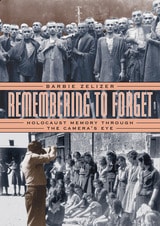
"[A] fascinating study. . . . Here we have a completely fresh look at the emergence of photography as a major component of journalistic reporting in the course of the liberation of the camps by the Western Allies. . . . Well written and argued, superbly produced with more photographs of atrocity than most people would want to see in a lifetime, this is clearly an important book."—Omer Bartov, Times Literary Supplement
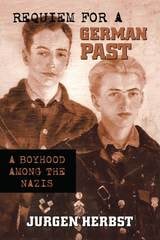
Requiem for a German Past
A Boyhood among the NazisJurgen Herbst
University of Wisconsin Press, 2002
Jurgen Herbst’s account of growing up in Nazi Germany from 1928 to 1948 is a boy’s experience of anti-Semitism and militarism from the inside. Herbst was a middle-class boy in a Lutheran family that saw value in Prussian military ideals and a mythic German past. His memoir is a compelling, understated tale of moral awakening.
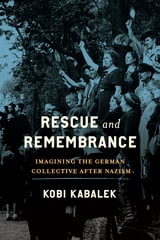
Rescue and Remembrance
Imagining the German Collective after NazismKobi Kabalek
University of Wisconsin Press, 2025
Kabalek argues that such simplistic depictions of the majority versus minority obscure the complex motivations and situations that led people in Nazi Germany to help persecuted Jews. Against the view that the rescuers were “forgotten” after the war, he shows that portrayals and interpretations of helping Jews appeared in various media and social discourses in East, West, and unified Germany and were used to actively debate questions of collective morality. Rescue and Remembrance analyzes the varied and changing depictions of rescue in the distinct German politics from the Nazi period, examining how the very notions of “majority” and “collective” were articulated and reformulated.
Rescuing the Children
A Holocaust MemoirVivette Samuel; Translated and with an introduction by Charles B. Paul; With a foreword by Elie Wiesel
University of Wisconsin Press, 2002
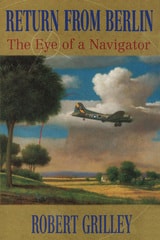
Return from Berlin
The Eye of a NavigatorRobert Grilley
University of Wisconsin Press, 2003
Wakened with flashlights on their faces in the predawn hours, he and his crew repeatedly face the Luftwaffe in battles five miles high, flying through flak "so thick you could get out and walk on it." Stretching their stamina to the limits, they succeed time after time in their missions to bomb munitions works, railyards, the Leüna synthetic oil plant at Merseburg in eastern Germany, the V2 rocket research center at Peenemünde on the distant Baltic Coast, and even to strike Hitler’s capital city, Berlin.
But Grilley finds interludes of unexpected grace and restoration on his days off, making serious drawings from nature at the neighboring Yokehill Farm. There he slowly cultivates a friendship with a curious eight-year-old, the lively child Elizabeth, who becomes for the combat flyer a symbol of survival.
Returning from Silence
Jenny’s StoryMichèle Sarde
Swan Isle Press, 2022
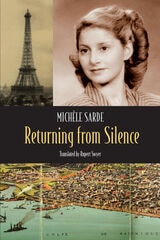
Born in Brittany on the threshold of World War II, novelist Michèle Sarde had long been silent about her origins. After her mother, Jenny, finally shared their family history, Sarde decided to reconstruct Jenny’s journey, including her exile from Salonica, move to Paris in 1921, and assimilation in France. The Nazi occupation then forced her and her family to hide and conceal their Jewish identity, and in this retelling, Sarde shows how Jenny fights with everything she has to survive the Holocaust and protect her daughter.
Returning from Silence is a powerful saga that reaches deep into Jewish history, opening with the Expulsion of the Jews from Spain in 1492 and their settlement in a more tolerant Ottoman Empire. Sephardi culture and language flourished in Salonica for four centuries, but with the fall of the Ottoman Empire in the 1920s, and the sense of troubling times to come, Jenny’s family felt impelled to leave their much-loved city and rebuild their lives in France. Their years in France led to change that none could have fully expected, and then, the Holocaust. The trauma lasts well into the post-war period, silencing both mother and daughter in unanticipated ways.
Through this family history, Sarde sensitively raises questions about identity, migration, and assimilation while weaving fiction together with history, research, and testimony to bring the characters’ stories to life.
Richard Bong
World War II Flying AcePete Barnes
Wisconsin Historical Society Press, 2009
Riveting and Rationing in Dixie
Alabama Women and the Second World WarMary Martha Thomas
University of Alabama Press, 1987
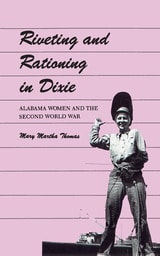
Covers the experience of both black and white Alabama women as defense workers, volunteers, and homemakers. The most important change for women during the war years was their employment in jobs normally held by men, which posed an implicit challenge to traditional notions about femininity and female limitations.
Thomas describes the women employed in the defense industries—how they were recruited and trained, where they worked and under what conditions, and what changes employers made in the workplace to accommodate women, She also discusses the experience of the women who served as volunteers in the Ground Observer Corps, the Citizens’ Service Corps, the Red Cross, and other volunteer agencies. In addition, the author considers how homemakers coped during a time of rationing, housing shortages, lack of schools, and inadequate medical facilities.
Rommel
The End of a LegendRalf Georg Reuth
Haus Publishing, 2019