Results by title
22279 books match the query 'Social Science' and 1072 start with r
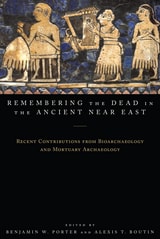
Remembering the Dead in the Ancient Near East
Recent Contributions from Bioarchaeology and Mortuary ArchaeologyBenjamin W. Porter
University Press of Colorado, 2016
Remembering the Dead in the Ancient Near East is among the first comprehensive treatments to present the diverse ways in which ancient Near Eastern civilizations memorialized and honored their dead, using mortuary rituals, human skeletal remains, and embodied identities as a window into the memory work of past societies.
In six case studies teams of researchers with different skillsets—osteological analysis, faunal analysis, culture history and the analysis of written texts, and artifact analysis—integrate mortuary analysis with bioarchaeological techniques. Drawing upon different kinds of data, including human remains, ceramics, jewelry, spatial analysis, and faunal remains found in burial sites from across the region’s societies, the authors paint a robust and complex picture of death in the ancient Near East.
Demonstrating the still underexplored potential of bioarchaeological analysis in ancient societies, Remembering the Dead in the Ancient Near East serves as a model for using multiple lines of evidence to reconstruct commemoration practices. It will be of great interest to students and scholars of ancient Near Eastern and Egyptian societies, the archaeology of death and burial, bioarchaeology, and human skeletal biology.
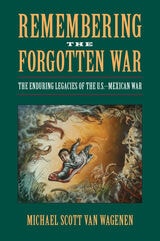
Remembering the Forgotten War
The Enduring Legacies of the U.S.-Mexican WarMichael Scott Van Wagenen
University of Massachusetts Press, 2012
On February 2, 1848, representatives of the United States and Mexico signed the Treaty of Guadalupe Hidalgo, officially ending hostilities between the two countries and ceding over one-half million square miles of land to the northern victors. In Mexico, this defeat has gradually moved from the periphery of dishonor to the forefront of national consciousness. In the United States, the war has taken an opposite trajectory, falling from its once-celebrated prominence into the shadowy margins of forgetfulness and denial.
Why is the U.S.–Mexican War so clearly etched in the minds of Mexicans and so easily overlooked by Americans? This book investigates that issue through a transnational, comparative analysis of how the tools of collective memory—books, popular culture, historic sites, heritage groups, commemorations, and museums—have shaped the war's multifaceted meaning in the 160 years since it ended. Michael Van Wagenen explores how regional, ethnic, and religious differences influence Americans and Mexicans in their choices of what to remember and what to forget. He further documents what happens when competing memories clash in a quest for dominance and control.
In the end, Remembering the Forgotten War addresses the deeper question of how remembrance of the U.S.–Mexican War has influenced the complex relationship between these former enemies now turned friends. It thus provides a new lens through which to view today's cross-border rivalries, resentments, and diplomatic pitfalls.
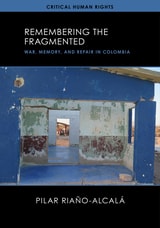
Remembering the Fragmented
War, Memory, and Repair in ColombiaPilar Riaño-Alcalá
University of Wisconsin Press, 2027
The South American nation of Colombia has experienced decades of violence involving state, guerrilla, and paramilitary actors, resulting in profound and enduring consequences. Scholars have examined both the violent events and the subsequent truth and reconciliation initiatives addressing this complex history. Pilar Riaño-Alcalá introduces a novel perspective by integrating Black, Indigenous, and memory studies in her analysis of two significant sites of mass violence: Bahia Portete, a Wayuu Indigenous territory in Upper Guajira, and Bojayá, a Black and Embera Indigenous territory in Chocó. By recognizing nonhuman and nonliving community members as actants and foregrounding Indigenous and Black ontologies in collective remembrance, Riaño-Alcalá reveals the processes through which these communities engage in social repair. She demonstrates how they interpret, restore, sustain, and reimagine their identities amid ongoing challenges posed by war and racial capitalism. This work advances scholarship in human rights studies, memory studies, Indigenous studies, Latin American studies, and the anthropology of social repair, offering significant new insights into a well-examined historical context.
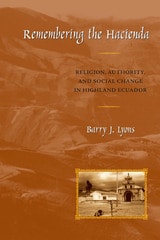
Remembering the Hacienda
Religion, Authority, and Social Change in Highland EcuadorBy Barry J. Lyons
University of Texas Press, 2006
From the colonial period through the mid-twentieth century, haciendas dominated the Latin American countryside. In the Ecuadorian Andes, Runa—Quichua-speaking indigenous people—worked on these large agrarian estates as virtual serfs. In Remembering the Hacienda: Religion, Authority, and Social Change in Highland Ecuador, Barry Lyons probes the workings of power on haciendas and explores the hacienda's contemporary legacy.
Lyons lived for three years in a Runa village and conducted in-depth interviews with elderly former hacienda laborers. He combines their wrenching accounts with archival evidence to paint an astonishing portrait of daily life on haciendas. Lyons also develops an innovative analysis of hacienda discipline and authority relations. Remembering the Hacienda explains the role of religion as well as the reshaping of Runa culture and identity under the impact of land reform and liberation theology.
This beautifully written book is a major contribution to the understanding of social control and domination. It will be valuable reading for a broad audience in anthropology, history, Latin American studies, and religious studies.
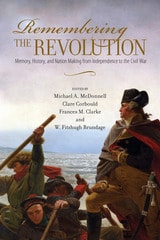
Remembering the Revolution
Memory, History, and Nation Making from Independence to the Civil WarMichael A. McDonnell
University of Massachusetts Press, 2013
In today's United States, the legacy of the American Revolution looms large. From presidential speeches to bestselling biographies, from conservative politics to school pageants, everybody knows something about the Revolution. Yet what was a messy, protracted, divisive, and destructive war has calcified into a glorified founding moment of the American nation. Disparate events with equally diverse participants have been reduced to a few key scenes and characters, presided over by well-meaning and wise old men.
Recollections of the Revolution did not always take today's form. In this lively collection of essays, historians and literary scholars consider how the first three generations of American citizens interpreted their nation's origins. The volume introduces readers to a host of individuals and groups both well known and obscure, from Molly Pitcher and “forgotten father” John Dickinson to African American Baptists in Georgia and antebellum pacifists. They show how the memory of the Revolution became politicized early in the nation's history, as different interests sought to harness its meaning for their own ends. No single faction succeeded, and at the outbreak of the Civil War the American people remained divided over how to remember the Revolution.
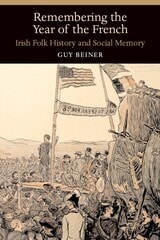
Remembering the Year of the French
Irish Folk History and Social MemoryGuy Beiner
University of Wisconsin Press, 2007
Beiner analyzes hundreds of hitherto unstudied historical, literary, and ethnographic sources. Though his focus is on 1798, his work is also a comprehensive study of Irish folk history and grass-roots social memory in Ireland. Investigating how communities in the West of Ireland remembered, well into the mid-twentieth century, an episode in the late eighteenth century, this is a “history from below” that gives serious attention to the perspectives of those who have been previously ignored or discounted. Beiner brilliantly captures the stories, ceremonies, and other popular traditions through which local communities narrated, remembered, and commemorated the past. Demonstrating the unique value of folklore as a historical source, Remembering the Year of the French offers a fresh perspective on collective memory and modern Irish history.
Winner, Wayland Hand Competition for outstanding publication in folklore and history, American Folklore Society
Finalist, award for the best book published about or growing out of public history, National Council on Public History
Winner, Michaelis-Jena Ratcliff Prize for the best study of folklore or folk life in Great Britain and Ireland
“An important and beautifully produced work. Guy Beiner here shows himself to be a historian of unusual talent.”—Marianne Elliott, Times Literary Supplement
“Thoroughly researched and scholarly. . . . Beiner’s work is full of empathy and sympathy for the human remains, memorials, and commemorations of past lives and the multiple ways in which they actually continue to live.”—Stiofán Ó Cadhla, Journal of British Studies
“A major contribution to Irish historiography.”—Maureen Murphy, Irish Literary Supplement
"A remarkable piece of scholarship . . . . Accessible, full of intriguing detail, and eminently teachable.”?—Ray Casman, New Hibernia Review
“The most important monograph on Irish history of the nineteenth and twentieth centuries to be published in recent years.”—Matthew Kelly, English Historical Review
“A strikingly ambitious work . . . . Elegantly constructed, lucidly written and inspired, and displaying an inexhaustible capacity for research”—Ciarán Brady, History IRELAND
“A closely argued, meticulously detailed and rich analysis . . . . providing such innovative treatment of a wide array of sources, his work will resonate with the concerns of many cultural and historical geographers working on social memory in quite different geographical settings and historical contexts.”—Yvonne Whelan, Journal of Historical Geography
Remembering to Live
Illness at the Intersection of Anxiety and Knowledge in Rural IndonesiaM. Cameron Hay
University of Michigan Press, 2004
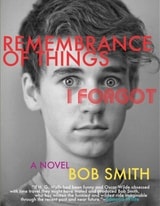
Remembrance of Things I Forgot
A NovelBob Smith
University of Wisconsin Press, 2011
“It’s safe to say your relationship is in trouble if the only way you can imagine solving your problems is by borrowing a time machine.”
In this wickedly comic, cross-country, time-bending journey, John confronts his own—and the nation’s—blunders, learning that a second chance at changing things for the better also brings new opportunities to screw them up. Through edgy humor, time travel, and droll one-liners, Bob Smith examines family dysfunction, suicide, New York City, and recent American history while effortlessly blending domestic comedy with science fiction. Part acidic political satire, part wild comedy, and part poignant social scrutiny, Remembrance of Things I Forgot is an uproarious adventure filled with sharp observations about our recent past.
InSight Out Book Club, featured selection
Bob Smith named one of Instinct magazine’s Leading Men 2011
Winner, Barbara Gittings Literature Award/Stonewall Book Awards, American Library Association
Finalist, Over the Rainbow Selection, American Library Association
Finalist, Green Carnation Prize, international prize for LGBT Literature
Amazon Top Ten Gay & Lesbian Books of 2011
Best Books for General Audiences, selected by the American Association of School Librarians
Best Books for General Audiences, selected by the Public Library Reviewers
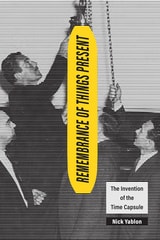
Remembrance of Things Present
The Invention of the Time CapsuleNick Yablon
University of Chicago Press, 2019
By offering a direct line to posterity, time capsules stimulated various hopes for the future. Remembrance of Things Present delves into these treasure chests to unearth those forgotten futures.
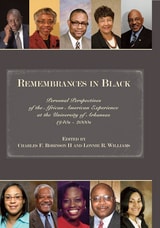
Remembrances in Black
Personal Perspectives of the African American Experience at the University of Arkansas, 1940s–2000sCharles F. Robinson II
University of Arkansas Press, 2015
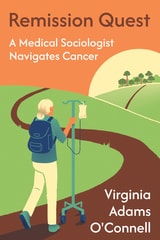
Remission Quest
A Medical Sociologist Navigates CancerVirginia Adams O’Connell
Temple University Press, 2025
In the course of diagnosis, treatment, and recovery, Adams O’Connell lived through theories she had researched and applied her sociological ideas to help make sense of her personal experiences. Remission Quest chronicles how the reality of living with cancer changed her perspective on what she had studied. Adams O’Connell found her knowledge illustrated and enriched her sociological analysis of our medical institutions and that her own illness narrative shone new light on her theories.
With moving prose, Remission Quest captures the emotions of having cancer and dealing with elaborate medical systems, learning how to be a “good patient” while also managing indescribable fear and fatigue, and confronting questions about the meaning of life. Adams O’Connell’s experiences are both personal and universal. They provide inspiration, compassion, and understanding.
Remittance as Belonging
Global Migration, Transnationalism, and the Quest for HomeHasan Mahmud
Rutgers University Press, 2025
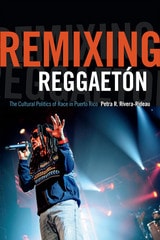
Remixing Reggaetón
The Cultural Politics of Race in Puerto RicoPetra R. Rivera-Rideau
Duke University Press, 2015
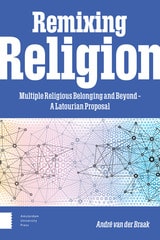
Remixing Religion
Multiple Religious Belonging and Beyond – A Latourian ProposalAndré van der Braak
Amsterdam University Press, 2026

Remixing Wong Kar-wai
Music, Bricolage, and the Aesthetics of OblivionGiorgio Biancorosso
Duke University Press, 2025
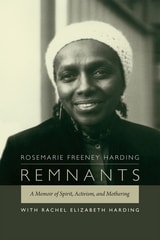
Remnants
A Memoir of Spirit, Activism, and MotheringRosemarie Freeney Harding with Rachel Elizabeth Harding
Duke University Press, 2015
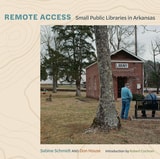
Remote Access
Small Public Libraries in ArkansasSabine Schmidt
University of Arkansas Press, 2021
Winner, 2024 Arkansiana Book Award, Arkansas Library Association
With their cameras and notebooks in hand, photographers Sabine Schmidt and Don House embarked on an ambitious project to document the libraries committed to serving Arkansas’s smallest communities. Remote Access is the culmination of this fascinating three-year effort, which took the artists to every region of their home state.
Schmidt’s carefully constructed color images of libraries and the communities they serve and House’s rich black-and-white portraits of library patrons and staff shine alongside the authors’ personal essays about their experiences. The pages here come alive with a deep connection to Arkansas’s history and culture as we accompany the authors on visits to a section of the Trail of Tears near Parkin, to the site of the tragic 1959 fire at the Arkansas Negro Boys Industrial School in Wrightsville, and to Maya Angelou’s childhood home in Stamps, among many other significant destinations.
Through this testament to the essential role of libraries in the twenty-first century, Schmidt and House have created a clear-eyed portrait of contemporary rural life, delving into issues of race, politics, gender, and isolation as they document the remarkable hard work and generosity put forth in community efforts to sustain local libraries.
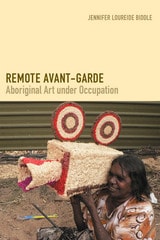
Remote Avant-Garde
Aboriginal Art under OccupationJennifer Loureide Biddle
Duke University Press, 2016
Remote Sensing in Archaeology
An Explicitly North American PerspectiveEdited by Jay K. Johnson
University of Alabama Press, 2006
In this volume, eleven archaeologists reveal how the broad application of remote sensing, and especially geophysical techniques, is altering the usual conduct of dirt archaeology. Using case studies that both succeeded and failed, they offer a comprehensive guide to remote sensing techniques on archaeological sites throughout North America. Because this new technology is advancing on a daily basis, the book is accompanied by a CD intended for periodic update that provides additional data and illustrations.

Remote Warfare
New Cultures of ViolenceRebecca A. Adelman
University of Minnesota Press, 2020
Considers how people have confronted, challenged, and resisted remote warfare
Drone warfare is now a routine, if not predominant, aspect of military engagement. Although this method of delivering violence at a distance has been a part of military arsenals for two decades, scholarly debate on remote warfare writ large has remained stuck in tired debates about practicality, efficacy, and ethics. Remote Warfare broadens the conversation, interrogating the cultural and political dimensions of distant warfare and examining how various stakeholders have responded to the reality of state-sponsored remote violence.
The essays here represent a panoply of viewpoints, revealing overlooked histories of remoteness, novel methodologies, and new intellectual challenges. From the story arc of Homeland to redefining the idea of a “warrior,” these thirteen pieces consider the new nature of surveillance, similarities between killing with drones and gaming, literature written by veterans, and much more. Timely and provocative, Remote Warfare makes significant and lasting contributions to our understanding of drones and the cultural forces that shape and sustain them.
Contributors: Syed Irfan Ashraf, U of Peshawar, Pakistan; Jens Borrebye Bjering, U of Southern Denmark; Annika Brunck, U of Tübingen; David A. Buchanan, U.S. Air Force Academy; Owen Coggins, Open U; Andreas Immanuel Graae, U of Southern Denmark; Brittany Hirth, Dickinson State U; Tim Jelfs, U of Groningen; Ann-Katrine S. Nielsen, Aarhus U; Nike Nivar Ortiz, U of Southern California; Michael Richardson, U of New South Wales; Kristin Shamas, U of Oklahoma; Sajdeep Soomal; Michael Zeitlin, U of British Columbia.
Remote
Reflections on Life in the Shadow of CelebrityDavid Shields
University of Wisconsin Press, 2003
In this truly one-of-a-kind book, the author/narrator—a representative, in extremis, of contemporary American obsession with beauty, celebrity, transmitted image—finds himself suspended, fascinated, in the remoteness of our wall-to-wall mediascape. It is a remoteness that both perplexes and enthralls him.
Through dazzling sleight of hand in which the public becomes private and the private becomes public, the entire book—clicking from confession to family-album photograph to family chronicle to sexual fantasy to pseudo-scholarly footnote to reportage to personal essay to stand-up comedy to cultural criticism to literary criticism to film criticism to prose-poem to litany to outtake —becomes both an anatomy of American culture and a searing self-portrait.
David Shields reads his own life—reads our life—as if it were an allegory about remoteness and finds persuasive, hilarious, heartbreaking evidence wherever he goes.
Winner of the PEN / Revson Award?
Removing Mountains
Extracting Nature and Identity in the Appalachian CoalfieldsRebecca R. Scott
University of Minnesota Press, 2010
In this rich ethnography of life in Appalachia, Scott examines mountaintop removal in light of controversy and protests from environmental groups calling for its abolishment. But Removing Mountains takes the conversation in a new direction, telling the stories of the businesspeople, miners, and families who believe they depend on the industry to survive. Scott reveals these southern Appalachian coalfields as a meaningful landscape where everyday practices and representations help shape a community's relationship to the environment.
Removing Mountains demonstrates that the paradox that faces this community-forced to destroy their land to make a wage-raises important questions related not only to the environment but also to American national identity, place, and white working-class masculinity.

Renaissance Revivals
City Comedy and Revenge Tragedy in the London Theater, 1576-1980Wendy Griswold
University of Chicago Press, 1986
Rendering Life Molecular
Models, Modelers, and Excitable MatterNatasha Myers
Duke University Press, 2015
Renegade Dreams
Living through Injury in Gangland ChicagoLaurence Ralph
University of Chicago Press, 2014
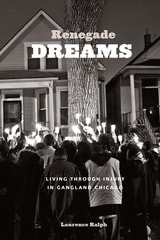
Going deep into a West Side neighborhood most Chicagoans only know from news reports—a place where children have been shot just for crossing the wrong street—Ralph unearths the fragile humanity that fights to stay alive there, to thrive, against all odds. He talks to mothers, grandmothers, and pastors, to activists and gang leaders, to the maimed and the hopeful, to aspiring rappers, athletes, or those who simply want safe passage to school or a steady job. Gangland Chicago, he shows, is as complicated as ever. It’s not just a warzone but a community, a place where people’s dreams are projected against the backdrop of unemployment, dilapidated housing, incarceration, addiction, and disease, the many hallmarks of urban poverty that harden like so many scars in their lives. Recounting their stories, he wrestles with what it means to be an outsider in a place like this, whether or not his attempt to understand, to help, might not in fact inflict its own damage. Ultimately he shows that the many injuries these people carry—like dreams—are a crucial form of resilience, and that we should all think about the ghetto differently, not as an abandoned island of unmitigated violence and its helpless victims but as a neighborhood, full of homes, as a part of the larger society in which we all live, together, among one another.
Renegade Rhymes
Rap Music, Narrative, and Knowledge in TaiwanMeredith Schweig
University of Chicago Press, 2022
Like many states emerging from oppressive political rule, Taiwan saw a cultural explosion in the late 1980s, when nearly four decades of martial law under the Chinese Nationalist Party ended. As members of a multicultural, multilingual society with a complex history of migration and colonization, Taiwanese people entered this moment of political transformation eager to tell their stories and grapple with their identities. In Renegade Rhymes, ethnomusicologist Meredith Schweig shows how rap music has become a powerful tool in the post-authoritarian period for both exploring and producing new knowledge about the ethnic, cultural, and political history of Taiwan.
Schweig draws on extensive ethnographic fieldwork, taking readers to concert venues, music video sets, scenes of protest, and more to show how early MCs from marginalized ethnic groups infused rap with important aspects of their own local languages, music, and narrative traditions. Aiming their critiques at the educational system and a neoliberal economy, new generations of rappers have used the art form to nurture associational bonds and rehearse rituals of democratic citizenship, making a new kind of sense out of their complicated present.
Renew Orleans?
Globalized Development and Worker Resistance after KatrinaAaron Schneider
University of Minnesota Press, 2018
Urban development after disaster, the fading of black political clout, and the onset of gentrification
Like no other American city, New Orleans since Hurricane Katrina offers powerful insight into issues of political economy in urban development and, in particular, how a city’s character changes after a disaster that spurs economic and political transition. In New Orleans, the hurricane upset an existing stalemate among rival factions of economic and political elites, and its aftermath facilitated the rise of a globally oriented faction of local capital.
In Renew Orleans? Aaron Schneider shows how some city leaders were able to access fragmented local institutions and capture areas of public policy vital to their development agenda. Through interviews and surveys with workers and advocates in construction, restaurants, shipyards, and hotel and casino cleaning, Schneider contrasts sectors prioritized during post-Katrina recovery with neglected sectors. The result is a fine-grained view of the way labor markets are structured to the advantage of elites, emphasizing how dual development produces wealth for the few while distributing poverty and exclusion to the many on the basis of race, gender, and ethnicity.
Schneider shows the way exploitation operates both in the workplace and the community, tracing working-class resistance that joins struggles for dignity at home and work. In the process, working classes and popular sectors put forth their own alternative forms of development.
Renewable Civic Energy
Community Engagement and Policy Design for a Climate Resilient AmericaCarmen Sirianni
Temple University Press, 2027
Although both our climate and democracy are in crisis, there is hope. Creative engagement has been taking place at the community level as environmental activists, grassroots movements, and place-based collaborative efforts have partnered with institutions to create effective sustainability initiatives.
Renewable Civic Energy provides an analytic framework and case studies that show how innovative practitioners from civic and professional associations, educational institutions, and youth organizations, as well as local, state, and federal agencies, have collaborated to “design for democracy.” These include watershed associations to restore rivers and address sea level rise, as well as collaborative community conservation and tribal partnerships on Western lands. Sirianni also analyzes collaborative environmental justice and university partnerships that promote engagement and democratic professionalism.
Sirianni closes Renewable Civic Energy by proposing several transformative, yet thoroughly pragmatic, institutional reform strategies. Ordinary people can help solve complex public problems—and they can enable government to work with them to improve both the climate and democracy.
Renewing the Maya World
Expressive Culture in a Highland TownBy Garrett W. Cook
University of Texas Press, 2000
Each year in the Highland Guatemala town of Santiago Momostenango, Maya religious societies, dance teams, and cofradías perform the annual cycle of rituals and festivals prescribed by Costumbre (syncretized Maya Christian religion), which serves to renew the cosmic order. In this richly detailed ethnography, Garrett Cook explores how these festivals of Jesucristo and the saints derive from and reenact three major ancient Maya creation myths, thus revealing patterns of continuity between contemporary expressive culture and the myths, rituals, and iconography of the Classic and Postclassic Maya.
Drawing on fieldwork conducted in the 1970s and renewed in the 1990s, Cook describes the expressive culture tradition performed in and by the cofradías and their dance teams. He listens as dancers and cofrades explain the meaning of service and of the major ritual symbols in the cults of the saints and Jesucristo. Comparing these symbols to iconographic evidence from Palenque and myths from the Popol Vuh, Cook persuasively argues that the expressive culture of Momostenango enacts major Maya creation myths—the transformative sunrise, the representation of the year as the life cycle of anthropomorphized nature, and the erection of an axis mundi.
This research documents specific patterns of continuity and discontinuity in the communal expression of Maya religious and cosmogonic themes. Along with other recent research, it demonstrates the survival of a basic Maya pattern—the world-creating vegetative renewal cycle—in the highland Maya cults of the saints and Jesucristo.
Renewing the World
Plains Indian Religion and MoralityHoward L. Harrod
University of Arizona Press, 1987
"Harrod's discussion of kinship and reciprocity in Northwest Plains cosmology contains valuable insight into Native American worldview, and his emphasis on the moral dimension of ritual process is a major addition to the too-often ignored subject of Native American moral life." —Journal of Religion
"Includes the major works on Blackfoot, Crow, Cheyennes, and Arapaho religion, the works to which anyone who wishes to understand the religious life of these tribes must continue to turn." —Choice
"Plains people, Harrod suggests, refracted nature and conceived an environmental ethic through a metaphor of kinship. He is particularly skillful in characterizing the ambiguity Plains people expressed at the necessity of killing and eating their animal kin. Renewing the World also contributes to another new and uncultivated science we might call 'ecology of mind'." —Great Plains Quarterly
Reno, Las Vegas, and the Strip
A Tale of Three CitiesEugene P. Moehring
University of Nevada Press, 2024
Moehring brings the story of the three cities to the present day, examining lessons learned from the Great Recession and the efforts under way in all three metropolises to diversify their economies. Moehring makes an important contribution with the only current study of Nevada’s cities, focusing on urban development issues rather than social history or the gaming industry. As the service economy continues to grow, not only in Nevada but throughout the United States, Moehring’s work has many implications for urban studies and particularly the study of urban development in other metropolitan areas.
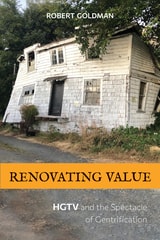
Renovating Value
HGTV and the Spectacle of GentrificationRobert Goldman
Temple University Press, 2021
HGTV has perfected stories about creating and capturing value in the housing market. But according to Robert Goldman, this lifestyle network’s beloved flagship programs, Flip or Flop, Property Brothers, and Fixer Upper—where people revitalize modern spaces and reinvent property values—offer “fairy tales” in the wake of the 2008 economic crisis. The cable channel’s seductive, bingeable programs may show how to find and extract value from properties, but, in fact, they insidiously ignore the realities of the real estate and mortgage markets, housing inequality, gentrification, economic insecurity, and even homelessness. In effect, HGTV has turned house flipping into a master narrative about getting ahead in America during an era of otherwise uneasy economic prospects.
HGTV pictures its insular moral economy as an alternative to a crisis-ridden neoliberal finance system that shaped landscapes of foreclosure and financial uncertainty for millions of households. Renovating Value explores the circuitry of consumer credit and debt, and a rent-gap model of gentrification that charts a path to the rehabilitation of Value. Goldman shrewdly critiques the aspirational myth of adding value to a home simply by using imagination, elbow grease, and aesthetic know-how.
Rent Strikes
A History of Collective Tenant Actions Across the WorldEdited by Lucas Poy and Hannes Rolf
University College London, 2025
Since the late nineteenth century, tenants across various historical and geographic contexts have engaged in collective action, including rent strikes, to improve their standard of living. Rent Strikes brings together an international cohort of researchers to identify common patterns and global trajectories in this rich history, spanning from the early twentieth century to the COVID-19 pandemic. Encompassing various continents and periods, it explores tenants’ struggles on both the local and national levels in North and Latin America, Northern and Southern Europe, and Oceania. Not only does this volume expand the scope of previous studies to consider the role of ethnicity, nationality, and gender in tenant mobilization, but it also aims to engage a wider audience beyond academia, including activists, policymakers, and the general public interested in housing.

Reparation and World Remaking
Elise Klein, Erin Fitz-Henry, and Rachel Hughes
University of Michigan Press, 2027
Reparations are not only about money, legal remedy, or moral repair. They are about the radical reimagining and remaking of a world still deeply scarred by colonialism, slavery, and racial capitalism. Bringing together scholars, activists, and practitioners from across the Caribbean, Latin America, the United States, Australia, and beyond, Reparation and World Remaking asks what genuinely transformative reparations might look like—and shows that, in many places, they are already underway.
Drawing on theorizations from Indigenous, Black, feminist, First Nations, and critical antipodean traditions, the volume extends reparative thinking by attending to the contributions of scholars of decoloniality, post-development, abolition, feminism, community economies, and environmental and climate justice. Reparation and World Remaking illuminates the many ways world remaking reparations are already being envisioned and enacted, in communities and movements across the globe.
Reparations and Reparatory Justice
Past, Present, and FutureEdited by Sundiata Keita Cha-Jua, Mary Frances Berry, and V. P. Franklin
University of Illinois Press, 2024
Sharing a focus on reparations as an issue of justice, the contributors provide a historical primer of the movement; introduce the philosophical, political, economic, legal and ethical issues surrounding reparations; explain why government, corporations, universities, and other institutions must take steps to rehabilitate, compensate, and commemorate African Americans; call for the restoration of Black people’s human and civil rights and material and psychological well-being; lay out specific ideas about how reparations can and should be paid; and advance cutting-edge interpretations of the complex long-lasting effects that enslavement, police and vigilante actions, economic discrimination, and other behaviors have had on people of African descent.
Groundbreaking and innovative, Reparations and Reparatory Justice offers a multifaceted resource to anyone wishing to explore a defining moral issue of our time.
Contributors: Dedrick Asante-Muhammad, Hilary McDonald Beckles, Mary Frances Berry, Sundiata Keita Cha-Jua, Chuck Collins, Ron Daniels, V. P. Franklin, Danny Glover, Adom Gretachew, Charles Henry, Kamm Howard, Earl Ofari Hutchinson, Jesse Jackson, Sr., Brian Jones, Sheila Jackson Lee, James B. Stewart, the Movement 4 Black Lives, the National African American Reparations Commission, the National Coalition of Blacks for Reparations in America, the New Afrikan Peoples Organization/Malcolm X Grassroots Movement
Reparative Craft
Eve Kosofsky Sedgwick as a Textile ArtistJason Edwards
Duke University Press, 2026
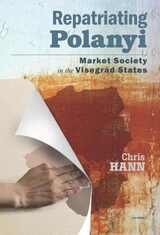
Repatriating Polanyi
Market Society in the Visegrád StatesChris Hann
Central European University Press, 2019
Karl Polanyi’s “substantivist” critique of market society has found new popularity in the era of neoliberal globalization. The author reclaims this polymath for contemporary anthropology, especially economic anthropology, in the context of Central Europe, where Polanyi (1886–1964) grew up. The Polanyian approach illuminates both the communist era, in particular the “market socialist” economy which evolved under János Kádár in Hungary, as well as the post-communist transformations of property relations, civil society and ethno-national identities throughout the region.
Hann’s analyses are based primarily on his own ethnographic investigations in Hungary and South-East Poland. They are pertinent to the rise of neo-nationalism in those countries, which is theorized as a malign countermovement to the domination of the market. At another level, Hann’s adaptation of Polanyi’s social philosophy points beyond current political turbulence to an original concept of “social Eurasia”.

Repealed
Ireland’s Unfinished Fight for Reproductive RightsCamilla Fitzsimons
Pluto Press, 2021
*Winner of the James S. Donnelly, Sr. Prize 2022*
In Ireland, 2018, a constitutional ban that equated the life of a woman to the life of a fertilized embryo was overturned and abortion was finally legalized. This victory for the Irish feminist movement set the country alight with euphoria. But the celebrations were short-lived - the new legislation turned out to be one of the most conservative in Europe. This book tells the story of the ‘Repeal’ campaign through the lens of the activists.
The authors trace the shocking history of the origins of the eighth amendment, which was drawn up in fear of a tide of liberal reforms across Europe. They draw out the lessons learned through the decades and from the groundbreaking campaign in 2018, which was an inspiring example of modern grassroots activism. They also recount the tensions between a medicalized approach and reproductive justice approach to abortion, as well as the harsh effect of the campaign on the health of activists.
Grounded in a radical feminist politics, this book is an honest and inspirational account of a movement that is only just beginning.

Repertoires and Cycles of Collective Action
Mark Traugott, editor
Duke University Press, 1995
The significance of repertoires—recurrent forms or tactics of social protest— is explored in an essay on eighteenth- and nineteenth-century Britain by the originator of the concept, Charles Tilly. Sidney Tarrow, whose work has most directly linked the concept of repertoires with that of cycles—the recurrent peaks and troughs in the historical incidence of collective action—contributes an essay that focuses on twentieth-century Italy. Other essays investigate the rhythms and logic of social change in contexts as diverse as sixteenth- through nineteenth-century Japan, nineteeth-century Europe, and twentieth-century America. Through inquiries into the consequences of violent repression for social mobilization, the struggle to control the linguistic terms of social conflict, the unacknowledged antecedents of contemporary movements, and the importance of "movement families," this volume demonstrates the usefulness of these two concepts and defines the relationship between them.
Collected from past issues of Social Science History, with a new introduction and two new essays, Repertoires and Cycles of Collective Action will reward an interdisciplinary audience of readers with the extraordinary vitality that emerges from this rich blend of historical perspectives.
Contributors. Charles Brockett, Craig Calhoun, Doug McAdam, Marc Steinberg, Sidney Tarrow, Charles Tilly, Mark Traugott, James White
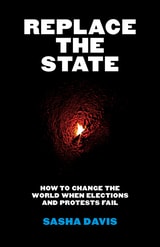
Replace the State
How to Change the World When Elections and Protests FailSasha Davis
University of Minnesota Press, 2025
A practical call to action against oppression
Across the globe, millions of people have participated in protests and marches, donated to political groups, or lobbied their representatives with the aim of creating lasting social change, overturning repressive laws, or limiting environmental destruction. Yet very little seems to improve for those affected by rapacious governments. Replace the State brings new hope for social justice movements by looking to progressive campaigns that have found success by unconventional, and more direct, means.
Sasha Davis, an activist and scholar of radical environmental advocacy, focuses on the strategies of movements, many of them Indigenous, that have occupied contested sites and demonstrated their effectiveness at managing or governing them. Including case studies of resistance to development on Indigenous lands in Hawai‘i, nuclear testing in the Nevada desert, and the U.S. military occupation of Okinawa, he offers insight and direction for activists, students, academics, and others dedicated to protecting and improving the well-being of their communities and beyond.
It would be easy to succumb to pessimism and political apathy in the face of governing institutions that are increasingly unresponsive to calls for change and repressive in response to protest, even as they violate human rights, ignore existential climate catastrophes, and concentrate power into fewer and fewer hands. Instead, Davis finds inspiration for genuine political change through social movements that are successfully “replacing the state” and taking over the day-to-day governance of threatened places. From contesting environmental abuse to reasserting Indigenous sovereignty, these social movements demonstrate how people can collectively wrest control over their communities from oppressive governments and manage them with a more egalitarian ethics of care.
Retail e-book files for this title are screen-reader friendly with images accompanied by short alt text and/or extended descriptions.

Replanted
Faith-Based Support for Adoptive and Foster FamiliesJenn Ranter Hook
Templeton Press, 2019
Many people embark on the journey of adoption and foster care but are unprepared for the challenges that await them along the way. Replanted takes an honest look at the joys and hardships that come with choosing this journey and provides a model of faith-based support made up of three parts to help families thrive: Soil, Sunlight, and Water.
- Soil, or emotional support, addresses the need for grace-filled settings where families can connect with other families who understand their experience.
- Sunlight, or informational support, focuses on obtaining helpful training to raise children who may have unique needs or challenges.
- Water, or tangible support, deals with concrete resources such as medical care, child care, and financial support.
Throughout the book, the Replanted model is brought to life by stories and examples based on the clinical work and personal experiences of the authors. Their candid insight will serve families who are actively involved in adoption or foster care, as well as people who are eager to help support those families.
Replanted affirms that with the right support system in place, parents can answer this sacred call not only with open hearts but also with their eyes wide open.
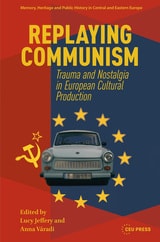
Replaying Communism
Trauma and Nostalgia in European Cultural ProductionLucy Jeffery
Central European University Press, 2026
The volume adopts an interdisciplinary approach to extend debates on the lasting impact of the communist era across Central and Eastern Europe with chapters thematically threaded through concepts including curation, immersion, interaction, humor and authenticity. A ‘trauma/nostalgia paradigm’ emerges as the tissue connecting the plurality of post-communist efforts employed to address the region’s contested pasts. Twelve original essays by contributors from both ‘inside’ and ‘outside’ the region detail how twenty-first-century cultural productions reengage the communist past. The impact of this past is seen as fundamental to understanding and shaping Central and Eastern European identities.
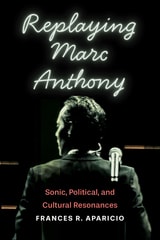
Replaying Marc Anthony
Sonic, Political, and Cultural ResonancesFrances R. Aparicio
The Ohio State University Press, 2025
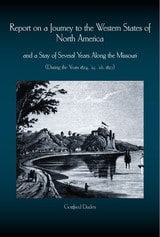
Report on a Journey to the Western States of North America
and a Stay of Several Years Along the Missouri (During the Years 1824-1827)Gottfried Duden; James W. Goodrich, General Editor; George H. Kellner, Elsa Nagel, Adolf E. Schroeder, and W. M. Senner, Editors and Translators
University of Missouri Press, 1980
The mass migrations to the United States from Europe that began in the 1830s were strongly influenced by what is known today as emigration literature--travelers' writings about their experiences in the New World. Such accounts were particularly popular with German readers; over 150 examples of the genre were published in Germany between 1827 and 1856. Gottfried Duden's Report on a Journey to the Western States of North America, published in 1829, was one of the most influential of these books. The timing, format, coverage, and literary qualities of the Report, and its idyllic descriptions of pioneer farming in Missouri, combined to make it an instant success. It attracted thousands of Germans to the Midwest, and particularly to Missouri, the focus of Duden's account. This edited and annotated translation is the first complete version to be published in English. It provides for the general public and the professional historian a significant contribution to U.S. immigration history and a unique and delightful fragment of Missouri's rich German heritage.
Duden presented his account in the form of personal letters, a style that helped make the book believable. The Mississippi- Missouri valley reminded him of his native Rhineland where the rivers facilitated trade and transportation, and fertile river bottomland offers the perfect environment for agriculture. Duden farmed the land he bought during his sojourn in Missouri, and his book includes meticulous descriptions of clearing, fencing, and harvesting. His pro-emigration bias, colored by the fact that he himself had been able to hire help on his Missouri farm, made his view of the farmer's life, it turned out, more idyllic than practical. Many would-be gentlemen farmers, inspired by his book to come to Missouri, found pioneer farming more strenuous than they had expected.
Reporting for Arkansas
The Documentary Films of Jack HillDale Carpenter
University of Arkansas Press, 2022
Jack Hill was a pioneering Arkansas documentary filmmaker dedicated to sharing his state’s history with a wider public. Following a decade as an award-winning investigative journalist and news anchor at KAIT in Jonesboro, Hill was pushed out by new management for his controversial reporting on corruption in a local sheriff’s office. What seemed like a major career setback turned out to be an opportunity: he founded the production company TeleVision for Arkansas, through which he produced dozens of original films. Although Hill brought an abiding interest in education and public health to this work from the beginning, he found his true calling in topics based in Arkansas history. Convinced that a greater acquaintance with the state’s most significant historical events would nurture a greater sense of homegrown pride, Hill tirelessly crisscrossed the state to capture the voices of hundreds of Arkansans recalling significant chapters in the state’s history, such as the oil boom in El Dorado and Smackover, the crucial contributions of the Arkansas Ordnance Plant in Jacksonville during World War II, and the role of Rosenwald Schools in expanding educational opportunities.
In Reporting for Arkansas, Dale Carpenter and Robert Cochran present a biography of Hill alongside an annotated selected filmography designed to accompany sixteen of his best films on subjects related to Arkansas history—all newly hosted online by the Center for Arkansas and Regional Studies at the University of Arkansas.
Reporting of Social Science in the National Media
Carol Weiss
Russell Sage Foundation, 1988
Reporting on Risk
How the Mass Media Portray Accidents, Diseases, Other HazardsEleanor Singer
Russell Sage Foundation, 1993
Repossessing Shanland
Myanmar, Thailand, and a Nation-State DeferredJane M. Ferguson
University of Wisconsin Press, 2022
Based on close readings of Shan-language media and years of ethnographic research in a community of soldiers and their families, Jane M. Ferguson details the origins of these movements and tells the story of the Shan in their own voices. She shows how the Shan have forged a homeland and identity during great upheaval by using state building as an ongoing project of resistance, resilience, and accommodation within both countries. In avoiding a good/bad moral binary and illuminating cultural complexities, Repossessing Shanland offers a fresh perspective on identity formation, transformation, and how people understand and experience borderlands today.

Represent and Destroy
Rationalizing Violence in the New Racial CapitalismJodi Melamed
University of Minnesota Press, 2011
In the global convulsions in the aftermath of World War II, one dominant world racial order broke apart and a new one emerged. This is the story Jodi Melamed tells in Represent and Destroy, portraying the postwar racial break as a transition from white supremacist modernity to a formally antiracist liberal capitalist modernity in which racial violence works normatively by policing representations of difference.
Following the institutionalization of literature as a privileged domain for Americans to get to know difference—to describe, teach, and situate themselves with respect to race—Melamed focuses on literary studies as a cultural technology for transmitting liberal racial orders. She examines official antiracism in the United States and finds that these were key to ratifying the country’s global ascendancy. She shows how racial liberalism, liberal multiculturalism, and neoliberal multiculturalism made racism appear to be disappearing, even as they incorporated the assumptions of global capitalism into accepted notions of racial equality.
Yet Represent and Destroy also recovers an anticapitalist “race radical” tradition that provides a materialist opposition to official antiracisms in the postwar United States—a literature that sounds out the violence of liberal racial orders, relinks racial inequality to material conditions, and compels desire for something better than U.S. multiculturalism.
Representations on the Margins of Europe
Politics and Identities in the Baltic and South Caucasian StatesEdited by Tsypylma Darieva and Wolfgang Kaschuba
Campus Verlag, 2007