Results by title
28164 books match the query 'History' and 1206 start with r
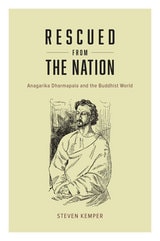
Rescued from the Nation
Anagarika Dharmapala and the Buddhist WorldSteven Kemper
University of Chicago Press, 2014
Drawing on huge stores of source materials—nearly one hundred diaries and notebooks—Kemper reconfigures Dharmapala as a world-renouncer first and a political activist second. Following Dharmapala on his travels between East Asia, South Asia, Europe, and the United States, he traces his lifelong project of creating a unified Buddhist world, recovering the place of the Buddha’s Enlightenment, and imitating the Buddha’s life course. The result is a needed corrective to Dharmapala’s embattled legacy, one that resituates Sri Lanka’s political awakening within the religious one that was Dharmapala’s life project.
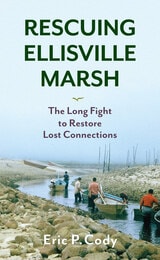
Rescuing Ellisville Marsh
The Long Fight to Restore Lost ConnectionsEric P. Cody
University of Massachusetts Press, 2023
For hundreds of years, farmers and fishing communities maintained the inlet to Ellisville Marsh, a picturesque piece of coastline ten miles south of Plymouth, Massachusetts. Recognized as one of the most environmentally sensitive and ecologically valuable places in the state, the salt marsh and estuary are home to a diverse array of wildlife and a range of habitats, including low-tide mudflats, a saltwater pond, intertidal zone, and fields of tall marsh grass.
After agricultural and fishing activities faded away in the late twentieth century, it soon became apparent that protecting the marsh and its surroundings from development would not be enough to restore the natural equilibrium that had been lost when the inlet became blocked. Having witnessed government inaction over the years, Eric P. Cody and four other locals founded the Friends of Ellisville Marsh in 2007 to address erosion, revive tidal flows, and revitalize fisheries and wildlife in the face of climate change. Rescuing Ellisville Marsh presents the powerful case study of backyard activism, telling the story of a community that bonded with a natural place and decided to fight for it.
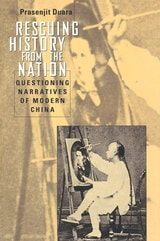
Rescuing History from the Nation
Questioning Narratives of Modern ChinaPrasenjit Duara
University of Chicago Press, 1995
The backlash against such histories has resulted in a tendency to view the past as largely constructed, imagined, or invented. In this book, Duara offers a way out of the impasse between constructionism and the evolving nation; he redefines history as a series of multiple, often conflicting narratives produced simultaneously at national, local, and transnational levels. In a series of closely linked case studies, he considers such examples as the very different histories produced by Chinese nationalist reformers and partisans of popular religions, the conflicting narratives of statist nationalists and of advocates of federalism in early twentieth-century China. He demonstrates the necessity of incorporating contestation, appropriation, repression, and the return of the repressed subject into any account of the past that will be meaningful to the present. Duara demonstrates how to write histories that resist being pressed into the service of the national subject in its progress—or stalled progress—toward modernity.
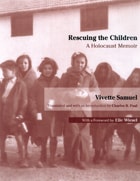
Rescuing the Children
A Holocaust MemoirVivette Samuel; Translated and with an introduction by Charles B. Paul; With a foreword by Elie Wiesel
University of Wisconsin Press, 2002
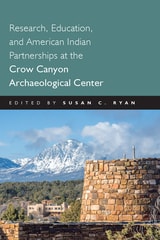
Research, Education and American Indian Partnerships at the Crow Canyon Archaeological Center
Susan C. Ryan
University Press of Colorado, 2024
Research, Education, and American Indian Partnerships at the Crow Canyon Archaeological Center guides Southwestern archaeology and public education beyond current practices—particularly regarding Indigenous partnerships—and provides a strategic handbook for readers into and through the mid-twenty-first century.
Open access edition supported by the Crow Canyon Archaeological Center King Family Fund and subvention supported in part by the Crow Canyon Archaeological Center and the Arizona Archaeological and Historical Society.
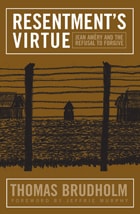
Resentment's Virtue
Jean Amery and the Refusal to ForgiveThomas Brudholm, Foreword by Jeffrie Murphy
Temple University Press, 2010
Most current talk of forgiveness and reconciliation in the aftermath of collective violence proceeds from an assumption that forgiveness is always superior to resentment and refusal to forgive. Victims who demonstrate a willingness to forgive are often celebrated as virtuous moral models, while those who refuse to forgive are frequently seen as suffering from a pathology. Resentment is viewed as a negative state, held by victims who are not "ready" or "capable" of forgiving and healing.
Resentment's Virtue offers a new, more nuanced view. Building on the writings of Holocaust survivor Jean Améry and the work of the South African Truth and Reconciliation Commission, Thomas Brudholm argues that the preservation of resentment can be the reflex of a moral protest that might be as permissible, humane or honorable as the willingness to forgive. Taking into account the experiences of victims, the findings of truth commissions, and studies of mass atrocities, Brudholm seeks to enrich the philosophical understanding of resentment.
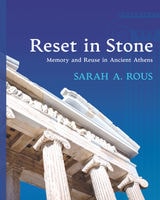
Reset in Stone
Memory and Reuse in Ancient AthensSarah A. Rous
University of Wisconsin Press, 2019
Sarah Rous develops the concept of upcycling to refer to this meaningful reclamation, the intentionality of reemploying each particular object for its specific new context. The upcycling approach drives innovative reinterpretations of diverse cases, including column drums built into fortification walls, recut inscriptions, monument renovations, and the wholesale relocation of buildings. Using archaeological, literary, and epigraphic evidence from more than eight centuries of Athenian history, Rous's investigation connects seemingly disparate instances of the reuse of building materials. She focuses on agency, offering an alternative to the traditional discourse on spolia. Reset in Stone illuminates a vital practice through which Athenians shaped social memory in the physical realm, literally building their past into their city.
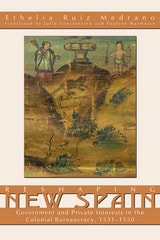
Reshaping New Spain
Government and Private Interests in the Colonial Bureaucracy, 1535-1550Ethelia Ruiz Medrano
University Press of Colorado, 2006
Drawing on extensive archival research, Ruiz examines the developing colonial institutions in Mexico and how they changed indigenous land ownership and labor laws to favor the new bureaucrats. This portrait of the emerging government in New Spain fills a critical niche in Latin American studies.
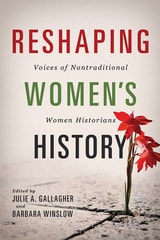
Reshaping Women's History
Voices of Nontraditional Women HistoriansJulie A. Gallagher, Barbara Winslow
University of Illinois Press, 2018
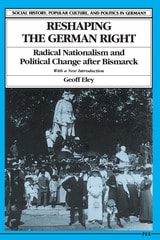
Reshaping the German Right
Radical Nationalism and Political Change after BismarckGeoff Eley
University of Michigan Press, 1991

Resistance against the Third Reich
1933-1990Edited by Michael Geyer and John W. Boyer
University of Chicago Press, 1994
Contributors include Geoffrey Cocks, Werner G. Jeanrond, Tony Judt, Claudia Koonz, Hans Mommsen, and Frank Trommler.
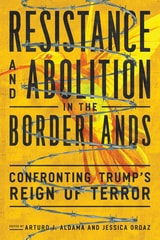
Resistance and Abolition in the Borderlands
Confronting Trump's Reign of TerrorEdited by Arturo J. Aldama and Jessica Ordaz; Foreword by Leo R. Chavez; Afterword by Karma R. Chávez
University of Arizona Press, 2024
This volume provides a well-argued look at the Trump era. Insightful contributions delve into the impact of Donald Trump’s rhetoric and policies on migrants detained and returned, immigrant children separated from their parents and placed in detention centers, and migrant women subjected to sexual and reproductive abuses, among other timely topics. The chapter authors document a long list in what the book calls “Trump’s Reign of Terror.”
Organized thematically, the book has four sections: The first gathers histories about the Trump years’ roots in a longer history of anti-migration; the second includes essays on artistic and activist responses on the border during the Trump years; the third critiques the normalization of Trump’s rhetoric and actions in popular media and culture; and the fourth envisions the future.
Resistance and Abolition in the Borderlands is an essential reader for those wishing to understand the extent of the damage caused by the Trump era and its impact on Latinx people.
Contributors
Arturo J. Aldama
Rebecca Avalos
Cynthia Bejarano
Tria Blu Wakpa
Renata Carvalho Barreto
Karma R. Chávez
Leo R. Chavez
Jennifer Cullison
Jasmin Lilian Diab
Allison Glover
Jamila Hammami
Alexandria Herrera
Diana J. Lopez
Sergio A. Macías
Cinthya Martinez
Alexis N. Meza
Roberto A. Mónico
José Enrique Navarro
Jessica Ordaz
Eliseo Ortiz
Kiara Padilla
Leslie Quintanilla
J-M Rivera
Heidy Sarabia
Tina Shull
Nishant Upadhyay
Maria Vargas
Antonio Vásquez
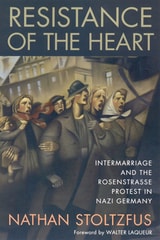
Resistance of the Heart
Intermarriage and the Rosenstrasse Protest in Nazi GermanyNathan Stoltzfus
Rutgers University Press, 2001
In February 1943 the Gestapo arrested approximately 10,000 Jews remaining in Berlin. Most died at Auschwitz. Two thousand of those Jews, however, had non-Jewish partners and were locked into a collection center on a street called Rosenstrasse. As news of the surprise arrest pulsed through the city, hundreds of Gentile spouses, mostly women, hurried to the Rosenstrasse in protest. A chant broke out: "Give us our husbands back."
Over the course of a week protesters vied with the Gestapo for control of the street. Now and again armed SS guards sent the women scrambling for cover with threats that they would shoot. After a week the Gestapo released these Jews, almost all of whom survived the war.
The Rosenstrasse Protest was the triumphant climax of ten years of resistance by intermarried couples to Nazi efforts to destroy their families. In fact, ninety-eight percent of German Jews who did not go into hiding and who survived Nazism lived in mixed marriages. Why did Hitler give in to the protesters? Using interviews with survivors and thousands of Nazi records never before examined in detail, Nathan Stoltzfus identifies the power of a special type of resistance--the determination to risk one's own life for the life of loved ones. A "resistance of the heart..."
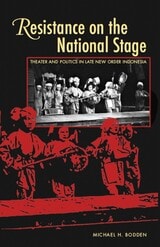
Resistance on the National Stage
Theater and Politics in Late New Order IndonesiaMichael H. Bodden
Ohio University Press, 2010
Resistance on the National Stage analyzes the ways in which, between 1985 and 1998, modern theater pracxadtitioners in Indonesia contributed to a rising movement of social protest against the long-governing New Order regime of President Suharto. It examines the work of an array of theater groups and networks from Jakarta, Bandung, and Yogyakarta that pioneered new forms of theater-making and new themes that were often presented more directly and critically than previous groups had dared to do.
Michael H. Bodden looks at a wide range of case studies to show how theater contributed to and helped build the opposition. He also looks at how specific combinations of social groups created tensions and gave modern theater a special role in bridging social gaps and creating social networks that expanded the reach of the prodemocracy movement. Theater workers constructed new social networks by involving peasants, Muslim youth, industrial workers, and lower-middle-class slum dwellers in theater productions about their own lives. Such networking and resistance established theater as one significant arena in which the groundwork for the ouster of Suharto in May 1998, and the succeeding Reform era, was laid.
Resistance on the National Stage will have broad appeal, not only for scholars of contemporary Indonesian culture and theater, but also for those interested in Indonesian history and politics, as well as scholars of postcolonial theater and culture.
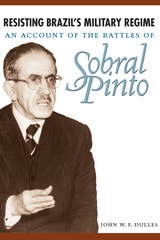
Resisting Brazil's Military Regime
An Account of the Battles of Sobral PintoBy John W. F. Dulles
University of Texas Press, 2007
Praised by his many admirers as a "courageous and fearless" defender of human rights, Heráclito Fontoura Sobral Pinto (1893-1991) was the most consistently forceful opponent of the regime of Brazilian dictator Getúlio Vargas. John W. F. Dulles chronicled Sobral's battles with the Vargas government in Sobral Pinto, "The Conscience of Brazil": Leading the Attack against Vargas (1930-1945), which History: Reviews of New Books called "a must-read for anyone wanting to understand twentieth-century Brazil."
In this second and final volume of his biography of Sobral Pinto, Professor Dulles completes the story of the fiery crusader's fight for democracy, morality, and justice, particularly for the downtrodden. Drawing on Sobral's vast correspondence, Dulles offers an extensive account of Sobral's opposition to the military regime that ruled Brazil from 1964 to 1985. He describes how Sobral Pinto defended those who had been politically influential before April, 1964, as well as other victims of the regime, including Communists, once-powerful labor leaders, priests, militant journalists, and students. Because Sobral Pinto participated in so many of the struggles against the military regime, his experiences provide vivid new insights into this important period in recent Brazilian history. They also shed light on developments in the Catholic Church (Sobral, a devout Catholic, vigorously opposed liberation theology), as well as on Sobral's key role in preserving Brazil's commission for defending human rights.
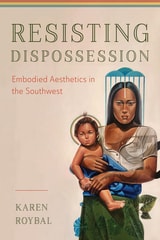
Resisting Dispossession
Embodied Aesthetics in the SouthwestKaren R. Roybal
University of Arizona Press, 2027
Illuminating the impacts of ongoing dispossession across the modern American Southwest
Resisting Dispossession examines how Native/Indigenous, Chicana/o/x, and Black communities in the American Southwest have confronted displacement and dispossession from the nineteenth century to the present. Moving beyond abstract theory, Karen R. Roybal centers cultural expression and embodied knowledge, revealing how colonialism, preservation, urban renewal, and gentrification continue to shape relationships to land, place, and belonging.
Drawing on Indigenous, Chicana feminist, and Black epistemologies, Roybal explores a diverse cultural archive of photographs, literature, musical compositions, oral histories, and storytelling practices. Through analyses of figures such as Kali Fajardo-Anstine, Raven Chacon, and Louis Carlos Bernal, alongside the stories of Chicana land grant heirs in New Mexico and southern Colorado, she demonstrates how artistic and cultural expression becomes a powerful tool for resisting erasure and reclaiming presence. Contesting representations of the Southwest made popular by figures like Ansel Adams and Georgia O’Keeffe, these works preserve alternative histories, challenge dominant narratives, and illuminate the ongoing impacts of dispossession across the region.
Interdisciplinary in scope, this work offers a fresh perspective on the intersections of aesthetics, embodiment, and power in the West and Southwest.
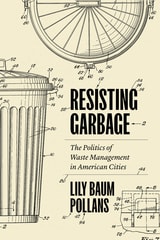
Resisting Garbage
The Politics of Waste Management in American CitiesLily Baum Pollans
University of Texas Press, 2021
Resisting Garbage presents a new approach to understanding practices of waste removal and recycling in American cities, one that is grounded in the close observation of case studies while being broadly applicable to many American cities today.
Most current waste practices in the United States, Lily Baum Pollans argues, prioritize sanitation and efficiency while allowing limited post-consumer recycling as a way to quell consumers’ environmental anxiety. After setting out the contours of this “weak recycling waste regime,” Pollans zooms in on the very different waste management stories of Seattle and Boston over the last forty years. While Boston’s local politics resulted in a waste-export program with minimal recycling, Seattle created new frameworks for thinking about consumption, disposal, and the roles that local governments and ordinary people can play as partners in a project of resource stewardship. By exploring how these two approaches have played out at the national level, Resisting Garbage provides new avenues for evaluating municipal action and fostering practices that will create environmentally meaningful change.
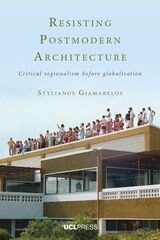
Resisting Postmodern Architecture
Critical Regionalism before GlobalisationStylianos Giamarelos
University College London, 2022
Since its first appearance in 1981, critical regionalism has enjoyed a celebrated worldwide reception as an architectural theory that defends the cultural identity of a place resisting the homogenizing onslaught of globalization. Its principles of acknowledging the climate, history, materials, culture, and topography of a specific place are integrated into architects’ education across the globe. But at the same time, the richer cross-cultural history of critical regionalism has frequently been reduced to schematic juxtapositions of “the global” with “the local.”
This book uses more than fifty interviews and previously unpublished archival material from six countries to resituate critical regionalism within the wider framework of debates around postmodern architecture, the diverse contexts from which it emerged, and the cultural media complex that conditioned its reception. In so doing, it explores the intersection of three areas of growing historical and theoretical interest—postmodernism, critical regionalism, and globalization—and shows how the “periphery” was not just a passive recipient, but also an active generator of architectural theory and practice.
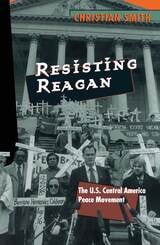
Resisting Reagan
The U.S. Central America Peace MovementChristian Smith
University of Chicago Press, 1996
Focusing on the movement's three most important national campaigns—Witness for Peace, Sanctuary, and the Pledge of Resistance—this book demonstrates the centrality of morality as a political motivator, highlights the importance of political opportunities in movement outcomes, and examines the social structuring of insurgent consciousness. Based on extensive surveys, interviews, and research, Resisting Reagan makes significant contributions to our understanding of the formation of individual activist identities, of national movement dynamics, and of religious resources for political activism.

Resisting Regionalism
Gender And Naturalism In American Fiction, 1885-1915Donna Campbell
Ohio University Press, 1997
When James Lane Allen defined the “Feminine Principle” and the “Masculine Principle” in American fiction for the Atlantic Monthly in 1897, he in effect described local color fiction and naturalism, two branches of realism often regarded as bearing little relationship to each other. In this award-winning study of both movements, Resisting Regionalism explores the effect the cultural dominance of women’s local color fiction in the 1890’s had on young male naturalist writers, who rebelled against the local colorists and their “teacup tragedies.”
An immensely popular genre, local color fiction reached its peak in the 1880s in such literary journals as Harper’s Monthly, Scribner’s, the Atlantic Monthly, and the Century. These short stories exhibited local “characters,” depicted marginal groups and vanishing folkways, and addressed issues of absence, loss, limitation, and the past. Despite such prickly themes, according to Donna Campbell, local color fiction “fulfilled some specific needs of the public – for nostalgia, for a retreat into mildly exotic locales, for a semblance of order preserved in ritual.”
By the turn of the century, however, local color fiction was fading from the scene, supplanted by writers of adventure fiction and historical romances, with whom local colorists increasingly merged, and opposed by the naturalists. In examining this historic shift, Resisting Regionalism shows that far from being distanced from local color fiction, nationalism emerged in part as a dissenting response to its popularity and to the era’s concerns about the dominance of feminine influence in American literature. The new generation of authors, including Crane, Norris, London, Frederic, Wharton, resisted the cultural myths and narrative strategies common to local colorists Sarah Orne Jewett, Rose Terry Cooke, Mary E. Wilkins Freeman, and Constance Fenimore Woolson. Yet, as Campbell underscores in her analysis of Stephan Crane’s The Monster, the naturalists could, and did, integrate local color conventions with the grotesque and horrifying to powerful effect.
In clear, accessible prose, Resisting Regionalism provides fresh readings of naturalistic works in the context of the dispute between local color and naturalism. In the process, this book shows the debt naturalism owes to local color fiction and illuminates a neglected but significant literary era.
Resisting Spirits
Drama Reform and Cultural Transformation in the People's Republic of ChinaMaggie Greene
University of Michigan Press, 2019

Resolving Racial Conflict
The Community Relations Service and Civil Rights, 1964-1989Bertram Levine
University of Missouri Press, 2005
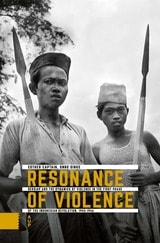
Resonance of Violence
Bersiap and the Dynamics of Violence in the First Phase of the Indonesian Revolution, 1945-1946Esther Captain
Amsterdam University Press, 2026
The authors expressly situate this terrifying period within the wider context of mutual Indonesian violence and the use of violence by the Japanese, British and Dutch against Indonesian citizens. Java, Sumatra, and other islands are discussed in the book, as well as the complex issue of the number of victims. Finally, they discuss the development of the term "bersiap" over the past 75 years, which grew into a key concept in the Netherlands to describe the earliest phase of the Indonesian War of Independence.
Resonant Violence
Affect, Memory, and Activism in Post-Genocide SocietiesKerry Whigham
Rutgers University Press, 2022
Resort City In The Sunbelt, Second Edition
Las Vegas, 1930-2000Eugene P. Moehring
University of Nevada Press, 2000
Resource Radicals
From Petro-Nationalism to Post-Extractivism in EcuadorThea Riofrancos
Duke University Press, 2020
Resowing the Seeds of War
Presidential Peace Rhetoric since 1945Stephen J. Heidt
Michigan State University Press, 2021
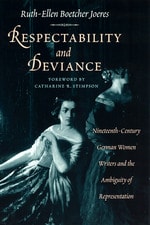
Respectability and Deviance
Nineteenth-Century German Women Writers and the Ambiguity of RepresentationRuth-Ellen Boetcher Joeres
University of Chicago Press, 1998
Studying a period of German literary history that has been largely ignored by modern readers, Ruth-Ellen Boetcher Joeres demonstrates that these writings offer intriguing opportunities to examine such critical topics as canon formation; the relationship between gender, class, and popular culture; and women, professionalism, and technology. The writers she explores range from Annette von Droste-Hülshoff, who managed to work her way into the German canon, to the popular serial novelist E. Marlitt, from liberal writers such as Louise Otto and Fanny Lewald, to the virtually unknown novelist and journalist Claire von Glümer. Through this investigation, Boetcher Joeres finds ambiguities, compromises, and subversions in these texts that offer an extensive and informative look at the exciting and transformative epoch that so much shaped our own.
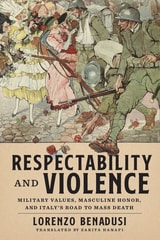
Respectability and Violence
Military Values, Masculine Honor, and Italy’s Road to Mass DeathLorenzo Benadusi
University of Wisconsin Press, 2021
In the aftermath of national unification in the 1860s, the Italian army was tasked with molding generations of men from warring regions and different social strata into obedient citizens of a centralized state. Integrating large numbers of the educated middle classes into the young kingdom’s armed forces proved decisive in establishing the army as the “main school” and backbone for mass nationalization. Lorenzo Benadusi examines the intersection of Italian military and civil society over the last century as they coalesced in the figure of the gentleman-officer—an idealized image of an altruistic, charming, and competent ruling class that could influence the choices, values, and behavior of the “new Italians.”
Respectability and Violence traces the relationship between civic virtues and military values from the post-Risorgimento period through the end of World War I, when the trauma of trench warfare made it necessary to again redefine ideas of chivalry and manliness and to accept violence as a necessary tool in defense of society and state. The language of conflict and attitudes about war forged in these decades—characterized by patriotism, heroism, and sacrifice—shaped the cultured bourgeoise into loyalists who ushered in Italy’s transition to a powerful Fascist political system. This unique study of the officer is crucial for understanding the military, social, and political history of Italy.
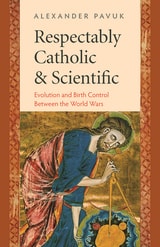
Respectably Catholic and Scientific
Evolution and Birth Control Between the World WarsAlexander Pavuk
Catholic University of America Press, 2021

Respecting the Wicked Child
A Philosophy of Secular Jewish Identity and EducationMitchell Silver
University of Massachusetts Press, 1998
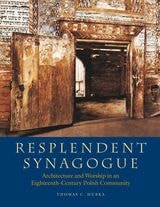
Resplendent Synagogue
Architecture and Worship in an Eighteenth-Century Polish CommunityThomas C. Hubka
Brandeis University Press, 2022
Thomas C. Hubka, an architectural historian, immersed himself in medieval and early modern Jewish history, religion, and culture to prepare for this remarkable study of the eighteenth-century Polish synagogue in the town of Gwozdziec, now in present-day Ukraine. Because the Gwozdziec Synagogue, like so many others, was destroyed by the Nazis, this book revives a spiritual community lost to history. Hubka selected the Gwozdziec Synagogue because of the completeness of its photographic and historical records. Graced with nearly two hundred historical photographs, architectural drawings, maps, diagrams, and color illustrations, Resplendent Synagogue vividly recreates the spiritual heart of a once-vibrant Jewish population. Hubka demonstrates that while the architectural exterior of the synagogue was largely the product of non-Jewish, regional influences, the interior design and elaborate wall-paintings signified a distinctly Jewish art form. The collaboration of Jewish and Gentile builders, craftsmen, and artists in the creation of this magnificent wooden structure attests to an eighteenth-century period of relative prosperity and communal well-being for the Jews of Gwozdziec. Part of a tradition that was later abandoned by Eastern European Jewish communities in the nineteenth and twentieth centuries, this truly resplendent synagogue exemplified a high point in Jewish architectural art and religious painting.
Responding to Crisis in Contemporary Mexico
The Political Writings of Paz, Fuentes, Monsiváis, and PoniatowskaClaire Brewster
University of Arizona Press, 2005
Claire Brewster has mined direct quotations from a host of publications to illustrate the techniques that they used in combating government and editorial restraints. Brewster first addresses the Student Movement of 1968—the violent suppression of which was a watershed in the relationship between the Mexican government and people—and illustrates the ways in which the student crisis affected the writers’ relationships with presidents Luis Echeverría Alvarez and José López Portillo. She next considers the profound social and political repercussions of the 1985 earthquake as described by Poniatowska and Monsiváis and the consequent emergence of Mexican civil society. She then outlines Paz’s and Monsiváis’s vociferous responses to the 1988 presidential election campaigns and their highly contentious result, and lastly she examines the Chiapas rebellion from January to July 1994.
The eloquent Zapatista spokesman, Subcomandante Marcos, challenged Mexican writers to a duel of words, and Brewster analyzes the ways in which the four writers took up the gauntlet—and in so doing reveals the development of their political thoughts and their relationships with the Mexican people and the federal government. The work of these four authors charts an important historical era, and a close examination of their essays reveals their maturation as writers and provides an understanding of the development of Mexican society. By bringing their opinions and attitudes to light, Brewster unearths a rich lode of insight into the inner workings of Mexican intellectuals and invites observers of contemporary Mexico to reconsider their role in reflecting social change.
Responses to Oliver Stone’s Alexander
Film, History, and Cultural StudiesEdited by Paul Cartledge and Fiona Rose Greenland; Afterword by Oliver Stone
University of Wisconsin Press, 2009
This volume brings together an intriguing mix of leading scholars in Macedonian and Greek history, Persian culture, film studies, classical literature, and archaeology—including some who were advisors for the film—and includes an afterword by Oliver Stone discussing the challenges he faced in putting Alexander’s life on the big screen. The contributors scrutinize Stone’s project from its inception and design to its production and reception, considering such questions as: Can a film about Alexander (and similar figures from history) be both entertaining and historically sound? How do the goals of screenwriters and directors differ from those of historians? How do Alexander’s personal relationships—with his mother Olympias, his wife Roxane, his lover Hephaistion, and others—affect modern perceptions of Alexander? Several of the contributors also explore reasons behind the film’s tepid response at the box office and subsequent controversies.
Responsive Democracy
Increasing State Accountability in East AsiaJeeyang Rhee Baum
University of Michigan Press, 2011
"Responsive Democracy is a pioneering contribution to the political analysis of administrative law in East Asia. Both political scientists and legal academics will greatly benefit from the author's in-depth analysis of the intersection between presidential power and administrative law in the contrasting cases of South Korea, Taiwan, and the Philippines."
---Susan Rose-Ackerman, Yale University Law School
"Baum's book is a very significant contribution because it focuses on a part of the world that has often been neglected in studies of democratization. It focuses attention on the nuts and bolts of what we mean by democratic consolidation and responsiveness. Indeed, if more political science were written with this clarity, we would all enjoy reading the literature much more!"
---Joseph Fewsmith, Boston University
Under what conditions is a newly democratic government likely to increase transparency, accountability, and responsiveness to its citizens? What incentives might there be for bureaucrats, including those appointed by a previously authoritarian government, to carry out the wishes of an emerging democratic regime? Responsive Democracy addresses an important problem in democratic transition and consolidation: the ability of the chief executive to control the state bureaucracy.
Using three well-chosen case studies---the Philippines, South Korea, and Taiwan---Jeeyang Rhee Baum explores the causes and consequences of codifying rules and procedures in a newly democratic government. In the Philippines, a president facing opposition has the option of appointing and dismissing officials at will and, therefore, has no need for administrative procedure acts. However, in South Korea and Taiwan, presidents employ such legislation to rein in recalcitrant government agencies, and, as a consequence, increase transparency, accountability, and responsiveness. Moreover, as Baum demonstrates by drawing upon surveys conducted both before and after implementation, administrative procedural reforms in South Korea and Taiwan improved public confidence in and attitudes toward democratic institutions.
Jeeyang Rhee Baum is a Research Fellow at the Ash Center for Democratic Governance and Innovation, John F. Kennedy School of Government, Harvard University.

Rest Uneasy
Sudden Infant Death Syndrome in Twentieth-Century AmericaCowgill, Brittany
Rutgers University Press, 2018
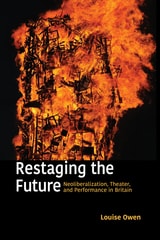
Restaging the Future
Neoliberalization, Theater, and Performance in BritainLouise Owen
Northwestern University Press, 2023
Post-Thatcher, British cultural politics were shaped by the government’s use of the arts in service of its own social and economic agenda. Restaging the Future: Neoliberalization, Theater, and Performance in Britain interrogates how arts practices and cultural institutions were enmeshed with the particular processes of neoliberalization mobilized at the end of the twentieth century and into the twenty-first.
Louise Owen traces the uneasy entanglement of performance with neoliberalism's marketization of social life. Focusing on this political moment, Owen guides readers through a wide range of performance works crossing multiple forms, genres, and spaces—from European dance tours, to Brazilian favelas, to the streets of Liverpool—attending to their distinct implications for the reenvisioned future in whose wake we now live.
Analyzing this array of participatory dance, film, music, public art, and theater projects, Owen uncovers unexpected affinities between community-based, experimental, and avant-garde movements. Restaging the Future provides key historical context for these performances, their negotiations of their political moment, and their themes of insecurity, identity, and inequality, created in a period of profound ideological and socioeconomic change.
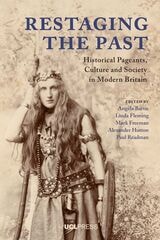
Restaging the Past
Historical Pageants, Culture and Society in Modern BritainEdited by Angela Bartie, Linda Fleming, Mark Freeman, and Alexander Hutton
University College London, 2020
Pageants were community events, bringing people together in a shared celebration and performance of the past; they also involved many prominent novelists, professional historians, and other writers, and as a result were featured repeatedly in popular and highbrow literature. Although the pageant tradition has largely died out, the contributors argue that it deserves to be acknowledged as a key aspect of community history during a period of great social and political change—and, they show, because of its former prominence, some lingering signs of “pageant fever” can still be seen in Britain today.
Restaging the Sixties
Radical Theaters and Their LegaciesEdited by James M. Harding and Cindy Rosenthal
University of Michigan Press, 2006
The volume explores how creations such as the Living Theatre's Paradise Now and the Performance Group’s Dionysus in 69 overlapped with political interests that, in the late 1960s, highlighted the notion of social collectives as a radical alternative to mainstream society. Situating theatrical practice within this socio-political context, the book considers how radical theaters sought to redefine the relationship between theater and political activism, and how, as a result, they challenged the foundations of theater itself.
James M. Harding is Associate Professor of English at Mary Washington University. His other books include Not the Other Avant-Garde: The Transnational Foundations of Avant-Garde Performance.
Cindy Rosenthal is Associate Professor of Theatre Studies, Hofstra University.
“A useful introduction to an eclectic period of experimental theater, providing portraits of the major political theaters and engaging with new vigor many of the era’s familiar aesthetic and ideological concerns. The writers offer a provocative history of theater’s attraction to (and occasional anxiety over) activism.”
--Marc Robinson, Yale University
Restaurant Republic
The Rise of Public Dining in BostonKelly Erby
University of Minnesota Press, 2016
Before the 1820s, the vast majority of Americans ate only at home. As the nation began to urbanize and industrialize, home and work became increasingly divided, resulting in new forms of commercial dining.
In this fascinating book, Kelly Erby explores the evolution of such eating alternatives in Boston during the nineteenth century. Why Boston? Its more modest assortment of restaurants, its less impressive—but still significant—expansion in commerce and population, and its growing diversity made it more typical of the nation’s other urban centers than New York. Restaurants, clearly segmented along class, gender, race, ethnic, and other lines, helped Bostonians become more comfortable with deepening social stratification in their city and young republic even as the experience of eating out contributed to an emerging public consumer culture.
Restaurant Republic sheds light on how commercial dining both reflected and helped shape growing fragmentation along lines of race, class, and gender—from the elite Tremont House, which served fashionable French cuisine, to such plebeian and ethnic venues as oyster saloons and Chinese chop suey houses. The epilogue takes us to the opening, in 1929 near Boston, of the nation’s first Howard Johnson’s and that restaurant’s establishment as a franchise in the next decade. The result is a compelling story that continues to shape America.
Restless Nation
Starting Over in AmericaJames M. Jasper
University of Chicago Press, 2000
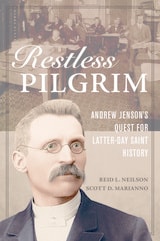
Restless Pilgrim
Andrew Jenson's Quest for Latter-day Saint HistoryReid L. Neilson and Scott D. Marianno
University of Illinois Press, 2022
Engaging and informed, Restless Pilgrim is a groundbreaking study of an important figure in Latter-day Saint intellectual life during a transformative era in Church history.
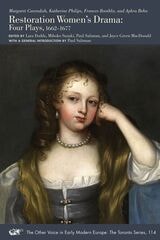
Restoration Women’s Drama
Four Plays, 1662–1677Margaret Cavendish, Katherine Philips, Frances Boothby, and Aphra Behn
Iter Press, 2026
Restoration Women’s Drama collects four Restoration plays by women: the highly acclaimed Katherine Philips, the successful professional Aphra Behn, the confidently original Margaret Cavendish, and the obscure pioneer Frances Boothby. This anthology includes Behn’s only tragedy as well as the first printed edition of Boothby’s Marcelia, the first play by a woman to be professionally staged in London, demonstrating the range of early modern drama produced by women in this period. An excellent introduction, it is poised to stimulate new discussions of women’s authorship, theatrical knowledge, and literary affinities. Each play has been edited afresh, and each has been modernized and annotated to facilitate reading, teaching, and performance possibilities.
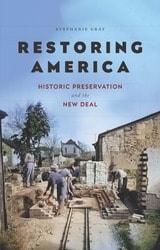
Restoring America
Historic Preservation and the New DealStephanie Gray
University of Massachusetts Press, 2025
Honorable Mention, New Deal Book Award
Exploring how the New Deal shaped history through politically driven commemoration
During the Great Depression, Americans employed historic preservation as a tool to address the political, economic, and social upheavals of the era. Inspired by the Roosevelt administration’s unprecedented support of federal arts projects, US politicians, architects, laborers, artisans, and local boosters skillfully used New Deal funds to restore, mythologize, and politicize the “historic shrines” in their communities. Restoring America illustrates how and why Americans turned to historic preservation as a strategy for managing both political realities and ambitions.
Stephanie Gray presents four thoroughly researched and diverse case studies: a colonial theater in the Deep South, a Puritan minister’s home in New England, aviator Charles Lindbergh's modest farmhouse and parklands of the Upper Midwest, and a multi-layered Spanish-German-Mexican arts village in the Central South. Collectively, these examples show how the restoration of old places emerged as a popular form of cultural production, an instrument of economic reconstruction, and a striking expression of political theater during the Depression. Moreover, these New Deal preservation projects make evident that any exercise in physically preserving the past is both conservative and progressive, reactive and proactive.
Restoring America contends that the federally funded and locally driven preservation initiatives of the 1930s and 1940s can help inform contemporary public history debates over the politics of commemoration and imagine possibilities for future preservation practice.

Restoring Baird's Image
Donald F. McLean
The Institution of Engineering and Technology, 2000

Restoring the Faith
The Assemblies of God, Pentecostalism, and American CultureEdith L. Blumhofer
University of Illinois Press, 1993
Edith Blumhofer uses the Assemblies of God, the largest classical Pentecostal denomination in the world, as a lens through which to view the changing nature of Anglo Pentecostalism in the United States. She illustrates how the original mission to proclaim the end resulted in the development of Bible schools, the rise of the charismatic movement, and the popularity of such figures as Aimee Semple McPherson, Charles Fox Parham, and David Du Plessis. Blumhofer also examines the sect's use of radio and television and the creation of a parallel Christian culture

Restoring the Pitchfork Ranch
How Healing a Southwest Oasis Holds Promise for Our Endangered LandA. Thomas Cole
University of Arizona Press, 2024
Restoring the Pitchfork Ranch tells the story of a decades-long habitat restoration project in southwestern New Mexico. A. Thomas Cole explains what inspired him and his wife, Lucinda, to turn their retirement into years dedicated to hard work and renewal. The book shares the past and present history of a very special ranch south of Silver City, which is home to a rare type of regional wetland, a fragile desert grassland ecosystem, archaeological sites, and a critical wildlife corridor in a drought-stricken landscape.
Today the 11,300 acres that make up the Pitchfork Ranch provide an important setting for carbon sequestration, wildlife habitats, and space for the reintroduction of endangered or threatened species. Restoring the Pitchfork Ranch weaves together stories of mine strikers, cattle ranching, and the climate crisis into an important and inspiring call to action. For anyone who has wondered how they can help, the Pitchfork Ranch provides an inspiring way forward.
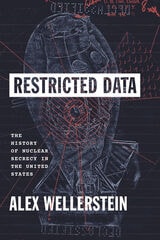
Restricted Data
The History of Nuclear Secrecy in the United StatesAlex Wellerstein
University of Chicago Press, 2021
The American atomic bomb was born in secrecy. From the moment scientists first conceived of its possibility to the bombings of Hiroshima and Nagasaki and beyond, there were efforts to control the spread of nuclear information and the newly discovered scientific facts that made such powerful weapons possible. The totalizing scientific secrecy that the atomic bomb appeared to demand was new, unusual, and very nearly unprecedented. It was foreign to American science and American democracy—and potentially incompatible with both. From the beginning, this secrecy was controversial, and it was always contested. The atomic bomb was not merely the application of science to war, but the result of decades of investment in scientific education, infrastructure, and global collaboration. If secrecy became the norm, how would science survive?
Drawing on troves of declassified files, including records released by the government for the first time through the author’s efforts, Restricted Data traces the complex evolution of the US nuclear secrecy regime from the first whisper of the atomic bomb through the mounting tensions of the Cold War and into the early twenty-first century. A compelling history of powerful ideas at war, it tells a story that feels distinctly American: rich, sprawling, and built on the conflict between high-minded idealism and ugly, fearful power.
Restructuring Architectural Theory
Edited by Marco Diani and Catherine Ingraham
Northwestern University Press, 1989
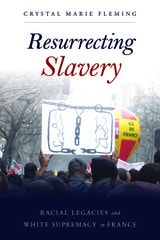
Resurrecting Slavery
Racial Legacies and White Supremacy in FranceCrystal Marie Fleming
Temple University Press, 2017
How can politicians and ordinary citizens face the racial past in a country that frames itself as colorblind? In her timely and provocative book, Resurrecting Slavery, Crystal Fleming shows how people make sense of slavery in a nation where talking about race, colonialism, and slavery remains taboo. Noting how struggles over the meaning of racial history are informed by contemporary politics of race, she asks: What kinds of group identities are at stake today for activists and French people with ties to overseas territories where slavery took place?
Fleming investigates the connections and disconnections that are made between racism, slavery, and colonialism in France. She provides historical context and examines how politicians and commemorative activists interpret the racial past and present. Resurrecting Slavery also includes in-depth interviews with French Caribbean migrants outside the commemorative movement to address the everyday racial politics of remembrance.
Bringing a critical race perspective to the study of French racism, Fleming’s groundbreaking study provides a more nuanced understanding of race in France along with new ways of thinking about the global dimensions of slavery, anti-blackness, and white supremacy.