Results by title
3258 books match the query 'Art' and 128 start with r
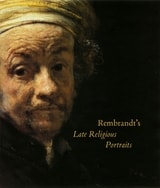
Rembrandt's Late Religious Portraits
Arthur K. Wheelock Jr.
University of Chicago Press, 2005
An exhibition by the National Gallery of Art and this accompanying catalog assemble seventeen of the paintings for the first time, finally giving the powerful images their due. Many of these subtle and wondrous paintings have been identified as images of apostles and evangelists, but among them are also representations of Christ, the Virgin, and still-unidentified saints and monks. In Rembrandt's typical fashion, the men and women in these portraits peer out of the dark recesses of dimly lit interiors as though burdened by the weight of their spiritual and emotional concerns. Yet recent archival research has raised questions about their attribution, the relationships among the paintings, and, in a broader sense, Rembrandt's life and career—issues addressed by the contributors to this volume. With its lavish color images and state-of-the-field research, Rembrandt's Late Religious Portraits will make a profound contribution to the understanding of this unique and provocative body of work.
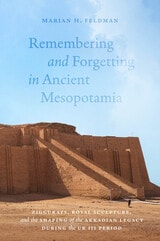
Remembering and Forgetting in Ancient Mesopotamia
Ziggurats, Royal Sculpture, and the Shaping of the Akkadian Legacy During the Ur III PeriodMarian H. Feldman
University of Chicago Press, 2026
In this innovative new study of ancient Mesopotamian art and architecture, Marian H. Feldman examines the complex legacy of the Akkadian dynasty, which spanned ca. 2350-2150 BCE in the region now known as southern Iraq. The Akkadian state played an essential role in the formation and expression of subsequent political entities in the region, yet our understanding of this period is based primarily on the historical lens of their successors, in particular the rulers of the Third Dynasty of Ur (ca. 2100-1000 BCE). Focusing on four remaining ziggurats in Ur, Eridu, Uruk, and Nippur, as well as surviving statues and steles, Feldman examines how the Ur III rulers selectively curated and erased Akkadian structures and monuments to serve their own political ambitions. Analyzing the archaeological evidence of Ur III building practices and the display of Akkadian royal sculpture, she considers the role of sacred spaces in our knowledge of the period and imagines how the cultivation of the Akkadian narrative helped the Ur III dynasty centralize its power. In so doing, this book proposes a new way to understand the impact of the survival—or erasure—of architectural and artistic remains on collective and historical memory.
Remote Avant-Garde
Aboriginal Art under OccupationJennifer Loureide Biddle
Duke University Press, 2016
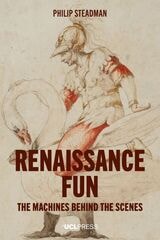
Renaissance Fun
The Machines behind the ScenesPhilip Steadman
University College London, 2021
Renaissance Fun is about the technology of entertainment in the forms of stage machinery, theatrical special effects, gardens, fountains, automata, and self-playing musical instruments from the Renaissance. How did the machines behind these shows work? How exactly were chariots filled with singers let down onto the stage? How were flaming dragons made to fly across the sky? How were seas created on stage? How did mechanical birds imitate real birdsong? What was “artificial music,” three centuries before Edison and the phonograph? How could pipe organs be driven and made to play themselves by waterpower alone? And who were the architects, engineers, and craftsmen who created these wonders? While this book is offered as entertainment in itself, it also offers a more serious scholarly argument centered on the enormous influence of Vitruvius and Hero, two ancient writers who composed on the subject.
Renaissance Invention
Stradanus's Nova RepertaEdited by Lia Markey
Northwestern University Press, 2020
Renaissance Invention: Stradanus’s “Nova Reperta” seeks to understand why certain inventions or novelties were represented in the series and how that presentation reflected and fostered their adoption in the sixteenth century. What can Stradanus’s prints tell us about invention and cross-cultural encounter in the Renaissance? What was considered “new” in the era? Who created change and technological innovation?
Through images of group activities and interactions in workshops, Stradanus’s prints emphasize the importance of collaboration in the creation of new things, dispelling traditional notions of individual genius. The series also dismisses the assumption that the revival of the wonders of the ancient world in Italy was the catalyst for transformation. In fact, the Latin captions on the prints explain how contemporary inventions surpass those of the ancients. Together, word and image foreground the global nature of invention and change in the early modern period even as they promote specifically Florentine interests and activities.
Renaissance and Baroque Art
Selected EssaysLeo Steinberg
University of Chicago Press, 2020
This volume begins and ends with thematic essays on two fundamental precepts of Steinberg’s art history: how dependence on textual authority mutes the visual truths of images and why artists routinely copy or adapt earlier artworks. In between are fourteen chapters on masterpieces of renaissance and baroque art, with bold and enlightening interpretations of works by Mantegna, Filippo Lippi, Pontormo, El Greco, Caravaggio, Steen and, finally, Velázquez. Four chapters are devoted to some of Velázquez’s best-known paintings, ending with the famously enigmatic Las Meninas.
Renaissance and Baroque Art is the third volume in a series that presents Steinberg’s writings, selected and edited by his longtime associate Sheila Schwartz.
Rencontre
Carolin Meister and Jean-Luc Nancy
Diaphanes, 2021
Hasard, providence, intrication quantique, rituel, animisme, étreinte ou porosité, pensée ou art sont autant de tentatives de tourner autour de ce qui nous échappe quand nous nous rencontrons. Et autant de façons de se rencontrer là où la philosophie reconnait que l’art lui échappe.

Rendered in Bits and Stone
Studies in (In)Tangible Digital HeritageEdited by Maciej Stasiowski
Intellect Books, 2026
As digital technologies increasingly shape how we preserve, interpret, and experience the past, the field of digital heritage has undergone rapid and transformative growth. This book offers a timely and critical exploration of how tools such as 3D modelling, augmented reality, and mobile applications are redefining the landscape of heritage conservation and storytelling.
Bringing together contributions from international scholars across disciplines, including architectural conservation, archaeology, urban studies, tourism, photography, museology, and game studies, this volume engages with the complex politics, practices, and potentials of digital heritage. The chapters are organized around three thematic strands: the digital politics of conservation, technology as a medium for narrative and interpretation, and the creation of virtual reconstructions of the past.
By critically examining the limitations of traditional preservation methods and the innovative opportunities offered by digital tools, this collection not only reflects the current state of the field but also contributes to its future directions. Featuring culturally and geographically diverse case studies and blending theoretical insight with practical application, the book is essential reading for students, researchers, and professionals in heritage studies, conservation, architecture, archaeology, and cultural tourism.
René Magritte
Selected WritingsRené Magritte
University of Minnesota Press, 2016
Available for the first time in an English translation, this selection of René Magritte’s writings gives non-Francophone readers the chance to encounter the many incarnations of the renowned Belgian painter—the artist, the man, the aspiring noirist, the fire-breathing theorist—in his own words. Through whimsical personal letters, biting apologia, appreciations of fellow artists, pugnacious interviews, farcical film scripts, prose poems, manifestos, and much more, a new Magritte emerges: part Surrealist, part literalist, part celebrity, part rascal.While this book is sure to appeal to admirers of Magritte’s art and those who are curious about his personal life, there is also much to delight readers interested in the history and theory of art, philosophy and politics, as well as lovers of creativity and the inner workings of a probing, inquisitive mind unrestricted by genre, medium, or fashion.
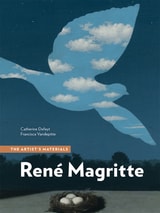
René Magritte
The Artist’s MaterialsCatherine Defeyt
J. Paul Getty Trust, The, 0
René Magritte (1898–1967) is the most famous Belgian artist of the twentieth century and a celebrated representative of the Surrealist movement. Much has been written about his practices, artistic community, and significance within the history of modernism, but little has been documented regarding his process.
This volume examines fifty oil paintings made by Magritte between 1921 and 1967, now held at the Royal Museums of Fine Arts of Belgium. This technical study of his works using noninvasive scientific imaging and chemical analysis reveals the artist’s painting materials, his habit of overpainting previous compositions, and the origins and mechanisms of surface and pigment degradation. Of interest to conservators, scientists, curators, and enthusiasts of twentieth-century art, this book expands our understanding of Magritte the artist and provides new and useful findings that will inform strategies for the future care of his works.
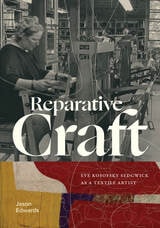
Reparative Craft
Eve Kosofsky Sedgwick as a Textile ArtistJason Edwards
Duke University Press, 2026

Replacing Home
From Primordial Hut to Digital Network in Contemporary ArtJennifer Johung
University of Minnesota Press, 2011
From property deeds to shipping containers to wearable shelters to virtual spaces: what does it mean to draw a spatial boundary? To be at home? In a world in which notions of place are constantly changing, Jennifer Johung looks at new constructions of staying in place—in contemporary site-specific art, digital media, portable architecture, and various other imaginable shelters and sites.
Replacing Home suggests that while “place” may no longer be a sustainable category, being in place and belonging at home are nonetheless possible. By emphasizing reusability rather than fixed constructions, art and architecture together propose various systems of replacing home in which sites can be revisited, material structures can be renewed, and dwellers can come back into contact over time. Bringing together a range of objects and events, Johung considers the structural replacements of home as evident in artistic analogies of the prehistoric hut, modular homes, transformable garments, and digitally networked sites.
In charting these intersections between contemporary art and architecture, Replacing Home introduces a new framework for reconceptualizing spatial situation; at the same time, it presents a new way to experience being and belonging within our globally expanded environments.
Representations of Working in Arts Education
Stories of Learning and TeachingNarelle Lemon, Susanne Garvis, and Christopher Klopper
Intellect Books, 2014
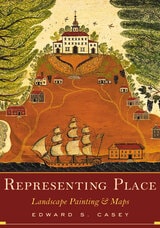
Representing Place
Landscape Painting And MapsEdward S. Casey
University of Minnesota Press, 2002
You are here, a map declares, but of course you are not, any more than you truly occupy the vantage point into which a landscape painting puts you. How maps and paintings figure and reconfigure space—as well as our place in it—is the subject of Edward S. Casey’s ambitious study, an exploration of how we portray the world and its many places.
Casey’s discussion ranges widely from Northern Sung landscape painting to nineteenth-century American and British landscape painting and photography, from prehistoric petroglyphs and medieval portolan charts to seventeenth-century Dutch cartography and land survey maps of the American frontier. From these culturally and historically diverse forays a theory of representation emerges. Casey proposes that the representation of place in visual works be judged in terms not of resemblance, but of reconnecting with an earth and world that are not the mere content of mind or language—a reconnection that calls for the embodiment and implacement of the human subject.
Representing Place is the third volume in Casey’s influential epic project of reinterpreting evolving conceptions of space in world thought. He combines history with philosophy, and cartography with art, to create a new understanding of how representation requires and thrives on space, ultimately renewing our appreciation of the power of place as it is set forth in paintings and maps.

Representing the French Revolution
Literature, Historiography, and ArtEdited by James A. W. Heffernan
Brandeis University Press, 1992
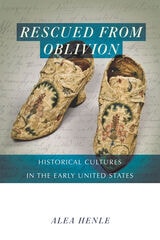
Rescued from Oblivion
Historical Cultures in the Early United StatesAlea Henle
University of Massachusetts Press, 2020
With in-depth research and an expansive scope, Rescued from Oblivion offers a vital account of the formation of historical culture and consciousness in the early United States, re-centering in the record groups long marginalized from the national memory. As Alea Henle demonstrates, these societies laid the groundwork for professional practices that are still embraced today: collection policies, distinctions between preservation of textual and nontextual artifacts, publication programs, historical rituals and commemorations, reconciliation of scholarly and popular approaches, and more. At the same time, officers of these early societies faced challenges to their historical authority from communities interested in preserving a broader range of materials and documenting more inclusive histories, including fellow members, popular historians, white women, and peoples of color.
Research in Art and Design Education
Issues and ExemplarsEdited by Richard Hickman
Intellect Books, 2008
Reset in Stone
Memory and Reuse in Ancient AthensSarah A. Rous
University of Wisconsin Press, 2019
Sarah Rous develops the concept of upcycling to refer to this meaningful reclamation, the intentionality of reemploying each particular object for its specific new context. The upcycling approach drives innovative reinterpretations of diverse cases, including column drums built into fortification walls, recut inscriptions, monument renovations, and the wholesale relocation of buildings. Using archaeological, literary, and epigraphic evidence from more than eight centuries of Athenian history, Rous's investigation connects seemingly disparate instances of the reuse of building materials. She focuses on agency, offering an alternative to the traditional discourse on spolia. Reset in Stone illuminates a vital practice through which Athenians shaped social memory in the physical realm, literally building their past into their city.
Resilient Memories
Amerindian Cognitive Schemas in Latin American ArtArij Ouweneel
The Ohio State University Press, 2018
Exploring works ranging in popularity, from Alfonso Cuarón’s Y Tu Mamá También to the paintings of Peruvian artists Claudia Coca and Jorge Miyagui, and from Mexican Zapatistas to hip-hop, Ouweneel details the ways in which artists interact with the embodied memory of the community but also assert their own place within it as crucial, furthering their audiences’ understanding of and interaction with existing cultural schemas. In this way, Ouweneel shows that memories must serve the present or they will be forgotten.
Resisting Abstraction
Robert Delaunay and Vision in the Face of ModernismGordon Hughes
University of Chicago Press, 2014
With Resisting Abstraction, the first English-language study of Delaunay in more than thirty years, Gordon Hughes mounts a powerful argument that Delaunay was not only one of the earliest artists to tackle abstraction, but the only artist to present his abstraction as a response to new scientific theories of vision. The colorful, optically driven canvases that Delaunay produced, Hughes shows, set him apart from the more ethereal abstraction of contemporaries like Kandinsky, Mondrian, Kazimir Malevich, and František Kupka. In fact, Delaunay emphatically rejected the spiritual motivations and idealism of that group, rooting his work instead in contemporary science and optics. Thus he set the stage not only for the modern artists who would follow, but for the critics who celebrated them as well.
Resolutions 3
Global Networks of VideoMing-Yuen S. Ma
University of Minnesota Press, 2012
Resolutions 3 explores the wide-ranging implications of video art and video-based production in contemporary media culture. It is the third volume in a series composed of Resolution: A Critique of Video Art (1986) and Resolutions: Contemporary Video Practices (1996). While Resolution was one of the first critical texts on video art in the United States, Resolutions was one of the first books to address video as a medium across disciplines from theoretical, activist, and transnational perspectives.
Resolutions 3 articulates this legacy as a challenge to reengage with the explosive viral reach of moving image–based content and its infiltration into and impact on culture and everyday life. The contributors to this work analyze what is now a fourth decade of video practices as marked within and outside the margins of art production, networked interventions, projected spectacle, museum entombment, or 24/7 streaming. Intending to broaden, contest, and amplify the mediated space that was defined by its two predecessors, this volume investigates the ever-changing state of video’s deployment as examiner, tool, journal reportage, improvisation, witness, riff, leverage, and document.
Contributors: Kathleen Ash-Milby, Smithsonian National Museum of the American Indian; Myriam-Odile Blin, Rouen U, France; Nancy Buchanan, California Institute of the Arts; Derek A. Burrill, U of California, Riverside; Sean Cubitt, U of Melbourne; Faisal Devji, New York U; Jennifer Doyle, U of California, Riverside; Jennifer Friedlander, Pomona College; Kathy High, Rensselaer Polytechnic Institute; Lucas Hilderbrand, U of California, Irvine; Nguyen Tan Hoang, Bryn Mawr College; Kathy Rae Huffman; Amelia Jones, McGill U; David Joselit, Yale U; Alexandra Juhasz, Pitzer College; Jessica Lawless, Santa Fe Community College; Hea Jeong Lee; Jesse Lerner, Pitzer College; Akira Mizuta Lippit, U of Southern California; Lionel Manga; Laurence A. Rickels, U of California, Santa Barbara; Kenneth Rogers, U of California, Riverside; Michael Rush, Eli and Edythe Broad Art Museum, Michigan State U; Freya Schiwy, U of California, Riverside; Beverly R. Singer, U of New Mexico; Yvonne Spielmann, U of the West of Scotland; Catherine Taft, Getty Research Institute; Holly Willis, U of Southern California.
Restructuring Architectural Theory
Edited by Marco Diani and Catherine Ingraham
Northwestern University Press, 1989
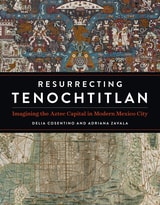
Resurrecting Tenochtitlan
Imagining the Aztec Capital in Modern Mexico CityDelia Cosentino and Adriana Zavala
University of Texas Press, 2023
Honorable Mention, ALAA-Arvey Foundation Book Award, Association of Latin American Art
Finalist, 2024 Charles Rufus Morey Book Award, College Art Association
How Mexican artists and intellectuals created a new identity for modern Mexico City through its ties to Aztec Tenochtitlan.
After archaeologists rediscovered a corner of the Templo Mayor in 1914, artists, intellectuals, and government officials attempted to revive Tenochtitlan as an instrument for reassessing Mexican national identity in the wake of the Revolution of 1910. What followed was a conceptual excavation of the original Mexica capital in relation to the transforming urban landscape of modern Mexico City.
Revolutionary-era scholars took a renewed interest in sixteenth century maps as they recognized an intersection between Tenochtitlan and the foundation of a Spanish colonial settlement directly over it. Meanwhile, Mexico City developed with modern roads and expanded civic areas as agents of nationalism promoted concepts like indigenismo, the embrace of Indigenous cultural expressions. The promotion of artworks and new architectural projects such as Diego Rivera’s Anahuacalli Museum helped to make real the notion of a modern Tenochtitlan. Employing archival materials, newspaper reports, and art criticism from 1914 to 1964, Resurrecting Tenochtitlan connects art history with urban studies to reveal the construction of a complex physical and cultural layout for Mexico’s modern capital.
Rethinking Borders
John Welchman
University of Minnesota Press, 1996

Rethinking Cosmopolitanism
Africa in Europe / Europe in AfricaSalah M. Hassan and Chika Okeke-Agula, special issue editors
Duke University Press, 2020
Contributors. Hans Belting, Susan Buck-Morss, Jareh Das, Naminata Diabate, Fatima El Tayeb, Salah M. Hassan, Achille Mbembe, Sandy Prita Meier, Chika Okeke-Agulu, Tejumola Olaniyan, Manuela Ribeiro Sanches, Berni Searle, Bahia Shehab, Brett M. Van Hoesen, Selene Wendt, Siegfried Zielinski
Rethinking Heritage for Sustainable Development
International Frameworks, Local ImpactsSophia Labadi
University College London, 2022
In 2015, the UN adopted Sustainable Development Goals (SDGs), which have since influenced international and intergovernmental organizations and governments and dictated priorities for international aid spending. Culture, including heritage, is often presented as fundamental to addressing the SDGs. Yet in practice heritage is marginalized when SDGs are being discussed and implemented.
This volume presents a substantial and original assessment of whether and how heritage has contributed to three key dimensions of sustainable development (poverty reduction, gender equality, and environmental sustainability) within the context of its marginalization from the SDGs and from previous international development agendas. The book adopts a novel, inclusive, large-scale, and systematic approach, providing the first comprehensive history of the international approaches to culture (including heritage) in development from 1970 to the present day. It critically assesses the international projects implemented in sub-Saharan Africa that aimed to demonstrate the contribution of heritage for development in time for the negotiation of the SDGs, reflecting on the shortcomings of selected projects and providing recommendations for rethinking heritage for development.
Rethinking the Greek Campaign to Repatriate the Parthenon Marbles
Problems and Complexities with Contested Cultural HeritageJames Beresford
Central European University Press, 2026
Return Engagements
Contemporary Art's Traumas of Modernity and History in Sài Gòn and Phnom PenhViet Lê
Duke University Press, 2021
Returning Home
Diné Creative Works from the Intermountain Indian SchoolFarina King, Michael P. Taylor, and James R. Swensen With Contributions by Robert Dodson, Rena Dunn, Terence Wride, and Students of the Intermountain Indian School
University of Arizona Press, 2021
This book works to recover the lived experiences of Native American boarding school students through creative works, student interviews, and scholarly collaboration. It shows the complex agency and ability of Indigenous youth to maintain their Diné culture within the colonial spaces that were designed to alienate them from their communities and customs. Returning Home provides a view into the students’ experiences and their connections to Diné community and land. Despite the initial Intermountain Indian School agenda to send Diné students away and permanently relocate them elsewhere, Diné student artists and writers returned home through their creative works by evoking senses of Diné Bikéyah and the kinship that defined home for them.
Returning Home uses archival materials housed at Utah State University, as well as material donated by surviving Intermountain Indian School students and teachers throughout Utah, Arizona, and New Mexico. Artwork, poems, and other creative materials show a longing for cultural connection and demonstrate cultural resilience. This work was shared with surviving Intermountain Indian School students and their communities in and around the Navajo Nation in the form of a traveling museum exhibit, and now it is available in this thoughtfully crafted volume. By bringing together the archived student arts and writings with the voices of living communities, Returning Home traces, recontextualizes, reconnects, and returns the embodiment and perpetuation of Intermountain Indian School students’ everyday acts of resurgence.
Reuse, Misuse, Abuse
The Ethics of Audiovisual Appropriation in the Digital EraJaimie Baron
Rutgers University Press, 2021
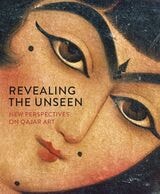
Revealing the Unseen
New Perspectives on Qajar ArtEdited by Melanie Gibson and Gwenaëlle Fellinger
Gingko, 2022
The thirteen articles in this volume were originally given as presentations at the symposium of the same name organized in June 2018 by the Musée du Louvre and the Musée du Louvre-Lens in conjunction with the exhibition The Empire of Roses: Masterpieces of 19th Century Persian Art. The exhibition explored the art of Iran in the nineteenth and early twentieth centuries, while the nation was under the rule of the Qajar dynasty. The symposium set out to present research on previously unknown and unpublished objects from this rich period of art history.
This volume, published with the Louvre Museum in France, is divided into four sections. The first, “Transitions and Transmissions,” is dedicated to the arts of painting, illumination, and lithography. The focus of the second section, entitled “The Image Revealed,” also considers works on paper, looking at new themes and techniques. “The Material World” examines the use of materials such as textiles, carpets, and armor. The articles in the final section discuss the history of two groups of artifacts acquired by their respective museums.
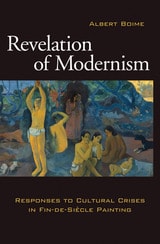
Revelation of Modernism
Response to Cultural Crises in Fin-de-Siécle PaintingAlbert Boime
University of Missouri Press, 2008
Among postimpressionist painters, Van Gogh, Seurat, Cézanne, and Gauguin produced a remarkable body of work that responded to a cultural and spiritual crisis in the avant-garde world—influences that pushed them toward an increasing reliance on science, literature, and occultism. In Revelation of Modernism, renowned art historian Albert Boime reappraises specific works by these masters from a perspective more appreciative of the individuals’ inner conflicts, offering the art world a new understanding of a period fraught with apocalyptic fears and existential anxieties.
Building on the seminal observations of Sven Lövgren from a half-century ago, Boime rejects popular notions of “art for art’s sake” and rethinks an entire movement to suggest that history, rather than expressive urge, is the driving force that shapes art. He reconsiders familiar masterpieces from a fresh perspective, situating the art in the contexts of history both real and speculative, of contemporary philosophy, and of science to depict modernism as a development that ultimately failed.
Boime expands on what we think we know about these figures and produces startling new revelations about their work. From the political history of Seurat’s Parade de cirque to the astronomical foundations of Van Gogh’s Starry Night, he draws analogies between literary sources and social, personal, and political strategies that have eluded most art historians. He offers a richer and more complex vision of Cézanne, considering the artist as an Old Testament figure in search of the Promised Landscape. And he provides a particularly detailed look at Gauguin—on whom Boime has never previously published—that takes a closer look at the artist’s The Vision after the Sermon and its allusions to Eliphas Lévi’s writings, sheds light on the sources for From whence do we come? and offers new thoughts about Gauguin’s various self-portraits.
Boime’s latest contribution further testifies to his status as one of our most important living art historians. As entertaining as it is eloquent, Revelation of Modernism is a bold and groundbreaking work that should be required reading for all who wish to understand the contradictory origins and development of modernism and its role in history.
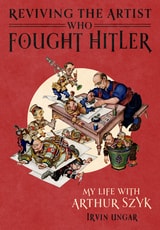
Reviving the Artist Who Fought Hitler
My Life with Arthur SzykIrvin Ungar
University of Texas Press, 2026
The intertwining story of a noted anti-Nazi artist and the former rabbi who revived his reputation.
During World War II, the Polish-Jewish immigrant Arthur Szyk became America’s leading anti-Nazi artist. His art was so effective that Adolf Hitler reportedly put a bounty on his head while the US military declared him a “citizen-soldier” of the free world. Szyk steadfastly fought for the rescue of European Jewry during the Holocaust, creating artworks like De Profundis, which imagines Jesus sharing the suffering of countless lifeless Jews. His civil rights art challenged segregation and his illuminated Declaration of Independence resides in the Library of Congress. Szyk’s masterwork, an illustrated Passover Haggadah, is considered by many to be one of the most beautiful books ever produced by human hands.
Once world-famous, Arthur Szyk was all but forgotten after his death in 1951. Reviving the Artist Who Fought Hitler recounts Irvin Ungar's decades-long journey to restore Szyk to public consciousness, and become the principal collector, dealer, scholar, and promoter of Szyk’s art in the United States, Europe, and Israel. Richly illustrated and full of forgotten history, this memoir is an inspiring story of artistic passion and an invitation to commune with a heroic advocate for all humanity.
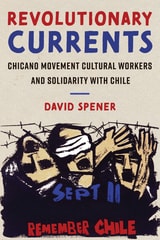
Revolutionary Currents
Chicano Movement Cultural Workers and Solidarity with ChileDavid Spener
University of Arizona Press, 2027
On September 11, 1973, General Augusto Pinochet led a bloody military coup in Chile that overthrew Salvador Allende’s democratically elected socialist government. The coup ushered in a cruelly repressive dictatorship that would govern the country for the next seventeen years, constituting a watershed moment in Cold War history.
This book recounts the untold story of how Chicano Movement poets, artists, musicians, and theater groups in the United States used their work to express solidarity with the international campaign to restore democracy in Chile. Such expressions of solidarity were especially prominent in the San Francisco Bay Area, where hundreds of Chilean exiles settled following the coup. Upon arrival, they joined a diverse Latinx population that was home to a Chicanx arts community whose members’ political orientations primed them to lend their talents to anti-imperialist causes. These Chicanxs were also drawn to the campaign against the dictatorship through friendship and acquaintance with members of the Chilean exile community.
David Spener shows how the Bay Area’s unique cosmopolitan social context offered Chicanxs and Chileans meaningful opportunities for dialogue and collaboration with each other as well as with Latinxs of other national origins. Chicanxs often adopted a pan-ethnic raza identity that they could share with Chilean, Nicaraguan, Puerto Rican, Salvadoran, and other Latinx activists. This did not mean, however, that they abandoned the political identities that they had gained from the Chicano Movement. Instead, many came to see themselves as uniting with other Latinxs, first Chileans and then Nicaraguans and Salvadorans, in a struggle against U.S. imperialism throughout the Americas.
Rhetoric of Modern Death in American Living Dead Films
Outi Hakola
Intellect Books, 2015
Rhetorics of Value
Exhibition Design and Communication in Museums and BeyondCorinne A. Kratz
Duke University Press, 2025
Ribbon of Darkness
Inferencing from the Shadowy Arts and SciencesBarbara Maria Stafford
University of Chicago Press, 2019
Stafford organizes these essays around three concepts that structure the book: inscrutability, ineffability, and intuitability. All three, she explains, allow us to examine how both the arts and the sciences imaginatively infer meaning from the “veiled behavior of matter,” bringing these historically divided subjects into a shared intellectual inquiry and imbuing them with an ethical urgency. A vanguard work at the intersection of the arts and sciences, this book will be sure to guide readers from either realm into unfamiliar yet undeniably fertile territory.
Richard Segalman Black & White
Muses, Magic & MonotypesRichard Segalman
The Artist Book Foundation, 2015
For many, the name Richard Segalman conjures up a vision of light-infused paintings of women gathered on a beach, gazing out the window of a New York City brownstone, or dressed in vcostumes from another era. But just as Edgar Degas, approaching his 60th year, surprised gallery goers with an exhibition not of ballerinas or race horses, but of highly atmospheric monotype landscapes, so too does Segalman surprise us with this exceptional collection of monotypes he began to produce in 1993, at nearly 60. "I reached a sort of plateau and needed a new direction," says the artist. "I came across a monotype... took a course... made one and I was hooked."
The significance of Segalman's shift into this medium is most powerfully conveyed through his arresting black-and-white prints that range from anonymous crowds on Coney Island beaches or New York City streets to a solitary figure in private contemplation. This monochromatic focus makes perfect sense: Segalman's first gallery appearance in New York—a sold-out show that gave him the courage to embrace the life of an artist—consisted entirely of black-and-white charcoal drawings, several stunning examples of which open this book.
Author Susan F. Castle's essay about the artist and his muses—the people, places, and things for which Richard Segalman has an abiding love—illuminates the exceptional work collected for this monograph. She combines excerpts from interviews with the artist and the three master printmakers with whom he has worked in Woodstock and Brooklyn, New York, and in Santa Fe, New Mexico. In addition, Anthony Kirk's insightful introudction provides an essential historical perspective on the artist and his printmaking process.

Rijksmuseum
The Building, the Collection and the Outdoor GalleryEdited by Cees W. de Jong and Patrick Spijkerman
Amsterdam University Press, 2015
The museum recently reopened after a ten-year renovation that cost more than $400 million, and the result is stunning: never before has the Rijksmuseum’s collection been displayed so well. This book offers a lavishly illustrated chronicle of both the collection and the building that houses it. Though nothing can replace an actual trip to the Rijksmuseum—as the more than two million annual visitors can attest—this book comes as close as possible, taking art lovers on a virtual tour of the greatest masterworks of Western art in a building that is brilliantly designed to show them at their best.
Risk Work
Making Art and Guerrilla Tactics in Punitive America, 1967–1987Faye Raquel Gleisser
University of Chicago Press, 2023
As US news covered anticolonialist resistance abroad and urban rebellions at home, and as politicians mobilized the perceived threat of “guerrilla warfare” to justify increased police presence nationwide, artists across the country began adopting guerrilla tactics in performance and conceptual art. Risk Work tells the story of how artists’ experimentation with physical and psychological interference from the late 1960s through the late 1980s reveals the complex and enduring relationship between contemporary art, state power, and policing.
Focusing on instances of arrest or potential arrest in art by Chris Burden, Adrian Piper, Jean Toche, Tehching Hsieh, Pope.L, the Guerrilla Girls, Asco, and PESTS, Faye Raquel Gleisser analyzes the gendered, sexualized, and racial politics of risk-taking that are overlooked in prevailing, white-centered narratives of American art. Drawing on art history and sociology as well as performance, prison, and Black studies, Gleisser argues that artists’ anticipation of state-sanctioned violence invokes the concept of “punitive literacy,” a collectively formed understanding of how to protect oneself and others in a carceral society.
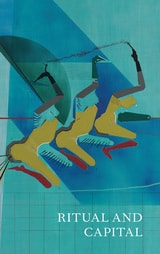
Ritual and Capital
Edited by Bard Graduate Center and Wendy's Subway
Bard Graduate Center, 2020
The publication of Ritual and Capital is the culmination of a series of public readings organized by Wendy’s Subway, a nonprofit organization in Brooklyn, as part of their Spring 2017 Reading Room residency at the Bard Graduate Center. Copublished by the Bard Graduate Center and Wendy’s Subway, Ritual and Capital is the first title in the BGCX series, a publication series designed to expand time-based programming after the events themselves have ended. Springing from the generative spontaneity of conversation, performance, and hands-on engagement as their starting points, these experimental publishing projects will provide space for continued reflection and research in a form that is inclusive of a variety of artists and makers.
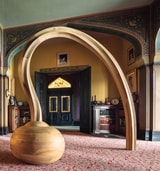
River Crossings
Contemporary Art Comes HomeJason Rosenfeld
The Artist Book Foundation, 2015
In a unique and groundbreaking 2015 presentation of important contemporary art rarely seen in the traditional environs of the Hudson River Valley, the Thomas Cole National Historic Site and Olana, Frederic Edwin Church's Persian-inspired mansion, showcased the work of contemporary American artists such as Chuck Close, Cindy Sherman, Maya Lin, Martin Puryear, and Gregory Crewdson, some of the 30 artists featured in the exhibition. Stephen Hannock, celebrated Luminist painter and one of the exhibition's co-curators, stated that "this is a terrific opportunity to open up contemporary art, as well as these historic properties, to audiences who will see firsthand these shared artistic concerns."
The works of art selected for the exhibition were shown at the two venues to encourage visitors to experience both of the distinguished properties and the grandeur of their surroundings, and to present a complete overview and understanding of these contemporary works in a location where many art historians believe American art was born. The accompanying publication, River Crossings: Contemporary Art Comes Home, provides readers with a lavish record of this extraordinary and innovative exhibition, and offers unique and highly informative perspectives on the continuity of the American artistic tradition in two of the nation's most historic sites.
In addition to an impressive plate section of more than 60 works with brief artist biographies and descriptive narratives for the individual works, this comprehensive presentation features noteworthy, exceptional contributions. Stephen Hannock's preface details the development of this remarkable exhibition, while co-curator Jason Rosenfeld reveals in his essay the exhibition's importance relative to historical perception as he considers Cole's and Church's support of conemporary art in their time. Cultural historian Maurice Berger considers the realities of race and gender from the nineteenth-century Hudson River Valley to the present, and Marvin Heiferman, curator and writer, examines photography in the exhibition and its connections to Church's work and his use of the medium. Award-winning architectural and landscape photographer Peter Aaron generously provided the stunning installation, exterior, and landscape photographs, a gorgeous complement to this outstanding catalogue.
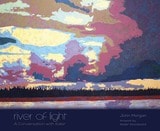
River of Light
A Conversation with KabirJohn Morgan
University of Alaska Press, 2014
River of Light: A Conversation with Kabir is centered in one man’s meditations and revelations while traveling on a river. John Morgan spent a week traveling the Copper River in Southcentral Alaska, and the resulting encounters form the heart of this book-length poem. The river’s shifting landscape enriches the poem’s meditative mood while currents shape the poem and the pacing of its lines. The mystic poet Kabir is Morgan’s internal guide and serves as a divine foil through quiet stretches that bring to mind questions about war and human nature. Artwork by distinguished Alaska artist Kesler Woodward is a sublime companion to the text.
A combination of adventurer’s tale and spiritual quest, River of Light: A Conversation with Kabir takes the reader on a soulful journey that is both deeply personal and profoundly universal.

Road Down Troublesome
Anita Skeen
Michigan State University Press, 2027
A poetic journey through memory, loss, and the stories that define us, Road Down Troublesome blends an unmistakable Appalachian voice with fierce emotional clarity. Through a series of poems that traverse emotional and physical landscapes, Skeen maps a journey toward insight in the wake of death, loss, and grief. The collection foregrounds the shaping forces of the mother-daughter relationship, ecological fragility, and the sustaining bonds of friendship. Opening with a nod to Lisel Mueller’s invitation to give grief language, the book culminates in “After,” a poem that embodies the stillness and transformation achieved through the act of telling.
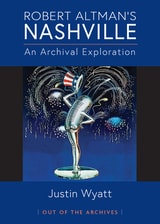
Robert Altman's Nashville
An Archival ExplorationJustin Wyatt
University of Michigan Press, 2026
This book explores Robert Altman’s classic film from a variety of critical perspectives inspired by the archival materials from the Altman archive in the Screen Arts Mavericks and Makers collection at the University of Michigan Special Collections Research Center. Each chapter is centered around materials on Nashville from the Altman archive: stills, contact sheets, advertising artwork (used and unused), Jean Pagliuso photo shoots, Joan Tewkesbury script drafts, contracts, reviews, internal accounting memos, and the Altman scrapbooks. (Each of his films has a scrapbook of reviews, interviews, and notes from fans.) Using these sources as a starting point, the book seeks to explain the relevance and importance of Nashville after more than half a century.
Robert Frank's 'The Americans'
The Art of Documentary PhotographyJonathan Day
Intellect Books, 2011
In the mid-1950s, Swiss-born New Yorker Robert Frank embarked on a ten-thousand-mile road trip across America, capturing thousands of photographs of all levels of a rapidly changing society. The resultant photo book, The Americans, represents a seminal moment in both photography and in America's understanding of itself. To mark the book’s fiftieth anniversary, Jonathan Day revisits this pivotal work and contributes a thoughtful and revealing critical commentary. Though the importance of The Americans has been widely acknowledged, it still retains much of its mystery. This comprehensive analysis places it thoroughly in the context of contemporary photography, literature, music, and advertising from its own period through the present.
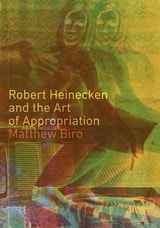
Robert Heinecken and the Art of Appropriation
Matthew Biro
University of Minnesota Press, 2022
The first comprehensive study of the artist Robert Heinecken and his critical views on the culture of mass media
This is the first book-length study dedicated to the artist Robert Heinecken, whose innovative photographic practices sought to interrogate how mass media imagery facilitated the construction of individual and collective identities. Appropriating, rephotographing, and layering pictures culled from newspapers, advertisements, pornography, and television, Heinecken recombined and transformed the ubiquitous images of mass culture to encourage viewers to critically reflect on their sense of self.
From the 1960s through the late 1990s, Heinecken’s controversial art continually challenged inherited ideas around consumerism, the facticity of reportage, and visual culture’s relationship to gender and identity politics. Embodying the evolution of contemporary art toward increasingly hybrid and conceptual approaches, his oeuvre includes examples of painting, sculpture, photomontage, performance, installation, time-based media, and artist’s books, all of which collectively exploit photography’s reproducibility to subvert society’s dominant ideologies and stereotypical modes of representation.
Author Matthew Biro presents an exhaustive look at Heinecken’s life and art, locating him within a lineage that encompasses the activities of the early twentieth-century avant-gardes and the postmodern strategies of the Pictures Generation artists. Assessing his career within the specific political and historical contexts from which he gleaned his material, and illustrated throughout with vibrant full-color reproductions of his art, this in-depth examination demonstrates Robert Heinecken’s significance as a key figure of twentieth-century art and an incisive commentator on modern life in America.
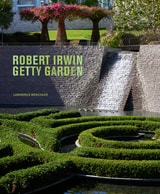
Robert Irwin Getty Garden
Lawrence Weschler
J. Paul Getty Trust, The, 2020
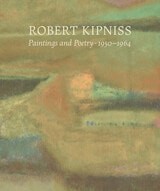
Robert Kipniss
Paintings and Poetry, 1950–1964Robert Kipniss
The Artist Book Foundation, 2013
A comprehensive look at a memorable period in the celebrated painter and printmaker's life and career, Robert Kipniss: Paintings and Poetry, 1950–1964 is the result of his many arduous months revisiting his more-than-half-a-century-ago writings and peoms that were stashed away and essentially forgotten. "Some of the poems are straightforward, some are infused with surreal irony, and some are angry," says Kipniss in his candid and honest preface. Thoughtful and articulate from conception to completion, his never-before-published poems are choreographed with his early paintings in this monograph's contemplation of these influential and foundational fourteen years. "When I stopped writing [in 1961] my vision was no longer divided between word-thinking and picture-thinking: these approaches had merged and in expressing myself I was more whole," reflects Kipniss in his retrospective musings.
This written and visual account of previously unpublished poems and critically acclaimed early paintings includes two astute and illustrative essays that further engage the reader in the evolution of the artist's prolific oeuvre. His prints, drawings, and paintings are remarkable for their eloquence and refinement, earning him international recognition for his expansive landscapes and small town vistas, as well as quiet interors and intimate still lifes.
Readers of this seminal volume are all the richer for catching a glimpse of an intensely personal segment of this accomplished artist's private history. In an unambiguous assessment, Kipniss elaborates, "The most significant insight that arose in this undertaking...came when I began to collate reproductions of my paintings of the 1950s. I could clearly see that my work in the two mediums were from very differing parts of my psyche, and that while they were both in themselves completely engaged, they were not in any way together."
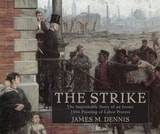
Robert Koehler’s The Strike
The Improbable Story of an Iconic 1886 Painting of Labor ProtestJames M. Dennis
University of Wisconsin Press, 2011
Every work of art has a story behind it. In 1886 the German American artist Robert Koehler painted a dramatic wide-angle depiction of an imagined confrontation between factory workers and their employer. He called this oil painting The Strike. It has had a long and tumultuous international history as a symbol of class struggle and the cause of workers’ rights. First exhibited just days before the tragic Chicago Haymarket riot, The Strike became an inspiration for the labor movement. In the midst of the campaign for an eight-hour workday, it gained international attention at expositions in Paris, Munich, and the 1893 Chicago World’s Fair. Though the painting fell into obscurity for decades in the early twentieth century, The Strike lived on in wood-engraved reproductions in labor publications. Its purchase, restoration, and exhibition by New Left activist Lee Baxandall in the early 1970s launched it to international fame once more, and collectors and galleries around the world scrambled to acquire it. It is now housed in the Deutsches Historisches Museum in Berlin, Germany.