Results by title
2646 books match the query 'History & Criticism' and 111 start with r
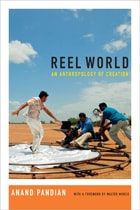
Reel World
An Anthropology of CreationAnand Pandian
Duke University Press, 2015
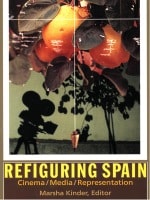
Refiguring Spain
Cinema/Media/RepresentationMarsha Kinder, ed.
Duke University Press, 1997
These essays consider a diverse array of texts, ranging from recent films by Almodóvar, Saura, Erice, Miró, Bigas Luna, Gutiérrez Aragón, and Eloy de la Iglesia to media coverage of the 1993 elections. Francoist cinema and other popular media are examined in light of strategies used to redefine Spain’s cultural identity. The importance of the documentary, the appropriation of Hollywood film, and the significance of gender and sexuality in Spanish cinema are also discussed, as is the discourse of the Spanish media star—whether involving film celebrities like Rita Hayworth and Antonio Banderas or historical figures such as Cervantes. The volume concludes with an investigation of larger issues of government policy in relation to film and media, including a discussion of the financing of Spanish cinema and an exploration of the political dynamics of regional television and art museums. Drawing on a wide range of critical discourses, including feminist, postcolonial, and queer theory, political economy, cultural history, and museum studies, Refiguring Spain is the first comprehensive anthology on Spanish cinema in the English language.
Contributors. Peter Besas, Marvin D’Lugo, Selma Reuben Holo, Dona M. Kercher, Marsha Kinder, Jaume Martí-Olivella, Richard Maxwell, Hilary L. Neroni, Paul Julian Smith, Roland B. Tolentino, Stephen Tropiano, Kathleen M. Vernon, Iñaki Zabaleta
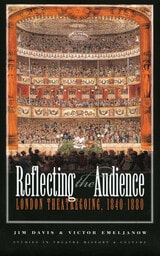
Reflecting the Audience
London Theatregoing, 1840-1880Jim Davis
University of Iowa Press, 2001
Davis and Emeljanow thoroughly examine the composition of these theatres' audiences, their behavior, and their attendance patterns by looking at topography, social demography, police reports, playbills, autobiographies and diaries, newspaper accounts, economic and social factors as seen in census returns, maps and transportation data, and the managerial policies of each theatre.
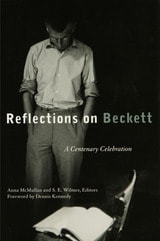
Reflections on Beckett
A Centenary CelebrationAnna McMullan and S. E. Wilmer, Editors. Foreword by Dennis Kennedy
University of Michigan Press, 2009
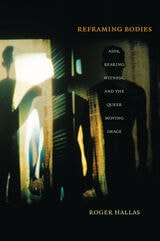
Reframing Bodies
AIDS, Bearing Witness, and the Queer Moving ImageRoger Hallas
Duke University Press, 2009
Challenging the entrenched media politics of who gets to speak, how, and to whom, Hallas offers a bold reconsideration of the intersubjective relations that connect filmmakers, subjects, and viewers. He explains how queer testimony reframes AIDS witnesses and their speech through its striking combination of direct address and aesthetic experimentation. In addition, Hallas engages recent historical changes and media transformations that have not only displaced queer AIDS media from activism to the archive, but also created new witnessing dynamics through the logics of the database and the remix. Reframing Bodies provides new insight into the work of Gregg Bordowitz, John Greyson, Derek Jarman, Matthias Müller, and Marlon Riggs, and offers critical consideration of important but often overlooked filmmakers, including Jim Hubbard, Jack Lewis, and Stuart Marshall.
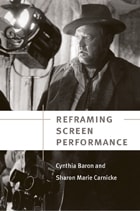
Reframing Screen Performance
Cynthia Baron and Sharon Marie Carnicke
University of Michigan Press, 2008
"A significant contribution to the literature on screen performance studies, Reframing Screen Performance brings the study of film acting up to date. It should be of interest to those within cinema studies as well as general readers."
---Frank P. Tomasulo, Florida State University
Reframing Screen Performance is a groundbreaking study of film acting that challenges the long held belief that great cinematic performances are created in the editing room. Surveying the changing attitudes and practices of film acting---from the silent films of Charlie Chaplin to the rise of Lee Strasberg's Actor's Studio in the 1950s to the eclecticism found in contemporary cinema---this volume argues that screen acting is a vital component of film and that it can be understood in the same way as theatrical performance. This richly illustrated volume shows how and why the evocative details of actors' voices, gestures, expressions, and actions are as significant as filmic narrative and audiovisual design. The book features in-depth studies of performances by Anjelica Huston, John Cusack, and Julianne Moore (among others) alongside subtle analyses of directors like Robert Altman and Akira Kurosawa, Sally Potter and Orson Welles. The book bridges the disparate fields of cinema studies and theater studies as it persuasively demonstrates the how theater theory can be illuminate the screen actor's craft.
Reframing Screen Performance brings the study of film acting into the twenty-first century and is an essential text for actors, directors, cinema studies scholars, and cinephiles eager to know more about the building blocks of memorable screen performance.
Cynthia Baron is Associate Professor of Film Studies at Bowling Green State University and co-editor of More Than a Method: Trends and Traditions in Contemporary Film Performance. Sharon Carnicke is Professor of Theater and Slavic Studies and Associate Dean of Theater at the University of Southern California and author of Stanislavsky in Focus.
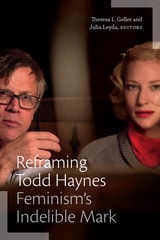
Reframing Todd Haynes
Feminism’s Indelible MarkTheresa L. Geller and Julia Leyda, editors
Duke University Press, 2022
Contributors. Danielle Bouchard, Nick Davis, Jigna Desai, Mary R. Desjardins, Patrick Flanery, Theresa L. Geller, Rebecca M. Gordon, Jess Issacharoff, Lynne Joyrich, Bridget Kies, Julia Leyda, David E. Maynard, Noah A. Tsika, Patricia White, Sharon Willis
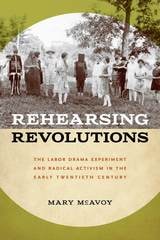
Rehearsing Revolutions
The Labor Drama Experiment and Radical Activism in the Early Twentieth CenturyMary McAvoy
University of Iowa Press, 2019
Choice Outstanding Academic Title, 2019
George Freedley Memorial Award Finalist, 2020
Between the world wars, several labor colleges sprouted up across the U.S. These schools, funded by unions, sought to provide members with adult education while also indoctrinating them into the cause. As Mary McAvoy reveals, a big part of that learning experience centered on the schools’ drama programs. For the first time, Rehearsing Revolutions shows how these left-leaning drama programs prepared American workers for the “on-the-ground” activism emerging across the country. In fact, McAvoy argues, these amateur stages served as training grounds for radical social activism in early twentieth-century America.Using a wealth of previously unpublished material such as director’s reports, course materials, playscripts, and reviews, McAvoy traces the programs’ evolution from experimental teaching tool to radically politicized training that inspired overt—even militant—labor activism by the late 1930s. All the while, she keeps an eye on larger trends in public life, connecting interwar labor drama to post-war arts-based activism in response to McCarthyism, the Cold War, and the Civil Rights movement. Ultimately, McAvoy asks: What did labor drama do for the workers’ colleges and why did they pursue it? She finds her answer through several different case studies in places like the Portland Labor College and the Highlander Folk School in Tennessee.
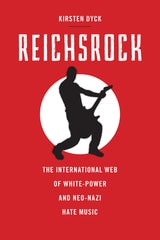
Reichsrock
The International Web of White-Power and Neo-Nazi Hate MusicDyck, Kirsten
Rutgers University Press, 2016
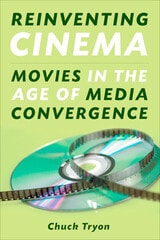
Reinventing Cinema
Movies in the Age of Media ConvergenceTryon, Chuck
Rutgers University Press, 2009
Reinventing Cinema examines film culture at the turn of this century, at the precise moment when digital media are altering our historical relationship with the movies. Spanning multiple disciplines, Chuck Tryon addresses the interaction between production, distribution, and reception of films, television, and other new and emerging media.Through close readings of trade publications, DVD extras, public lectures by new media leaders, movie blogs, and YouTube videos, Tryon navigates the shift to digital cinema and examines how it is altering film and popular culture.
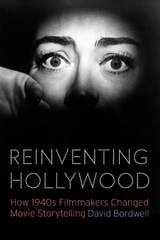
Reinventing Hollywood
How 1940s Filmmakers Changed Movie StorytellingDavid Bordwell
University of Chicago Press, 2017
If this sounds like today’s cinema, that’s because it is. In Reinventing Hollywood, David Bordwell examines the full range and depth of trends that crystallized into traditions. He shows how the Christopher Nolans and Quentin Tarantinos of today owe an immense debt to the dynamic, occasionally delirious narrative experiments of the Forties. Through in-depth analyses of films both famous and virtually unknown, from Our Town and All About Eve to Swell Guy and The Guilt of Janet Ames, Bordwell assesses the era’s unique achievements and its legacy for future filmmakers. Reinventing Hollywood is a groundbreaking study of how Hollywood storytelling became a more complex art and essential reading for lovers of popular cinema.
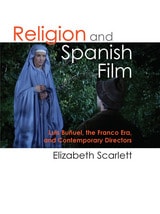
Religion and Spanish Film
Luis Buñuel, the Franco Era, and Contemporary DirectorsElizabeth Scarlett
University of Michigan Press, 2014
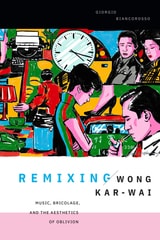
Remixing Wong Kar-wai
Music, Bricolage, and the Aesthetics of OblivionGiorgio Biancorosso
Duke University Press, 2025
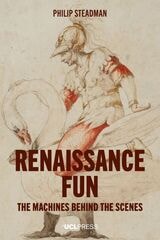
Renaissance Fun
The Machines behind the ScenesPhilip Steadman
University College London, 2021
Renaissance Fun is about the technology of entertainment in the forms of stage machinery, theatrical special effects, gardens, fountains, automata, and self-playing musical instruments from the Renaissance. How did the machines behind these shows work? How exactly were chariots filled with singers let down onto the stage? How were flaming dragons made to fly across the sky? How were seas created on stage? How did mechanical birds imitate real birdsong? What was “artificial music,” three centuries before Edison and the phonograph? How could pipe organs be driven and made to play themselves by waterpower alone? And who were the architects, engineers, and craftsmen who created these wonders? While this book is offered as entertainment in itself, it also offers a more serious scholarly argument centered on the enormous influence of Vitruvius and Hero, two ancient writers who composed on the subject.
Renaissance Shakespeare/Shakespeare Renaissances
Proceedings of the Ninth World Shakespeare CongressMartin Procházka
University of Delaware Press, 2014
Published by University of Delaware Press. Distributed worldwide by Rutgers University Press.
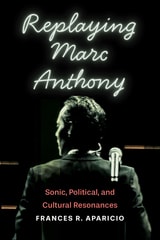
Replaying Marc Anthony
Sonic, Political, and Cultural ResonancesFrances R. Aparicio
The Ohio State University Press, 2025
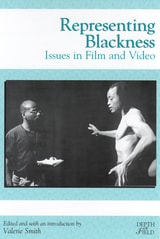
Representing Blackness
Issues in Film and VideoSmith, Valerie
Rutgers University Press, 1997
The essays in this collection provide a variety of perspectives on black representation and questions of racial authenticity in mainstream as well as African American independent cinema. This volume includes seminal essays on racial stereotypes, trenchant critiques of that discourse, original essays on important directors such as Haile Gerima and Charles Burnett, and an insightful discussion of black gay and lesbian film and video.
The contributors include Donald Bogle, Thomas Cripps, Jane Gaines, Nathan Grant, Stuart Hall, Tommy L. Lott, Wahneema Lubiano, Mike Murashige, Valerie Smith, James Snead, and David Van Leer. This volume is an important contribution to the Depth of Field series and should be indispensible for courses and individual scholars in film and multicultural studies. The book contains a mix of original and previously published pieces.
Representing The Woman
Cinema and PsychoanalysisElizabeth Cowie
University of Minnesota Press, 1996
Representing the Past
Essays in Performance HistoriographyCharlotte M. Canning
University of Iowa Press, 2010
How do historians represent the past? How do theatre historians represent performance events? The fifteen challenging essays in Representing the Past: Essays in Performance Historiography focus on the fundamental epistemological conditions and procedures that serve as the foundational ideas that guide all historians in their endeavors. Unified by their investigations into how best to understand and then represent the past, this diverse group of scholars in the field of theatre history and performance studies offers insights into the abiding issues that all historians face in the task of representing human events and actions.
Five primary ideas provide the topics as well as the intellectual parameters for this book: archive, time, space, identity, and narrative. Taking these as the conceptual framework for historical research and analysis, the essayists cover an expansive range of case studies and problems in the historical study of performance from the Americas to Africa and from Europe to India and China. Considering not only how historians think about these concepts in their research and writing but more pointedly—and historiographically—how they think with them, the essayists demonstrate the power and centrality of each of these five ideas in historical scholarship from initial research to the writing of essays and books.
Performance history has a diversity of identities, locations, sources, and narratives. This compelling engagement with the concepts essential to historical understanding is a valuable contribution to the historiography of performance—for students, teachers, and the future of the discipline itself. Expanding upon its classic predecessor, Interpreting the Theatrical Past: Essays in the Historiography of Performance, this exciting new collection illustrates the contemporary richness of historical thinking and writing in the field of performance history.
Representing
Hip Hop Culture and the Production of Black CinemaS. Craig Watkins
University of Chicago Press, 1998
"Watkins is at his most sophisticated and persuasive when he explains the surprising success of hyper-talented, entrepreneurial, and energetic black artists."—Archon Fung, Boston Book Review
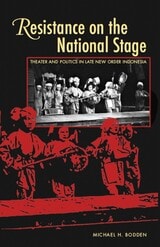
Resistance on the National Stage
Theater and Politics in Late New Order IndonesiaMichael H. Bodden
Ohio University Press, 2010
Resistance on the National Stage analyzes the ways in which, between 1985 and 1998, modern theater pracxadtitioners in Indonesia contributed to a rising movement of social protest against the long-governing New Order regime of President Suharto. It examines the work of an array of theater groups and networks from Jakarta, Bandung, and Yogyakarta that pioneered new forms of theater-making and new themes that were often presented more directly and critically than previous groups had dared to do.
Michael H. Bodden looks at a wide range of case studies to show how theater contributed to and helped build the opposition. He also looks at how specific combinations of social groups created tensions and gave modern theater a special role in bridging social gaps and creating social networks that expanded the reach of the prodemocracy movement. Theater workers constructed new social networks by involving peasants, Muslim youth, industrial workers, and lower-middle-class slum dwellers in theater productions about their own lives. Such networking and resistance established theater as one significant arena in which the groundwork for the ouster of Suharto in May 1998, and the succeeding Reform era, was laid.
Resistance on the National Stage will have broad appeal, not only for scholars of contemporary Indonesian culture and theater, but also for those interested in Indonesian history and politics, as well as scholars of postcolonial theater and culture.
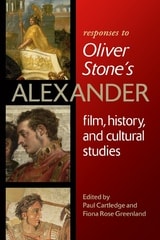
Responses to Oliver Stone’s Alexander
Film, History, and Cultural StudiesEdited by Paul Cartledge and Fiona Rose Greenland; Afterword by Oliver Stone
University of Wisconsin Press, 2009
This volume brings together an intriguing mix of leading scholars in Macedonian and Greek history, Persian culture, film studies, classical literature, and archaeology—including some who were advisors for the film—and includes an afterword by Oliver Stone discussing the challenges he faced in putting Alexander’s life on the big screen. The contributors scrutinize Stone’s project from its inception and design to its production and reception, considering such questions as: Can a film about Alexander (and similar figures from history) be both entertaining and historically sound? How do the goals of screenwriters and directors differ from those of historians? How do Alexander’s personal relationships—with his mother Olympias, his wife Roxane, his lover Hephaistion, and others—affect modern perceptions of Alexander? Several of the contributors also explore reasons behind the film’s tepid response at the box office and subsequent controversies.
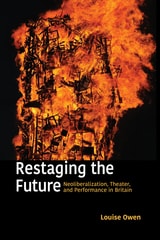
Restaging the Future
Neoliberalization, Theater, and Performance in BritainLouise Owen
Northwestern University Press, 2023
Post-Thatcher, British cultural politics were shaped by the government’s use of the arts in service of its own social and economic agenda. Restaging the Future: Neoliberalization, Theater, and Performance in Britain interrogates how arts practices and cultural institutions were enmeshed with the particular processes of neoliberalization mobilized at the end of the twentieth century and into the twenty-first.
Louise Owen traces the uneasy entanglement of performance with neoliberalism's marketization of social life. Focusing on this political moment, Owen guides readers through a wide range of performance works crossing multiple forms, genres, and spaces—from European dance tours, to Brazilian favelas, to the streets of Liverpool—attending to their distinct implications for the reenvisioned future in whose wake we now live.
Analyzing this array of participatory dance, film, music, public art, and theater projects, Owen uncovers unexpected affinities between community-based, experimental, and avant-garde movements. Restaging the Future provides key historical context for these performances, their negotiations of their political moment, and their themes of insecurity, identity, and inequality, created in a period of profound ideological and socioeconomic change.
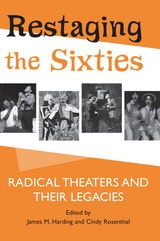
Restaging the Sixties
Radical Theaters and Their LegaciesEdited by James M. Harding and Cindy Rosenthal
University of Michigan Press, 2006
The volume explores how creations such as the Living Theatre's Paradise Now and the Performance Group’s Dionysus in 69 overlapped with political interests that, in the late 1960s, highlighted the notion of social collectives as a radical alternative to mainstream society. Situating theatrical practice within this socio-political context, the book considers how radical theaters sought to redefine the relationship between theater and political activism, and how, as a result, they challenged the foundations of theater itself.
James M. Harding is Associate Professor of English at Mary Washington University. His other books include Not the Other Avant-Garde: The Transnational Foundations of Avant-Garde Performance.
Cindy Rosenthal is Associate Professor of Theatre Studies, Hofstra University.
“A useful introduction to an eclectic period of experimental theater, providing portraits of the major political theaters and engaging with new vigor many of the era’s familiar aesthetic and ideological concerns. The writers offer a provocative history of theater’s attraction to (and occasional anxiety over) activism.”
--Marc Robinson, Yale University
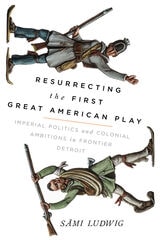
Resurrecting the First Great American Play
Imperial Politics and Colonial Ambitions in Frontier DetroitSämi Ludwig
University of Wisconsin Press, 2020
Sämi Ludwig contends that Ponteach's literary and artistic merits are worthy of further exploration. He investigates questions of authorship and analyzes the play's content, embracing its many contradictions as enriching windows into the era. In this way, he suggests using Ponteach as a tool to better understand British imperialism in North America and the emerging theatrical forms of the Young Republic.
Rethinking American Music
Edited by Tara Browner and Thomas L. Riis
University of Illinois Press, 2019
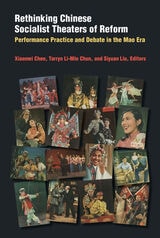
Rethinking Chinese Socialist Theaters of Reform
Performance Practice and Debate in the Mao EraXiaomei Chen, Tarryn Li-Min Chun, and Siyuan Liu, Editors
University of Michigan Press, 2021

Retrofitting Blade Runner
Issues in Ridley Scott's Blade Runner and Phillip K. Dick's Do Androids Dream of Electric Sheep?Judith B. Kerman
University of Wisconsin Press, 1997
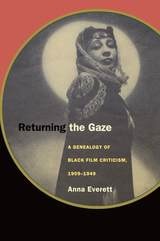
Returning the Gaze
A Genealogy of Black Film Criticism, 1909–1949Anna Everett
Duke University Press, 2001
Culling black newspapers, magazines, scholarly and political journals, and monographs, Everett has produced an unparalleled investigation of black critical writing on the early cinema during the era of racial segregation in America. Correcting the notion that black critical interest in the cinema began and ended with the well-documented press campaign against D. W. Griffith’s Birth of a Nation, she discovers that as early as 1909 black newspapers produced celebratory discourses about the cinema as a much-needed corrective to the predominance of theatrical blackface minstrelsy. She shows how, even before the Birth of a Nation controversy, the black press succeeded in drawing attention to both the callous commercial exploitation of lynching footage and the varied work of black film entrepreneurs. The book also reveals a feast of film commentaries that were produced during the “roaring twenties” and the jazz age by such writers as W.E.B. DuBois, Langston Hughes, and Zora Neale Hurston, as well as additional pieces that were written throughout the Depression and the pre– and post–war periods. Situating this wide-ranging and ideologically complex material in its myriad social, political, economic, and cultural contexts, Everett aims to resuscitate a historical tradition for contemporary black film literature and criticism.
Returning the Gaze will appeal to scholars and students of film, black and ethnic studies, American studies, cultural studies, literature, and journalism.
Reuse, Misuse, Abuse
The Ethics of Audiovisual Appropriation in the Digital EraJaimie Baron
Rutgers University Press, 2021
Revisiting Women's Cinema
Feminism, Socialism, and Mainstream Culture in Modern ChinaLingzhen Wang
Duke University Press, 2021
Revolution Televised
Prime Time and the Struggle for Black PowerChristine Acham
University of Minnesota Press, 2005
In Revolution Televised, Christine Acham offers a more complex reading of this period in African American television history, finding within these programs opposition to dominant white constructions of African American identity. She explores the intersection of popular television and race as witnessed from the documentary coverage of the civil rights and Black Power movements, the personal politics of Flip Wilson and Soul Train’s Don Cornelius, and the ways in which notorious X-rated comic Redd Foxx reinvented himself for prime time.
Reflecting on both the potential of television to effect social change as well as its limitations, Acham concludes with analyses of Richard Pryor’s politically charged and short-lived sketch comedy show and the success of outspoken comic Chris Rock. Revolution Televised deftly illustrates how black television artists operated within the constraints of the television industry to resist and ultimately shape the mass media’s portrayal of African American life.
Christine Acham is assistant professor in African American and African studies at the University of California, Davis.
Revolutionary Stagecraft
Theater, Technology, and Politics in Modern ChinaTarryn Li-Min Chun
University of Michigan Press, 2024
2026 NYU Joe Callaway Prize Winner
- 2025 Association for Theatre in Higher Education Outstanding Book Award in Innovative Achievement Winner
- 2024 Theatre Library Association George Freedley Memorial Award Co-Winner
- American Society for Theatre Research Barnard Hewitt Award for Outstanding Research in Theatre History Finalist
Revolutionary Stagecraft draws on a rich corpus of literary, historical, and technical materials to reveal a deep entanglement among technological modernization, political agendas, and the performing arts in modern China. This unique approach to Chinese theater history combines a close look at plays themselves, performance practices, technical theater details, and behind-the-scenes debates over “how to” make theater amid the political upheavals of China’s 20th century. The book begins at a pivotal moment in the 1920s—when Chinese theater artists began to import, use, and write about modern stage equipment—and ends in the 1980s when China's scientific and technological boom began. By examining iconic plays and performances from the perspective of the stage technologies involved, Tarryn Li-Min Chun provides a fresh perspective on their composition and staging. The chapters include stories on the challenges of creating imitation neon, rigging up a makeshift revolving stage, and representing a nuclear bomb detonating onstage.
In thinking about theater through technicity, the author mines well-studied materials such as dramatic texts and performance reviews for hidden technical details and brings to light a number of previously untapped sources such as technical journals and manuals; set design renderings, lighting plots, and prop schematics; and stage technology how-to guides for amateur thespians. This approach focuses on material stage technologies, situating these objects equally in relation to their technical potential, their human use, and the social, political, economic, and cultural forces that influence them. In each of its case studies, Revolutionary Stagecraft reveals the complex and at times surprising ways in which Chinese theater artists and technicians of the 20th century envisioned and enacted their own revolutions through the materiality of the theater apparatus.
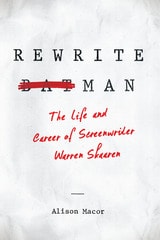
Rewrite Man
The Life and Career of Screenwriter Warren SkaarenBy Alison Macor
University of Texas Press, 2017
In Rewrite Man, Alison Macor tells an engrossing story about the challenges faced by a top screenwriter at the crossroads of mixed and conflicting agendas in Hollywood. Whether writing love scenes for Tom Cruise on the set of Top Gun, running lines with Michael Keaton on Beetlejuice, or crafting Nietzschean dialogue for Jack Nicholson on Batman, Warren Skaaren collaborated with many of New Hollywood’s most powerful stars, producers, and directors. By the time of his premature death in 1990, Skaaren was one of Hollywood’s highest-paid writers, although he rarely left Austin, where he lived and worked. Yet he had to battle for shared screenwriting credit on these films, and his struggles yield a new understanding of the secretive screen credit arbitration process—a process that has only become more intense, more litigious, and more public for screenwriters and their union, the Writers Guild of America, since Skaaren’s time. His story, told through a wealth of archival material, illuminates crucial issues of film authorship that have seldom been explored.
Rewriting Television
Alison Peirse
Rutgers University Press, 2025
Rhymes in the Flow
How Rappers Flip the BeatMacklin Smith and Aurko Joshi
University of Michigan Press, 2020
Despite its global popularity, rap has received little scholarly attention in terms of its poetic features. Rhymes in the Flow systematically analyzes the poetics (rap beats, rhythms, rhymes, verse and song structures) of many notable rap songs to provide new insights on rap artistry and performance. Defining and describing the features of what rappers commonly call flow, the authors establish a theory of the rap line as they trace rap’s deepest roots and stylistic evolution—from Anglo-Saxon poetry to Lil Wayne—and contextualize its complex poetics. Rhymes in the Flow helps explain rap’s wide appeal by focusing primarily on its rhythmic and thematic power, while also claiming its historical, cultural, musical, and poetic importance.

Rhythmic Gesture in Mozart
Le Nozze di Figaro and Don GiovanniWye Jamison Allanbrook
University of Chicago Press, 1984
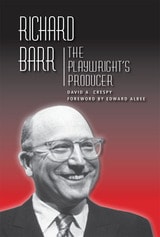
Richard Barr
The Playwright's ProducerDavid A. Crespy
Southern Illinois University Press, 2013
In Richard Barr: The Playwright’s Producer, author David A. Crespy investigates the career of one of the theatre’s most vivid luminaries, from his work on the film and radio productions of Orson Welles to his triumphant—and final—production of Stephen Sondheim’s Sweeney Todd: The Demon Barber of Fleet Street. Explored in detail along the way are the producer’s relationship with playwright Edward Albee, whose major plays such as A Zoo Story and Who’s Afraid of Virginia Woolf Barr was the first to produce, and his innovative productions of controversial works by playwrights like Samuel Beckett, Terrence McNally, and Sam Shepard. Crespy draws on Barr’s own writings on the theatre, his personal papers, and more than sixty interviews with theatre professionals to offer insight into a man whose legacy to producers and playwrights resounds in the theatre world. Also included in the volume are a foreword and an afterword by Edward Albee, a three-time Pulitzer Prize–winning playwright and one of Barr’s closest associates.
Richard Linklater
David T. Johnson
University of Illinois Press, 2012
Richard Wagner's Political Ecology
Kirsten S. Paige
University of Chicago Press, 2026
A study of the deep history of the Wagnerian environmental imagination.
Richard Wagner’s operas are bursting with environmental imagery, from tittering birds to flowing rivers to towering trees. In Richard Wagner’s Political Ecology, Kirsten S. Paige asks where Wagner’s environmental imagination came from, how it was received by audience members and reconceived by stage directors, and how it refracts his politics. By tracing the ecological dimensions of the composer’s essays and dramas, Paige reveals how Wagner’s environmental imagination was inextricable from broader political concerns of his time.
The book begins by examining the way Wagner’s political ecology shape-shifted across its rhetorical, musical, scenographic, and technological permutations. Although Wagner’s essays and dramas invite a range of interpretations, for Paige, they point to an all-encompassing image of opera-as-climate. The book then turns to the ways Wagnerian drama—and opera more generally—at once participates in the industrial-technological lineage of climate change and helps spectators grapple with the challenges of living in a warming world. In providing the first close examination of Wagner’s artistic thought, practice, and reception in relation to nineteenth-century climate theory and the early history of environmentalism, Richard Wagner’s Political Ecology considers what it might mean to reimagine opera around ethical mandates of sustainability.
Right to the Juke Joint
A Personal History of American MusicPatrick B Mullen
University of Illinois Press, 2018
Risk Culture
Performance and Danger in Early AmericaJoseph Fichtelberg
University of Michigan Press, 2010
---David Shields, University of South Carolina
Ritwik Ghatak
Occasional Essays for a 100th BirthdayEdited by Gayatri Chakravorty Spivak and Surya Parekh
Seagull Books, 2025
The cinema of Ritwik Ghatak (1925–76) continues to resonate across borders and generations. His films—largely shaped by the 1947 Partition of Bengal and the experience of displacement—probe the fractured human condition through bold formal experimentation, unforgettable soundscapes, and a profound sense of myth and memory. Though his body of work was modest in size, Ghatak’s influence has steadily expanded, securing his place as a major figure in world cinema. This distinctive volume, which marks the centenary of this visionary filmmaker, gathers essays by important scholars and thinkers from around the world.
Moving beyond conventional film criticism and area studies, the collection stages new, transnational encounters with Ghatak’s films—approaching them as world texts, as sonic and visual experiments, and as meditations on migration, collectivity, and social existence.
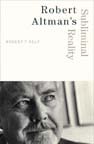
Robert Altman’s Subliminal Reality
Robert T. Self
University of Minnesota Press, 2002
The most complete and compelling analysis available of Altman’s films
With his complex and unconventional films, Robert Altman often draws an impassioned response from critics but bafflement and indifference from the general public. Some audiences have dismissed his movies as insignificant, unsatisfying, and unreadable. Ironically, Altman might agree: he makes films in order to challenge filmgoers’s expectations of straightforward narratives and easily understood endings.
In Robert Altman’s Subliminal Reality, Robert T. Self sheds light on Altman’s work and provides the most comprehensive analysis of his films to date. With close readings of classics like MASH, McCabe and Mrs. Miller, and Nashville, as well as more recent films like The Player, Short Cuts, and Cookie’s Fortune, Self asserts the value of Altman’s work not only to film theory and the entertainment industry but to American culture itself. In his analysis, Self identifies Altman’s films particularly as they address issues of form, identity, and industry. He explains how Altman critiques moviemaking forms by using an open, fragmented mode of storytelling and by turning conventional Hollywood genres inside out. He examines Altman’s characterization of social and individual identity as fragile and fragmentary and his depiction of antiheroic characters debilitated by their socially constructed gender roles. Finally, Self shows how Altman challenges the entertainment industry itself, questioning its methods and motives and critiquing its role in our cultural alienation. Self frames his study of Altman’s work with a discussion of the director’s efforts to create a "subliminal reality" in his narratives—to touch audiences on an unconscious level and to recognize the unspoken, and unspeakable, dimensions in human interactions. According to Self, this striving for "subliminal reality" makes Altman’s films not only exemplary of the potential of art cinema narration but instrumental in keeping such narrative alive.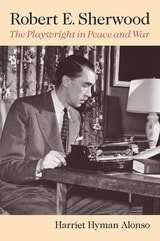
Robert E. Sherwood
The Playwright in Peace and WarHarriet Hyman Alonso
University of Massachusetts Press, 2007
One of the nation's first film critics, an acclaimed speechwriter on his own and for President Franklin D. Roosevelt, a propagandist during World War II, and a leading producer on Broadway, Robert E. Sherwood scripted some of the most popular plays and films of his day, including Waterloo Bridge, The Best Years of Our Lives, Idiot's Delight, Abe Lincoln in Illinois, and Rebecca. His work brought him four Pulitzer Prizes and an Oscar. In his personal life, however, he was driven by a deep conviction that war was a societal evil that must be eradicated and human rights a moral responsibility that all governments should protect. At times, his belief in pacifism and his commitment to defending freedom and justice came into conflict with each other, causing frustration and emotional trauma which found their way into his writings and actions.
In this book, Harriet Hyman Alonso unravels Sherwood's inner struggle and portrays his political journey. Relying largely on his letters, diaries, plays, films, essays, and biography of Roosevelt and Harry Hopkins, she traces Sherwood's obsession with the world of politics and its effects on his life and art, from his experience as a soldier in World War I to the Cold War. She also describes his participation in the Algonquin Round Table, his friendships and working relationships with such notables as Alfred Lunt, Lynn Fontanne, Edna Ferber, Spencer Tracy, Harry Hopkins, and Franklin D. Roosevelt, his two marriages and uneasy relationship with his daughter, and his leadership role in the Broadway community.
Alonso brings together history, theater and film studies, and peace studies in this interdisciplinary political biography. In the process, she illuminates major currents in U.S. foreign policy, society, and culture from 1896 to 1955—the years of the remarkable life of Robert E. Sherwood.
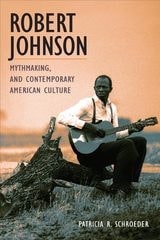
Robert Johnson, Mythmaking, and Contemporary American Culture
Patricia R. Schroeder
University of Illinois Press, 2004
Merging literary analysis with cultural criticism and biographical study, Patricia R. Schroeder explores Johnson's ongoing role as a cultural icon. Schroeder's detailed analysis engages key images and myths about the blues musician (such as the Faustian crossroads exchange of his soul for guitar virtuosity). Navigating the many competing interpretations that swirl around him, Schroeder reveals the cultural purposes served by the stories and the storytellers. The result is a fascinating examination of the relationships among Johnson's life, its subsequent portrayals, and the forces that drove the representations.
Offering penetrating insights into both Johnson and the society that perpetuates him, Robert Johnson, Mythmaking, and Contemporary American Culture is essential reading for blues fans and cultural critics interested in a foundational musical figure.
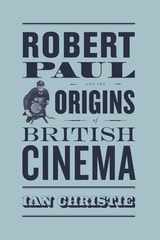
Robert Paul and the Origins of British Cinema
Ian Christie
University of Chicago Press, 2019
From improving upon Edison’s Kinetoscope to cocreating the first movie camera in Britain to building England’s first film studio and launching the country’s motion-picture industry, Paul played a key part in the history of cinema worldwide. It’s not only Paul’s story, however, that historian Ian Christie tells here. Robert Paul and the Origins of British Cinema also details the race among inventors to develop lucrative technologies and the jumbled culture of patent-snatching, showmanship, and music halls that prevailed in the last decade of the nineteenth century. Both an in-depth biography and a magnificent look at early cinema and fin-de-siècle Britain, Robert Paul and the Origins of British Cinema is a first-rate cultural history of a fascinating era of global invention, and the revelation of one of its undervalued contributors.
Rock 'n' Roll Movies
Sterritt, David
Rutgers University Press, 2018
Rock Eras
Interpretations of Music and Society, 1954-1984Jim Curtis
University of Wisconsin Press, 1987
Paper is temporarily out of stock, Cloth (0-87972-368-8) is available at the paper price until further notice.
Rock Over the Edge
Transformations in Popular Music CultureRoger Beebe, Denise Fulbrook, and Ben Saunders, eds.
Duke University Press, 2002
Bridging the disciplines of musicology and cultural studies, the collection has two primary goals: to seek out a language for talking about music culture and to look at the relationship of music to culture in general. The editors’ introduction provides a backward glance at recent rock criticism and also looks to the future of the rapidly expanding discipline of popular music studies. Taking seriously the implications of critical theory for the study of non-literary aesthetic endeavors, the volume also addresses such issues as the affective power of popular music and the psychic construction of fandom.
Rock Over the Edge will appeal to scholars and students in popular music studies and American Studies as well as general readers interested in popular music.
Contributors. Ian Balfour, Roger Beebe, Michael Coyle, Robert Fink, Denise Fulbrook, Tony Grajeda, Lawrence Grossberg, Trent Hill, Josh Kun, Jason Middleton, Lisa Ann Parks, Ben Saunders, John J. Sheinbaum, Gayle Wald, Warren Zanes