1427 books match the query 'Politics' and 68 start with r
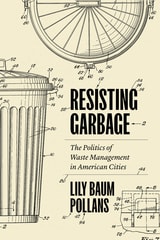
cover of Resisting Garbage: The Politics of Waste Management in American Cities

Resisting Garbage

The Politics of Waste Management in American Cities

Lily Baum Pollans

University of Texas Press, 2021

Resisting Garbage presents a new approach to understanding practices of waste removal and recycling in American cities, one that is grounded in the close observation of case studies while being broadly applicable to many American cities today.

Most current waste practices in the United States, Lily Baum Pollans argues, prioritize sanitation and efficiency while allowing limited post-consumer recycling as a way to quell consumers’ environmental anxiety. After setting out the contours of this “weak recycling waste regime,” Pollans zooms in on the very different waste management stories of Seattle and Boston over the last forty years. While Boston’s local politics resulted in a waste-export program with minimal recycling, Seattle created new frameworks for thinking about consumption, disposal, and the roles that local governments and ordinary people can play as partners in a project of resource stewardship. By exploring how these two approaches have played out at the national level, Resisting Garbage provides new avenues for evaluating municipal action and fostering practices that will create environmentally meaningful change.

[more]
cover of Resisting War: The Politics of Conscientious Objection

Resisting War

The Politics of Conscientious Objection

Pinar Kemerli

Duke University Press, 2027

Political theorists conventionally frame conscientious objection as a private and apolitical corollary of civil disobedience. In Resisting War, Pınar Kemerli challenges this depoliticized interpretation and argues that conscientious objection can be a radically political practice that calls into question the state’s right to coerce individuals to partake in wars deemed oppressive and unjust. Interweaving a study of the evolution of conscientious objection theory and practice from the First World War onward with extensive fieldwork examining the Turkish antiwar movement, Kemerli tracks the many ways this resistance practice taps into the diverse histories and paradigms of anticolonialism and anti-imperialism. Connecting the stories of African American Muslims to Vietnam and then to Turks and Kurds in the Middle East, Kemerli shows how the refusal to participate in war ultimately raises its own distinct contestation of state sovereignty, nationalist allegiance, and the normative religiosities that claim people in the service of militarized nationalism.
[more]
cover of Reverberations across Small-Scale British Theatre: Politics, Aesthetics and Forms

Reverberations across Small-Scale British Theatre

Politics, Aesthetics and Forms

Edited by Patrick Duggan and Victor Ukaegbu

Intellect Books, 2013
Between 1960 and 2010, a new generation of British avant-garde theater companies, directors, designers, and performers emerged. Some of these companies and individuals have endured to become part of theater history while others have disappeared from the scene, mutated into new forms, or become part of the establishment. Reverberations across Small-Scale British Theatre at long last puts these small-scale British theater companies and personalities in the scholarly spotlight. By questioning what “Britishness” meant in relation to the small-scale work of these practitioners, contributors articulate how it is reflected in the goals, manifestos, and aesthetics of these companies. 
[more]
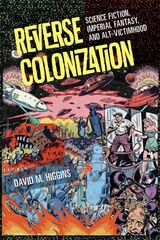
cover of Reverse Colonization: Science Fiction, Imperial Fantasy, and Alt-victimhood

Reverse Colonization

Science Fiction, Imperial Fantasy, and Alt-victimhood

David M. Higgins

University of Iowa Press, 2021

Reverse colonization narratives are stories like H. G. Wells’s War of the Worlds, in which technologically superior Martians invade and colonize England. They ask Western audiences to imagine what it’s like to be the colonized rather than the colonizers. David Higgins argues that although some reverse colonization stories are thoughtful and provocative, reverse colonization fantasy has also led to the prevalence of a very dangerous kind of science fictional thinking in our current political culture. It has become popular among groups such as anti-feminists, white supremacists, and far-right reactionaries to appropriate a sense of righteous, anti-imperial victimhood—the sense that white men, in particular, are somehow colonized victims fighting an insurgent resistance against an oppressive establishment. Nothing could be timelier, as an armed far-right mob stormed the U.S. Capitol on January 6, 2021, in an effort to stop the presidential election from being “stolen from them.”

Higgins shows that this reverse colonization stance depends upon a science fictional logic that achieved dominance within imperial fantasy during the 1960s and has continued to gain momentum ever since. By identifying with fantastic forms of victimhood, subjects who already enjoy social hegemony are able to justify economic inequality, expansions of police and military power, climatological devastation, new articulations of racism, and countless other forms of violence—all purportedly in the name of security, self-defense, and self-protection.
 
[more]
cover of Revising State Theory: Essays in Politics and Postindustrialism

Revising State Theory

Essays in Politics and Postindustrialism

Fred Block

Temple University Press, 1987
Socialist Review Book Award, Socialist Review, 1987 This volume makes available in one place a complete statement of Fred Block's perspective for students and participants in the ongoing debate on state theory. His substantial Introduction serves as an intellectual autobiography in which he assesses the field-including the theories of Domhoff, Poulantzas, and Skocpoland situates his own work within it. Block also discusses his relationship to different strands of Marxism. In his analysis of the relationship between business and the state, Block argues that while business interests have far more influence over state policy than other constituencies, state actors still have substantial autonomy in formulating policies. In particular, the business community's internal divisions and difficulties in assessing its own interests limit its capacity to control events. Block insists that when business influence is greatest, as during the Reagan years, state policies will be least successful in solving the society's problems. "What is at work here is a relatively simple sociological dynamic--that institutionalized relations of power tend to become visible only when they weaken. When these institutionalized relations are most effective, they tend to be invisible, precisely because the justifying ideologies so dominate people's commonsense understandings. The classic recent example is the existence of women's subordination. In the fifties, people would have responded to the claim that women were systematically discriminated against in American society with incredulity because they had so totally accepted an ideology that justified differential treatment of men and women as normal and natural. The full-blown analysis and critique of male domination emerges only in the seventies, when patriarchal arrangements are already weakening.... "In state theory, the development is analogous. In the fifties, pluralist arguments dominate because the exercise of power has been rendered invisible. The relation between business and the state works so well that it leaves few traces. Moreover, there is little real debate about how the society should be structured, so the extent to which everyone's basic assumptions fit with the interests of corporate capitalism is not at all obvious. Since nobody was even asking the big questions of who should make investment decisions and how should income and wealth be distributed, it was not apparent that the narrow limits of debate fit exactly with the interests of business.... However, the cumulative impact of Vietnam and racial conflict in the late sixties, the drama of Watergate, and the growing economic difficulties of advanced capitalist societies in the early seventies served to make the exercise of power in American society widely visible. The previous functional relation between the state and business had been disrupted and the efforts by each side to advocate its own interests became more apparent." --From the Introduction
[more]
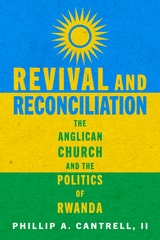
cover of Revival and Reconciliation: The Anglican Church and the Politics of Rwanda

Revival and Reconciliation

The Anglican Church and the Politics of Rwanda

Phillip A. Cantrell II

University of Wisconsin Press, 2022

When Europe began colonizing Rwanda in the late nineteenth century, the Anglican Church played a significant and long-lasting role in controlling the colony through the Ruanda Mission. This informative volume shows how the church repeatedly aligned with the regime in power and failed to take account of its own history in fomenting ethnic tensions prior to the 1994 genocide. In recent years, the media has depicted Rwanda as a model of unity, development, and recovery, yet Phillip A. Cantrell II argues that not all is as it seems, as he takes a critical look at the church's complicity with authoritarian rule—from the Tutsi monarchy to the Rwandan Patriotic Front.

Drawing from new archival materials as well as on-the-ground field research, Revival and Reconciliation is a Rwanda-centered account of the country's ecclesiastical and national historiography. Cantrell calls attention to the harms the postgenocide church risks doing should it continue to support false narratives about Rwanda's colonial and postcolonial past—with dangerous consequences for the future.
[more]
cover of Revolting Indolence: The Politics of Slacking, Lounging, and Daydreaming in Queer and Trans Latinx Culture

Revolting Indolence

The Politics of Slacking, Lounging, and Daydreaming in Queer and Trans Latinx Culture

Marcos Gonsalez

University of Texas Press, 2024

2026 Bronze Medal for the Best LGBTQ+ Themed Book, Conference on Latin American History (CLAH)
2025 Honorable Mention, John Leo & Dana Heller Award for Best Single Work, Anthology, Multi-Authored, or Edited Book in LGBTQ Studies, Popular Culture Association (PCA)
2025 Honorable Mention, Alan Bray Memorial Book Prize, GL/Q Caucus of the Modern Language Association and the Q/T Caucus of the American Studies Association

How indolent practices in Latinx LGBTQ culture challenge capitalist imperatives to be productive.

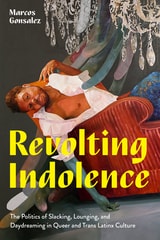
Revolting Indolence makes a case for laziness as an aesthetic-political strategy for countering the oppressive logics of cisheteronormative racial capitalism. Focusing on ways in which queer and trans Latinx people demonstrate the unwillingness of their participation in “productivist” ethics and allied respectability politics, Marcos Gonsalez argues that slacking off, lounging, daydreaming, and partying are liberatory practices—revolts that in turn are treated as revolting.

Gonsalez explores how queer and trans Latinx artists refute discourses in which work is a moral good. In Paris Is Burning, RuPaul's Drag Race, documentary photography of queer and trans Latinx life in Los Angeles, and other sources, Gonsalez identifies two lazy styles: first, flagrant refusals of work that critique capitalist reason; and second, the invention of alternative aesthetic worlds beyond racial capitalism and violence targeting queer and trans people, whose rejection of the cisgender nuclear family paradigm is rightly seen as threatening the stability of a functioning capitalist system. Reclaiming laziness as a resource for radical imagining, Revolting Indolence asks us to do that which we want most and which capitalist exploitation can least tolerate: to slow down.
[more]
cover of Revolutionary Stagecraft: Theater, Technology, and Politics in Modern China

Revolutionary Stagecraft

Theater, Technology, and Politics in Modern China

Tarryn Li-Min Chun

University of Michigan Press, 2024

2026 NYU Joe Callaway Prize Winner

  • 2025 Association for Theatre in Higher Education Outstanding Book Award in Innovative Achievement Winner
  • 2024 Theatre Library Association George Freedley Memorial Award Co-Winner
  • American Society for Theatre Research Barnard Hewitt Award for Outstanding Research in Theatre History Finalist 

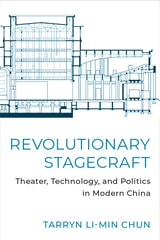
Revolutionary Stagecraft draws on a rich corpus of literary, historical, and technical materials to reveal a deep entanglement among technological modernization, political agendas, and the performing arts in modern China. This unique approach to Chinese theater history combines a close look at plays themselves, performance practices, technical theater details, and behind-the-scenes debates over “how to” make theater amid the political upheavals of China’s 20th century. The book begins at a pivotal moment in the 1920s—when Chinese theater artists began to import, use, and write about modern stage equipment—and ends in the 1980s when China's scientific and technological boom began. By examining iconic plays and performances from the perspective of the stage technologies involved, Tarryn Li-Min Chun provides a fresh perspective on their composition and staging. The chapters include stories on the challenges of creating imitation neon, rigging up a makeshift revolving stage, and representing a nuclear bomb detonating onstage. 

In thinking about theater through technicity, the author mines well-studied materials such as dramatic texts and performance reviews for hidden technical details and brings to light a number of previously untapped sources such as technical journals and manuals; set design renderings, lighting plots, and prop schematics; and stage technology how-to guides for amateur thespians. This approach focuses on material stage technologies, situating these objects equally in relation to their technical potential, their human use, and the social, political, economic, and cultural forces that influence them. In each of its case studies, Revolutionary Stagecraft reveals the complex and at times surprising ways in which Chinese theater artists and technicians of the 20th  century envisioned and enacted their own revolutions through the materiality of the theater apparatus.
[more]
cover of Revolutions of Capitalism: The Politics of the Event

Revolutions of Capitalism

The Politics of the Event

Maurizio Lazzarato. Translated by Brian Whitener and Geo Maher.

Duke University Press, 2026
Framed by brilliant readings of Gilles Deleuze and Félix Guattari, Gabriel Tarde, and Mikhail Bakhtin, Maurizio Lazzarato’s Revolutions of Capitalism charts a new theory of contemporary capitalism and the politics against it. Originally published in French in 2004, this newly translated work sees capitalism as driven, not only by labor or value, but by the capture of cooperation and by the taming of possibles. Lazzarato theorizes how contemporary capitalism depends on noo-politics, or the “action of brains at a distance on other brains,” which seeks to control memory and attention and to trap the proliferation of possibles. Against this, Lazzarato reveals how current social movements attack established institutions and their vision of a single possible world to liberate the creation and actualization of a multiplicity of possible worlds.
[more]
cover of Rhetoric and the Republic: Politics, Civic Discourse, and Education in Early America

Rhetoric and the Republic

Politics, Civic Discourse, and Education in Early America

Mark Garrett Longaker

University of Alabama Press, 2007
Casts a revealing light on modern cultural conflicts through the lens of rhetorical education.

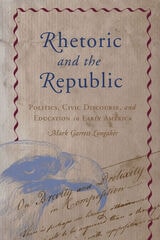
Contemporary efforts to revitalize the civic mission of higher education in America have revived an age-old republican tradition of teaching students to be responsible citizens, particularly through the study of rhetoric, composition, and oratory. This book examines the political, cultural, economic, and religious agendas that drove the various—and often conflicting—curricula and contrasting visions of what good citizenship entails. Mark Garrett Longaker argues that higher education more than 200 years ago allowed actors with differing political and economic interests to wrestle over the fate of American citizenship. Then, as today, there was widespread agreement that civic training was essential in higher education, but there were also sharp differences in the various visions of what proper republic citizenship entailed and how to prepare for it.

Longaker studies in detail the specific trends in rhetorical education offered at various early institutions—such as Yale, Columbia, Pennsylvania, and William and Mary—with analyses of student lecture notes, classroom activities, disputation exercises, reading lists, lecture outlines, and literary society records. These documents reveal an extraordinary range of economic and philosophical interests and allegiances—agrarian, commercial, spiritual, communal, and belletristic—specific to each institution. The findings challenge and complicate a widely held belief that early-American civic education occurred in a halcyon era of united democratic republicanism. Recognition that there are multiple ways to practice democratic citizenship and to enact democratic discourse, historically as well as today, best serves the goal of civic education, Longaker argues.

Rhetoric and the Republic illuminates an important historical moment in the history of American education and dramatically highlights rhetorical education as a key site in the construction of democracy.
[more]
cover of Righteous Sisterhood: The Politics and Power of an All-Women's Motorcycle Club

Righteous Sisterhood

The Politics and Power of an All-Women's Motorcycle Club

Sarah L. Hoiland

Temple University Press, 2025

A righteous sister identifies herself as a biker. She might wrench, or maintain, her own bike, and she prefers to ride with other righteous sisters. Righteous Sisterhood is Sarah Hoiland’s insightful ethnography about an all-women motorcycle club (MC). She recounts stories of women bikers for whom riding in an MC is “an act of rebellion” and “liberating” even as it constrains—a reactionary populist version of the American Dream dipped in “girl power.”

Granted unprecedented access to the MC’s initiation rituals, annual ceremonies, and the extensive socialization process, Hoiland investigates this fascinating subculture, why women choose to join, and why, in some cases, they exit or become exiled.

Righteous Sisterhood also reveals complex and contradictory gender and political dynamics within the club and within the larger subculture. The MC provides a unique, liberatory, womanist space within the larger male-dominated MC social world, but these women remain outsiders, with political voices that are lost in the misogyny of alt-right spaces. As Hoiland emphasizes, the quest for righteous sisterhood is about finding individual excellence and camaraderie while seeking recognition and immortality within the MC.
[more]
cover of Rights at Work: Pay Equity Reform and the Politics of Legal Mobilization

Rights at Work

Pay Equity Reform and the Politics of Legal Mobilization

Michael W. McCann

University of Chicago Press, 1994

What role has litigation played in the struggle for equal pay between women and men? In Rights at Work, Michael W. McCann explains how wage discrimination battles have raised public legal consciousness and helped reform activists mobilize working women in the pay equity movement over the past two decades.

Rights at Work explores the political strategies in more than a dozen pay equity struggles since the late 1970s, including battles of state employees in Washington and Connecticut, as well as city employees in San Jose and Los Angeles. Relying on interviews with over 140 union and feminist activists, McCann shows that, even when the courts failed to correct wage discrimination, litigation and other forms of legal advocacy provided reformers with the legal discourse—the understanding of legal rights and their constraints—for defining and advancing their cause.

Rights at Work offers new insight into the relation between law and social change—the ways in which grass roots social movements work within legal rights traditions to promote progressive reform.
[more]
cover of Rise to the Challenge: A Memoir of Politics, Leadership, and Love

Rise to the Challenge

A Memoir of Politics, Leadership, and Love

Johnson

University of Minnesota Press, 2024

The inspiring life story of Minnesota’s first woman lieutenant governor: breaking political ground, navigating patriarchal tradition, and persevering through great personal loss

Marking a milestone for women in state government, Marlene M. Johnson became Minnesota’s first woman lieutenant governor under Rudy Perpich’s gubernatorial administration in January 1983. That same year, she met her husband, Peter, and their deeply loving relationship profoundly sustained her for twenty-seven years. Rise to the Challenge weaves these personal and professional stories together in a courageous portrait of dedication and leadership.

Growing up in rural Minnesota, Johnson began organizing and advocating for change early, beginning with a campaign to introduce foreign languages into her high school curriculum. Pursuing a deeply felt commitment to improving the lives of others, she continued to sharpen her leadership skills throughout her life, participating in activist work in college, cofounding organizations to support women entrepreneurs and politicians, and eventually running an international education nonprofit.

A stalwart supporter, her husband gave Marlene strength and encouragement to face the challenges of the political landscape and its gender biases. Then, in 2010, he suffered a traumatic brain injury that would change both of their lives. Learning how to be a medical advocate and, eventually, facing the sorrow of Peter’s death, Marlene relied on the hard-fought resilience and belief in herself that Peter had helped her to develop.

A story of learning and leadership in politics, business, and public service, Rise to the Challenge is a moving portrayal of spirit, perseverance, and grace in the face of daunting personal challenges, supported by unwavering faith in the public good.
[more]
cover of Risky Rivers: The Economics and Politics of Floodplain Farming in Amazonia

Risky Rivers

The Economics and Politics of Floodplain Farming in Amazonia

Michael Chibnik

University of Arizona Press, 1994

While anthropologists and ecologists have carefully described the activities of the slash-and-burn cultivators, ranchers, and miners of tropical South America, they have largely overlooked the economic strategies and political struggles of riverine people who survive by flood-recession agriculture and fishing. These ribere¤os, who constitute the majority of the inhabitants of the Amazonian floodplains of Peru, have developed ecologically sustainable resource management practices that enable them to cope with periodic inundations of their fields by "risky rivers."

They have, however, suffered greatly from unpredictable crop prices and erratic state agricultural policies. Michael Chibnik here examines the household economies, cultural ecology, grassroots political organizations of ribere¤os living in three floodplain villages near Iquitos, Peru. He describes the villagers' remarkable history, their participation in misconceived development programs, and their longstanding conflicts with regional elites. Chibnik discusses the political ecology of the region in the context of arguments about appropriate development policies in tropical lowlands. Although ribere¤os practice intensive agriculture with low environmental impact, they have not been able to improve their economic circumstances in recent years. Chibnik's study is a significant and timely contribution to current debates about the possibility of sustainable, equitable development in Amazonia.

[more]
cover of Rome's Visceral Reactions: Politics and Poetics in Flesh and Blood

Rome's Visceral Reactions

Politics and Poetics in Flesh and Blood

Caitlin Hines

University of Michigan Press, 2026

In ancient Rome, the Latin word viscera denoted the inner parts of the body, where physical sensations related to fear and anger could be felt and whose injury meant certain death. Viscera were also entangled with religious, political, and reproductive imagery: the word could refer to cuts of sacrificial meat, the inner workings of a governing body, a mother’s fertile womb, and the offspring she has carried. It appears in scientific descriptions of human anatomy, in elaborations of violent deaths, accusations of political conspiracy, and the laments of parents who must watch their children die. The sudden expansions of viscera into vivid metaphors for the body politic, the violated womb, and the desecrated sacrifice materialized in parallel with watershed moments in Roman history, reflecting urgent contemporary anxieties about politics, reproduction, and succession. Rome’s Visceral Reactions traces and interprets the semantic history of viscera, whose progressive acquisition of new meanings offers a compelling case for the dynamic interaction between body metaphor, semantic change, and political crisis at Rome.

Caitlin Hines follows the history of viscera from its earliest attestations through the end of the Julio-Claudian period and considers the works of Lucretius, Cicero, Vergil, Livy, Ovid, Seneca, and Lucan. Applying theories of embodied cognition and semantic change, Hines demonstrates how Roman authors influenced the development of their language through the invention, reception, and affirmation of innovative meanings and how pressing political and cultural crises could shape, and be shaped in return, by the sophisticated linguistic games of the Roman literary elite.
[more]
cover of Rough Rider in the White House: Theodore Roosevelt and the Politics of Desire

Rough Rider in the White House

Theodore Roosevelt and the Politics of Desire

Sarah Watts

University of Chicago Press, 2003

Who was Theodore Roosevelt? Most of us think of him as one of America's greatest presidents, a champion of progressive politics, and a master statesman. But many feared the political power that Roosevelt wielded. Woodrow Wilson once called him "the most dangerous man of the age." Mark Twain thought him "clearly insane." William James scorned the "flood of bellicose emotion" he let loose during his presidency. Even his biographer, Edmund Morris, is astonished at Roosevelt's "irrational love of battle."

In this book, Sarah Watts probes this dark side of the Rough Rider, presenting a fascinating psychological portrait of a man whose personal obsession with masculinity profoundly influenced the fate of a nation. Drawing on his own writings and on media representations of him, Watts attributes the wide appeal of Roosevelt's style of manhood to the way it addressed the hopes and anxieties of men of his time. Like many of his contemporaries, Roosevelt struggled with what it meant to be a man in the modern era. He saw two foes within himself: a fragile weakling and a primitive beast. The weakling he punished and toughened with rigorous, manly pursuits such as hunting, horseback riding, and war. The beast he unleashed through brutal criticism of homosexuals, immigrants, pacifists, and sissies—anyone who might tarnish the nation's veneer of strength and vigor. With his unabashed paeans to violence and aggressive politics, Roosevelt ultimately offered American men a chance to project their longings and fears onto the nation and its policies. In this way he harnessed the primitive energy of men's desires to propel the march of American civilization—over the bodies of anyone who might stand in its way.

Written with passion and precision, this powerful revisioning of an American icon will forever alter the way we see Theodore Roosevelt and his political legacy.

"A superb scholarly study of how Roosevelt built his political base on the aspiration and fears of men in a rapidly changing nation and world."—Charles K. Piehl, Library Journal

"A thought-provoking and innovative study of the dark side of Roosevelt's personality. . . . [Watt's] arguments are clear, passionate, and thoroughly supported."—Elizabeth A. Bennion, Journal of Interdisciplinary History
[more]
cover of Rumba Rules: The Politics of Dance Music in Mobutu’s Zaire

Rumba Rules

The Politics of Dance Music in Mobutu’s Zaire

Bob W. White

Duke University Press, 2008

Mobutu Sese Seko, who ruled Zaire (now the Democratic Republic of Congo) from 1965 until 1997, was fond of saying “happy are those who sing and dance,” and his regime energetically promoted the notion of culture as a national resource. During this period Zairian popular dance music (often referred to as la rumba zaïroise) became a sort of musica franca in many parts of sub-Saharan Africa. But how did this privileged form of cultural expression, one primarily known for a sound of sweetness and joy, flourish under one of the continent’s most brutal authoritarian regimes? In Rumba Rules, the first ethnography of popular music in the Democratic Republic of Congo, Bob W. White examines not only the economic and political conditions that brought this powerful music industry to its knees, but also the ways that popular musicians sought to remain socially relevant in a time of increasing insecurity.

Drawing partly on his experiences as a member of a local dance band in the country’s capital city Kinshasa, White offers extraordinarily vivid accounts of the live music scene, including the relatively recent phenomenon of libanga, which involves shouting the names of wealthy or powerful people during performances in exchange for financial support or protection. With dynamic descriptions of how bands practiced, performed, and splintered, White highlights how the ways that power was sought and understood in Kinshasa’s popular music scene mirrored the charismatic authoritarianism of Mobutu’s rule. In Rumba Rules, Congolese speak candidly about political leadership, social mobility, and what it meant to be a bon chef (good leader) in Mobutu’s Zaire.

[more]