Results by title
1668 books match the query 'Popular culture' and 71 start with r
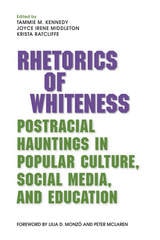
Rhetorics of Whiteness
Postracial Hauntings in Popular Culture, Social Media, and EducationEdited by Tammie M. Kennedy, Joyce Irene Middleton, Krista Ratcliffe, with a foreword by Lilia D. Monzó and Peter McLaren
Southern Illinois University Press, 2017
With the election of our first black president, many Americans began to argue that we had finally ended racism, claiming that we now live in a postracial era. Yet near-daily news reports regularly invoke white as a demographic category and recount instances of racialized violence as well as an increased sensitivity to expressions of racial unrest. Clearly, American society isn’t as color-blind as people would like to believe. In Rhetorics of Whiteness: Postracial Hauntings in Popular Culture, Social Media, and Education, contributors reveal how identifications with racialized whiteness continue to manifest themselves in American culture.
The sixteen essays that comprise this collection not only render visible how racialized whiteness infiltrates new twenty-first-century discourses and material spaces but also offer critical tactics for disrupting this normative whiteness. Specifically, contributors examine popular culture (novels, films, TV), social media (YouTube, eHarmony, Facebook), education (state law, the textbook industry, dual credit programs), pedagogy (tactics for teaching via narratives, emotional literacy, and mindfulness) as well as cultural theories (concepts of racialized space, anti-dialogicism, and color blindness). Offering new approaches to understanding racialized whiteness, this volume emphasizes the importance of a rhetorical lens for employing whiteness studies’ theories and methods to identify, analyze, interpret, and interrupt representations of whiteness.
Although whiteness studies has been waning as an active research field for the past decade, the contributors to Rhetorics of Whiteness assert that it hasn’t lost its relevancy because racialized whiteness and issues of systemic racism persist in American society and culture today. Few whiteness studies texts have been published in rhetoric and composition in the past decade, so this collection should quickly become mandatory reading. By focusing on common, yet often overlooked, contemporary examples of how racialized whiteness haunts U.S. society, Rhetorics of Whiteness serves as a valuable text for scholars in the field as well as anyone else interested in the topic.
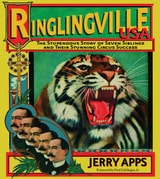
Ringlingville USA
The Stupendous Story of Seven Siblings and Their Stunning Circus SuccessJerry Apps
Wisconsin Historical Society Press, 2004
The Ringling Brothers began their business under the most modest of circumstances and through hard work, business savvy, and some luck created the largest, most famous circus in the world. They became wealthy men, one 50 cent admission ticket at a time.
Ringlingville USA chronicles the brothers' journey from immigrant poverty to enduring glory as the kings of the circus world. The Ringlings and their circus were last studied in depth over four decades ago. Now, for the first time, the brothers' detailed financial records and personal correspondence are available to researchers. Jerry Apps weaves together that information with newspaper accounts, oral histories, colorful anecdotes, and stunning circus ephemera and photos, many never before been published, to illuminate the importance of the Ringlings' accomplishments. He describes how the Ringling Brothers confronted the challenges of taxation, war, economic pressure, changing technology, and personal sorrows to find their place in history. The brothers emerge as complex characters whose ambition, imagination, and pure hucksterism fueled the phenomenon that was the Ringling Brothers' Circus.

Ripple Effects
The Work That Music Festivals Do in the WorldEdited by Eric Fillion and Ajay Heble
Temple University Press, 2027
What is the work that music festivals do in the world? In asking this question, Ripple Effects explores the varied ways in which festivals can act as spaces where new social relations are cultivated, as places for envisioning and enacting repertories of embodied memory and care, as alternatives to fragmented private consumption of culture, as sites for unexpected conversations.
While some case studies discuss structures of dominance inside mammoth corporate-sponsored festivals, other chapters find insubordinate spaces in festivals designed to honor traditional folk musics, to protest the proliferation of nuclear weapons, to deploy cultural exchanges in defiance of Cold War politics, to build pan-African unity, and to embrace the links between humans and the more-than-human world.
Ripple Effects brings together leading and emerging scholars, artists, and arts presenters to consider the challenges, rewards, and responsibilities associated with the improvisational culture and ethos of music festivals as alternative public spheres.
Contributors: Amina Boubia, Jody H. Cripps, Chris Dodd, Ben Finley, Simon Frith, Maria Giaever Lopez, Chris Greencorn, Jo Haynes, Michael J. Kramer, David A. McDonald, Patricia Nicholson, Melissa Noventa, William Parker, Jeremy Reed, Andrew Snyder, Cheryl Thompson, Steve Waksman, Katharine White, Deborah Wong, and the editors.
Rituals and Ceremonies in Popular Culture
Edited by Ray B. Browne
University of Wisconsin Press, 1980
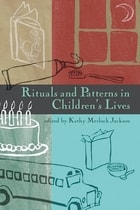
Rituals and Patterns in Children's Lives
Edited by Kathy Merlock Jackson
University of Wisconsin Press, 2005
Trick-or-treating. Flower girls. Bedtime stories. Bar and bat mitvah. In a nation of increasing ethnic, familial, and technological complexity, the patterns of children's lives both persist and evolve. This book considers how such events shape identity and transmit cultural norms, asking such questions as:
* How do immigrant families negotiate between old traditions and new?
* What does it mean when children engage in ritual insults and sick jokes?
* How does playing with dolls reflect and construct feelings of racial identity?
* Whatever happened to the practice of going to the Saturday matinee to see a Western?
* What does it mean for a child to be (in the words of one bride) "flower-girl material"? How does that role
cement a girl's bond to her family and initiate her into society?
* What is the function of masks and costumes, and why do children yearn for these accoutrements of disguise?
Rituals and Patterns in Children's Lives suggests the manifold ways in which America's children come to know their society and themselves.
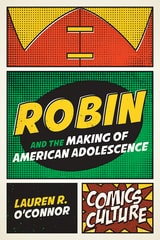
Robin and the Making of American Adolescence
Lauren R. O'Connor
Rutgers University Press, 2021
Robinson Crusoe after 300 Years
Andreas K. E. Mueller
Bucknell University Press, 2021
Rock Eras
Interpretations of Music and Society, 1954-1984Jim Curtis
University of Wisconsin Press, 1987
Paper is temporarily out of stock, Cloth (0-87972-368-8) is available at the paper price until further notice.
Rock Over the Edge
Transformations in Popular Music CultureRoger Beebe, Denise Fulbrook, and Ben Saunders, eds.
Duke University Press, 2002
Bridging the disciplines of musicology and cultural studies, the collection has two primary goals: to seek out a language for talking about music culture and to look at the relationship of music to culture in general. The editors’ introduction provides a backward glance at recent rock criticism and also looks to the future of the rapidly expanding discipline of popular music studies. Taking seriously the implications of critical theory for the study of non-literary aesthetic endeavors, the volume also addresses such issues as the affective power of popular music and the psychic construction of fandom.
Rock Over the Edge will appeal to scholars and students in popular music studies and American Studies as well as general readers interested in popular music.
Contributors. Ian Balfour, Roger Beebe, Michael Coyle, Robert Fink, Denise Fulbrook, Tony Grajeda, Lawrence Grossberg, Trent Hill, Josh Kun, Jason Middleton, Lisa Ann Parks, Ben Saunders, John J. Sheinbaum, Gayle Wald, Warren Zanes
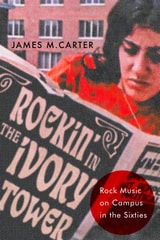
Rockin' in the Ivory Tower
Rock Music on Campus in the SixtiesJames M. Carter
Rutgers University Press, 2023
Histories of American rock music and the 1960s counterculture typically focus on the same few places: Woodstock, Monterey, Altamont. Yet there was also a very active college circuit that brought edgy acts like the Jefferson Airplane and the Velvet Underground to different metropolitan regions and smaller towns all over the country. These campus concerts were often programmed, promoted, and reviewed by students themselves, and their diverse tastes challenged narrow definitions of rock music.
Rockin’ in the Ivory Tower takes a close look at two smaller universities, Drew in New Jersey and Stony Brook on Long Island, to see how the culture of rock music played an integral role in student life in the late 1960s. Analyzing campus archives and college newspapers, historian James Carter traces connections between rock fandom and the civil rights protests, free speech activism, radical ideas, lifestyle transformations, and anti-war movements that revolutionized universities in the 1960s. Furthermore, he finds that these progressive students refused to segregate genres like folk, R&B, hard rock, and pop. Rockin’ in the Ivory Tower gives readers a front-row seat to a dynamic time for the music industry, countercultural politics, and youth culture.
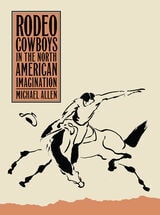
Rodeo Cowboys In The North American Imagination
Michael Allen
University of Nevada Press, 1998
Rodeo is an enduring relic of America’s popular culture, drawing capacity audiences to all its venues, from small western cowtowns to Madison Square Garden. The rodeo cowboy, that figure of rugged independence and solitary courage, continues to evoke the spirit of a vanished frontier and the hardy pioneers who conquered it. In this study historian Michael Allen examines the image of the rodeo cowboy and the role this image has played in popular culture over the past century. He sees rodeo as a significant American folk festival and the rodeo cowboy as the avatar of a nearly extinct authentic figure, the “real cowboy,” who embodies the skills and values of traditional western rural culture. Allen’s analysis explores the evolution of the myth of the rodeo man and its subsequent institutionalization and acculturation into the media of popular culture. He also examines the impact on this myth of significant changes in the rodeo milieu—the commercialization of the event and the professionalization of rodeo performers; the arrival on the rodeo scene of performers from outside the white, male, western, rural origins of the traditional cowboy performers. He discovers that America’s—and indeed the world’s—fascination with the rodeo cowboy reflects feelings far deeper than a taste for exciting entertainment. Allen’s discussion of the archetypal figure of the rodeo cowboy will change forever our perception of rodeo, but it will also help us understand how the ancient tension between frontier and civilization continues to play a role in our national imagination.
Rogue Scholar
The Sinister Life and Celebrated Death of Edward H. RulloffRichard W. Bailey
University of Michigan Press, 2003
Richard Bailey's narrative, calm and impartial yet spiked with wit and suspense, captures perfectly the slightly haunted and overwrought air of Victorian rural America, calling on newspaper accounts, interviews, and eyewitness reports of the day. Inevitably, the quiet accumulation of details builds to a story that transcends its individual events to touch on the universal themes of any age.
Rogue Scholar is about the evil of one man who lived a life of deception and crime. Yet in a larger sense it is also the portrait of a condemned soul in its final hours, an examination of the death penalty, and a reminder that media sensationalism is nothing new.
Roll Me in Your Arms
"Unprintable" Ozark Folksongs and Folklore, Volume I, Folksongs and MusicVance Randolph
University of Arkansas Press, 1992
Collected in the field from 1915 through 1955, these tales and songs were considered by the publisher at the time to be too salacious for inclusion in Vance Randolph’s Ozark Folksongs. Randolph came to doubt that they would ever appear in print, and they did not in his lifetime.
Roll Me in Your Arms, Volume I of “Unprintable” Ozark Folksongs and Folklore, includes 180 unexpurgated songs collected by Randolph with tunes transcribed from the original singers. Volume II, Blow the Candle Out, contains rhymes and songs without music as well as other unexpurgated Ozark folk materials, including children’s lore, elements in speech, graffiti, riddles, dance calls, and beliefs.
G. Legman’s painstaking and patient editing, annotating, and crossreferencing richly complement the Randolph collection. The result is a look into a previously neglected area in the study of folksong and folklore in the Ozarks and further evidence of Randolph’s preeminence in the field.
The late Vance Randolph lived in the Ozark Mountains from 1920 until his death in 1980. Although he taught folklore at the University of Arkansas in Fayetteville, he is best remembered for his many years of field research resulting in the national bestseller Pissing in the Snow & Other Ozark Folktales and more than a dozen other books on American folklore.
Romance Of The Road
Literature Of The American HighwayRonald Primeau
University of Wisconsin Press, 1996
Writers examined include Jack Kerouac, Jim Dodge, Ralph Waldo Emerson, William Least Heat Moon, Robert M. Pirsig, Henry Miller, Joan Didion, Mona Simpson, and Walt Whitman.
Romance of Commerce and Culture
Capitalism, Modernism, and the Chicago-Aspen Crusade for Cultural Reform, Revised EditionJames Sloan Allen
University Press of Colorado, 2002

Romantic Conventions
Anne K. Kaler
University of Wisconsin Press, 1999
Traditionally, romance novels have a reputation as being no more than trashy, sex-filled fantasy escapes for frustrated housewives. But books in this genre account for nearly half of the paperbacks published. Contributors examine the patterns used by the romance authors to tell their stories.
Rooted Resistance
Agrarian Myth in Modern AmericaNorie R. Singer
University of Arkansas Press, 2020
Through a careful examination of several case studies, Rooted Resistance traverses the ground of agrarian myth in modern America. The authors investigate key figures and movements in the history of modern agrarianism, including the World War I victory garden efforts, the postwar Country Life movement for the vindication of farmers’ rights, the Southern Agrarian critique of industrialism, and the practical and spiritual prophecy of organic farming put forth by J. I. Rodale. This critical history is then brought up to date with recent examples such as the contested South Central Farm in urban Los Angeles and the spectacular rise and fall of the Chipotle “Food with Integrity” branding campaign.
By examining a range of case studies, Singer, Grey, and Motter aim for a deeper critical understanding of the many applications of agrarian myth and reveal why it can help provide a pathway for positive systemic change in the food system.
Rosa Bonheur
The Artist's (Auto)biographyAnna Klumpke
University of Michigan Press, 2001
Rosa Bonheur: The Artist's (Auto)Biography brings this extraordinary woman to life in a unique blend of biography and autobiography. Coupling her own memories with Bonheur's first-person account, Anna Klumpke, a young American artist who was Bonheur's lover and chosen portraitist, recounts how she came to meet and fall in love with Bonheur. Bonheur's account of her own life story, set nicely within Klumpke's narrative, sheds light on such topics as gender formation, institutional changes in the art world, governmental intervention in the arts, the social and legal regulation of dress codes, and the perceived transgressive nature of female sexual companionship in a repressive society, all with the distinctive flavor of Bonheur's artistic personality.
Gretchen van Slyke's translation provides a rare glimpse into the unconventional life of this famous French painter, and renders accessible for the first time in English this public statement of Bonheur's artistic credo. More importantly, whether judged by her century's standards (or perhaps even our own), it details a story of lesbian love that is bold, unconventional, and courageous.
"The remarkable life of Rosa Bonheur, one of the most highly decorated artists and certainly the best known female artist of her time in nineteenth-century France, is long overdue for further scrutiny." --Therese Dolan, Temple University
Gretchen van Slyke is Associate Professor of French, University of Vermont.
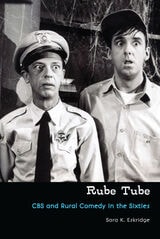
Rube Tube
CBS and Rural Comedy in the SixtiesSara K. Eskridge
University of Missouri Press, 2022
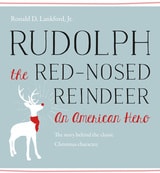
Rudolph the Red-Nosed Reindeer
An American HeroRonald D. Lankford
University Press of New England, 2016
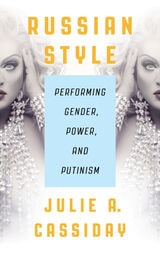
Russian Style
Performing Gender, Power, and PutinismJulie A. Cassiday
University of Wisconsin Press, 2023