Results by title
828 books match the query 'Research' and 86 start with r
Realized Religion
Research on the Relationship between Religion and HealthTheodore J. Chamberlain
Templeton Press, 2001
Realized Religion includes research that investigates the impact of spirituality in health and healing, faith healing, religion and mental health, religion and life satisfaction, religion and mental disorders, religion and martial satisfaction, the effect of religion on suicide, and the effect of religion on alcohol use and abuse. This book documents over 300 scientific studies published by reputable scientific journals demonstrating that religion has an ameliorating effect on the survival rate of surgical patients, on depression and anxiety, on suicide rates, and on promotion of a healthy lifestyle.
Realized Religion presents useful and helpful information to researchers and scholars who seek to understand the subtle connection between healing and spirituality. It will be an invaluable resource for libraries and others interested in the emerging field of spirituality and healing.

Recipes and Reciprocity
Building Relationships in ResearchHannah Tait Neufeld
University of Manitoba Press, 2022
Reclaiming Indigenous Research in Higher Education
Minthorn, Robin Starr
Rutgers University Press, 2018
Recently, Native scholars have started to reclaim research through the development of their own research methodologies and paradigms that are based in tribal knowledge systems and values, and that allow inherent Indigenous knowledge and lived experiences to strengthen the research. Reclaiming Indigenous Research in Higher Education highlights the current scholarship emerging from these scholars of higher education. From understanding how Native American students make their way through school, to tracking tribal college and university transfer students, this book allows Native scholars to take center stage, and shines the light squarely on those least represented among us.
Recommended Principles to Guide Academy-Industry Relationships
American Association of University Professors
University of Illinois Press, 2014
• Preserving the integrity of research and public respect for higher education
• Eliminating and managing individual and institutional financial conflicts of interest
• Maintaining unbiased hiring and recruitment policies
• Establishing grievance procedures and due process rights for faculty, graduate students, and academic professionals
• Mastering the complications of negotiations over patents and copyright
• Assuring the ethics of research involving human subjects.
In a time of dynamic change Recommended Principles to Guide Academy-Industry Relationships offers an indispensable and authoritative guide to sustaining integrity and tradition while achieving great things in twenty-first century academia.
Redesigning Social Inquiry
Fuzzy Sets and BeyondCharles C. Ragin
University of Chicago Press, 2008
Redesigning Social Inquiry provides a substantive critique of the standard approach to social research—namely, assessing the relative importance of causal variables drawn from competing theories. Instead, Ragin proposes the use of set-theoretic methods to find a middle path between quantitative and qualitative research. Through a series of contrasts between fuzzy-set analysis and conventional quantitative research, Ragin demonstrates the capacity for set-theoretic methods to strengthen connections between qualitative researchers’ deep knowledge of their cases and quantitative researchers’ elaboration of cross-case patterns. Packed with useful examples, Redesigning Social Inquiry will be indispensable to experienced professionals and to budding scholars about to embark on their first project.

Reframing Failure in Digital Scholarship
Edited by Anna-Maria Sichani and Michael Donnay
University of London Press, 2025
Failure is ordinary. From technological failures and computational obsolescence to rejected applications and challenging collaborations, failure is an unavoidable part of any scholarly endeavor. This is especially true for digital scholarship, as the everyday risk of failure is compounded by the challenges of interdisciplinary research and the fragility of digital technology.
Reframing Failure in Digital Scholarship brings together a diverse, interdisciplinary, and international group of scholars and practitioners who each offer short personal and professional reflections on the failed, broken, or challenging aspects of scholarly practice. It provides a critical perspective on the ways institutional and material conditions are intractably linked to approaches to digital research and how those conditions differ within and across national contexts.
In creating a critical, constructive, and compassionate vocabulary for failure, this book normalizes failure as an object of inquiry, asking what value exists in failure in digital scholarship and how we can create the space to fail better.
Reimagining Process
Online Writing Archives and the Future of Writing StudiesKyle Jensen
Southern Illinois University Press, 2015
For more than four decades, the dominant model for pedagogy and research in the field of composition has been a how-centered process approach to writing instruction, which involves studying the writing that students produce to expose the various stages of their writing process. By looking at notes, outlines, and multiple drafts, often presented by students together in the form of a portfolio, instructors can identify unproductive habits that students may have and provide techniques that help them improve their writing. In this groundbreaking volume, Kyle Jensen critiques traditional how-centered process instruction and presents a sound, practical methodology by which portfolios and online writing archives—digital interfaces that expose the marks of revision writers make during composition—might be employed to develop theories about what writing is: how it occurs, functions, circulates, creates meaning, and forms its subjects. Offering online writing archives as a way to envision a transdisciplinary approach to writing studies, Reimagining Process does not abandon the prevailing concepts of process pedagogy but rather casts them in wider contexts to conceive new ways of teaching and studying writing.
Religion and the Social Sciences
Basic and Applied Research PerspectivesJeff Levin
Templeton Press, 2018
To give this research the attention it deserves, editor Jeff Levin assembled a panel of preeminent social scientists and gave them a single directive: write the ultimate statement on religion from within their respective social science discipline or field. The result is this single volume, “state-of-the-science” compendium—a first of its kind for the study of religion.
Composed of ten essays, this book details the study of religion within nine basic and applied areas of social science. Along with a critical introduction to this subject, these essays include the expert contributions of:
- Kenneth I. Pargament & Julie J. Exline on psychology
- Anthony Gill on political science
- Charles M. North on economics
- Barry Hankins on history
- Annette Mahoney on family studies
- Byron R. Johnson on criminology
- Linda K. George on gerontology
- William H. Jeynes on education
- Jeff Levin on epidemiology
- An introduction to the history of the discipline’s or field’s religious research, as well as its most important people and published works.
- A comprehensive overview of key research findings and theories.
- A detailed research agenda to guide future scholars.
- An annotated bibliography of seminal works for the reader’s further consideration.

Renaissance Drama 40
What is Renaissance Drama?William N. West
Northwestern University Press, 2012
In this fortieth volume of Renaissance Drama, we pause again, not with the idea that we could define, or even describe, what might be, ought to be, or is included in the study of Renaissance drama (or if it is even always or ever the Renaissance, or the drama, that we study). But this does not even seem to have been what moved the first conversations that became "Research Opportunities" and Renaissance Drama. Rather, as they seem to have felt, we want to look at where we are and where our studies might lead us, and we too think we might as well make a beginning. For this issue, the editors invited a number of scholars working on different kinds of Renaissance drama, in a variety of ways and in several languages, to contribute brief essays addressing the state of the field of Renaissance drama, "the field" being convenient shorthand for the practical but productive indefinition under which we carry out our research and publish Renaissance Drama. In particular we asked them to consider these questions:
- How and with what effects has the study of Renaissance drama (or early modern performance) changed over the past half-century?
- What now is Renaissance drama? What could Renaissance drama become?
- What do you see as the most exciting (or least productive) development in the field?
- How have other developments in literary studies, performance studies, or other historical periods affected work in the field?
- What is missing from work in the field that it would be desirable to include or revive?
- Are there strategies you would propose for working through the divisions in the field based on national boundaries, between languages and traditions, or between canonical figures like Shakespeare, Molière, and other kinds of work? What kinds of distinctions do you see in the field? How are they useful or misleading?
- What new avenues in the field should open up further? Where should we look now?
- What is the most important work being done, or remaining to be done?
Report on the State of UK-Based Research on Latin America and the Caribbean 2014
Edited by Antoni Kapcia and Linda A. Newson
University of London Press, 2015
Reporting of Social Science in the National Media
Carol Weiss
Russell Sage Foundation, 1988
Research Confidential
Solutions to Problems Most Social Scientists Pretend They Never HaveEszter Hargittai
University of Michigan Press, 2009
"We all know that the actual process of empirical research is a messy, complicated business that at best only approximates the models we impart to students. Research Confidential pulls back the curtain on this process, laying bare the sordid details of the research process, but doing so in a way that respects the ideals of social research and that provides useful lessons for young scholars. It should be required reading for our research methods courses."
---Michael X. Delli Carpini, Dean, Annenberg School for Communication, University of Pennsylvania
"In this impressive volume, some of the brightest young lights in social research have taken us backstage to share what they learned from their innovative projects. Besides providing a wealth of help with methodological concerns, the book includes theoretical and career issues to consider when doing research. Anyone doing research should benefit from reading it."
---Caroline Hodges Persell, Professor of Sociology, New York University
"Research Confidential complements existing methods literature by providing refreshingly honest accounts of key challenges and decision forks-in-the-research-road. Each chapter enlightens and entertains."
---Kirsten Foot, Associate Professor of Communication, University of Washington
"A must-read for researchers embarking on new projects. Rather than the abstract descriptions of most methods textbooks, this volume provides rich accounts of the firsthand experiences of actual researchers. An invaluable resource of practical advice. Critically, it will make new researchers aware of the actual challenges that they are likely to face in their work."
---Christopher Winship, editor of Sociological Methods and Research and Professor of Sociology, Harvard University
This collection of essays aims to fill a notable gap in the existing literature on research methods in the social sciences. While the methods literature is extensive, rarely do authors discuss the practical issues and challenges they routinely confront in the course of their research projects. As a result, editor Eszter Hargittai argues, each new cohort is forced to reinvent the wheel, making mistakes that previous generations have already confronted and resolved. Research Confidential seeks to address this failing by supplying new researchers with the kind of detailed practical information that can make or break a given project. Written in an informal, accessible, and engaging manner by a group of prominent young scholars, many of whom are involved in groundbreaking research in online contexts, this collection promises to be a valuable tool for graduate students and educators across the social sciences.
Eszter Hargittai is Associate Professor of Communication Studies at Northwestern University and Fellow at the Berkman Center for Internet & Society at Harvard University.
Cover art courtesy of Dustin Gerard
Research Directions of Black Psychologists
Wade Boykin
Russell Sage Foundation, 1979
Research On Altruism & Love
An Annotated Bibliography of Major Studies in Psychology, Sociology, Evolutionary Biology, and TheologyStephen Post
Templeton Press, 2003
Research on Altruism and Love is a compendium of annotated bibliographies reviewing literature and research studies on the nature of love. An essay introduces each of the annotated bibliographies.
A variety of literature directly related to science-and-love issues or supporting those issues is covered in the Religious Love Interfaces with Science section. This annotated bibliography is unique in that it approaches the field from a decidedly religious perspective. It includes classical expositions of love that continue to influence contemporary scholars, including Platos' work on eros, the work and words of Jesus, Aristotle, Augustine of Hippo, Martin Luther, Kierkegaard, and Ghandi, among others. The contemporary discussion includes Anders Nygren's theological arguments in his classic, Agape and Eros; Pitirim Sorokin; and others. An issue that often emerges in this literature is the question of the nature and definition of love.
A second annotated bibliography features current empirical research in the field of Personality and Altruism, with a focus on social psychology. Among the topics covered are the altruistic personality, altruistic behavior, empathy, helping behavior, social responsibility, and volunteerism. Methodologies are diverse, and studies include experiments, local and national surveys, naturalistic observation, and combinations of these.
The Evolutionary Biology annotated bibliography covers the most significant works on altruism and love in the field of biology and evolutionary psychology.
The fourth and final annotated bibliography in this volume is entitled Sociology of Faith-Based Volunteerism. Here the focus is on literature on the interface of helping behavior and religious organizations, as well as major pieces on voluntary associations.
Research Shortcuts
Judi Kesselman-Turkel and Franklynn Peterson
University of Wisconsin Press, 2003
There are proper ways to research a paper...and there are the ways most students do it: laboriously, tediously, and inefficiently. Here are the techniques and shortcuts that the pros use. They will enable students to find their way to the best resources for their own projects.
From preparing the preliminary outline, work file, and bibiliography, Research Shortcuts proceeds to using the appropriate resource guides, as well as modern aids to research. It also discusses shortcuts that reach the experts: writing letters that get questions answered, and making face-to-face (or telephone) interviews pay off.
A final section is devoted to using the research data: first drafts, choosing specific quotes wisely, paraphrasing, and final drafts.
Research as More Than Extraction
Knowledge Production and Gender-Based Violence in African SocietiesAnnie Bunting, Allen Kiconco, Joel Quirk
Ohio University Press, 2023
Wartime violence and its aftermath present numerous practical, ethical, and political challenges that are especially acute for researchers working on gender-based and sexual violence. Drawing upon applied examples from across the African continent, this volume features unique contributions from researchers and practitioners with decades of experience developing research partnerships, designing and undertaking fieldwork, asking sensitive questions, negotiating access, collecting and evaluating information, and validating results. These are all endeavors that also raise pressing ethical questions, especially in relation to retraumatization, social stigma, and even payment of participants.
Ethical and methodological questions cannot be separated from political and institutional considerations. Systems of privilege and marginalization cannot be wished away, so they need to be both interrogated and contested. This is where precedents and power relations established under colonialism and imperialism take center stage. Europeans have been extracting valuable resources from the African continent for centuries. Research into gender-based violence risks being yet another extractive industry. There are times when committed individuals can make valuable contributions to a more equitable future, but funding streams, knowledge hierarchies, and institutional positions continue to have powerful effects.
Accordingly, the contributors to this volume also concentrate upon the layered effects of power and position, relationships between researchers, organizations, and communities, and the political economy of knowledge production; this brings into focus questions about how and why information gets generated, for which kinds of audiences, and for whose benefit.

Research in Art and Design Education
Issues and ExemplarsEdited by Richard Hickman
Intellect Books, 2008

Research in Global Learning
Methodologies for Global Citizenship and Sustainable Development EducationEdited by Douglas Bourn
University College London, 2023
Young people around the world are calling ever more urgently on policymakers to address today’s global challenges of sustainability, structural inequality, and social justice. It is little surprise that learning in a global society, understanding sustainable development, and being active global citizens are increasingly popular themes for education at all levels. Educational research makes a crucial contribution to knowledge that can address the great questions of our time, and evidence from a diversity of studies is vital if we are to build a clear picture. Research in Global Learning showcases methods and findings from a range of early career researchers who conducted illuminating studies located around the globe, specifically Brazil, China, Ghana, Greece, Israel, Jamaica, Japan, Kazakhstan, Pakistan, Poland, South Korea, Trinidad and Tobago, Turkey, the United States, and the United Kingdom.
Flexibility of approach is key to successful educational research in differing contexts. The studies in this volume use a range of approaches to investigate four important themes: the relationship between policy and practice, opportunities and constraints within the education system and the role of teachers, challenges and opportunities for higher education, and the perspectives of young people and students. Case studies, quantitative and qualitative research, participatory action research, longitudinal studies, and analysis of textbooks through critical discourse analysis are all used to demonstrate how learning about global citizenship and sustainability can inspire learners and contribute to quality education.
Research on Human Subjects
Problems of Social Control in Medical ExperimentationBernard Barber
Russell Sage Foundation, 1973
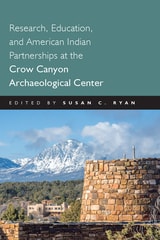
Research, Education and American Indian Partnerships at the Crow Canyon Archaeological Center
Susan C. Ryan
University Press of Colorado, 2024
Research, Education, and American Indian Partnerships at the Crow Canyon Archaeological Center guides Southwestern archaeology and public education beyond current practices—particularly regarding Indigenous partnerships—and provides a strategic handbook for readers into and through the mid-twenty-first century.
Open access edition supported by the Crow Canyon Archaeological Center King Family Fund and subvention supported in part by the Crow Canyon Archaeological Center and the Arizona Archaeological and Historical Society.
Researching Black Communities
A Methodological GuideJames S. Jackson, Cleopatra Howard Caldwell, Sherrill L. Sellers, editors
University of Michigan Press, 2014
Researching Perpetrators of Genocide
Edited by Kjell Anderson and Erin Jessee
University of Wisconsin Press, 2021
This collection of case studies by scholars from a range of disciplinary backgrounds turns a critical and reflective eye toward qualitative fieldwork on the topic. Framed by an introduction that sets out key issues in perpetrator research and a conclusion that proposes and outlines a code of best practice, the volume provides an essential starting point for future research while advancing genocide studies, transitional justice, and related fields. This original, important, and welcome contribution will be of value to historians, political scientists, criminologists, anthropologists, lawyers, and legal scholars.
Researching Writing
An Introduction to Research MethodsJoyce Kinkead
Utah State University Press, 2016
Author Joyce Kinkead lays out the research process, including finding and defining questions, planning, and starting the research. Expository content introduces the language and methods of writing research, and specific methods are demonstrated in published examples, illustrating student work using student work and showing that it is possible for students to join the scholarly conversation in writing studies. Other features include student activities, instructor resources, student resources, and links to external content on journal websites, digital publications, YouTube, and similar work.
The first-ever textbook for research methods in writing studies for undergraduates, Researching Writing takes a hands-on approach that excites and engages students in the depth and complexities of research and will influence the creation of courses in new writing majors as the field continues to grow.

Resolving Disputes Between Nations
Coercion or Conciliation?Martin Patchen
Duke University Press, 1988
Retention and Resistance
Writing Instruction and Students Who LeavePegeen Reichert Powell
Utah State University Press, 2014
Retention is a vital issue for institutions, but as these students’ stories show, leaving college is often the result of complex and idiosyncratic individual situations that make institutional efforts difficult and ultimately ineffective. An adjustment of institutional and pedagogical objectives is needed to refocus on educating as many students as possible, including those who might leave before graduation.
Much of the pedagogy, curricula, and methodologies of composition studies assume students are preparing for further academic study. Retention and Resistance argues for a new kairotic pedagogy that moves toward an emphasis on the present classroom experience and takes students’ varied experiences into account. Infusing the discourse of retention with three individual student voices, Powell explores the obligation of faculty to participate in designing an institution that educates all students, no matter where they are in their educational journey or how far that journey will go.
Rethinking Sex
Social Theory and Sexuality ResearchR. Connell
Temple University Press, 1993

Return to Warden's Grove
Science, Desire, and the Lives of SparrowsChristopher Norment
University of Iowa Press, 2008
Based on three seasons of field research in the Canadian Arctic, Christopher Norment's exquisitely crafted meditation on science and nature, wildness and civilization, is marked by bottomless prose, reflection on timeless questions, and keen observations of the world and our place in it. In an era increasingly marked by cutting-edge research at the cellular and molecular level, what is the role for scientists of sympathetic observation? What can patient waiting tell us about ourselves and our place in the world?
His family at home in the American Midwest, Norment spends months on end living in isolation in the Northwest Territories, studying the ecology of the Harris's Sparrow. Although the fourteenth-century German mystic Meister Eckhardt wrote, "God is at home, we are in the far country," Norment argues that an intellectual, emotional, and spiritual "far country" can be found in the lives of animals and arctic wilderness. For Norment, "doing science" can lead to an enriched aesthetic and emotional connection to something beyond the self and a way to develop a sacred sense of place in a world that feels increasingly less welcoming, certain, and familiar.
Reversing the Lens
Ethnicity, Race, Gender, and Sexuality through FilmJun Xing
University Press of Colorado, 2003
Revitalizing Federal Education Research and Development
Improving the R&D Centers, Regional Educational Laboratories, and the "New" OERIMaris A. Vinovskis
University of Michigan Press, 2001
Maris A. Vinovskis uses the research he has done over the past decade, along with the findings of other policymakers, to argue that the American public school system needs to gain functional reform if research institutions are to conduct more effective studies for policymakers. He examines here both recent reform policies as well as the history behind educational reform.
Vinovskis's vigorous investigation of the process of educational research and development in the United States will be of particular interest to individuals whose careers depend on continued federal funding. This book will also appeal to educators, policymakers, and public policy analysts and will be of unequaled value in understanding the formulation of new educational policies in the twenty-first century.
Maris A. Vinovskis is active on Capitol Hill and lectures throughout the country at such prestigious institutions as the American Academy of Arts and Sciences, the Brookings Institution, and the John F. Kennedy School of Government at Harvard. He is Professor of History, University of Michigan.

Rewired
Research-Writing Partnerships Within TheRandall McClure
Assoc of College & Research Libraries, 2016

Rewriting Television
Alison Peirse
Rutgers University Press, 2025
Rhetoric Of The Human Sciences
Language And Argument In Scholarship And Public AffairsJohn S. Nelson
University of Wisconsin Press, 1990
Rhetorical Mediator
Understanding Agency in Indigenous Translation and Interpretation through Indigenous Approaches to UXNora K. Rivera
Utah State University Press, 2023
In places where Indigenous language translation and interpretation are greatly needed, Indigenous language mediators often lack adequate systems to professionalize their field while withstanding Western practices that do not align with their worldviews. Through a “design thinking” methodology based on her work organizing and participating in an Indigenous-focused interpreter and translator conference, Rivera examines testimonios and semi-structured interviews conducted with Indigenous interpreters and translators to emphasize dialogue and desahogo (emotional release) as Indigenous communication practices.
The Rhetorical Mediator advocates for Indigenous language practices that have been sidelined by Western scholarship and systems, helping to create more equitable processes to directly benefit Indigenous individuals and other underrepresented groups. This book benefits specialists, including UX researchers, technical and professional communicators, interpreters and translators, and Indigenous professionals, as well as academics teaching graduate and undergraduate methods, Indigenous rhetoric and translation, and UX courses.
Risk Acceptability According to the Social Sciences
Mary Douglas
Russell Sage Foundation, 1985
Rubber Boots Methods for the Anthropocene
Doing Fieldwork in Multispecies WorldsAstrid Oberborbeck Andersen
University of Minnesota Press, 2023
A methodological follow-up to Arts of Living on a Damaged Planet
The environmental and climatic crises of our time are fundamentally multispecies crises. And the Anthropocene, a time of “human-made” disruptions on a planetary scale, is a disruption of the fabric of life as a whole. The contributors to Rubber Boots Methods for the Anthropocene argue that understanding the multispecies nature of these disruptions requires multispecies methods.
Answering methodological challenges posed by the Anthropocene, Rubber Boots Methods for the Anthropocene retools the empirical study of the socioecological chaos of the contemporary moment across the arts, human science, and natural science. Based on critical landscape history, multispecies curiosity, and collaboration across disciplines and knowledge systems, the volume presents thirteen transdisciplinary accounts of practical methodological experimentation, highlighting diverse settings ranging from the High Arctic to the deserts of southern Africa and from the pampas of Argentina to the coral reefs of the Western Pacific, always insisting on the importance of firsthand, “rubber boots” immersion in the field.
The methodological companion to Arts of Living on a Damaged Planet: Ghosts and Monsters of the Anthropocene (Minnesota, 2017), this collection puts forth empirical studies of the multispecies messiness of contemporary life that investigate some of the critical questions of our time.
Contributors: Filippo Bertoni, Museum für Naturkunde, Berlin; Harshavardhan Bhat, U of Westminster; Nathalia Brichet, U of Copenhagen; Janne Flora, Aarhus U, Denmark; Natalie Forssman, U of British Columbia; Peter Funch, Aarhus U; Kirsten Hastrup, U of Copenhagen; Colin Hoag, Smith College; Joseph Klein, U of California, Santa Cruz; Andrew S. Mathews, U of California, Santa Cruz; Daniel Münster, U of Oslo; Ursula Münster, U of Oslo; Jon Rasmus Nyquist, U of Oslo; Katy Overstreet, U of Copenhagen; Pierre du Plessis, U of Oslo; Meredith Root-Bernstein; Heather Anne Swanson, Aarhus U; Anna Lowenhaupt Tsing, U of California,
Santa Cruz; Stine Vestbo.
Rubbish!
The Archaeology of GarbageWilliam Rathje and Cullen Murphy
University of Arizona Press, 2001