Results by title
4127 books match the query 'Science' and 118 start with r
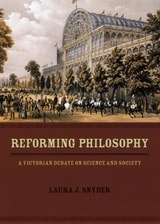
Reforming Philosophy
A Victorian Debate on Science and SocietyLaura J. Snyder
University of Chicago Press, 2006
Mill—philosopher, political economist, and Parliamentarian—remains a canonical author of Anglo-American philosophy, while Whewell—Anglican cleric, scientist, and educator—is now often overlooked, though in his day he was renowned as an authority on science. Placing their teachings in their proper intellectual, cultural, and argumentative spheres, Laura Snyder revises the standard views of these two important Victorian figures, showing that both men’s concerns remain relevant today.
A philosophically and historically sensitive account of the engagement of the major protagonists of Victorian British philosophy, Reforming Philosophy is the first book-length examination of the dispute between Mill and Whewell in its entirety. A rich and nuanced understanding of the intellectual spirit of Victorian Britain, it will be welcomed by philosophers and historians of science, scholars of Victorian studies, and students of the history of philosophy and political economy.
Reframing the Ethnographic Museum
Histories, Politics and FuturesEdited by Michael Rowlands, Nick Stanley, and Graeme Were
University College London, 2025
Ethnographic museums are at a crossroads; caught between colonial legacies, and the difficulties of captivating new audiences in a digital world. Reframing the Ethnographic Museum brings together leading scholars and curators to study the shifting role of these institutions in a rapidly changing cultural and political landscape. From Asia to Africa, the book explores how different museum strategies have grappled with decolonization and digital transformation, engaging in critical analysis and including case studies of innovative curatorial practices.
As museums confront calls for accountability and reconsider their collections, this volume provides a relevant exploration of the dilemmas and possibilities facing ethnographic display today. Reframing the Ethnographic Museum urges us to rethink how we engage with the past, and how museums can become spaces of dialogue and reflection.
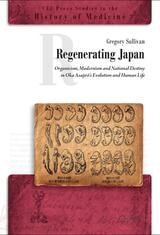
Regenerating Japan
Organicism, Modernism and National Destiny in Oka Asajiro's Evolution and Human LifeGregory Sullivan
Central European University Press, 2018
As the first step toward a comprehensive reinterpretation of the role of evolutionary science and biomedicine in pre-1945 Japan, this book addresses the early writings of that era’s most influential exponent of shinkaron (evolutionism), the German-educated research zoologist and popularizer of biomedicine, Oka Asajirō (1868–1944). Concentrating on essays that Oka published in the years during and after the Russo-Japanese War (1904–5), the author describes the process by which Oka came to articulate a programmatic modernist vision of national regeneration that would prove integral to the ideological climate in Japan during the first half of the twentieth century. In contrast to other scholars who insist that Oka was merely a rationalist enlightener bent on undermining state Shinto orthodoxy, Gregory Sullivan maintains that Oka used notions from evolutionary biology of organic individuality—especially that of the nation as a super-organism—to underwrite the social and geopolitical aims of the Meiji state.
The author suggests that this generative scientism gained wide currency among early twentieth-century political and intellectual elites, including Emperor Hirohito himself, who had personal connections to Oka. The wartime ideology may represent an unfinished attempt to synthesize Shinto fundamentalism and the eugenically-oriented modernism that Oka was among the first to articulate.
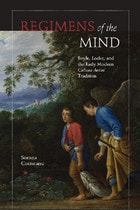
Regimens of the Mind
Boyle, Locke, and the Early Modern Cultura Animi TraditionSorana Corneanu
University of Chicago Press, 2011
Reigning the River
Urban Ecologies and Political Transformation in KathmanduAnne M. Rademacher
Duke University Press, 2011
Rademacher conducted research during a volatile period in Nepal’s political history. As clashes between Maoist revolutionaries and the government intensified, the riverscape became a site of competing claims to a capital city that increasingly functioned as a last refuge from war-related violence. In this time of intense flux, efforts to ensure, create, or imagine ecological stability intersected with aspirations for political stability. Throughout her analysis, Rademacher emphasizes ecology as an important site of dislocation, entitlement, and cultural meaning.
Rejecting Climate Doomism
Diana Stuart
University of Michigan Press, 2026
Drawing from climate science, sociology, psychology, and philosophy, Rejecting Climate Doomism outlines the reasons to instead choose action grounded in active hope. It examines how global warming could be effectively limited through specific policy proposals. Despite the many obstacles to achieving some of the policies discussed in this book, they are still possible and worth pursuing. By outlining a positive vision of the far-reaching changes that can be used to minimize warming, the book encourages readers to advocate for the social and economic changes necessary to forge the best path for people and the planet.

Relativistic Astrophysics, 2
The Structure and Evolution of the UniverseYa. B. Zel'dovich and I. D. Novikov
University of Chicago Press, 1983
This second volume of Relativistic Astrophysics provides a remarkably complete picture of the present state of cosmology. It is a synthesis of the theoretical foundations of contemporary cosmology, which are derived from work in relativity, plasma theory, thermodynamics, hydrodynamics, and particle physics. It presents the theoretical work that explains, describes, and predicts the nature of the universe, the physical process that occur in it, the formation of galaxies, the synthesis of the light elements, and the cosmological singularity and the theory of gravitation.
This book, long and eagerly awaited, is essential for everyone whose work is related to cosmology and astrophysics.
Relentless Evolution
John N. Thompson
University of Chicago Press, 2013
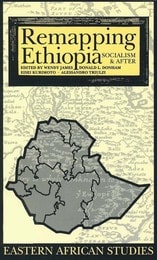
Remapping Ethiopia
Socialism & AfterWendy James
Ohio University Press, 2002
Governance everywhere is concerned with spatial relationships. Modern states “map” local communities, making them legible for the purposes of control. Ethiopia has gone through several stages of “mapping” in its imperial, revolutionary, and postrevolutionary phases.
In 1986 The Southern Marches of Imperial Ethiopia, a cross-disciplinary collection edited by Don Donham and Wendy James, opened up the study of center/periphery relations in the Ethiopian empire until the fall of the monarchy in 1974. This new volume examines similar themes, taking the story forward through the major changes effected by the socialist regime from the revolution of 1974 to its overthrow in 1991, and then into the current period that has been marked by moves toward local democracy and political devolution.
Topics include the changing fortunes of new and historic towns and cities, the impact of the Mengistu regime’s policies of villagization and resettlement, local aspects of the struggle against Mengistu and its aftermath, and the fate of border regions. Special attention is given to developments since 1991: to new local institutions and forms of autonomy, the links between the international diasporas of Ethiopia and the fortunes of their home areas. The collection draws on the work of established scholars as well as a new generation of Ethiopian and international researchers in the disciplines of anthropology, political science, history, and geography.
Remarkable Plants That Shape Our World
Helen Bynum and William Bynum
University of Chicago Press, 2014
Remarkable Plants celebrates the wonder and utility of the green kingdom, taking a detailed look at how plants have shaped our world. It focuses on eighty key species and richly explores their history, highlighting their importance and bringing to light surprising stories. Organized thematically into eight sections, the book starts with “Transformers” (including rice, beans, olives) and moves through sections such as “Heal and Harm” (poppy, aloe, strychnos) and “Revered and Adored” (lotus, frankincense, rose). Each species is introduced with its common and scientific names and followed by an exploration of its cultural, historical, botanical, and symbolic associations. Hundreds of botanical illustrations show full plants as well as highlight distinctive leaves, blooms, and fruits.
Rooted in one of the world’s most important and renowned temples of greenery, the Royal Botanic Gardens, Kew, Remarkable Plants is a symbiotic balance of science and art that will open readers’ eyes to the deep influence of the natural world on our modern one.

Remarkable Trees
Christina Harrison and Tony Kirkham
University of Chicago Press, 2019
Remarkable Trees tells the unique story of more than sixty species, each selected for its resonance and connection with people. In portraits that combine vivid cultural and historical narrative with a firm scientific grounding, Christina Harrison and Tony Kirkham reveal fascinating details of trees from the world’s major environmental zones and habitats. Some are obvious superstars such as oaks, redwoods and coconut, while others are more surprising: we learn of the monkey puzzle, a tree native to Chile that “can grow for 1,000 years,” and of the manchineel, a tree that contains sap so toxic to human skin that it’s a risk to stand beneath it on a rainy day. In these pages are trees that are healers and killers, trees that serve as foundations of great buildings and grand feasts, and trees that leave us with a sense of wonder and of worry for their survival.
In a tribute to the artists and botanists who have been inspired by trees for centuries, this book is filled with 240 delightful illustrations. The varied and beautiful images come from the unrivalled archive at the Royal Botanic Gardens, Kew, and they bring this enlightening and enchanting volume to life.
While trees have supported us for millennia, we have recently lost that direct, deep connection with them. Harrison and Kirkham remind us that we do not have to look far to reestablish that relationship and that we can still cherish the splendor and significance of these quiet giants.
Removing Mountains
Extracting Nature and Identity in the Appalachian CoalfieldsRebecca R. Scott
University of Minnesota Press, 2010
In this rich ethnography of life in Appalachia, Scott examines mountaintop removal in light of controversy and protests from environmental groups calling for its abolishment. But Removing Mountains takes the conversation in a new direction, telling the stories of the businesspeople, miners, and families who believe they depend on the industry to survive. Scott reveals these southern Appalachian coalfields as a meaningful landscape where everyday practices and representations help shape a community's relationship to the environment.
Removing Mountains demonstrates that the paradox that faces this community-forced to destroy their land to make a wage-raises important questions related not only to the environment but also to American national identity, place, and white working-class masculinity.
Renaissance Man of Cannery Row
The Life and Letters of Edward F. RickettsEdward F. Ricketts, edited by Katharine A. Rodger
University of Alabama Press, 2002
This portrait of one of John Steinbeck's closest friends illuminates the life and work of a figure central to the development of scientific and literary thought in the 20th century.
Marine biologist Edward F. Ricketts is perhaps best known as the inspiration for John Steinbeck's most empathic literary characters Doc in Cannery Row, Slim in Of Mice and Men, Jim Casy in The Grapes of Wrath, and Lee in East of Eden. The correspondence of this accomplished scientist, writer, and philosopher reveals the influential exchange of ideas he shared with such prominent thinkers and artists as Henry Miller, Joseph Campbell, Ellwood Graham, and James Fitzgerald, in addition to Steinbeck, all of whom were drawn to Ricketts's Monterey Bay laboratory, a haven of intellectual discourse and Bohemian culture in the 1930s and 1940s.
The 125 previously unpublished letters of this collection, housed at the Stanford University Library, document the broad range of Ricketts's interests and accomplishments during the last 12 and most productive years of his life. His handbook on Pacific marine life, Between Pacific Tides, is still in print, now in its fifth edition. The biologist's devotion to ecological conservation and his evolving philosophy of science as a cross-disciplinary, holistic pursuit led to the publication of The Sea of Cortez. Many of Ricketts's letters discuss his studies of the Pacific littoral and his theories of “phalanx” and transcendence. Epistles to family members, often tender and humorous, add dimension and depth to Steinbeck's mythologized depictions of Ricketts. Katharine A. Rodger has enriched the correspondence with an introductory biographical essay and a list of works cited.
Rendering Life Molecular
Models, Modelers, and Excitable MatterNatasha Myers
Duke University Press, 2015
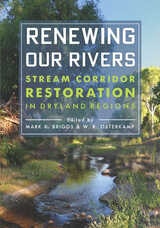
Renewing Our Rivers
Stream Corridor Restoration in Dryland RegionsEdited by Mark K. Briggs and W. R. Osterkamp
University of Arizona Press, 2020
Our rivers are in crisis and the need for river restoration has never been more urgent. Water security and biodiversity indices for all of the world’s major rivers have declined due to pollution, diversions, impoundments, fragmented flows, introduced and invasive species, and many other abuses.
Developing successful restoration responses are essential. Renewing Our Rivers addresses this need head on with examples of how to design and implement stream-corridor restoration projects. Based on the experiences of seasoned professionals, Renewing Our Rivers provides stream restoration practitioners the main steps to develop successful and viable stream restoration projects that last. Ecologists, geomorphologists, and hydrologists from dryland regions of Australia, Mexico, and the United States share case studies and key lessons learned for successful restoration and renewal of our most vital resource.
The aim of this guidebook is to offer essential restoration guidance that allows a start-to-finish overview of what it takes to bring back a damaged stream corridor. Chapters cover planning, such emerging themes as climate change and environmental flow, the nuances of implementing restoration tactics, and monitoring restoration results. Renewing Our Rivers provides community members, educators, students, natural resource practitioners, experts, and scientists broader perspectives on how to move the science of restoration to practical success.
Reparations and the Human
David L. Eng
Duke University Press, 2025
Reports of the Greenland Expeditions of the University of Michigan (1926-31)
Part I, Aërology Expeditions of 1926 and 1927-29S.P. Fergusson, Editor
University of Michigan Press, 1931
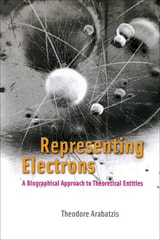
Representing Electrons
A Biographical Approach to Theoretical EntitiesTheodore Arabatzis
University of Chicago Press, 2005
Using the electron—or rather its representation—as a historical actor, Theodore Arabatzis illustrates the emergence and gradual consolidation of its representation in physics, its career throughout old quantum theory, and its appropriation and reinterpretation by chemists. As Arabatzis develops this novel biographical approach, he portrays scientific representations as partly autonomous agents with lives of their own. Furthermore, he argues that the considerable variance in the representation of the electron does not undermine its stable identity or existence.
Raising philosophical issues of contentious debate in the history and philosophy of science—namely, scientific realism and meaning change—Arabatzis addresses the history of the electron across disciplines, integrating historical narrative with philosophical analysis in a book that will be a touchstone for historians and philosophers of science and scientists alike.
Reproduction by Design
Sex, Robots, Trees, and Test-Tube Babies in Interwar BritainAngus McLaren
University of Chicago Press, 2012
Reproductive Labor and Innovation
Against the Tech Fix in an Era of HypeJennifer Denbow
Duke University Press, 2024
Reproductive Success
Studies of Individual Variation in Contrasting Breeding SystemsEdited by T. H. Clutton-Brock
University of Chicago Press, 1988
"A must read for anyone interested in evolution, mating/social systems, and population ecology."—John L. Koprowski, IJournal of Insect Behavior
Rereading the Fossil Record
The Growth of Paleobiology as an Evolutionary DisciplineDavid Sepkoski
University of Chicago Press, 2012
Rereading the Fossil Record presents the first-ever historical account of the origin, rise, and importance of paleobiology, from the mid-nineteenth century to the late 1980s. Drawing on a wealth of archival material, David Sepkoski shows how the movement was conceived and promoted by a small but influential group of paleontologists and examines the intellectual, disciplinary, and political dynamics involved in the ascendency of paleobiology. By tracing the role of computer technology, large databases, and quantitative analytical methods in the emergence of paleobiology, this book also offers insight into the growing prominence and centrality of data-driven approaches in recent science.
Research Methods in Sport Management
Second EditionBrenda G. Pitts
FiT Publishing, 2018
Research—the systematic investigation of materials and sources to establish facts and reach new conclusions—is carried out for a variety of purposes and to achieve a variety of goals. For sport business industry, research is critical for developing strategies to effectively understand and manage the franchise, property, or facility.
This second edition of Research Methods in Sport Management provides a detailed introduction into the research itself, and applies those methods directly to the field of sport business management. With established reputations as expert researchers in the field, the authors have reorganized foundational concepts and updated methods and industry examples to provide students, instructors and professionals with a knowledge base and resources to prepare, collect, analyze and present targeted research for scholarly publication or to better interpret and respond to the needs of an array of areas in the sport management industry.
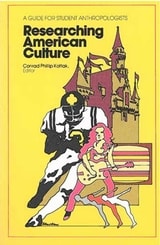
Researching American Culture
A Guide for Student AnthropologistsConrad Phillip Kottak, Editor
University of Michigan Press, 1982
Conducting original fieldwork is a science and an art. Anthropology students can easily get an A in Aborigines without ever understanding their own tribal behavior. American culture, like all others, has its share of ritual and myths, ranging from singles bars to sports events. This volume guides undergraduate students to correct scientific methods and successful personal approaches in their work.
Researching American Culture covers the universe of ethnography: the researcher’s role, interviewing, questionnaire construction, ethics, coping with the limitations of time and space. Guides for researchers, original research papers by undergraduates, and essays by professional anthropologists are all included. By applying anthropological techniques to today’’s behavior, students learn to be objective about their own culture and skeptical about practices rarely questioned.
Residual Governance
How South Africa Foretells Planetary FuturesGabrielle Hecht
Duke University Press, 2023
Residues
Thinking Through Chemical EnvironmentsSoraya Boudia
Rutgers University Press, 2022
Winner of the 2023 Merton Award from the Science, Knowledge, and Technology section of the American Sociological Association
Residues offers readers a new approach for conceptualizing the environmental impacts of chemicals production, consumption, disposal, and regulation. Environmental protection regimes tend to be highly segmented according to place, media, substance, and effect; academic scholarship often reflects this same segmented approach. Yet, in chemical substances we encounter phenomena that are at once voluminous and miniscule, singular and ubiquitous, regulated yet unruly. Inspired by recent studies of materiality and infrastructures, we introduce “residual materialism” as a framework for attending to the socio-material properties of chemicals and their world-making powers. Tracking residues through time, space, and understanding helps us see how the past has been built into our present chemical environments and future-oriented regulatory systems, why contaminants seem to always evade control, and why the Anthropocene is as inextricably harnessed to the synthesis of carbon into new molecules as it is driven by carbon’s combustion.
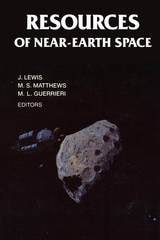
Resources of Near-Earth Space
John S. Lewis
University of Arizona Press, 1993
The parts of the solar system that are most accessible from Earth—the Moon, the near-Earth asteroids, Mars and its moons—are rich in materials of great potential value to humanity. Resources of Near-Earth Space explores the possibilities both of utilizing these materials to produce propellants, structural metals, refractories, life-support fluids, and other materials on site to reduce the costs of space exploration, and of providing a source of materials and energy for our own planet that would not be environmentally destructive to Earth.This volume summarizes the present state of the art in attempts to realize these possibilities: identifying the resources, mining and processing, transportation, and economics. As a broad survey of a rapidly evolving field, it is intended as a technical introduction to the use of nonterrestrial materials for scientists, engineers, and industrial and governmental project managers who seek to make space more accessible.
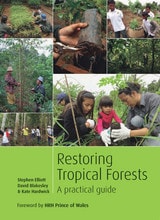
Restoring Tropical Forests
A Practical GuideStephen Elliott, David Blakesley, and Kate Hardwick
Royal Botanic Gardens, Kew, 2013
The book is based on the innovative techniques developed at Chiang Mai University’s Forest Restoration Research Unit, Thailand. It takes a threepart approach, first looking at effective general concepts of tropical forest dynamics and regeneration, then at specific proven restoration techniques, and finally at how to use research methods to refine and adapt the techniques to local ecological and socioeconomic conditions. In addition, illustrations and case studies of successful applications help to make this a global, user-friendly guide. Whether for developing new techniques or improving old ones, Restoring Tropical Forests is a valuable tool for effective, ecologically sound change.
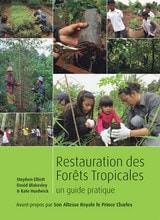
Restoring Tropical Forests
A Practical Guide (French Edition)Stephen Elliott, David Blakesley, and Kate Hardwick
Royal Botanic Gardens, Kew, 2014
The book is based on the innovative techniques developed at Chiang Mai University’s Forest Restoration Research Unit, Thailand. It takes a threepart approach, first looking at effective general concepts of tropical forest dynamics and regeneration, then at specific proven restoration techniques, and finally at how to use research methods to refine and adapt the techniques to local ecological and socioeconomic conditions. In addition, illustrations and case studies of successful applications help to make this a global, user-friendly guide. Whether for developing new techniques or improving old ones, Restoring Tropical Forests is a valuable tool for effective, ecologically sound change.
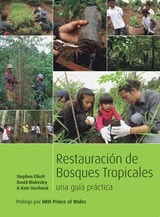
Restoring Tropical Forests
A Practical Guide (Spanish Edition)Stephen Elliott, David Blakesley, and Kate Hardwick
Royal Botanic Gardens, Kew, 2014
The book is based on the innovative techniques developed at Chiang Mai University’s Forest Restoration Research Unit, Thailand. It takes a threepart approach, first looking at effective general concepts of tropical forest dynamics and regeneration, then at specific proven restoration techniques, and finally at how to use research methods to refine and adapt the techniques to local ecological and socioeconomic conditions. In addition, illustrations and case studies of successful applications help to make this a global, user-friendly guide. Whether for developing new techniques or improving old ones, Restoring Tropical Forests is a valuable tool for effective, ecologically sound change.
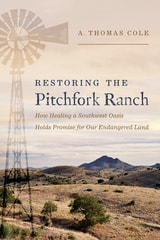
Restoring the Pitchfork Ranch
How Healing a Southwest Oasis Holds Promise for Our Endangered LandA. Thomas Cole
University of Arizona Press, 2024
Restoring the Pitchfork Ranch tells the story of a decades-long habitat restoration project in southwestern New Mexico. A. Thomas Cole explains what inspired him and his wife, Lucinda, to turn their retirement into years dedicated to hard work and renewal. The book shares the past and present history of a very special ranch south of Silver City, which is home to a rare type of regional wetland, a fragile desert grassland ecosystem, archaeological sites, and a critical wildlife corridor in a drought-stricken landscape.
Today the 11,300 acres that make up the Pitchfork Ranch provide an important setting for carbon sequestration, wildlife habitats, and space for the reintroduction of endangered or threatened species. Restoring the Pitchfork Ranch weaves together stories of mine strikers, cattle ranching, and the climate crisis into an important and inspiring call to action. For anyone who has wondered how they can help, the Pitchfork Ranch provides an inspiring way forward.
Restricted Data
The History of Nuclear Secrecy in the United StatesAlex Wellerstein
University of Chicago Press, 2021
The American atomic bomb was born in secrecy. From the moment scientists first conceived of its possibility to the bombings of Hiroshima and Nagasaki and beyond, there were efforts to control the spread of nuclear information and the newly discovered scientific facts that made such powerful weapons possible. The totalizing scientific secrecy that the atomic bomb appeared to demand was new, unusual, and very nearly unprecedented. It was foreign to American science and American democracy—and potentially incompatible with both. From the beginning, this secrecy was controversial, and it was always contested. The atomic bomb was not merely the application of science to war, but the result of decades of investment in scientific education, infrastructure, and global collaboration. If secrecy became the norm, how would science survive?
Drawing on troves of declassified files, including records released by the government for the first time through the author’s efforts, Restricted Data traces the complex evolution of the US nuclear secrecy regime from the first whisper of the atomic bomb through the mounting tensions of the Cold War and into the early twenty-first century. A compelling history of powerful ideas at war, it tells a story that feels distinctly American: rich, sprawling, and built on the conflict between high-minded idealism and ugly, fearful power.
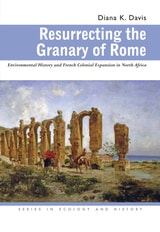
Resurrecting the Granary of Rome
Environmental History and French Colonial Expansion in North AfricaDiana K. Davis
Ohio University Press, 2007
Tales of deforestation and desertification in North Africa have been told from the Roman period to the present. Such stories of environmental decline in the Maghreb are still recounted by experts and are widely accepted without question today. International organizations such as the United Nations frequently invoke these inaccurate stories to justify environmental conservation and development projects in the arid and semiarid lands in North Africa and around the Mediterranean basin. Recent research in arid lands ecology and new paleoecological evidence, however, do not support many claims of deforestation, overgrazing, and desertification in this region.
Diana K. Davis’s pioneering analysis reveals the critical influence of French scientists and administrators who established much of the purported scientific basis of these stories during the colonial period in Algeria, Morocco, and Tunisia, illustrating the key role of environmental narratives in imperial expansion. The processes set in place by the use of this narrative not only systematically disadvantaged the majority of North Africans but also led to profound changes in the landscape, some of which produced the land degradation that continues to plague the Maghreb today.
Resurrecting the Granary of Rome exposes many of the political, economic, and ideological goals of the French colonial project in these arid lands and the resulting definition of desertification that continues to inform global environmental and development projects. The first book on the environmental history of the Maghreb, this volume reframes much conventional thinking about the North African environment. Davis’s book is essential reading for those interested in global environmental history.
Rethinking Expertise
Harry Collins and Robert Evans
University of Chicago Press, 2007
What does it mean to be an expert? In Rethinking Expertise, Harry Collins and Robert Evans offer a radical new perspective on the role of expertise in the practice of science and the public evaluation of technology.
Collins and Evans present a Periodic Table of Expertises based on the idea of tacit knowledge—knowledge that we have but cannot explain. They then look at how some expertises are used to judge others, how laypeople judge between experts, and how credentials are used to evaluate them. Throughout, Collins and Evans ask an important question: how can the public make use of science and technology before there is consensus in the scientific community? This book has wide implications for public policy and for those who seek to understand science and benefit from it.
“Starts to lay the groundwork for solving a critical problem—how to restore the force of technical scientific information in public controversies, without importing disguised political agendas.”—Nature
“A rich and detailed ‘periodic table’ of expertise . . . full of case studies, anecdotes and intriguing experiments.”—Times Higher Education Supplement (UK)
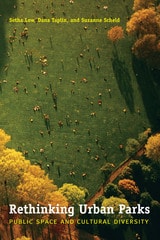
Rethinking Urban Parks
Public Space and Cultural DiversityBy Setha Low, Dana Taplin, and Suzanne Scheld
University of Texas Press, 2005
Urban parks such as New York City's Central Park provide vital public spaces where city dwellers of all races and classes can mingle safely while enjoying a variety of recreations. By coming together in these relaxed settings, different groups become comfortable with each other, thereby strengthening their communities and the democratic fabric of society. But just the opposite happens when, by design or in ignorance, parks are made inhospitable to certain groups of people.
This pathfinding book argues that cultural diversity should be a key goal in designing and maintaining urban parks. Using case studies of New York City's Prospect Park, Orchard Beach in Pelham Bay Park, and Jacob Riis Park in the Gateway National Recreation Area, as well as New York's Ellis Island Bridge Proposal and Philadelphia's Independence National Historical Park, the authors identify specific ways to promote, maintain, and manage cultural diversity in urban parks. They also uncover the factors that can limit park use, including historical interpretive materials that ignore the contributions of different ethnic groups, high entrance or access fees, park usage rules that restrict ethnic activities, and park "restorations" that focus only on historical or aesthetic values. With the wealth of data in this book, urban planners, park professionals, and all concerned citizens will have the tools to create and maintain public parks that serve the needs and interests of all the public.

Retro-reflective Beamforming Technique for Microwave Power Transmission
Mingyu Lu
The Institution of Engineering and Technology, 2024
Return to Warden's Grove
Science, Desire, and the Lives of SparrowsChristopher Norment
University of Iowa Press, 2008
Based on three seasons of field research in the Canadian Arctic, Christopher Norment's exquisitely crafted meditation on science and nature, wildness and civilization, is marked by bottomless prose, reflection on timeless questions, and keen observations of the world and our place in it. In an era increasingly marked by cutting-edge research at the cellular and molecular level, what is the role for scientists of sympathetic observation? What can patient waiting tell us about ourselves and our place in the world?
His family at home in the American Midwest, Norment spends months on end living in isolation in the Northwest Territories, studying the ecology of the Harris's Sparrow. Although the fourteenth-century German mystic Meister Eckhardt wrote, "God is at home, we are in the far country," Norment argues that an intellectual, emotional, and spiritual "far country" can be found in the lives of animals and arctic wilderness. For Norment, "doing science" can lead to an enriched aesthetic and emotional connection to something beyond the self and a way to develop a sacred sense of place in a world that feels increasingly less welcoming, certain, and familiar.
Rewriting the Mechanic
Text, Technology, and the Body in the Eighteenth CenturyEmily M. West
Bucknell University Press, 2027
In the eighteenth century, “technology” didn’t name a particular device or a process. It referred instead to written accounts of the mechanical arts, a now-obsolete category encompassing the wide range of work done by hand, from baking bread to building ships. Rewriting the Mechanic examines how these written descriptions, circulating across genres in eighteenth-century Britain, transformed certain mechanical arts by imagining them as newly innovative, authoritative, and able to make speculative possibilities real—as what we now call technological. Reversing the familiar story in which literature simply reflects technological change, West draws on the work of Robert Hooke, Aphra Behn, Daniel Defoe, Maria Edgeworth, and Jane Austen to demonstrate the influence of literary techniques on ideas about masculinity, power, and the body, and how these texts helped to bring the very idea of technological modernity into being.
Published by Bucknell University Press. Distributed worldwide by Rutgers University Press.
Rhetoric, Science, and Magic in Seventeenth-century England
Ryan J. Stark
Catholic University of America Press, 2009
Rhumb Lines and Map Wars
A Social History of the Mercator ProjectionMark Monmonier
University of Chicago Press, 2004
Because it distorts the proportionate size of countries, the Mercator map was criticized for inflating Europe and North America in a promotion of colonialism. In 1974, German historian Arno Peters proffered his own map, on which countries were ostensibly drawn in true proportion to one another. In the ensuing "map wars" of the 1970s and 1980s, these dueling projections vied for public support—with varying degrees of success.
Widely acclaimed for his accessible, intelligent books on maps and mapping, Monmonier here examines the uses and limitations of one of cartography's most significant innovations. With informed skepticism, he offers insightful interpretations of why well-intentioned clerics and development advocates rallied around the Peters projection, which flagrantly distorted the shape of Third World nations; why journalists covering the controversy ignored alternative world maps and other key issues; and how a few postmodern writers defended the Peters worldview with a self-serving overstatement of the power of maps. Rhumb Lines and Map Wars is vintage Monmonier: historically rich, beautifully written, and fully engaged with the issues of our time.
Rhythm and Noise
An Aesthetics of RockTheodore Gracyk
Duke University Press, 1996
What’s in a name? “Rock” or “Rock ’n’ Roll?” Grayck argues that rock and roll is actually a performance style, one in a number of musical styles comprising rock. What distinguishes rock, Gracyk tells us, is how it is mediated by technology: The art is in the recording. The lesson is a heady one, entailing a tour through the history of rock music from Elvis Presley’s first recordings in 1954 to Kurt Cobain’s suicide in 1994. Gracyk takes us through key recordings, lets us hear what rock musicians and their critics have to say, shows us how other kinds of music compare, and gives us the philosophical background to make more than passing sense of the medium. His work takes up the common myths and stereotypes about rock, popular and academic, and focuses on the features of the music that electrify fans and consistently generate controversy. When Elvis came to town, did southern sheriffs say that rock was barbaric and addictive? Well so did Theodor Adorno, in his way, and Allan Bloom, in his, and Gracyk takes aim at this charge as it echoes through the era of recorded music. He looks at what rock has to do with romanticism and, even more, with commercialism. And he questions the orthodoxy of making grand distinctions between “serious” and “popular” art.
Keenly attuned to the nuances of music and of all the ways that we can think about it, this exhilarating book tunes us in, as no other has, to the complex role of rock in American culture.
Ribbon of Darkness
Inferencing from the Shadowy Arts and SciencesBarbara Maria Stafford
University of Chicago Press, 2019
Stafford organizes these essays around three concepts that structure the book: inscrutability, ineffability, and intuitability. All three, she explains, allow us to examine how both the arts and the sciences imaginatively infer meaning from the “veiled behavior of matter,” bringing these historically divided subjects into a shared intellectual inquiry and imbuing them with an ethical urgency. A vanguard work at the intersection of the arts and sciences, this book will be sure to guide readers from either realm into unfamiliar yet undeniably fertile territory.
Richard Owen
Biology without DarwinNicolaas A. Rupke
University of Chicago Press, 2009
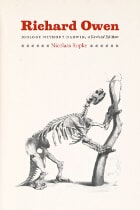
In the mid-1850s, no scientist in the British Empire was more visible than Richard Owen. Mentioned in the same breath as Isaac Newton and championed as Britain’s answer to France’s Georges Cuvier and Germany’s Alexander von Humboldt, Owen was, as the Times declared in 1856, the most “distinguished man of science in the country.” But, a century and a half later, Owen remains largely obscured by the shadow of the most famous Victorian naturalist of all, Charles Darwin. Publicly marginalized by his contemporaries for his critique of natural selection, Owen suffered personal attacks that undermined his credibility long after his name faded from history.
With this innovative biography, Nicolaas A. Rupke resuscitates Owen’s reputation. Arguing that Owen should no longer be judged by the evolution dispute that figured in only a minor part of his work, Rupke stresses context, emphasizing the importance of places and practices in the production and reception of scientific knowledge. Dovetailing with the recent resurgence of interest in Owen’s life and work, Rupke’s book brings the forgotten naturalist back into the canon of the history of science and demonstrates how much biology existed with, and without, Darwin
Ricky's Atlas
Mapping a Land on FireLi
Oregon State University Press, 2016
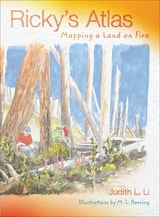
In this sequel to Ellie’s Log: Exploring the Forest Where the Great Tree Fell, Ricky Zamora brings his love of map-making and his boundless curiosity to the arid landscapes east of the Cascades Mountains. He arrives during a wild thunderstorm, and watches his family and their neighbors scramble to deal with a wildfire sparked by lightning. Joined by his friend Ellie, he sees how plants, animals, and people adjust to life with wildfires.
While hiking across a natural prairie, climbing up a fire tower, and studying historical photos and maps, Ricky and Ellie learn about the role of fire in shaping the landscape of the semi-arid plateau east of the mountains. They experience the scary days of wildfire in progress, explore a gritty site after a wildfire, and discover how some plants and animals depend on fire to survive.
Color pen-and-ink drawings accompany the text and vividly illustrate plants, animals, and events encountered in this exciting summer adventure. With his friend Ellie, Ricky creates a brightly colored diary of the fire, with maps, timelines, and sketches of what they see in this fire-prone land. Ricky’s notebook about his summer visit to his uncle’s ranch becomes an atlas of fire ecology, weather patterns, and life in the rain shadow.
Upper elementary kids will enjoy the mixture of amazing adventures with actual historical, physical, and ecological data about the region. Woven into the story are the small pleasures of ranch life, intriguing histories of Native Americans and early settlers, and almost unbelievable views of ancient fossils. Ricky and Ellie’s explorations, accompanied by their hand-written notes, introduce readers to a very special landscape and history east of the mountains.
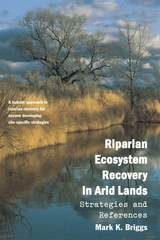
Riparian Ecosystem Recovery in Arid Lands
Strategies and ReferencesMark K. Briggs
University of Arizona Press, 1996
The book opens with a review of watershed characteristics and an examination of drainage systems, then proceeds to determining the causes of riparian decline. It introduces five factors that have a significant effect on the results of riparian rehabilitation--natural regeneration, water availability, channel stability, direct impacts such as livestock grazing and recreational activities, and soil salinity--and offers case studies that demonstrate how revegetation has been used both effectively and ineffectively.
It also discusses strategies other than revegetation that may be effective in improving the ecological condition of a site. Many of the strategies presented are also relevant to nonarid climates and to urban areas. By emphasizing evaluation of riparian ecosystems, so that the causes of degradation can be understood, and by offering general approaches that can be tailored to specific situations, Riparian Ecosystem Recovery in Arid Lands takes a holistic approach to riparian recovery that will enable users to better judge whether recovery expenditures are likely to produce desired results. An unprecedented work, it will substantially add to efforts across the Southwest and elsewhere to restore these unique and priceless ecosystems.
CONTENTS
1 An Overview: Background on Riparian Ecosystems / Lessons Learned from Past Riparian Recovery Efforts / An Evaluation Strategy / Defining Some Important Terms
2 Considering the Damaged Riparian Area from a Watershed Perspective: Case Study 1: Rincon Creek / Taking Advantage of Available Information / Getting to Know the Watershed / Getting to Know the Stream
3 Impacts within the Riparian Zone: Livestock / Case Study 2: Sheepshead Spring / Recreation / Competition from Nonnative Species / Wildlife
4 Natural Recovery in Riparian Ecosystems: Case Study 3: Aravaipa Creek / Factors Influencing Natural Recovery / Case Study 4: McEuen Seep / Autoecology of Selected Southwestern Riparian Tree Species / Case Study 5: Boulder Creek
5 Water Availability: Case Study 6: Box Bar / How Groundwater Decline Occurs / Evaluating Groundwater Conditions / Revegetating Riparian Ecosystems Characterized by Groundwater Decline
6 The Drainageway: Channel Instability and Riparian Ecosystems / Case Study 7: Babocomari River / Channel Dynamics / Strategies for Evaluating Channel Stability / Developing Recovery Projects along Unstable Alluvial Stream Channels
7 Soil Salinity and Riparian Ecosystems: Effects of Soil Salinity on Plant Growth / The Soil Survey / Soil Salinity and Revegetation
8 Developing the Recovery Plan: Developing Project Objectives / Selecting the Best Site / Local, State, and Federal Permit Requirements / Identifying Model Areas / Critical Components of the Recovery Plan / Community Involvement / Demonstration Sites / Postproject Evaluation and Monitoring
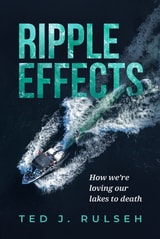
Ripple Effects
How We're Loving Our Lakes to DeathTed J. Rulseh
University of Wisconsin Press, 2022
In his engaging and conversational style, Ted Rulseh details each of these challenges and proposes achievable solutions. He draws on personal experience, interviews, academic research, and government reports to describe the state of the lakes, the stresses they are under, and avenues to successful lakeside living for a sustainable future. Ripple Effects will be a go-to source for all who love lakes and who advocate for their protection; its driving question is summed up by one of Rulseh’s interviewees: “We love this lake. What can we do to keep it healthy?”
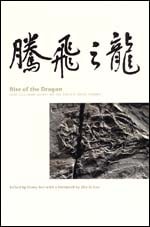
Rise of the Dragon
Readings from Nature on the Chinese Fossil RecordEdited by Henry Gee
University of Chicago Press, 2002
Perhaps the best known of these new Chinese fossils are the famous feathered dinosaurs from Liaoning Province, which may help end one of the most intense debates in paleontology—whether birds evolved from dinosaurs. But other finds have been just as spectacular, such as the minutely preserved (to the cellular level) animal embryos of the 670 million-year-old Duoshantuo phosphorites, or the world's oldest known fish, from the Chengjiang formation in southwestern Yunnan Province.
Rise of the Dragon makes descriptions and detailed discussions of these important finds available in one convenient volume for paleontologists and serious fossil fans.
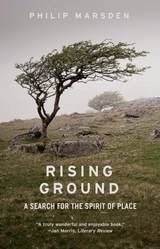
Rising Ground
A Search for the Spirit of PlacePhilip Marsden
University of Chicago Press, 2016
Rising Ground is a record of that journey, but it is also so much more: a beautifully written meditation on place, nature, and human life that encompasses history, archaeology, geography, and the love of place that suffuses us when we finally find home. Firmly in a storied tradition of English nature writing that stretches from Gilbert White to Helen MacDonald, Rising Ground reveals the ways that places and peoples have interacted over time, from standing stones to footpaths, ancient habitations to modern highways. What does it mean to truly live in a place, and what does it take to understand, and honor, those who lived and died there long before we arrived?
Like the best travel and nature writing, Rising Ground is written with the pace of a contemplative walk, and is rich with insight and a powerful sense of the long skein of years that links us to our ancestors. Marsden’s close, loving look at the small patch of earth around him is sure to help you see your own place—and your own home—anew.
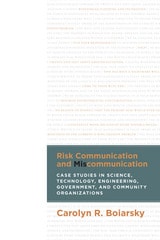
Risk Communication and Miscommunication
Case Studies in Science, Technology, Engineering, Government, and Community OrganizationsCarolyn Boiarsky
University Press of Colorado, 2016
Drawing from research in rhetoric, linguistics, technical communication, educational psychology, and web design, Boiarsky provides a new way to look at risk communication. She shows how failing to consider the readers’ needs or the rhetorical context in which one writes can be catastrophic and how anticipating those needs can enhance effectiveness and prevent disaster. She examines the communications and miscommunications of original e-mails, memos, and presentations about various environmental disasters, including the Columbia space shuttle explosion and the BP/Deepwater Horizon oil rig explosion, and successes, such as the Enbridge pipeline expansion and the opening of the Mississippi Spillway, and offers recommendations for effective communication.
Taking into account the growing need to communicate complex and often controversial issues across vast geographic and cultural spaces with an ever-expanding array of electronic media, Risk Communication and Miscommunication provides strategies for clear communication of data, ideas, and procedures to varied audiences to prevent or minimize damage from environmental incidents.
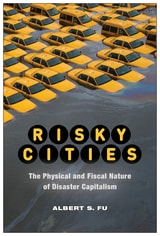
Risky Cities
The Physical and Fiscal Nature of Disaster CapitalismAlbert S. Fu
Rutgers University Press, 2022