Results by title
22279 books match the query 'Social Science' and 1072 start with r
Ruptures
Anthropologies of Discontinuity in Times of TurmoilEdited by Martin Holbraad, Bruce Kapferer, and Julia F. Sauma
University College London, 2019
With Ruptures, editors Martin Holbraad, Bruce Kapferer, and Julia F. Sauma have brought together leading and emerging international anthropologists to explore the concept of rupture in select ethnographic and historical contexts. Among the contributions are chapters that look at images of the guillotine in the French Revolution, reactions to Trump’s election in the United States, the motivations of young Danes who join ISIS in Syria, “butterfly effect” activism among environmental anarchists in northern Europe, the experiences of political trauma and its “repair” through privately sponsored museums of Mao’s revolution in China, people’s experience of the devastating 2001 earthquake in Gujarat; the rupture of Protestant faith among Danish nationalist theologians, and the attempt to invent ex nihilo an alphabet for use in Christian prophetic movements in Congo and Angola.

Rural America in a Globalizing World
Problems and Prospects for the 2010'sConner Bailey
West Virginia University Press, 2014
This fourth Rural Sociological Society decennial volume provides advanced policy scholarship on rural North America during the 2010’s, closely reflecting upon the increasingly global nature of social, cultural, and economic forces and the impact of neoliberal ideology upon policy, politics, and power in rural areas.
The chapters in this volume represent the expertise of an influential group of scholars in rural sociology and related social sciences. Its five sections address the changing structure of North American agriculture, natural resources and the environment, demographics, diversity, and quality of life in rural communities.
Rural County, Urban Borough
A History of QueensJeffrey A. Kroessler
Rutgers University Press, 2025
Rural County, Urban Borough is a history of place, charting the rapid transformation of the Queens landscape. It identifies what drove the borough’s development, from public infrastructure, architecture, and transportation to technological innovation and urban planning. New York historian Jeffrey A. Kroessler takes us inside the backrooms and boardrooms where local powerbrokers shaped the borough’s future, chronicling how its relationship with the city has evolved. He also shows the steps Queens residents from all backgrounds took to care for their neighborhoods and build their communities. Richly illustrated, this book underscores why Queens is integral to New York City and the wider world and reveals how, in its evolution, we see the whole arc of American urban history.

Rural Development in China
Prospect and RetrospectHsiao-tung Fei
University of Chicago Press, 1989
Returning to Kaixian'gong in 1957 and again in the 1980s, Fei examined the changes that had occurred since his initial research. Three essays that resulted from these follow-up studies are included in this collection, providing a rare summary and analysis of developments in the village between 1936 and 1986. Also included here are four articles based on Fei's 1983-84 research in other areas of Jiangsu province. His explorations of the contrast between the wealth of southern Jiangsu and the long-standing poverty of the northern half of the province address key issues of public policy in China today. Useful to students of rural sociology as well as of Chinese history, politics, economics, and anthropology, this collection will provide an overview not only of developments in the small towns of China but also of Fei's thought.
Rural Life
Portraits of the Prairie Town, 1946James P. Giffen
University of Manitoba Press, 2004
Rural Pain, Republican Gain
How the Republican Party Is Killing Rural America and Why Democrats Are BlamedMichael E. Shepherd
University of Chicago Press, 2026
An eye-opening look at how Republican policies have affected health outcomes in rural communities and why poor, rural white voters are turning to the Republican Party—not despite this harm, but because of it.
Over the last four decades, the health of rural Americans has been in free fall. Just as opioid and gun deaths have ripped apart rural communities, hospitals have closed at alarming rates, leaving millions desperately far from care. At the same time, voters in struggling rural communities have increasingly come to vote for the Republican Party.
In Rural Pain, Republican Gain, Michael E. Shepherd demonstrates that these two trends are closely connected. At both the federal and state levels, the Republican Party has increasingly enacted policies that worsen rural health. Rural voters are not indifferent to this development (quite the contrary), but they misassign blame, in part, because the Democratic Party is more commonly associated with health-related policy initiatives and has ownership of health as an issue area. Republican politicians can reap rewards from their own destructive policies by appealing to the shared grievances of rural people.
Shepherd draws on new, wide-ranging data, including in-depth studies of the opioid epidemic, hospital closures, and COVID-19. In so doing, he quantifies the harm of Republican policymaking and its disproportionate effect on rural communities, recasting how readers understand growing Republican support among less healthy, lower-income rural white Americans.
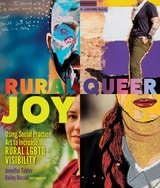
Rural Queer Joy
Using Social Practice Art to Increase Rural LGBTQ+ VisibilityJennifer Tabler
University of Wyoming Press, 2026
Blending social science, fine arts, and the humanities, Rural Queer Joy explores how the telling of rural LGBTQ+ stories affects young rural queer people today. The stories of well-known Wyoming LGBTQ+ people like Matthew Shepard, Sissy Goodwin, and Artemis Langford often center experiences of trauma and hardship, leaving little space for experiences of triumph or joy.
Author Jennifer Tabler and photographer Bailey Russel provided rural LGBTQ+ community members with an opportunity to represent their own experiences through participation in a social practice art project, asking what about being LGBTQ+ brings them joy. They then took the participants’ portraits and invited them to annotate these portraits with paint, markers, paper, or other media. This kind of social practice art provides an opportunity to engage in epistemic activism through the self-empowerment of marginalized voices and perspectives, while also centering visuals of rural queer people that counter existing stereotypes and add nuance to our understanding of rural LGBTQ+ people.
The dynamic artwork and quotes from young rural LGBTQ+ people displayed in this book highlight how their identities are sources of joy and opportunity rather than constraint and hardship. Rural and/or LGBTQ+ people, researchers, and teachers in the fields of community-engaged arts, gender studies, sociology of sexualities, and public humanities will find inspiration in Rural Queer Joy—inspiration to rethink what it means to be rural and LGBTQ+ as well as to use social practice art to increase the visibility of other underserved communities.
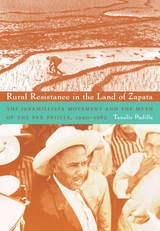
Rural Resistance in the Land of Zapata
The Jaramillista Movement and the Myth of the Pax-Priísta, 1940–1962Tanalís Padilla
Duke University Press, 2008
The peasants known in popular memory as Jaramillistas were led by Rubén Jaramillo (1900–1962). An agrarian leader from Morelos who participated in the Mexican Revolution and fought under Zapata, Jaramillo later became an outspoken defender of the rural poor. The Jaramillistas were inspired by the legacy of the Zapatistas, the peasant army that fought for land and community autonomy with particular tenacity during the Revolution. Padilla examines the way that the Jaramillistas used the legacy of Zapatismo but also transformed, expanded, and updated it in dialogue with other national and international political movements.
The Jaramillistas fought persistently through legal channels for access to land, the means to work it, and sustainable prices for their products, but the Mexican government increasingly closed its doors to rural reform. The government ultimately responded with repression, pushing the Jaramillistas into armed struggle, and transforming their calls for local reform into a broader critique of capitalism. With Rural Resistance in the Land of Zapata, Padilla sheds new light on the decision to initiate armed struggle, women’s challenges to patriarchal norms, and the ways that campesinos framed their demands in relation to national and international political developments.
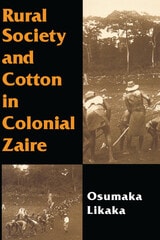
Rural Society and Cotton in Colonial Zaire
Osumaka Likaka
University of Wisconsin Press, 1997
As local plots of food crops grown by individual households gave way to commercial fields of cotton, a whole host of social, economic, and environmental changes followed. Likaka reveals how food shortages and competition for labor were endemic, forests were cleared, social stratification increased, married women lost their traditional control of agricultural production, and communities became impoverished while local chiefs enlarged their power and prosperity.
Likaka documents how the cotton regime promoted its cause through agricultural exhibits, cotton festivals, films, and plays, as well as by raising producer prices and decreasing tax rates. He also shows how the peasant laborers in turn resisted regimented agricultural production by migrating, fleeing the farms for the bush, or sabotaging plantings by surreptitiously boiling cotton seeds. Small farmers who had received appallingly low prices from the cotton companies resisted by stealing back their cotton by night from the warehouses, to resell it in the morning. Likaka draws on interviews with more than fifty informants in Zaire and Belgium and reviews an impressive array of archival materials, from court records to comic books. In uncovering the tumultuous economic and social consequences of the cotton regime and by emphasizing its effects on social institutions, Likaka enriches historical understanding of African agriculture and development.
Rural and Small Town America
Glenn V. Fuguitt
Russell Sage Foundation, 1989

Russell Sage Foundation 1907-1946
volumes 1 and 2John Glenn
Russell Sage Foundation, 1947
Russia and the Media
The Makings of a New Cold WarGreg McLaughlin
Pluto Press, 2020
But recent propaganda images that define public debate around growing tensions with Russia are not new or arbitrary. Russia and the Media asks, what is the role of Western journalism in constructing a new kind of Cold War with Russia? Focusing on British and US media coverage of moments of crisis and of co-operation between the West and Russia, McLaughlin exposes how such a Cold War framework shapes public perceptions of a major, hostile power reasserting itself on the world stage.
Scrutinizing events such as the Ukraine/Crimea crisis, the Skripal Poisoning and Russia's military intervention in Syria - as well as analyzing media coverage of the 2018 Russian presidential election and build up to the 2018 World Cup - Russia and the Media makes a landmark intervention at the intersection of media studies and international relations.
Russia's Imperial Endeavor and Its Geopolitical Consequences
The Russia-Ukraine War, Volume TwoBálint Madlovics
Central European University Press, 2024
Aside from the near-complete devastation of a sovereign state and reversal of the global balance of power, the Russian invasion of Ukraine in 2022 is leading to a radical transformation in the Eastern European and Eurasian regions – including Russia itself.
The 13 chapters in this volume examine the main geopolitical consequences of the resurgent imperialist aspirations of the Russian Federation. They examine the ideological tools of history falsification as an integral part of hybrid warfare. Turning to the economy, the book discusses how the war and economic sanctions imposed on Russia are redrawing the geopolitical map and how economic relations would change following a regime transformation. The book discusses the reactions of members of the international community to the invasion, whether threatened or neutral parties or allies. The collection therefore offers a comprehensive picture of the main consequences of the resurgent imperialist aspirations of the Russian Federation. Equipped with the conceptual tools of the analysis with a focus on the patronal features of the political-economic system, the book considers the aftermath of the war. This collection complements the book entitled Ukraine. Patronal Democracy and the Russian Invasion.

Russia's New Fin de Siècle
Contemporary Culture between Past and PresentEdited by Birgit Beumers
Intellect Books, 2013
Russian Pendulum
Paradoxes, Practices and PatternsAlena Ledeneva
University College London, 2026
An unorthodox portrait of modern-day Russia, including its paradoxes, practices, and patterns.
Russian Pendulum takes readers on a compelling journey through Russia in which tradition, modernity, power, and informality collide. Linking local knowledge and insider expertise with global trends and international perspectives, the book reveals the patterns that have defined Russia’s destiny for centuries. At its core lies an intricate system of informal networks that are held together by cooptation, control, and camouflage practices.
Russian Style
Performing Gender, Power, and PutinismJulie A. Cassiday
University of Wisconsin Press, 2023
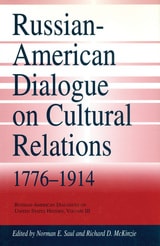
Russian-American Dialogue on Cultural Relations, 1776-1914
Edited by Norman E. Saul & Richard D. McKinzie
University of Missouri Press, 1996
Russian-American Dialogue on Cultural Relations, 1776-1914, the third volume in the Russian-American Dialogues series, provides English translations of the best Russian scholarship on cultural relations. Each essay originally appeared as an article in the former Soviet Union. Five issues are discussed: the contributions that each country made to the cultural life of the other; the correspondence and interactions between scientists, writers, and others from the two nations; the development of public perceptions and how these changed over time; the "American focus" in Russian periodicals during the nineteenth century; and the significant roles of Russians and the Russian presence in American history. The Russian articles on each of these subjects are followed by comments from American historians.
The articles by the Russian scholars make extensive use of and liberally cite material from Russian archives and publications. As a result, they provide American readers with new scientific exchanges, personalities, and points of view. The result is a plethora of new material for Western historians of Russia as well as of the United States. The book provides an opportunity for scholars to examine more thoroughly the relevant issues of Russian-American cultural relations.
An important scholarly contribution, Russian-American Dialogue on Cultural Relations, 1776-1914 brings a new dimension to the relationship between the United States and Russia before 1914. It will be of interest not only to historians of this period but to all historians and students of international cultural relations.

Ruth Bader Ginsburg’s Legacy of Dissent
Feminist Rhetoric and the LawKatie L. Gibson
University of Alabama Press, 2018
A rhetorical analysis of Justice Ruth Bader Ginsburg’s feminist jurisprudence.
Ruth Bader Ginsburg’s lifelong effort to reshape the language of American law has had profound consequences: she has shifted the rhetorical boundaries of jurisprudence on a wide range of fundamental issues from equal protection to reproductive rights. Beginning in the early 1970s, Ginsburg led a consequential attack on sexist law in the United States. By directly confronting the patriarchal voice of the law, she pointedly challenged an entrenched genre of legal language that silenced the voices and experiences of American women and undermined their status as equal citizens. On the United States Supreme Court, Justice Ginsburg continues to challenge the traditional scripts of legal discourse to insist on a progressive vision of the Constitution and to demand a more inclusive and democratic body of law.
This illuminating work examines Justice Ruth Bader Ginsburg’s contributions in reshaping the rhetoric of the law (specifically through the lens of watershed cases in women’s rights) and describes her rhetorical contributions—beginning with her work in the 1970s as a lawyer and an advocate for the ACLU’s Women’s Rights Project through her tenure as a Supreme Court justice. Katie L. Gibson examines Ginsburg’s rhetoric to argue that she has dramatically shifted the boundaries of legal language. Gibson draws from rhetorical theory, critical legal theory, and feminist theory to describe the law as a rhetorical genre, arguing that Ginsburg’s jurisprudence can appropriately be understood as a direct challenge to the traditional rhetoric of the law.
Ruth Bader Ginsburg stands as an incredibly important figure in late twentieth- and early twenty-first-century feminism. While a growing number of admirers celebrate Justice Ginsburg’s voice of dissent today, Ginsburg’s rhetorical legacy reveals that she has long articulated a sharp and strategic voice of judicial dissent. This study contributes to a more complete understanding of her feminist legacy by detailing the unique contributions of her legal rhetoric.

Ruthless Criticism
New Perspectives in U.S. Communication HistoryWilliam S. Solomon and Robert W. McChesney, Editors
University of Minnesota Press, 1993
Ruthless Criticism was first published in 1993. Minnesota Archive Editions uses digital technology to make long-unavailable books once again accessible, and are published unaltered from the original University of Minnesota Press editions.
Ruthless Criticism offers perspectives and subjects largely outside traditional historiography. It broadens the concept of media history to include lesser-studied media, and offers alternative interpretations of traditional media.
This anthology of original research includes an array of scholarly and theoretical perspectives. Each addresses specific topic within a specific era. reflecting the diversity of U.S. mass media.
Solomon and McChesney begin by using critical theory and deconstruction to examine the meanings of print in the colonial era. Subsequent chapters study the media ecology of the antebellum press; the intense focus on profits of the post-Civil War mainstream press; gender images in the labor press; the diversity of political views within the working-class press; and the development of a commercial press in the black community.
The essays concerning the twentieth century focus on the rise of a culture industry and include studies on the origins of the broadcast ratings system and the commercial broadcast system and the commercial broadcast system, early television's portrayals of childhood, the televisions networks' close ties with the federal government, the government's key role in creating and developing the field of mass communication research, and teenage girls' popular culture from 1960–1968 as a formative influence on the feminist movement.
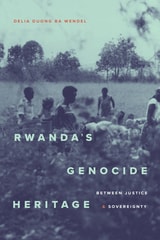
Rwanda's Genocide Heritage
Between Justice and SovereigntyDelia Duong Ba Wendel
Duke University Press, 2025
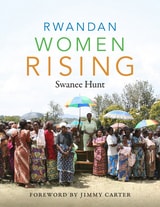
Rwandan Women Rising
Swanee Hunt
Duke University Press, 2017

Rêvoir
Hélène Cixous
Seagull Books, 2024
As the pandemic sweeps through Paris in March 2020, the writer HC faces a choice: stay in Paris or flee to the countryside? The weight of historical responses bears down on her—those of her ancestors and Jewish writers during moments of persecution.
Still uncertain, she flees to the country at the last moment, with her cats and her daughter, with her diaries and notebooks. What will she do here? Write? What will she write about? Can she write about the experience of being confined? She will write about her cats; every day she will observe their lives and take notes about how they cope with being housebound, and later, in the spring, with the outdoors.
Thucydides, Defoe, Camus, Kafka—she will compare her experiences with those of others who have been confined by malady or persecution. She will write of her mother, who fled impending disaster on many occasions and always kept a suitcase ready.
She too will endure. The important thing is to have a good death, surrounded by those she loves, not locked down in a hospital.