Results by title
8642 books match the query '20th century' and 391 start with r
Red Scare
Right-Wing Hysteria, Fifties Fanaticism, and Their Legacy in TexasBy Don Carleton
University of Texas Press, 2014
Red Star Over the Third World
Vijay Prashad
Pluto Press, 2019
From Cuba to Vietnam, China to South Africa, the October Revolution of 1917 inspired millions of people beyond the territory of Russia. It proved that the masses could not only overthrow autocratic governments, but that they could also form an opposing government in their own image.
The new idea that the working class and the peasantry could be allied, combined with the clear strength and necessity of a vanguard party, guided multiple revolutions across the globe. Here is much-needed antidote to all the glum histories written on the demise of the Soviet Union. Vijay Prashad throws a spotlight on the way the Russian Revolution was seen and received in the countries colonized by European empires. With Russia as an inspiration and providing support, suddenly workers and peasants, those left out of capitalist prosperity, organized and attempted to create for themselves real socialist revolution. Prashad’s chapters include:
*Eastern Graves
*Red October
*Follow the Path of the Russians
*The Lungs of Russia
*Soviet Asia
*Enemy of Imperialism
*Eastern Marxism
*Colonial Fascism
*Polycentric Communism
*Memories of Communism
The author writes in this Preface, “It has been a quarter-century since the demise of the USSR. And yet, the marks of the October Revolution remain—not just in the territories of the USSR but more so in what used to be known as the Third World. From Cuba to Vietnam, from China to South Africa, the October Revolution remains as an inspiration. After all, that Revolution proved that the working class and the peasantry could not only overthrow an autocratic government but it could form its own government.”
This book explains the power of the October Revolution in the Global South. From Ho Chí Minh to Fidel Castro, reflections on polycentric communism, and collective memories of communism, it shows how, for a brief moment, another world was possible.
Red Virgin Soil
Soviet Literature in the 1920'sRobert A. Maguire
Northwestern University Press, 2000
Red War on the Family
Sex, Gender, and Americanism in the First Red ScareErica J Ryan
Temple University Press, 2016
In her probing and engaging book, Red War on the Family, Erica Ryan traces the roots of sexual modernism and the history of antiradicalism and antifeminism. She illuminates how Americans responded to foreign and domestic threats and expressed nationalism by strengthening traditional gender and family roles-especially by imposing them on immigrant groups, workers, women, and young people.
Ryan argues that the environment of political conformity in the 1920s was maintained in part through the quest for cultural and social conformity, exemplified by white, middle-class family life. Red War on the Family charts the ways Americanism both reinforced and was reinforced by these sexual and gender norms in the decades after World War I.
Red Weather
Janet McAdams
University of Arizona Press, 2012
Red, White, Black, and Blue
A Dual Memoir of Race and Class in AppalachiaWilliam M. Drennen Jr., Kojo (William T.) Jones Jr.
Ohio University Press, 2004
Redeeming Culture
American Religion in an Age of ScienceJames Gilbert
University of Chicago Press, 1997
"Anyone seriously interested in the history of current controversies involving religion and science will find Gilbert's book invaluable."—Peter J. Causton, Boston Book Review
"Redeeming Culture provides some fascinating background for understanding the interactions of science and religion in the United States. . . . Intriguing pictures of some of the highlights in this cultural exchange."—George Marsden, Nature
"A solid and entertaining account of the obstacles to mutual understanding that science and religion are now warily overcoming."—Catholic News Service
"[An] always fascinating look at the conversation between religion and science in America."—Publishers Weekly
Redeeming Objects
A West German MythologyNatalie Scholz
University of Wisconsin Press, 2023
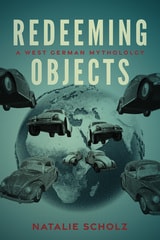
Postwar advertising, film, and print culture sought to divest mass-produced goods—such as the Volkswagen and modern interiors—of their fascist legacies. But Scholz demonstrates that postwar representations were saturated with unacknowledged references to the Nazi past. Drawing on a vast array of popular and highbrow publications and films, Redeeming Objects adds a new perspective to debates about postwar reconstruction, memory, and consumerism.
Redeeming a People
The Critical Role of Historical Examination in Moving Cultural and Moral TrajectoriesDarius Gray
Utah State University Press, 2020
The Arrington Lecture series, established by one of the twentieth-century West's most distinguished historians, Leonard Arrington, has become a leading forum for prominent historians to address topics related to Mormon history. Utah State University hosts the Leonard J. Arrington Mormon History Lecture Series through the Merrill-Cazier Library Special Collections and Archives department.
Redefining Science
Scientists, the National Security State, and Nuclear Weapons in Cold War AmericaPaul Rubinson
University of Massachusetts Press, 2016
The Cold War forced scientists to reconcile their values of internationalism and objectivity with the increasingly militaristic uses of scientific knowledge. For decades, antinuclear scientists pursued nuclear disarmament in a variety of ways, from grassroots activism to transnational diplomacy and government science advising. The U.S. government ultimately withstood these efforts, redefining science as a strictly technical endeavor that enhanced national security and deeming science that challenged nuclear weapons on moral grounds “emotional” and patently unscientific. In response, many activist scientists restricted themselves to purely technical arguments for arms control. When antinuclear protest erupted in the 1980s, grassroots activists had moved beyond scientific and technical arguments for disarmament. Grounding their stance in the idea that nuclear weapons were immoral, they used the “emotional” arguments that most scientists had abandoned.
Redefining Science shows that the government achieved its Cold War “consensus” only by active opposition to powerful dissenters and helps explain the current and uneasy relationship between scientists, the public, and government in debates over issues such as security, energy, and climate change.
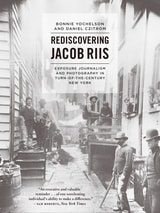
Rediscovering Jacob Riis
Exposure Journalism and Photography in Turn-of-the-Century New YorkBonnie Yochelson and Daniel Czitrom
University of Chicago Press, 2014
With Rediscovering Jacob Riis, art historian Bonnie Yochelson and historian Daniel Czitrom place Jacob Riis’s images in historical context even as they expose a clear sightline to the present. In the first half of their book, Czitrom explores Riis’s reporting and activism within the gritty specifics of Gilded Age New York: its new immigrants, its political machines, its fiercely competitive journalism, its evangelical reformers, and its labor movement. In delving into Riis’s intellectual education and the lasting impact of How the Other Half Lives, Czitrom shows that though Riis argued for charity, not sociopolitical justice, the empathy that drove his work continues to inspire urban reformers today.
In the second half of the book, Yochelson describes for the first time Riis’s photographic practice: his initial reliance on amateur photographers to take the photographs he needed, his own use of the camera, and then his collecting of photographs by professionals, who by 1900 were documenting social reform efforts for government agencies and charities. She argues that while Riis is rightly considered a revolutionary in the history of photography, he was not a photographic artist. Instead, Riis was a writer and lecturer who first harnessed the power of photography to affect social change.
As staggering inequality continues to be an urgent political topic, this book, illustrated with nearly seventy of Riis’s photographs, will serve as a stunning reminder of what has changed, and what has not.
Rediscovering Korean Cinema
Sangjoon Lee, Editor
University of Michigan Press, 2019
This groundbreaking collection of thirty-five essays by a wide range of academic specialists situates current scholarship on Korean cinema within the ongoing theoretical debates in contemporary global film studies. Chapters explore key films of Korean cinema, from Sweet Dream, Madame Freedom, The Housemaid, and The March of Fools to Oldboy, The Host, and Train to Busan, as well as major directors such as Shin Sang-ok, Kim Ki-young, Im Kwon-taek, Bong Joon-ho, Hong Sang-soo, Park Chan-wook, and Lee Chang-dong. While the chapters provide in-depth analyses of particular films, together they cohere into a detailed and multidimensional presentation of Korean cinema’s cumulative history and broader significance.
With its historical and critical scope, abundance of new research, and detailed discussion of important individual films, Rediscovering Korean Cinema is at once an accessible classroom text and a deeply informative compendium for scholars of Korean and East Asian studies, cinema and media studies, and communications. It will also be an essential resource for film industry professionals and anyone interested in international cinema.
Rediscovering Nancy Drew
Carolyn Stewart Dyer
University of Iowa Press, 1995
Reed Smoot Hearings
The Investigation of a Mormon Senator and the Transformation of an American ReligionMichael Harold Paulos
Utah State University Press, 2022
The work adds new insights into the role religion and the secular played in the shaping of US political institutions and national policies. Chapters also look at the history of anti-polygamy laws, the persistence of post-1890 plural marriage, the continuation of anti-Mormon sentiment, the intimacies and challenges of religious privatization, the dynamic of federal power on religious reform, and the more intimate role individuals played in effecting these institutional and national developments.
The Smoot hearings stand as an important case study that highlights the paradoxical history of religious liberty in America and the principles of exclusion and coercion that history is predicated on. Framed within a liberal Protestant sensibility, these principles of secular progress mapped out the relationship of religion and the nation-state for the new modern century. The Reed Smoot Hearings will be of significant interest to students and scholars of Mormon, western, American, and religious history.
Publication supported, in part, by Gonzaba Medical Group.
Contributors: Gary James Bergera, John Brumbaugh, Kenneth L. Cannon II, Byron W. Daynes, Kathryn M. Daynes, Kathryn Smoot Egan, D. Michael Quinn
Reel Freedom
Black Film Culture in Early Twentieth-Century New York CityAlyssa Lopez
Temple University Press, 2025
Lopez investigates how ordinary people, labor activists, journalists, filmmakers, theater managers, and owners all shaped Black film culture. Black girls and women used moviegoing as a means of independence and control over their lives. Race filmmaker Oscar Micheaux fought with New York State’s censorship board to get his films screened with limited edits in local theaters. And Harlem’s Black projectionists battled for unionization and fair pay, while journalists linked cinema to Black New Yorkers’ lived experiences.
In Reel Freedom, Lopez chronicles the wide-ranging and remarkable pervasiveness of Black film culture in New York City, redefining a period and place most associated with the Harlem Renaissance. In doing so, she illustrates how Black New Yorkers leveraged cinema to make the city their own and to enjoy urban living to its fullest.
In the series Urban Life, Landscape, and Policy
Reel Pleasures
Cinema Audiences and Entrepreneurs in Twentieth-Century Urban TanzaniaLaura Fair
Ohio University Press, 2017
Reflections on a Disruptive Decade
Essays from the SixtiesEugene Davidson
University of Missouri Press, 2000
As editor of Modern Age in the 1960s, Eugene Davidson introduced each quarterly issue with a thought-provoking contemplation of one or another of the decade's dizzying events. Gathered together here for the first time, the essays in Reflections on a Disruptive Decade present an intellectual conservative's perspective on an era which, because it underscores so many of the political divisions still with us today, continues to hold our fascination.
Davidson deals with the marvelous but confused realm of post-1945 international politics, in which the American people faced a new enemy, one often baffling and terrifying. The Cuban missile crisis was probably the most uncertain moment in foreign policy during this century. Although the crisis was resolved without bloodshed, there was intense danger of irrationality, for the Russians foolhardily had sent nuclear missiles to Cuba.
Other topics Davidson addresses are the Civil Rights movement, the policies and programs of Lyndon Johnson's Great Society, and the East-West battles of ideology and arms in Europe, Vietnam, and the Middle East. With remarkable shrewdness, Davidson illuminates many contradictions and excesses of the decade's liberal ascendancy, and presciently detects signs pointing to a resurgence of the nation's conservative forces.
Although more than thirty years have passed, Davidson's essays still contain great clarity, and his appraisals are still keen. Reflections on a Disruptive Decade is a truly remarkable addition to the work of this distinguished scholar.
Reflections
Conversations, Essays, and Other WritingsThomas Hauser
University of Arkansas Press, 2014
Reform and Revolt in the City of Dreaming Spires
Radical, Socialist and Communist Politics in the City of Oxford 1830–1980Duncan Bowie
University of Westminster Press, 2018
Reformed American Dreams
Welfare Mothers, Higher Education, and ActivismSheila M. Katz
Rutgers University Press, 2019
Refounding Democracy through Intersectional Activism
How Progressive Era Feminists Redefined Who We Are, and What It Means TodayWendy Sarvasy
Temple University Press, 2024
Sarvasy shows how these activists worked to incorporate women by combining political democracy with the creation of a welfare state. They embedded this nation-state project within a new humanitarian transnational level as they evolved their multileveled social citizenship.
Refounding Democracy through Intersectional Activism demonstrates how a theory-activist dynamic played out in experimental socializing spaces and democratic conversations. It offers an inspirational method for intersectional activists today.
Reframing Russian Modernism
Edited by Irina Shevelenko
University of Wisconsin Press, 2018
Expanding upon prior studies that focus more specifically on literary manifestations of the movement, Reframing Russian Modernism features original research that ranges broadly, from political aesthetics to Darwinism to yoga. These unique complementary perspectives counter reductionism of any kind, integrating the study of Russian modernism into the larger body of humanistic scholarship devoted to modernity.
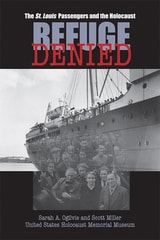
Refuge Denied
The St. Louis Passengers and the HolocaustSarah A. Ogilvie and Scott Miller
University of Wisconsin Press, 2006
Although the episode of the St. Louis is well known, the actual fates of the passengers, once they disembarked, slipped into historical obscurity. Prompted by a former passenger’s curiosity, Sarah Ogilvie and Scott Miller of the United States Holocaust Memorial Museum set out in 1996 to discover what happened to each of the 937 passengers. Their investigation, spanning nine years and half the globe, took them to unexpected places and produced surprising results. Refuge Denied chronicles the unraveling of the mystery, from Los Angeles to Havana and from New York to Jerusalem.
Some of the most memorable stories include the fate of a young toolmaker who survived initial selection at Auschwitz because his glasses had gone flying moments before and a Jewish child whose apprenticeship with a baker in wartime France later translated into the establishment of a successful business in the United States. Unfolding like a compelling detective thriller, Refuge Denied is a must-read for anyone interested in the Holocaust and its impact on the lives of ordinary people.
Refuge in the Lord
Lawrence J. McAndrews
Catholic University of America Press, 2015
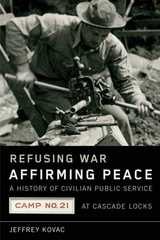
Refusing War, Affirming Peace
The History of Civilian Public Service Camp #21 at Cascade LocksJeffrey Kovac
Oregon State University Press, 2009
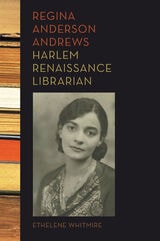
Regina Anderson Andrews, Harlem Renaissance Librarian
Ethelene Whitmire
University of Illinois Press, 2015
Andrews also played a key role in the Harlem Renaissance, supporting writers and intellectuals with dedicated workspace at her 135th Street Branch Library. After hours she cohosted a legendary salon that drew the likes of Langston Hughes and Zora Neale Hurston. Her work as an actress and playwright helped establish the Harlem Experimental Theater, where she wrote plays about lynching, passing, and the Underground Railroad.
Ethelene Whitmire's new biography offers the first full-length study of Andrews's activism and pioneering work with the NYPL. Whitmire's portrait of her sustained efforts to break down barriers reveals Andrews's legacy and places her within the NYPL's larger history.
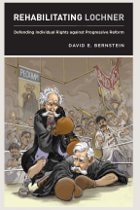
Rehabilitating Lochner
Defending Individual Rights against Progressive ReformDavid E. Bernstein
University of Chicago Press, 2011
In this timely reevaluation of an infamous Supreme Court decision, David E. Bernstein provides a compelling survey of the history and background of Lochner v. New York. This 1905 decision invalidated state laws limiting work hours and became the leading case contending that novel economic regulations were unconstitutional. Sure to be controversial, Rehabilitating Lochner argues that the decision was well grounded in precedent—and that modern constitutional jurisprudence owes at least as much to the limited-government ideas of Lochner proponents as to the more expansive vision of its Progressive opponents.
Tracing the influence of this decision through subsequent battles over segregation laws, sex discrimination, civil liberties, and more, Rehabilitating Lochner argues not only that the court acted reasonably in Lochner, but that Lochner and like-minded cases have been widely misunderstood and unfairly maligned ever since.
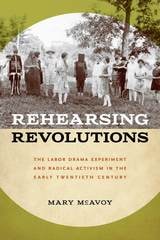
Rehearsing Revolutions
The Labor Drama Experiment and Radical Activism in the Early Twentieth CenturyMary McAvoy
University of Iowa Press, 2019
Choice Outstanding Academic Title, 2019
George Freedley Memorial Award Finalist, 2020
Between the world wars, several labor colleges sprouted up across the U.S. These schools, funded by unions, sought to provide members with adult education while also indoctrinating them into the cause. As Mary McAvoy reveals, a big part of that learning experience centered on the schools’ drama programs. For the first time, Rehearsing Revolutions shows how these left-leaning drama programs prepared American workers for the “on-the-ground” activism emerging across the country. In fact, McAvoy argues, these amateur stages served as training grounds for radical social activism in early twentieth-century America.Using a wealth of previously unpublished material such as director’s reports, course materials, playscripts, and reviews, McAvoy traces the programs’ evolution from experimental teaching tool to radically politicized training that inspired overt—even militant—labor activism by the late 1930s. All the while, she keeps an eye on larger trends in public life, connecting interwar labor drama to post-war arts-based activism in response to McCarthyism, the Cold War, and the Civil Rights movement. Ultimately, McAvoy asks: What did labor drama do for the workers’ colleges and why did they pursue it? She finds her answer through several different case studies in places like the Portland Labor College and the Highlander Folk School in Tennessee.
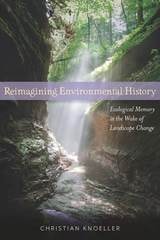
Reimagining Environmental History
Ecological Memory in the Wake of Landscape ChangeChristian Knoeller
University of Nevada Press, 2017
Reading across centuries and genres, Knoeller gives us a vibrant new appraisal of Midwestern/North American interior literary traditions and makes clear how vital environmental writing is to this region. To date, no one has written such an eloquent and comprehensive cross-genre analysis of Midwestern environmental literature.
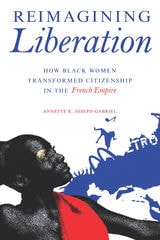
Reimagining Liberation
How Black Women Transformed Citizenship in the French EmpireAnnette K. Joseph-Gabriel
University of Illinois Press, 2019
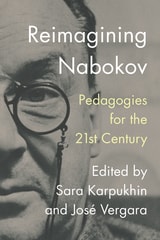
Reimagining Nabokov
Pedagogies for the 21st CenturyJosé Vergara
Amherst College Press, 2022
“It is both timely and refreshing to have an influx of teacher-scholars who engage Nabokov from a variety of perspectives… this volume does justice to the breadth of Nabokov’s literary achievements, and it does so with both pedagogical creativity and scholarly integrity."—Dana Dragunoiu, Carleton University
"[A] valuable study for any reader, teacher, scholar, or student of Nabokov. Amongst specific and urgent insights on the potential for digital methods, the relevance of Nabokov for students today, and how to reconcile issues of identity with an author who disavowed history and politics, are much wider and timeless questions of authorial control and the ability to access reality."—Anoushka Alexander-Rose, Nabokov Online Journal
Contributions by Galya Diment, Tim Harte, Robyn Jensen, Sara Karpukhin, Yuri Leving, Roman Utkin, José Vergara, Meghan Vicks, Olga Voronina, Lisa Ryoko Wakamiya, and Matthew Walker.
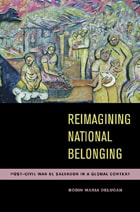
Reimagining National Belonging
Post-Civil War El Salvador in a Global ContextRobin Maria DeLugan
University of Arizona Press, 2012
Examining events that unfolded between 1992 and 2011, DeLugan both illustrates the idiosyncrasies of state and society in El Salvador and opens a larger portal into conditions of constructing a state in the present day around the globe—particularly the process of democratization in an age of neoliberalism. She demonstrates how academics, culture experts, popular media, and the United Nations and other international agencies have all helped shape ideas about national belonging in El Salvador. She also reveals the efforts that have been made to include populations that might have been overlooked, including indigenous people and faraway citizens not living inside the country’s borders. And she describes how history and memory projects have begun to recall the nation’s violent past with the goal of creating a more just and equitable nation.
This illuminating case study fills a gap in the scholarship about culture and society in contemporary El Salvador, while offering an “ethnography of the state” that situates El Salvador in a global context.
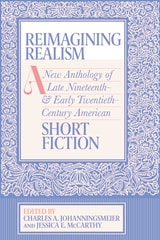
Reimagining Realism
A New Anthology of Late Nineteenth- and Early Twentieth-Century American Short FictionCharles A. Johanningsmeier
Ohio University Press, 2022
This innovative collection reinvents the standard American short fiction anthology and offers readers an invigorated, inclusive, and nuanced understanding of American literary history and culture from the Civil War to the end of World War I.
Beginning with one of Louisa May Alcott’s Hospital Sketches, originally published in 1863, this anthology offers a refreshing perspective on American literature from the latter half of the nineteenth century through the first decades of the twentieth. Based on Alcott’s brief stint as a Civil War nurse, Hospital Sketches stands in contrast to the sentimentality of her better-known Little Women and illustrates a blending of romanticism and realism. Furthermore, its thematic focus on the tension between idealized notions of noble, patriotic duty and the horrific reality of war exemplifies a dominant American cultural mindset at the time.
Following this model of complicating accepted ideas about realism and of particular authors, Reimagining Realism brings together dozens of texts that engage with the immense changes and upheavals that characterized American culture over the next six decades: war, abolition, voting rights, westward expansion, immigration, racism and ethnocentrism, industrial production, labor reforms, transportation, urban growth, journalism, mass media, education, and economic disparity.
Reimagining Realism presents a collection of works much more diverse than what is typically found in other anthologies of short fiction from this era. Some selections are lesser-known works by familiar authors that enable readers to see dimensions of these authors that are rarely considered but deserve further study. The book also features authors from many previously underrepresented groups and includes some outstanding works by authors whose names are almost completely unknown to today’s readers—but which deserve greater attention.
The volume’s editors, in their intent to spur readers to further reimagine realism, to represent the spectrum of viewpoints prevalent during this era, and to spark critical thinking and productive discussion, have been careful not to apply any type of political litmus test to the included works. They have also refrained from categorizing works according to convention, so as not to predispose readers to restrictive interpretations, and have provided only brief, highly readable headnotes and annotations that will help readers better understand the texts.
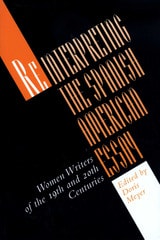
Reinterpreting the Spanish American Essay
Women Writers of the 19th and 20th CenturiesEdited by Doris Meyer
University of Texas Press, 1995
Latin American women have long written essays on topics ranging from gender identity and the female experience to social injustice, political oppression, lack of educational opportunities, and the need for female solidarity in a patriarchal environment. But this rich vein of writing has often been ignored and is rarely studied.
This volume of twenty-one original studies by noted experts in Latin American literature seeks to recover and celebrate the accomplishments of Latin American women essayists. Taking a variety of critical approaches, the authors look at the way women writers have interpreted the essay genre, molded it to their expression, and created an intellectual tradition of their own. Some of the writers they treat are Flora Tristan, Gertrudis Gómez de Avellaneda, Clorinda Matto de Turner, Victoria Ocampo, Alfonsina Storni, Rosario Ferré, Christina Peri Rossi, and Elena Poniatowska.
This book is the first of a two-volume project that reexamines the Latin American essay from a feminist perspective. The second volume, also edited by Doris Meyer, contains thirty-six essays in translation by twenty-two women authors.
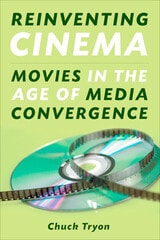
Reinventing Cinema
Movies in the Age of Media ConvergenceTryon, Chuck
Rutgers University Press, 2009
Reinventing Cinema examines film culture at the turn of this century, at the precise moment when digital media are altering our historical relationship with the movies. Spanning multiple disciplines, Chuck Tryon addresses the interaction between production, distribution, and reception of films, television, and other new and emerging media.Through close readings of trade publications, DVD extras, public lectures by new media leaders, movie blogs, and YouTube videos, Tryon navigates the shift to digital cinema and examines how it is altering film and popular culture.
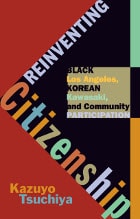
Reinventing Citizenship
Black Los Angeles, Korean Kawasaki, and Community ParticipationKazuyo Tsuchiya
University of Minnesota Press, 2014
In the 1960s and 1970s, the United States and Japan went through massive welfare expansions that sparked debates about citizenship. At the heart of these disputes stood African Americans and Koreans. Reinventing Citizenship offers a comparative study of African American welfare activism in Los Angeles and Koreans’ campaigns for welfare rights in Kawasaki. In working-class and poor neighborhoods in both locations, African Americans and Koreans sought not only to be recognized as citizens but also to become legitimate constituting members of communities.
Local activists in Los Angeles and Kawasaki ardently challenged the welfare institutions. By creating opposition movements and voicing alternative visions of citizenship, African American leaders, Tsuchiya argues, turned Lyndon B. Johnson’s War on Poverty into a battle for equality. Koreans countered the city’s and the nation’s exclusionary policies and asserted their welfare rights. Tsuchiya’s work exemplifies transnational antiracist networking, showing how black religious leaders traveled to Japan to meet Christian Korean activists and to provide counsel for their own struggles.
Reinventing Citizenship reveals how race and citizenship transform as they cross countries and continents. By documenting the interconnected histories of African Americans and Koreans in Japan, Tsuchiya enables us to rethink present ideas of community and belonging.
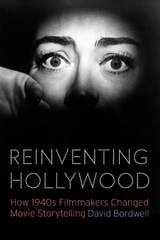
Reinventing Hollywood
How 1940s Filmmakers Changed Movie StorytellingDavid Bordwell
University of Chicago Press, 2017
If this sounds like today’s cinema, that’s because it is. In Reinventing Hollywood, David Bordwell examines the full range and depth of trends that crystallized into traditions. He shows how the Christopher Nolans and Quentin Tarantinos of today owe an immense debt to the dynamic, occasionally delirious narrative experiments of the Forties. Through in-depth analyses of films both famous and virtually unknown, from Our Town and All About Eve to Swell Guy and The Guilt of Janet Ames, Bordwell assesses the era’s unique achievements and its legacy for future filmmakers. Reinventing Hollywood is a groundbreaking study of how Hollywood storytelling became a more complex art and essential reading for lovers of popular cinema.
Rejuvenating the Humanities
Ray B. Browne
University of Wisconsin Press, 1992
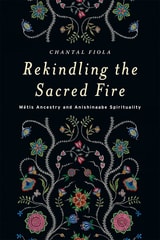
Rekindling the Sacred Fire
Métis Ancestry and Anishinaabe SpiritualityChantal Fiola
University of Manitoba Press, 2015
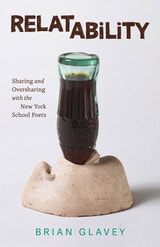
Relatability
Sharing and Oversharing with the New York School PoetsBrian Glavey
University of Chicago Press, 2026
An engaging account of how the New York School poets used art to imagine their queerness as something that might be shared with other people.
How did Frank O’Hara and other New York School poets—a small coterie associated with experimental art and gay culture —become fixtures in today’s culture, quoted on prestige television shows, in teen romances, and at the wedding ceremonies of straight celebrities? How, in other words, did these poets become so relatable? Brian Glavey’s Relatability tells the story of an aesthetic as it traveled from a cluster of mostly queer poets in the middle of the twentieth century to become increasingly central to everyday life in the early twenty-first century.
That the New York School poets are more relatable now than they were during their own lifetime speaks in part to the growing acceptance of same-sex desire in American culture. But Glavey argues that this transformation also tells the story of a shift in the way that aesthetic experience is understood to work. Moving away from forms of modernist impersonality, O’Hara, John Ashbery, James Schuyler, and Joe Brainard made sociability central to the experience of art and literature. Attempting to share their experience of works of art, they were willing to risk the reader’s judgment that they had, perhaps, overshared. Glavey advances an idea of aesthetic judgment that takes seriously its missed connections as well as its successes. Relatability adds a fresh perspective to current conversations around attachment and affect in literary studies.
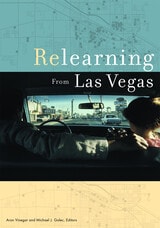
Relearning from Las Vegas
Aron Vinegar
University of Minnesota Press, 2009
Evaluates for the first time one of the foundational works in architecture criticism
Immediately on its publication in 1972, Learning from Las Vegas, by Robert Venturi, Denise Scott Brown, and Steven Izenour, was hailed as a transformative work in the history and theory of architecture, liberating those in architecture who were trying to find a way out of the straitjacket of architectural orthodoxies. Resonating far beyond the professional and institutional boundaries of the field, the book contributed to a thorough rethinking of modernism and was subsequently taken up as an early manifestation and progenitor of postmodernism.
Going beyond analyzing the original text, the essays provide insights into the issues surrounding architecture, culture, and philosophy that have been influenced by Learning from Las Vegas. For the contributors, as for scholars in an array of fields, the pioneering book is as relevant to architectural debates today as it was when it was first published.Contributors: Ritu Bhatt, Karsten Harries, Jean-Claude Lebensztejn, John McMorrough, Katherine Smith, Dell Upton, Nigel Whitely.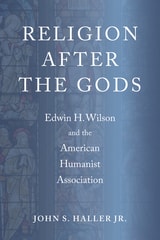
Religion After the Gods
Edwin H. Wilson and the American Humanist AssociationJohn S. Haller Jr.
University of Illinois Press, 2026
Sometimes called America’s fourth religion, religious humanism emerged in the Midwest as a product of Enlightenment rationality, the Social Gospel, and the philosophy of pragmatism. John S. Haller Jr. examines religious humanism’s first fifty years alongside Edwin H. Wilson’s pivotal role in the American Humanist Association (AHA).
Started by a group of Unitarian faculty and students, religious humanism applied the rituals of the theocentric universe of Judeo-Christianity to the non-theistic, anthropocentric universe of agnostics, altruists, humanitarians, and meliorists. Their beliefs found expression in the AHA, founded in 1941 with Wilson as the secretary and editor of its magazine. Wilson’s actions in these and other roles weighed heavily on the organization’s reputation, influence, successes, and failures. At the same time, his multifaceted work reflected the relationship between power and the possibilities inherent in the pluralistic and democratic heritage he pursued.
Rigorous and astute, Religion After the Gods reveals how the tensions between individual aspirations and bureaucratic constraints culminated in hopeful humanist practices.

Religion and Politics in East Africa
The Period since IndependenceHölger Bernt Hansen
Ohio University Press, 1994
Religious activities have been of continuing importance in the rise of protest against postcolonial governments in Eastern Africa. Governments have attempted to “manage“ religious affairs in both Muslim and Christian areas. Religious denominations have acted as advocates of human rights and in opposition to one-party-state regimes. Islamic fundamentalism changed with the ending of the Cold War.
The book is divided into four parts: The Challenge of Islam; Christianity, Sectarianism, and Politics in Uganda; Christians and Muslim in Kenyan Politics; and Cross-cultural Complications. An introductory essay by Michael Twaddle provides and overview of the changing character of politico-religious conflict in Eastern Africa. Holger Bernt Hansen summarizes the presentation with a discussion of dilemmas and challenges in the study of religion and politics.
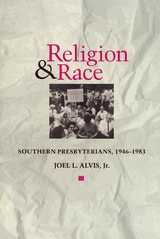
Religion and Race
Southern Presbyterians, 1946 to 1983Joel L. Alvis Jr
University of Alabama Press, 1994
Joel Alvis focuses on the relationships and tensions in the Presbyterian Church, U.S., whose ecclesiastical boundaries never expanded significantly beyond its original territory in the Confederacy and border South. By the time of the civil rights movement, the church was actively involved in ecumenical activities despite its regional isolation, and that involvement created unease in some quarters of the denomination. This concise institutional history traces how the church shaped and was shaped by its regional culture and explores the denomination's own cultural struggle to determine what role race issues would play in the definition of being Presbyterian.
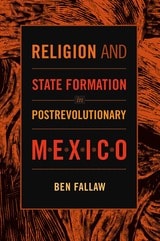
Religion and State Formation in Postrevolutionary Mexico
Ben Fallaw
Duke University Press, 2012
Ben Fallaw argues that previous scholarship has not appreciated the pervasive influence of Catholics and Catholicism on postrevolutionary state formation. By delving into the history of four understudied Mexican states, he is able to show that religion swayed regional politics not just in states such as Guanajuato, in Mexico's central-west "Rosary Belt," but even in those considered much less observant, including Campeche, Guerrero, and Hidalgo. Religion and State Formation in Postrevolutionary Mexico reshapes our understanding of agrarian reform, federal schooling, revolutionary anticlericalism, elections, the Segunda (a second Cristero War in the 1930s), and indigenism, the Revolution's valorization of the Mesoamerican past as the font of national identity.
Religion and the Cold War
A Global PerspectivePhilip E. Muehlenbeck
Vanderbilt University Press, 2012
Students and scholars will find in this volume a level of comprehensiveness rarely achieved in Cold War studies. Each chapter reveals that the power and influence of ideas are just as important as military might in the struggles between superpowersand that few ideas, then as now, carry as much force as religious ideology. As Muehlenbeck and his contributors demonstrate, no area of the world, and no religious tenet, was safe from the manipulations of a powerful set of players focused solely on their own sphere of influence.
Religion in China and Its Modern Fate
Paul R. Katz
Brandeis University Press, 2014
Religion in the Modern American West
Ferenc Morton Szasz
University of Arizona Press, 2000
When Americans migrated west, they carried with them not only their hopes for better lives but their religious traditions as well. Yet the importance of religion in the forging of a western identity has seldom been examined.
In this first historical overview of religion in the modern American West, Ferenc Szasz shows the important role that organized religion played in the shaping of the region from the late-nineteenth to late-twentieth century. He traces the major faiths over that time span, analyzes the distinctive response of western religious institutions to national events, and shows how western cities became homes to a variety of organized faiths that cast only faint shadows back east.
While many historians have minimized the importance of religion for the region, Szasz maintains that it lies at the very heart of the western experience. From the 1890s to the 1920s, churches and synagogues created institutions such as schools and hospitals that shaped their local communities; during the Great Depression, the Latter-day Saints introduced their innovative social welfare system; and in later years, Pentecostal groups carried their traditions to the Pacific coast and Southern Baptists (among others) set out in earnest to evangelize the Far West. Beginning in the 1960s, the arrival of Asian faiths, the revitalization of evangelical Protestantism, the ferment of post-Vatican II Catholicism, the rediscovery of Native American spirituality, and the emergence of New Age sects combined to make western cities such as Los Angeles and San Francisco among the most religiously pluralistic in the world.
Examining the careers of key figures in western religion, from Rabbi William Friedman to Reverend Robert H. Schuller, Szasz balances specific and general trends to weave the story of religion into a wider social and cultural context. Religion in the Modern American West calls attention to an often-overlooked facet of regional history and broadens our understanding of the American experience.
Religion, Politics, and Sugar
The LDS Church, the Federal Government, and the Utah-Idaho Sugar Company, 1907-1927Matthew C. Godfrey
Utah State University Press, 2007
Mary Lois Walker Morris was a Mormon woman who challenged both American ideas about marriage and the U.S. legal system. Before the Manifesto provides a glimpse into her world as the polygamous wife of a prominent Salt Lake City businessman, during a time of great transition in Utah. This account of her life as a convert, milliner, active community member, mother, and wife begins in England, where her family joined the Mormon church, details her journey across the plains, and describes life in Utah in the 1880s. Her experiences were unusual as, following her first husband's deathbed request, she married his brother as a plural wife in the Old Testament tradition of levirate marriage.
Mary Morris's memoir frames her 1879 to 1887 diary with both reflections on earlier years and passages that parallel entries in the day book, giving readers a better understanding of how she retrospectively saw her life. The thoroughly annotated diary offers the daily experience of a woman who kept a largely self-sufficient household, had a wide social network, ran her own business, wrote poetry, and was intellectually curious. The years of "the Raid" (federal prosecution of polygamists) led Mary and Elias Morris to hide their marriage on "the underground," and her to perjury during Elias's trial for unlawful cohabitation. The book ends with Mary Lois's arrival at the Salt Lake Depot after three years in exile in Mexico with a polygamist colony.
Religious Freedom after the Sexual Revolution
A Catholic GuideHelen Alvare
Catholic University of America Press, 2022