Results by title
2916 books match the query 'Politics and government' and 160 start with r
Routine Crisis
An Ethnography of DisillusionSarah Muir
University of Chicago Press, 2021
Anthropologist Sarah Muir offers a cogent meditation on the limits of critique at this historical moment, drawing on deep experience in Argentina but reflecting on a truly global condition. If we feel things are being upended in a manner that is ongoing, tumultuous, and harmful, what would we need to do—and what would we need to give up—to usher in a revitalized critique for today's world? Routine Crisis is an original provocation and a challenge to think beyond the limits of exhaustion and reimagine a form of criticism for the twenty-first century.
Routing the Opposition
Social Movements, Public Policy, and DemocracyDavid S. Meyer
University of Minnesota Press, 2005
Rude Democracy
Civility and Incivility in American PoliticsAuthored by Susan Herbst
Temple University Press, 2020
Democracy is, by its very nature, often rude. But there are limits to how uncivil we should be. In her timely and important book, Rude Democracy, Susan Herbst explores the ways we discuss public policy, how we treat each other as we do, and how we can create a more civil national culture.
Herbst uses the examples of Sarah Palin and Barack Obama to illustrate her case. She scrutinizes Palin as both victim and perpetrator of incivility, including close analysis of her speeches on the 2008 campaign trail, the tone at her rallies, and her interactions with her audience. Turning to Barack Obama, Herbst argues that a key 2009 speech reveals much about his own perspective on American civility as it pertains to contentious issues such as abortion, and notes, too, what the controversy surrounding the speech reveals about the nature of public opinion in the United States. She also dissects Palin’s and Obama’s roles in the 2009 health care debate. Finally, in a fascinating chapter, Herbst examines how young people come to form their own attitudes about civility and political argument.
In Rude Democracy, Susan Herbst insists that Americans need to recognize the bad tendencies and habits we have developed, use new media for more effective debate, and develop a tougher and more strategic political skin. She urges us to boost both the intelligence and productivity of our debates, noting that the effort demands a commitment to the nature of argument itself. Rude Democracy outlines a plan for moving forward and creating a more civil climate for American politics.
Ruling Indonesia
Jokowi's Presidency in an Age of Democratic Crisis and Great Power CompetitionMarcus Mietzner
University of Michigan Press, 2026
Joko Widodo—popularly called Jokowi—ruled Indonesia for a decade, from 2014 to 2024. The world’s fourth-largest nation and third-largest democracy, Indonesia had embarked on a messy democratic transition in the late 1990s, with the country’s ethnic and religious heterogeneity posing significant challenges to governance. Initially seen as a reformer who might challenge oligarchic structures, Jokowi was slowly but steadily seen as himself being a threat to democracy. By the time Jokowi wrapped up his presidency, he had achieved the highest approval ratings among Indonesia’s post-authoritarian presidents—and became the president with the tightest grip over Indonesia’s political elite.
Based on exclusive interviews with Jokowi and many of Indonesia’s top leaders, Ruling Indonesia shows Jokowi as a president obsessively preoccupied with his economic development agenda, subordinating all other aspects of governance to this goal. His focused approach delivered economic successes and unprecedented popularity, but also seriously undermined the health of Indonesia’s democratic institutions. Offering a holistic appraisal of his decade in office, Marcus Mietzner analyzes Jokowi’s domestic record in the context of his attempts to position Indonesia more favorably in the international competition for power and resources. Crucially, his obsession to push Indonesia closer to industrialized status while neglecting democratic development represented the ambitions and trials of many Global South leaders who are trying to juggle economic development, growing Sino-American tensions around the world, and concerns for democratic rights. As such, this book provides valuable insights into how the great power rivalry of the 21st century and the global recession of democracy are playing out in central arenas of the Global South.
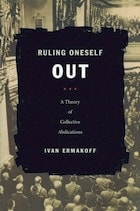
Ruling Oneself Out
A Theory of Collective AbdicationsIvan Ermakoff
Duke University Press, 2008
Ermakoff distinguishes several mechanisms of alignment in troubled and uncertain times and assesses their significance through a fine-grained examination of actors’ beliefs, shifts in perceptions, and subjective states. To this end, he draws on the analytical and methodological resources of perspectives that usually stand apart: primary historical research, formal decision theory, the phenomenology of group processes, quantitative analyses, and the hermeneutics of testimonies. In elaborating this dialogue across disciplinary boundaries, Ruling Oneself Out restores the complexity and indeterminate character of pivotal collective decisions and demonstrates that an in-depth historical exploration can lay bare processes of crucial importance for understanding the formation of political preferences, the paradox of self-deception, and the makeup of historical events as highly consequential.

Rural Resistance in the Land of Zapata
The Jaramillista Movement and the Myth of the Pax-Priísta, 1940–1962Tanalís Padilla
Duke University Press, 2008
The peasants known in popular memory as Jaramillistas were led by Rubén Jaramillo (1900–1962). An agrarian leader from Morelos who participated in the Mexican Revolution and fought under Zapata, Jaramillo later became an outspoken defender of the rural poor. The Jaramillistas were inspired by the legacy of the Zapatistas, the peasant army that fought for land and community autonomy with particular tenacity during the Revolution. Padilla examines the way that the Jaramillistas used the legacy of Zapatismo but also transformed, expanded, and updated it in dialogue with other national and international political movements.
The Jaramillistas fought persistently through legal channels for access to land, the means to work it, and sustainable prices for their products, but the Mexican government increasingly closed its doors to rural reform. The government ultimately responded with repression, pushing the Jaramillistas into armed struggle, and transforming their calls for local reform into a broader critique of capitalism. With Rural Resistance in the Land of Zapata, Padilla sheds new light on the decision to initiate armed struggle, women’s challenges to patriarchal norms, and the ways that campesinos framed their demands in relation to national and international political developments.

Russia Under Yeltsin and Putin
Neo-Liberal AutocracyBoris Kagarlitsky
Pluto Press, 2002
Kagarlitsky shows how to understand these changes, and how to characterise the complex process of reform, revolution and counter revolution.
Looking in detail at the nature of Russian society and politics since 1990, Kagarlitsky offers an introductory political analysis of the major political and economic developments that have taken place under President Yeltsin, and the legacy he bequeathed so unexpectedly to his successor Putin. He focuses on the role of the media in post-Soviet Russia, corporate structures and their influence on social conflict, the formation of the oligarchy and the role of the left in modern Russia.
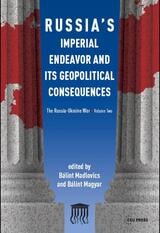
Russia's Imperial Endeavor and Its Geopolitical Consequences
The Russia-Ukraine War, Volume TwoBálint Madlovics
Central European University Press, 2024
Aside from the near-complete devastation of a sovereign state and reversal of the global balance of power, the Russian invasion of Ukraine in 2022 is leading to a radical transformation in the Eastern European and Eurasian regions – including Russia itself.
The 13 chapters in this volume examine the main geopolitical consequences of the resurgent imperialist aspirations of the Russian Federation. They examine the ideological tools of history falsification as an integral part of hybrid warfare. Turning to the economy, the book discusses how the war and economic sanctions imposed on Russia are redrawing the geopolitical map and how economic relations would change following a regime transformation. The book discusses the reactions of members of the international community to the invasion, whether threatened or neutral parties or allies. The collection therefore offers a comprehensive picture of the main consequences of the resurgent imperialist aspirations of the Russian Federation. Equipped with the conceptual tools of the analysis with a focus on the patronal features of the political-economic system, the book considers the aftermath of the war. This collection complements the book entitled Ukraine. Patronal Democracy and the Russian Invasion.
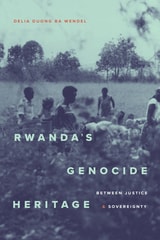
Rwanda's Genocide Heritage
Between Justice and SovereigntyDelia Duong Ba Wendel
Duke University Press, 2025
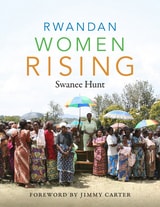
Rwandan Women Rising
Swanee Hunt
Duke University Press, 2017