Results by title
60 books match the query '1918-1945' and 3 start with s
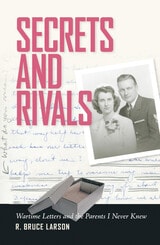
Secrets and Rivals
Wartime Letters and the Parents I Never KnewR. Bruce Larson
University of Missouri Press, 2015
Reading through the letters, he is drawn into his parents’ courtship amid the hardships of separation and war. Beyond the tumultuous romance, Larson finds that he barely recognizes his father, whom he knew only as distant and impassive. He uncovers shocking truths about his mother, Ruth, whom family lore had pigeonholed as sweetly pious.
At the time of the letters, Bob is a young Coast Guard clerk fighting off depression with thoughts of his dream girl back home. Back in Minnesota, Ruth passes the days adrift in romantic fantasies and liaisons with local admirers. Bob’s suspicions about Ruth and his obsession with her from afar threaten the young man’s fragile hold on his sanity, but he will not give her up. Decades later, their son comes to feel a tenderness for both his parents and to understand how their losses, fears, and reluctance can transform and refashion family bonds.
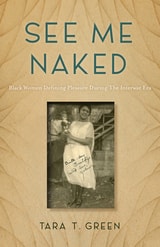
See Me Naked
Black Women Defining Pleasure in the Interwar EraTara T. Green
Rutgers University Press, 2022
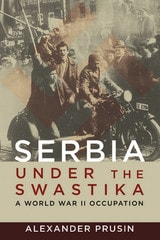
Serbia under the Swastika
A World War II OccupationAlexander Prusin
University of Illinois Press, 2017
Deftly merging political and social history, Serbia under the Swastika looks at the interactions between Germany’s occupation policies, the various forces of resistance and collaboration, and the civilian population. Alexander Prusin reveals a German occupying force at war with itself. Pragmatists intent on maintaining a sedate Serbia increasingly gave way to Nazified agencies obsessed with implementing the expansionist racial vision of the Third Reich. As Prusin shows, the increasing reliance on terror catalyzed conflict between the nationalist Chetniks, communist Partisans, and the collaborationist government. Prusin unwraps the winding system of expediency that at times led the factions to support one-another against the Germans--even as they fought a ferocious internecine civil war to determine the future of Yugoslavia.
Comprehensive and judicious, Serbia under the Swastika is a rare English-language foray into the still-fraught history of Serbia in World War II.