Results by title
193 books match the query '1945-' and 12 start with s

Saving Ben
A Father's Story of AutismDan E. Burns
University of North Texas Press, 2009

She Came from Mariupol
Natascha Wodin
Michigan State University Press, 2022
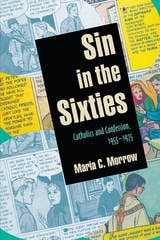
Sin in the Sixties
Maria C. Morrow
Catholic University of America Press, 2016
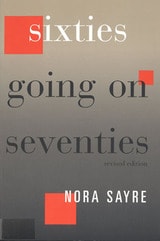
Sixties Going on Seventies
Sayre, Nora
Rutgers University Press, 1996
Nora Sayre guides us through our nation’s transformation during an explosive decade. She explores the landscapes of the era--student strikes at Harvard and Yale, anti-war veterans, John Birchers, Timothy Leary, Yippies and Aquarians, utopias gone wrong, George McGovern, Spiro Agnew, Richard Nixon, George Wallace, black anger in Watts, the media at work, policemen in college, off-off Broadway, the 1972 Democratic and Republican Conventions, and the rebirth of feminism. Sixties Going on Seventies, nominated for a 1974 National Book Award, is also a chronicle of the shattering of cities, the problems of the left, the momentum of the right--and above all, the authentic voices of the people concerned. Sayre recorded all of these events and personalities in exhilarating prose; her witty observations are remarkably fresh today.
Now back in print, this revised edition contains the best of the original volume and brings the commentary up to date, allowing us to view the period with hindsight from the nineties.

Solidarity and the Politics of Anti-Politics
Opposition and Reform in Poland since 1968David Ost
Temple University Press, 1991
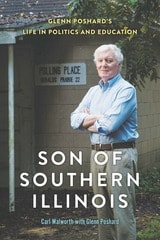
Son of Southern Illinois
Glenn Poshard’s Life in Politics and EducationCarl Walworth with Glenn Poshard
Southern Illinois University Press, 2023
A life of principles, service, and faith
This first biography of Glenn Poshard traces the life of a young man who rose from rural poverty in Southern Illinois to become a United States congressman and president of the Southern Illinois University system. This profound portrait unveils a life and career dedicated to making higher education affordable and improving the quality of life for the community of Southern Illinois.
Beginning with his childhood in a two-room home near Herald, Illinois and the early, tragic loss of his sister, this biography navigates Poshard’s service in the military, his time as a state senator and United States congressman, his run for governor, his years at Southern Illinois University, and the establishment of the Poshard Foundation for Abused Children. Intimacies of his personal life are disclosed, such as his struggles with and treatment for depression, his passion for education, and the lasting bonds he formed with his teachers. His unpopular decision to refuse PAC donations is also highlighted, along with the work that went into sponsoring the Illinois Wilderness Act, and his relationship with civil rights activist John Lewis. Glenn Poshard’s efforts for the Wilderness Act designated Southern Illinois’s famous Garden of the Gods as a National Wilderness Preservation System, which continues to attract visitors from around the world.
Poshard’s path from poverty was riddled with hardship, but his perseverance and family values ultimately allowed for longstanding personal and civic growth. From an admirable work ethic to a steadfast commitment to problem-solving, this biography illuminates the life and accomplishments of an impressive and generous leader.
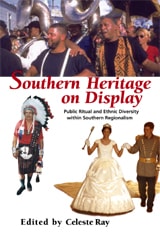
Southern Heritage on Display
Public Ritual and Ethnic Diversity within Southern RegionalismEdited by Celeste Ray
University of Alabama Press, 2002
W. J. Cash's 1941 observation that “there are many Souths and many cultural traditions among them” is certainly validated by this book. Although the Civil War and its “lost cause” tradition continues to serve as a cultural root paradigm in celebrations, both uniting and dividing loyalties, southerners also embrace a panoply of public rituals—parades, cook-offs, kinship homecomings, church assemblies, music spectacles, and material culture exhibitions—that affirm other identities. From the Appalachian uplands to the Mississippi Delta, from Kentucky bluegrass to Carolina piedmont, southerners celebrate in festivals that showcase their diverse cultural backgrounds and their mythic beliefs about themselves.
The ten essays of this cohesive, interdisciplinary collection present event-centered research from various fields of study—anthropology, geography, history, and literature—to establish a rich, complex picture of the stereotypically “Solid South.” Topics include the Mardi Gras Indian song cycle as a means of expressing African-American identity in New Orleans; powwow performances and Native American traditions in southeast North Carolina; religious healings in southern Appalachian communities; Mexican Independence Day festivals in central Florida; and, in eastern Tennessee, bonding ceremonies of melungeons who share Indian, Scots Irish, Mediterranean, and African ancestry. Seen together, these public heritage displays reveal a rich “creole” of cultures that have always been a part of southern life and that continue to affirm a flourishing regionalism.
This book will be valuable to students and scholars of cultural anthropology, American studies, and southern history; academic and public libraries; and general readers interested in the American South. It contributes a vibrant, colorful layer of understanding to the continuously emerging picture of complexity in this region historically depicted by simple stereotypes.
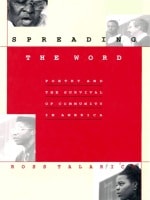
Spreading the Word
Poetry and the Survival of Community in AmericaRoss Talarico
Duke University Press, 1995
Drawing on his workshops in Rochester, Talarico describes a unique approach for eliciting poetry from people of many ages and backgrounds—particularly underpriviledged urban kids and the elderly. The process—from dialogue to self-expression to publication to public event—illuminates the urgency and meaning of releasing the spirit captured in each man and woman and child’s experience. "Some people say that Ross Talarico has done the impossible," the Today Show remarked of his success in Rochester; and with this book Talarico offers the same opportunity to others. Teachers, community leaders, parents, and children will be able to follow his practical, hands-on approach to encouraging self-expression in diverse, even unlikely, settings. They will see here how poetry is indeed relevant, ever more crucial to our identity as the culture evolves—how it is, finally, the place where the inarticulate can come to speak for themselves.
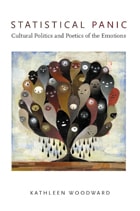
Statistical Panic
Cultural Politics and Poetics of the EmotionsKathleen Woodward
Duke University Press, 2009
Referring discreetly to her own experience, Woodward examines the interpenetration of social structures and subjectivity, considering how psychological emotions are social phenomena, with feminist anger, racial shame, old-age depression, and sympathy for non-human cyborgs (including robots) as key cases in point. She discusses how emerging institutional and discursive structures engender “new” affects that in turn can help us understand our changing world if we are attentive to them—the “statistical panic” produced by the risk society, with its numerical portents of disease and mortality; the rage prompted by impenetrable and bloated bureaucracies; the brutal shame experienced by those caught in the crossfire of the media; and the conservative compassion that is not an emotion at all, only an empty political slogan.
The orbit of Statistical Panic is wide, drawing in feminist theory, critical phenomenology, and recent theories of the emotions. But at its heart are stories. As an antidote to the vacuous dramas of media culture, with its mock emotions and scattershot sensations, Woodward turns to the autobiographical narrative. Stories of illness—by Joan Didion, Yvonne Rainer, Paul Monette, and Alice Wexler, among others—receive special attention, with the inexhaustible emotion of grief framing the book as a whole.
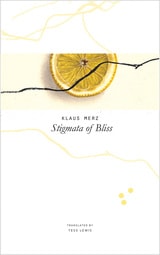
Stigmata of Bliss
Three NovellasKlaus Merz
Seagull Books, 2017
Jacob Asleep introduces a family marked by illness, eccentricity, and a child’s death. In A Man’s Fate, a moment of inattention on a mountainous hike upends a teacher’s life and his understanding of mortality. And finally, The Argentine traces the fluctuations of memory and desire in a man’s journey around the world. In each novella, Merz takes readers on a profound and intimate journey. Read as a whole, the works complement, enrich, and echo each other.

Sugar's Life in the Hood
The Story of a Former Welfare MotherBy Sugar Turner and Tracy Bachrach Ehlers
University of Texas Press, 2002
All her life, Sugar Turner has had to hustle to survive. An African American woman living in the inner city, she has been a single mother juggling welfare checks, food stamps, boyfriends and husbands, illegal jobs, and home businesses to make ends meet for herself and her five children. Her life's path has also wandered through the wilderness of crack addiction and prostitution, but her strong faith in God and her willingness to work hard for a better life pulled her through. Today, Turner is off welfare and is completing her education. She is computer literate, holds a job in the local school system, has sent three of her children to college, and is happily married.
In this engrossing book, Sugar Turner collaborates with anthropologist Tracy Bachrach Ehlers in telling her story. Through conversations with Ehlers, diary entries, and letters, Turner vividly and openly describes all aspects of her life, including motherhood, relationships with men, welfare and work, and her attachment to her friends, family, and life in the "hood." Ehlers also gives her reactions to Turner's story, discussing not only how it belies the "welfare queen" stereotype, but also how it forced her to confront her own lingering confusions about race, her own bigotry.
What emerges from this book is a fascinating story of two women from radically different backgrounds becoming equal witnesses to each other's lives. By allowing us into the real world of an inner-city African American mother, they replace with compassion and insight the stereotypes, half-truths, and scorn that too often dominate public discourse.
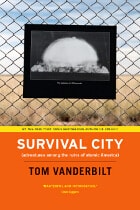
Survival City
Adventures among the Ruins of Atomic AmericaTom Vanderbilt
University of Chicago Press, 2002
On the road to Survival City, Tom Vanderbilt maps the visible and invisible legacies of the cold war, exhuming the blueprints for the apocalypse we once envisioned and chronicling a time when we all lived at ground zero. In this road trip among ruined missile silos, atomic storage bunkers, and secret test sites, a lost battleground emerges amid the architecture of the 1950s, accompanied by Walter Cotten’s stunning photographs. Survival City looks deep into the national soul, unearthing the dreams and fears that drove us during the latter half of the twentieth century.
“A crucial and dazzling book, masterful, and for me at least, intoxicating.”—Dave Eggers
“A genuinely engaging book, perhaps because [Vanderbilt] is skillful at conveying his own sense of engagement to the reader.”—Los Angeles Times
“A retracing of Dr. Strangelove as ordinary life.”—Greil Marcus, Bookforum