Results by title
187 books match the query '1951-' and 10 start with s
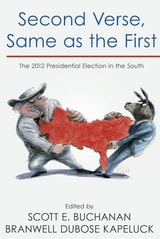
Second Verse, Same as the First
The 2012 Presidential Election in the SouthScott E. Buchanan
University of Arkansas Press, 2014

Seeds of Disquiet
Cheryl Heppner
Gallaudet University Press, 1992
In her autobiography Seeds of Disquiet, Cheryl Heppner writes of experiencing severe hearing loss twice. Spinal meningitis caused a profound loss of hearing when she was six, and for the next 18 years she worked hard to live the life of a “normal” hearing person. Through exhaustive work in speech therapy and speechreading, she excelled in school and college, performing Herculean feats without the assistance of trained interpreters or notetakers.
Then, when she was 25, two strokes left her completely deaf. For the next 20 years she worked to recreate her life through sign language and the Deaf community. The process stunned her by revealing how much she had missed before. Initially embittered, Cheryl Heppner later went on to use her astonishing energy as an advocate for deaf and hard of hearing people.
Seeds of Disquiet celebrates her accomplishments, the most significant of which, perhaps, was her reconciliation with her loved ones from her former life with her new outlook.

Separate Games
African American Sport behind the Walls of SegregationDavid K. Wiggins
University of Arkansas Press, 2017
Winner of the 2017 NASSH Book Award for best edited collection.
The hardening of racial lines during the first half of the twentieth century eliminated almost all African Americans from white organized sports, forcing black athletes to form their own teams, organizations, and events. This separate sporting culture, explored in the twelve essays included here, comprised much more than athletic competition; these “separate games” provided examples of black enterprise and black self-help and showed the importance of agency and the quest for racial uplift in a country fraught with racialist thinking and discrimination.
The significance of this sporting culture is vividly showcased in the stories of the Cuban Giants baseball team, basketball’s New York Renaissance Five, the Tennessee State Tigerbelles track-and-field team, black college football’s Turkey Bowl Classic, car racing’s Gold and Glory Sweepstakes, Negro League Baseball’s East-West All-Star game, and many more. These teams, organizations, and events made up a vibrant national sporting complex that remained in existence until the integration of sports beginning in the late 1940s. Separate Games explores the fascinating ways sports helped bind the black community and illuminate race pride, business acumen, and organizational abilities.

Soapy
A Biography of G. Mennen WilliamsThomas J. Noer
University of Michigan Press, 2005
---George McGovern
"Soapy Williams had a deep talent not only to compel but on occasion to repel."
---John Kenneth Galbraith
"Thomas Noer has written a model biography of a fascinating political figure. He brings Williams to life with all his contradictions, old-fashioned qualities, and admirable idealism."
---Robert Divine, George W. Littlefield Professor Emeritus in American History, University of Texas
"G. Mennen 'Soapy' Williams was not only a giant in the 20th century history of the Michigan Democratic Party, the history of the state of Michigan and our nation-he was a giant ahead of his time. Throughout his long and extremely distinguished career as Governor of Michigan, Assistant Secretary of State for African Affairs and Chief Justice of the Michigan Supreme Court, Soapy maintained an unwavering commitment to equality, justice and civil rights for all people."
---Senator Carl Levin
In this first complete biography of G. Mennen "Soapy" Williams, author Thomas Noer brings to life the story of one of the most controversial and colorful politicians in twentieth-century American politics and a giant in the Michigan Democratic Party.
In 1948, winning a stunning upset, Williams became Michigan's second Democratic governor since the Civil War and was reelected five times. He served under Kennedy and Johnson as Assistant Secretary of State for Africa, briefly held the post of U.S. Ambassador to the Philippines, and was a member of the Michigan Supreme Court from 1970 to 1986, serving as Chief Justice in his last term.
Sporting his instantly recognizable trademark green and white polka-dot bow tie, Williams was a flamboyant character. He was also known for his energetic campaign style: he could say "hello" in seventeen languages, would shake hands with as many as five thousand factory workers a day, and made seemingly endless diplomatic trips to Africa. All of this captured the attention of the media and the public and made Williams into a celebrity.
Beneath his showy public persona, however, Williams also made important contributions to American diplomatic and political history. He built an unrivaled political machine in Michigan, bringing organized labor, African Americans, and ethnic groups into a new coalition; influenced the shift in American policy toward support for African independence; and wrote landmark decisions as a jurist on the Michigan Supreme Court.
The fascinating story of a complex and complicated man, Soapy will introduce one of the great American political figures of the twentieth century to a new generation of readers.
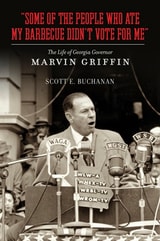
Some of the People Who Ate My Barbecue Didn't Vote for Me
The Life of Georgia Governor Marvin GriffinScott E. Buchanan
Vanderbilt University Press, 2011
.
In "Some of the People Who Ate My Barbecue Didn't Vote for Me," Scott Buchanan portrays Marvin Griffin as a Yellow Dog Democrat struggling against inevitable change. Griffin was viewed by many as a charismatic voice of resistance in the Georgia and the South in the wake of Brown v. Board of Education. He combined a staunch segregationist approach with economically progressive policies, assisting in Georgia's transformation from an agrarian economy to a more industrialized one.
Ironically, it was these efforts and the larger shift in politics that doomed Griffin's career, ensuring his administration would last only one term. In many ways, Griffin stands as a clear dividing line between the Old South and the New.
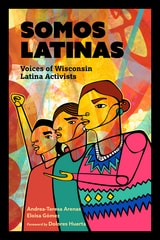
Somos Latinas
Voices of Wisconsin Latina ActivistsAndrea-Teresa Arenas
Wisconsin Historical Society Press, 2018
Celebrated Latina civil rights activist Dolores Huerta once said, “Every moment is an organizing opportunity, every person a potential activist, every minute a chance to change the world.” These are the stories of some of the Latina activists from Wisconsin who have lived Huerta’s words. Somos Latinas shares the powerful narratives of 25 activists—from outspoken demonstrators to collaborative community-builders to determined individuals working for change behind the scenes—providing proof of the long-standing legacy of Latina activism throughout Wisconsin.
Somos Latinas draws on activist interviews conducted as part of the Somos Latinas Digital History Project, housed at the Wisconsin Historical Society, and looks deep into the life and passion of each woman. Though Latinas have a rich history of community activism in the state and throughout the country, their stories often go uncelebrated. Somos Latinas is essential reading for scholars, historians, activists, and anyone curious about how everyday citizens can effect change in their communities.
Southern Parties and Elections
Studies in Regional Political ChangeRobert P. Steed
University of Alabama Press, 1997
Clarifies the recent and dramatic development of party competition in the South
Southern politics has changed dramatically during the past half century. While new developments have touched virtually every aspect of the region's politics, change has been especially marked in the South's political party and electoral systems. Southern Parties and Elections explores the contemporary developments in party realignment and examines the relationship between regional party change and electoral behavior and the larger patterns in national politics.
The collection's first group of essays examines some of the key legal issues in contemporary southern politics: the legal battle over majority-minority districting, the electoral consequences of such districting, the practice-fairly widespread in the South-of separating presidential elections from state and local elections, and the connections between the electorate and party change.
The second section of essays focuses on nominations, elections, and partisan developments in the South, including the recent surge of voter participation in southern Republican primaries, the comparative importance of the South and selected states with large blocks of electoral votes in presidential election outcomes, and the southern contribution to patterns of voting in Congress. The final two chapters examine changes in southern state legislatures-one a case study of the Virginia General Assembly and the other an analysis of state legislatures in the region as a whole.
Collectively these essays add important pieces to the enduring puzzle of "southern politics."

Stand Up for Alabama
Governor George WallaceJeffrey Frederick
University of Alabama Press, 2007
Reassessing the Political Legacy of Alabama's Most Influential Governor.
Whereas other studies have focused on George Wallace’s career as a national figure, Stand Up for Alabama provides a detailed, comprehensive, and analytical study of Wallace’s political life that emphasizes his activities and their impact within the state of Alabama. Jeff Frederick answers two fundamental questions: What was George Wallace’s impact on the state of Alabama? Why did Alabamians continue to embrace him over a twenty-five year period? Using a variety of sources to document the state’s performance in areas including mental health, education, conservation, prisons, and industrial development, Frederick answers question number one. He cites comparisons between Alabama and both peer states in the South and national averages. Wallace’s policies improved the state, but only in relation to Alabama’s past, not in relation to peer states in the region or national averages. As a result, energy was expended but little progress was made.
To answer the second question, Frederick uses the words of Alabamians themselves through oral history, correspondence, letters to the editor, and other sources. Alabamians, white and eventually black, supported Wallace because race was but one of his appeals. Stand Up for Alabama shows that Wallace connected to Alabamians at a gut level, reminding them of their history and memory, championing their causes on the stump, and soothing their concerns about their place in the region and the nation.
Jeff Frederick examines the development of policy during the Wallace administrations and documents relationships with his constituents in ways that go beyond racial politics. He also analyzes the connections between Wallace’s career and Alabamians’ understanding of their history, sense of morality, and class system. “Stand up for Alabama” was the governor’s campaign slogan.

Standing at the Water's Edge
Bob Straub's Battle for the Soul of OregonCharles K. Johnson
Oregon State University Press, 2012
A man of intelligence, drive, creativity, and fascinating contradictions, Straub overcame personal challenges and inevitable comparisons to his charismatic predecessor and friendly Republican rival, Tom McCall, to have a lasting impact on Oregon and the nation. Charles Johnson shares insights into Straub’s significant legacy, focusing on his leading role in the state’s financial and environmental issues and his influence on McCall. Johnson also reveals much of Straub’s warm personal story, along with his secret struggles, including his battle with depression while Governor.
Standing at the Water’s Edge offers rich descriptions of other intriguing political figures of the time as well, capturing the flavor of what has been called Oregon’s political “golden age” of the sixties and seventies—created in part by the symbiotic relationship between Straub and McCall—and describing how and why it ended.
Standing at the Water’s Edge is an essential addition to the literature about Oregon’s political leaders for historians, political scientists, and general readers interested in Oregon history.
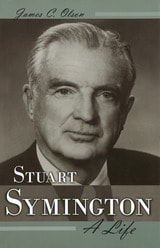
Stuart Symington
A LifeJames C. Olson
University of Missouri Press, 2003