Results by title
8642 books match the query '20th century' and 572 start with s

S-class destroyer Piet Hein (ex HMS Serapis)
Jantinus Mulder
Amsterdam University Press, 2024

SEASONING
A Poet’s Year, with Seasonal RecipesDavid Young
The Ohio State University Press, 1999
Set in northeastern Ohio, where the author has lived and worked for close to forty years, Seasoning demonstrates that an “unremarkable” place—no grand scenery, no special claims to beauty—can be the perfect setting in which to learn about animals, plants, food, geology, history, weather, and time. Coming to terms with place and time, and connecting them, the author suggests, may be our true task in life.
Among the many distinctive features of this lovely book are the recipes, arranged seasonally and revealing Young’s preference for natural foods prepared with care.
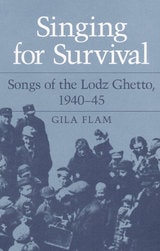
SINGING FOR SURVIVAL
"SONGS OF THE LODZ GHETTO, 1940-45"Gila Flam
University of Illinois Press, 1992
"An extremely accurate and valuable work. There is nothing like it in either the extensive holocaust literature or the ethnomusicology literature."
-- Mark Slobin, author of Chosen Voices: The Story of the American Cantorate

SOS-Calling All Black People
A Black Arts Movement ReaderBracey John H.
University of Massachusetts Press, 0
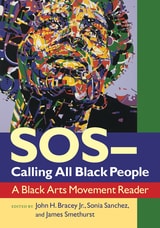
SOS—Calling All Black People
A Black Arts Movement ReaderJohn H. Bracey
University of Massachusetts Press, 2014
Many of the movement's leading artists, including Ed Bullins, Nikki Giovanni, Woodie King, Haki Madhubuti, Sonia Sanchez, Askia Touré, and Val Gray Ward remain artistically productive today. Its influence can also be seen in the work of later artists, from the writers Toni Morrison, John Edgar Wideman, and August Wilson to actors Avery Brooks, Danny Glover, and Samuel L. Jackson, to hip hop artists Mos Def, Talib Kweli, and Chuck D.
SOS—Calling All Black People includes works of fiction, poetry, and drama in addition to critical writings on issues of politics, aesthetics, and gender. It covers topics ranging from the legacy of Malcolm X and the impact of John Coltrane's jazz to the tenets of the Black Panther Party and the music of Motown. The editors have provided a substantial introduction outlining the nature, history, and legacy of the Black Arts Movement as well as the principles by which the anthology was assembled.

SS Australis
Bert Lamers
Amsterdam University Press, 2024
ss 'America' for the United States Lines. The ship was sold to the Greek Chandris Lines in 1964 and served until 1977 very succesfully on the route Western-Europe-Australia-New Zealand. Later the route became a full round-the-world-service. After her Australian period the liner sailed under the names of 'America' (for the third time), 'Italis', 'Noga', 'Alferdoss' and finally 'American Star'. In this volume of Liners the history of the great liner from when she was purchased by the Greek interest in 1964 until her sad wracking in January 1994.

STEELWORKERS IN AMERIA
THE NONUNION ERADavid Brody
University of Illinois Press, 1960
as well as a symposium on the book in which seven prominent historians
discuss its significance and its place in the historiography of labor.
"Steelworkers in America has emerged and remained one of
the few genuinely classic works of U.S. labor history--one of the axiomatic
starting points for any understanding of the new labor history."
-- Roy Rosenzweig
"The vision of Steelworkers has survived these thirty years
and continues to inspire new work in labor history." -- Lizabeth
Cohen
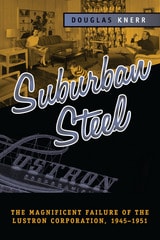
SUBURBAN STEEL
The Magnificent Failure of the Lustron Corporation, 1945–1951Douglas Knerr
The Ohio State University Press, 2004
Suburban Steel chronicles the rise and fall of the Lustron Corporation, once the largest and most completely industrialized housing company in U.S. history. Beginning in 1947, Lustron manufactured porcelain-enameled steel houses in a one-million-square-foot plant in Columbus, Ohio. With forty million dollars in federal funds and support from the highest levels of the Truman administration, the company planned to produce one hundred houses per day, each neatly arranged on specially designed tractor-trailers for delivery throughout the country. Lustron’s unprecedented size and scope of operations attracted intense scrutiny. The efficiencies of uninterrupted production, integrated manufacturing, and economies of scale promised to lead the American housing industry away from its decentralized, undercapitalized, and inefficient past toward a level of rationalization and organization found in other sectors of the industrial economy.
The company’s failure marked a watershed in the history of the American housing industry. Although people did not quit talking about industrialized housing, enthusiasm for its role in the transformation of the housing industry at large markedly waned. Suburban Steel considers Lustron’s magnificent failure in the context of historical approaches to the nation’s perpetual shortage of affordable housing, arguing that had Lustron’s path not been interrupted, affordable and desirable housing for America’s masses would be far more prevalent today.

Sabra and Shatila
September 1982Bayan Nuwayhed Al-Hout
Pluto Press, 2004
The book covers the history of the Sabra and Shatila massacre, which took place over three bloody days in the Lebanese capital Beirut. It was committed against Palestinian refugees by Lebanese militias, aided and supervised by the Israeli Army, which had encircled the district.
Now available for the first time in English, this classic book is the most comprehensive, authoritative account of what happened and who was responsible. The author, Bayan Nuwayhed al-Hout, was a Professor at the Lebanese University at the time. Driven by the horror of what occurred, she interviewed survivors and set up an oral history project immediately after the massacre to preserve testimonies. This book is the result.
Following a general introduction, the first part contains interviews mainly with victims' families. The second part analyses statistical data and attempts to determine the number of victims. The conclusion, 'Who Was Responsible?', sheds light on the various parties responsible.
Over five-hundred pages long, illustrated with photographs and maps, unrivalled in detail and scope, this book is a courageous attempt to make sense of what happened and an important political document in its own right.
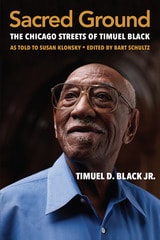
Sacred Ground
The Chicago Streets of Timuel BlackTimuel D. Black Jr., as told to Susan Klonsky, edited by Bart Schultz
Northwestern University Press, 2019
Sacred Ground opens in 1919, during the summer of the Chicago race riot, when infant Black and his family arrive in Chicago from Birmingham, Alabama, as part of the first Great Migration. He recounts in vivid detail his childhood and education in the Black Metropolis of Bronzeville and South Side neighborhoods that make up his "sacred ground."
Revealing a priceless trove of experiences, memories, ideas, and opinions, Black describes how it felt to belong to this place, even when stationed in Europe during World War II. He relates how African American soldiers experienced challenges and conflicts during the war, illuminating how these struggles foreshadowed the civil rights movement. A labor organizer, educator, and activist, Black captures fascinating anecdotes and vignettes of meeting with famous figures of the times, such as Duke Ellington and Martin Luther King Jr., but also with unheralded people whose lives convey lessons about striving, uplift, and personal integrity.
Rounding out this memoir, Black reflects on the legacy of his friend and mentee, Barack Obama, as well as on his public works and enduring relationships with students, community workers, and some very influential figures in Chicago and the world.
Sacred Men
Law, Torture, and Retribution in GuamKeith L. Camacho
Duke University Press, 2019
Sacred Pens and Public Voices
Latter-day Saint Women in Dialogue with AmericaLori Motzkus Wilkinson
University of Illinois Press, 2026
Though intellectually connected to figures outside the Church, the LDS women saw them less as
women's rights activists to emulate and more as speakers of truths that, regardless of the origin, should be embraced and harnessed. Wilkinson reveals how Emmeline B. Wells, Susa Young Gates, and other Latter-day Saint women supported and upheld institutional LDS authority and utilized the importance of women’s roles in the home and society as mechanisms for women’s advancement. Even as LDS women continued to engage with prominent national thinkers, their writings and lives demonstrated that they connected with the larger sphere of women’s rights activism before drawing on the LDS concept of women’s divine nature to reshape those ideals to uniquely religious ends.
Original and eye-opening, Sacred Pens and Public Voices revises established narratives about how LDS women interacted with and used ideas taken from national women’s movements.
Sacred Place
W Scott Olsen
University of Utah Press, 1996
Some of today's most significant writers and poets explore the relation between what we call the sacred and what we witness in the apparent world.
This unprecedented anthology brings together a provocative mix of new and well known writers whose poetry and prose broaches the possibility of something "bigger" going on, something more significant at stake. Is some powerful agency at work in what we see or are we just wishing (or fearing) that there were? Who can say? Who would dare? What’s most intriguing about the selections in this volume is that the authors do dare. What’s most attractive about them is that they resist answering that dare with reductions. They prefer the swoon of multiple possibilities over the relative comfort of conclusions. Various as they are, the works collected in The Sacred Place share a common reverence for the word itself, and perhaps best of all—they share a common understanding that no one of them comprehends fully what that means. They seem to desire instead a sense that the humble stuff surrounding us affords a likely enough habitation for the sacred, even now.
Sacrifice in the Modern World
On the Particularity and Generality of Nazi MythDavid Pan
Northwestern University Press, 2012
A landmark book, David Pan’s Sacrifice in the Modern World seeks to explain the continuing emphasis, in modern times, on sacrifice. Pan specifically turns to the culture of sacrifice—ritualized and sanctified death—in Nazi Germany, showing how that regime co-opted an existing discussion of sacrifice and infused it with its own mythology. Pan suggests that sacrifice is a key value in every society but that there is a preponderance of association of sacrifice with Nazi culture and therefore a largely pejorative treatment of sacrifice.
Surveying the arguments of philosopher Alfred Baeumler and other symptomatic Nazi texts, Pan shows how the Nazis’ reactionary intellectual culture unraveled much of the Enlightenment project. In so doing, he is able to offer a compelling new perspective on basic theoretical concepts in the work of Kant, Nietzsche, Adorno, Bataille, Girard, and others. He posits that it is only by clearing our way through the Nazis’ misuse of sacrifice that we can understand the durability of sacrificial structures that—following several of the theorists he discusses— establish the fundamental values by which we live our lives.
Rather than condemning the Nazi appeal to sacrifice itself, this book looks at the particular ways in which sacrifice was distributed and structured within that society. All cultures must grapple with the existential violence of the human condition, and they frequently do so through aesthetic treatments of sacrifice, rooted in myths and traditions. Pan argues that our task is not to eradicate these traditions but to engage them by carefully evaluating the commitments and values that they imply.
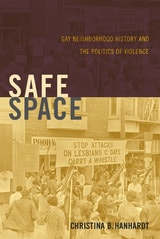
Safe Space
Gay Neighborhood History and the Politics of ViolenceChristina B. Hanhardt
Duke University Press, 2013
Since the 1970s, a key goal of lesbian and gay activists has been protection against street violence, especially in gay neighborhoods. During the same time, policymakers and private developers declared the containment of urban violence to be a top priority. In this important book, Christina B. Hanhardt examines how LGBT calls for "safe space" have been shaped by broader public safety initiatives that have sought solutions in policing and privatization and have had devastating effects along race and class lines.
Drawing on extensive archival and ethnographic research in New York City and San Francisco, Hanhardt traces the entwined histories of LGBT activism, urban development, and U.S. policy in relation to poverty and crime over the past fifty years. She highlights the formation of a mainstream LGBT movement, as well as the very different trajectories followed by radical LGBT and queer grassroots organizations. Placing LGBT activism in the context of shifting liberal and neoliberal policies, Safe Space is a groundbreaking exploration of the contradictory legacies of the LGBT struggle for safety in the city.

Sailing into History
Great Lakes Bulk Carriers of the Twentieth Century and the Crews Who Sailed ThemFrank Boles
Michigan State University Press, 2017
Saint Genet
Actor and MartyrJean-Paul Sartre
University of Minnesota Press, 2012
Saint Genet is Jean-Paul Sartre’s classic biography of Jean Genet—thief, convict, and great artist—a character of almost legendary proportions whose influence grows stronger with time. Bringing together two of the century’s greatest minds and artists, Saint Genet is at once a compelling psychological portrait, masterpiece of literary criticism, and one of Sartre’s most personal and inspired philosophical creations.

Saipan
The War Diary of John CiardiJohn Ciardi
University of Arkansas Press, 1988

Sales and Celebrations
Retailing and Regional Identity in Western New York State, 1920–1940Sarah Elvins
Ohio University Press, 2004
Between the two world wars, the retail world experienced tremendous changes. New forms of competition, expanded networks of communication and transportation, and the proliferation of manufactured goods posed challenges to department store and small shopkeeper alike.
In western New York, and in Buffalo and Rochester in particular, retailers were a crucial part of urban life, acting as cultural brokers and civic leaders. They were also cultivators of area pride. Even as they adopted the latest merchandising techniques or stocked the newest items, merchants emphasized their local roots and their ability to put a local spin on national trends and innovations. Regional identity became a powerful selling tool not only during the prosperity of the 1920s but also through the economic crisis of the Great Depression.
Sales and Celebrations explains how local traditions and institutions affected the evolution of American consumer culture. It expands our understanding of American consumerism, demonstrating that local particularities and loyalties could often coexist with, and occasionally challenge, the spread of mass consumption. In her award-winning study, Professor Sarah Elvins provides new insight into the relationship between America’s largest metropolises and its smaller centers. Retailers in Buffalo and Rochester did not simply imitate the practices of their counterparts in Manhattan and Chicago; they highlighted their unique ability to serve the wants and needs of their particular markets.
By drawing attention to this persistent power of the local, Sales and Celebrations illuminates a neglected aspect of the story of American culture in the interwar period.
Sally Rooney
Perspectives and ApproachesEllen Scheible
Bucknell University Press, 2026
Bestselling Irish novelist Sally Rooney has emerged as the defining voice of a generation, a cultural phenomenon whose spare, intelligent prose and sharp social insight have reshaped contemporary fiction and sparked a global conversation about intimacy, politics, and the millennial condition. This new collection brings together contributors from a wide range of disciplines to offer fresh critical readings of Rooney’s influential novels, alongside adaptable strategies for teaching her work in today’s undergraduate and graduate classrooms. The essays situate Rooney within literary traditions from Romantic poetry to the bildungsroman and the contemporary campus novel, while engaging with contemporary topics such as gender politics, late capitalism, and media adaptation. Providing accessible yet rigorous frameworks for exploring Rooney’s fiction, this volume confirms her significance not only within contemporary literary studies but also as a cultural force whose work reaffirms the relevance of the humanities in the twenty-first-century classroom.
Published by Bucknell University Press. Distributed worldwide by Rutgers University Press.
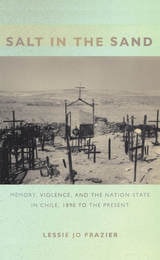
Salt in the Sand
Memory, Violence, and the Nation-State in Chile, 1890 to the PresentLessie Jo Frazier
Duke University Press, 2007
Analyzing multiple memories of state violence, Frazier innovatively shapes social and cultural theory to interpret a range of sources, including local and national government archives, personal papers, popular literature and music, interviews, architectural and ceremonial commemorations, and her ethnographic observations of civic associations, women's and environmental groups, and human rights organizations. A masterful integration of extensive empirical research with sophisticated theoretical analysis, Salt in the Sand is a significant contribution to interdisciplinary scholarship on human rights, democratization, state formation, and national trauma and reconciliation.
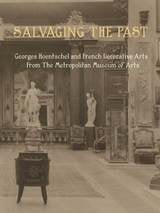
Salvaging the Past
Georges Hoentschel and French Decorative Arts from The Metropolitan Museum of Art, 1907-2013Daniëlle O. Kisluk-Grosheide
Bard Graduate Center, 2013
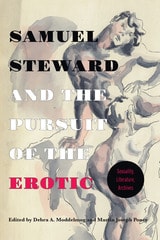
Samuel Steward and the Pursuit of the Erotic Sexuality, Literature, Archives
Sexuality, Literature, ArchivesEdited by Debra A. Moddelmog and Martin Joseph Ponce
The Ohio State University Press, 2017
With work by prominent scholars in queer, transgender, and sexuality studies, and with topics such as the queer archive, hoarding, masochism, the queer mystery, race and desire, sexology, and gay pornography, Samuel Steward and the Pursuit of the Erotic will appeal to a wide range of readers across a variety of disciplines invested in queer experience. Closing on a personal recollection from one of Steward’s last close friends, the volume will also appeal to readers interested in the personal aspects of this fascinating, idiosyncratic figure’s multifaceted life.
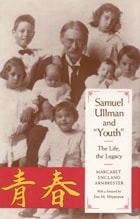
Samuel Ullman and "Youth"
The Life, the LegacyMargaret E. Armbrester
University of Alabama Press, 2009
Thousands of wonderful and sometimes strange fads have captured the public fancy in the almost five decades since the end of World War II. Most have been short-lived and soon faded away. There is, however, a poem that has not only withstood the vicissitudes of time, but has spread around the world like the waves lapping at a beach. This is the poem "Youth," by Samuel Ullman.
In December 1945, the Reader’s Digest published the poem and reported that General Douglas MacArthur, Commander of the Allied Forces, Far East, kept a copy of the poem near his desk.
Around that time, Yoshio Okada, a Japanese businessman, bought a copy of that December 1945 edition of the Reader's Digest, read the poem and was deeply affected by it. He translated it into Japanese and displayed it in his office as a guiding inspiration. Many of Okada's friends read the poem and were fascinated by its beauty. It began to receive national publicity through newspapers and magazines and became popular throughout Japan, especially among the intellectual community. Part of the reason for this widespread popularity is the excellence of the translation. Yoshio Okada, a man of noble character, gifted with a profound philosophy of life and literary talent, translated the poem into a beautiful, soulstirring Japanese version.
Samuel Ullman's “Youth” reflects the truth of life, and his outcry of spirituality touches the intrinsic nature of man.
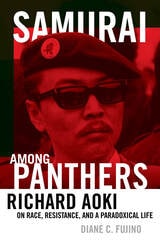
Samurai among Panthers
Richard Aoki on Race, Resistance, and a Paradoxical LifeDiane C. Fujino
University of Minnesota Press, 2012
An iconic figure of the Asian American movement, Richard Aoki (1938–2009) was also, as the most prominent non-Black member of the Black Panther Party, a key architect of Afro-Asian solidarity in the 1960s and ’70s. His life story exposes the personal side of political activism as it illuminates the history of ethnic nationalism and radical internationalism in America.
A reflection of this interconnection, Samurai among Panthers weaves together two narratives: Aoki’s dramatic first-person chronicle and an interpretive history by a leading scholar of the Asian American movement, Diane C. Fujino. Aoki’s candid account of himself takes us from his early years in Japanese American internment camps to his political education on the streets of Oakland, to his emergence in the Black Panther Party. As his story unfolds, we see how his parents’ separation inside the camps and his father’s illegal activities shaped the development of Aoki’s politics. Fujino situates his life within the context of twentieth-century history—World War II, the Cold War, and the protests of the 1960s. She demonstrates how activism is both an accidental and an intentional endeavor and how a militant activist practice can also promote participatory democracy and social service.
The result of these parallel voices and analysis in Samurai among Panthers is a complex—and sometimes contradictory—portrait of a singularly extraordinary activist and an expansion and deepening of our understanding of the history he lived.
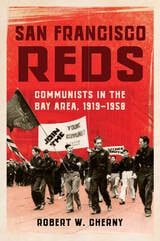
San Francisco Reds
Communists in the Bay Area, 1919-1958Robert W. Cherny
University of Illinois Press, 2024
Founded in 1919, the Communist Party (CP) in San Francisco survived an ineffectual early period to become a force in the trade union heyday of the 1930s. Robert Cherny uses the lives and careers of more than fifty members to tell the story of the city’s CP from its founding through 1958.
Cherny draws on FBI files, the records of the CP at the Russian State Archive for Social and Political History, interviews, and memoirs to follow male and female party and union leaders, rank-and-file members, and others. His history reveals why people joined the CP while charting the frequent changes in policy, constant member turnover, and disruptive factionalism that limited party aims and successes. Cherny also follows his subjects through their resignations, expulsions, or other reasons for departure and looks at the CP’s influence on their lives in subsequent years.
Vivid and exhaustively researched, San Francisco Reds is a long view account of the personal motivations and activism of an Old Left generation in a West Coast city.
San Francisco Year Zero
Political Upheaval, Punk Rock and a Third-Place Baseball TeamLincoln A. Mitchell
Rutgers University Press, 2019
In San Francisco Year Zero, San Francisco native Lincoln Mitchell traces the roots of the current situation back to 1978, when three key events occurred: the assassination of George Moscone and Harvey Milk occurring fewer than two weeks after the massacre of Peoples Temple members in Jonestown, Guyana, the explosion of the city’s punk rock scene, and a breakthrough season for the San Francisco Giants. Through these three strands, Mitchell explores the rifts between the city’s pro-business and progressive-left politicians, the emergence of Dianne Feinstein as a political powerhouse, the increasing prominence of the city’s LGBT community, punk’s reinvigoration of the Bay Area’s radical cultural politics, and the ways that the Giants helped unify one of the most ethnically and culturally diverse cities in the nation.
Written from a unique insider’s perspective, San Francisco Year Zero deftly weaves together the personal and the political, putting a human face on the social upheavals that transformed a city.

San Francisco's International Hotel
Mobilizing the Filipino American Community in the Anti-Eviction MovementEstella Habal
Temple University Press, 2008
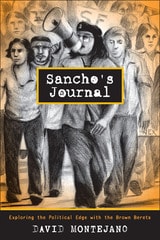
Sancho's Journal
Exploring the Political Edge with the Brown BeretsBy David Montejano
University of Texas Press, 2012
How do people acquire political consciousness, and how does that consciousness transform their behavior? This question launched the scholarly career of David Montejano, whose masterful explorations of the Mexican American experience produced the award-winning books Anglos and Mexicans in the Making of Texas, 1836–1986, a sweeping outline of the changing relations between the two peoples, and Quixote’s Soldiers: A Local History of the Chicano Movement, 1966–1981, a concentrated look at how a social movement “from below” began to sweep away the last vestiges of the segregated social-political order in San Antonio and South Texas. Now in Sancho’s Journal, Montejano revisits the experience that set him on his scholarly quest—“hanging out” as a participant-observer with the South Side Berets of San Antonio as the chapter formed in 1974.
Sancho’s Journal presents a rich ethnography of daily life among the “batos locos” (crazy guys) as they joined the Brown Berets and became associated with the greater Chicano movement. Montejano describes the motivations that brought young men into the group and shows how they learned to link their individual troubles with the larger issues of social inequality and discrimination that the movement sought to redress. He also recounts his own journey as a scholar who came to realize that, before he could tell this street-level story, he had to understand the larger history of Mexican Americans and their struggle for a place in U.S. society. Sancho’s Journal completes that epic story.
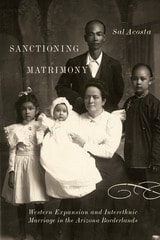
Sanctioning Matrimony
Western Expansion and Interethnic Marriage in the Arizona BorderlandsSal Acosta
University of Arizona Press, 2016
Following the Treaty of Mesilla (1853), interethnic relationships played a significant part in the Southwest. Acosta provides previously unseen archival research on the scope and tenor of interracial marriages in Arizona. Contending that scholarship on intermarriage has focused on the upper classes, Acosta takes us into the world of the working and lower classes and illuminates how church and state shaped the behavior of participants in interracial unions.
Marriage practices in Tucson reveal that Mexican women were pivotal in shaping family and social life between 1854 and 1930. Virtually all intermarriages before 1900 were, according to Acosta, between Mexican women and white men, or between Mexican women and blacks or Chinese until the 1920s, illustrating the importance of these women during the transformation of Tucson from a Mexican pueblo to an American town.
Acosta’s deep analysis of vital records, census data, and miscegenation laws in Arizona demonstrates how interethnic relationships benefited from and extended the racial fluidity of the Arizona borderlands.

Sand, Snow, and Stardust
How US Military Engineers Conquered Extreme EnvironmentsGretchen Heefner
University of Chicago Press, 2025
Deserts, the Arctic, outer space—these extreme environments are often seen as inhospitable places at the edges of our maps. But from the 1940s through the 1960s, spurred by the diverse and unfamiliar regions the US military had navigated during World War II, the United States defense establishment took a keen interest in these places, dispatching troops to the Aleutian Islands, North Africa, the South Pacific, and beyond. To preserve the country’s status as a superpower after the war, to pave runways and build bridges, engineers had to understand and then conquer dunes, permafrost, and even the surface of the moon.
Sand, Snow, and Stardust explores how the US military generated a new understanding of these environments and attempted to master them, intending to cement America’s planetary power. Operating in these regions depended as much on scientific and cultural knowledge as on military expertise and technology. From General George S. Patton learning the hard way that the desert is not always hot, to the challenges of constructing a scientific research base under the Arctic ice, to the sheer implausibility of modeling Martian environments on Earth, Gretchen Heefner takes us on a wry expedition into the extremes and introduces us to the people who have shaped our insight into these extraordinary environments. Even decades after the first manned space flight, plans for human space exploration and extraplanetary colonization are still based on what we know about stark habitats on Earth.
An entertaining survey of the relationship between environmental history and military might, Sand, Snow, and Stardust also serves as a warning about the further transformation of the planet—whether through desertification, melting ice caps, or attempts to escape it entirely.
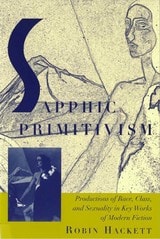
Sapphic Primitivism
Productions of Race, Class, and Sexuality in Key Works of Modern FictionHackett, Robin
Rutgers University Press, 2003
In this book, Robin Hackett examines portrayals of race, class, and sexuality in modernist texts by white women to argue for the existence of a literary device that she calls “Sapphic primitivism.” The works vary widely in their form and content and include Olive Schreiner’s proto-modernist exploration of New Womanhood, The Story of an African Farm; Virginia Woolf’s high modernist “play-poem,” The Waves; Sylvia Townsend Warner’s historical novel, Summer Will Show; and Willa Cather’s Southern pastoral, Sapphira and the Slave Girl. In each, blackness and working-class culture are figured to represent sexual autonomy, including lesbianism, for white women. Sapphic primitivism exposes the ways several classes of identification were intertwined with the development of homosexual identities at the turn of the century. Sapphic primitivism is not, however, a means of disguising lesbian content. Rather, it is an aesthetic displacement device that simultaneously exposes lesbianism and exploits modern, primitivist modes of self-representation. Hackett’s revelations of the mutual interests of those who study early twentieth-century constructions of race and sexuality and twenty-first-century feminists doing anti-racist and queer work are a major contribution to literary studies and identity theory.
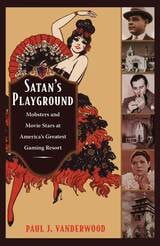
Satan's Playground
Mobsters and Movie Stars at America's Greatest Gaming ResortPaul J. Vanderwood
Duke University Press, 2010
Less than a year after Agua Caliente opened, gangsters held up its money-car in transit to a bank in San Diego, killing the courier and a guard and stealing the company money pouch. Paul J. Vanderwood weaves the story of this heist gone wrong, the search for the killers, and their sensational trial into the overall history of the often-chaotic development of Agua Caliente, Tijuana, and Southern California. Drawing on newspaper accounts, police files, court records, personal memoirs, oral histories, and “true detective” magazines, he presents a fascinating portrait of vice and society in the Jazz Age, and he makes a significant contribution to the history of the U.S.-Mexico border.
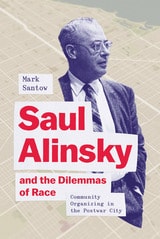
Saul Alinsky and the Dilemmas of Race
Community Organizing in the Postwar CityMark Santow
University of Chicago Press, 2023
Saul Alinsky is the most famous—even infamous—community organizer in American history. Almost single-handedly, he invented a new political form: community federations, which used the power of a neighborhood’s residents to define and fight for their own interests. Across a long and controversial career spanning more than three decades, Alinsky and his Industrial Areas Foundation organized Eastern European meatpackers in Chicago, Kansas City, Buffalo, and St. Paul; Mexican Americans in California and Arizona; white middle-class homeowners on the edge of Chicago’s South Side black ghetto; and African Americans in Rochester, Buffalo, Chicago, and other cities.
Mark Santow focuses on Alinsky’s attempts to grapple with the biggest moral dilemma of his age: race. As Santow shows, Alinsky was one of the few activists of the period to take on issues of race on paper and in the streets, on both sides of the color line, in the halls of power, and at the grassroots, in Chicago and in Washington, DC. Alinsky’s ideas, actions, and organizations thus provide us with a unique and comprehensive viewpoint on the politics of race, poverty, and social geography in the United States in the decades after World War II. Through Alinsky’s organizing and writing, we can see how the metropolitan color line was constructed, contested, and maintained—on the street, at the national level, and among white and black alike. In doing so, Santow offers new insight into an epochal figure and the society he worked to change.
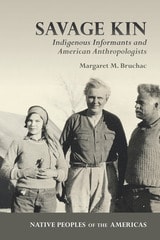
Savage Kin
Indigenous Informants and American AnthropologistsMargaret M. Bruchac
University of Arizona Press, 2018
This book reconceptualizes the intimate details of encounters with Native interlocutors who by turns inspired, facilitated, and resisted the anthropological enterprise. Like other texts focused on this era, Savage Kin features some of the elite white men credited with salvaging material that might otherwise have been lost. Unlike other texts, this book highlights the intellectual contributions and cultural strategies of unsung Indigenous informants without whom this research could never have taken place.
These bicultural partnerships transgressed social divides and blurred the roles of anthropologist/informant, relative/stranger, and collector/collected. Yet these stories were obscured by collecting practices that separated people from objects, objects from communities, and communities from stories. Bruchac’s decolonizing efforts include “reverse ethnography”—painstakingly tracking seemingly unidentifiable objects, misconstrued social relations, unpublished correspondence, and unattributed field notes—to recover this evidence. Those early encounters generated foundational knowledges that still affect Indigenous communities today.
Savage Kin also contains unexpected narratives of human and other-than-human encounters—brilliant discoveries, lessons from ancestral spirits, prophetic warnings, powerful gifts, and personal tragedies—that will move Native and non-Native readers alike.
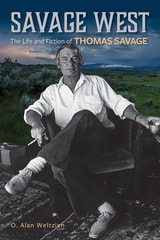
Savage West
The Life and Fiction of Thomas SavageO. Alan Weltzien
University of Nevada Press, 2022
O. Alan Weltzien's insightful and detailed literary biography chronicles the life and work of this neglected but deeply talented novelist. Savage, a closeted gay family man, was both an outsider and an insider, navigating an intense conflict between his sexual identity and the claustrophobic social restraints of the rural West. Unlike many other Western writers, Savage avoided the formula westerns— so popular in his time— and offered instead a realistic, often subversive version of the region. His novels tell a hard, harsh story about dysfunctional families, loneliness, and stifling provincialism in the small towns and ranches of the northern Rockies, and his minority interpretation of the West provides a unique vision and caustic counternarrative contrary to the triumphant settler-colonialism themes that have shaped most Western literature. Savage West seeks to claim Thomas Savage's well-deserved position in American literature and to reintroduce twenty-first-century readers to a major Montana writer.
Savaging the Civilized
Verrier Elwin, His Tribals, and IndiaRamachandra Guha
University of Chicago Press, 1999
Described by his contemporaries as a cross between Albert Schweitzer and Paul Gauguin, Elwin was a man of contradictions, at times taking on the role of evangelist, social worker, political activist, poet, government worker, and more. He rubbed elbows with the elite of both Britain and India, yet found himself equally at home among the impoverished and destitute. Intensely political, the Oxford-trained scholar tirelessly defended the rights of the indigenous and, despite the deep religious influences of St. Francis and Mahatma Gandhi on his early career, staunchly opposed Hindu and Christian puritans in the debate over the future of India's tribals. Although he was ordained as an Anglican priest, Elwin was married twice to tribal women and enthusiastically (and publicly) extolled the tribals' practice of free sex. Later, as prime minister Nehru's friend and advisor in independent India, his compelling defense of tribal hedonism made him at once hugely influential, extremely controversial, and the polemical focal point of heated discussions on tribal policy and economic development.
Savaging the Civilized is both biography and history, an exploration through Elwin's life of some of the great debates of the twentieth century: the future of development, cultural assimilation versus cultural difference, the political practice of postcolonial as opposed to colonial governments, and the moral practice of writers and intellectuals.
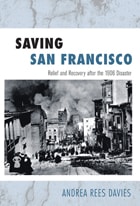
Saving San Francisco
Relief and Recovery after the 1906 DisasterAndrea Rees Davies
Temple University Press, 2011
Combining the experiences of ordinary people with urban politics and history, Saving San Francisco challenges the long-lived myth that the 1906 disaster erased social differences as it leveled the city. Highlighting new evidence from San Francisco’s relief camps, Andrea Rees Davies shows that as policy makers directed various forms of aid to groups and projects that enjoyed high social status before the disaster, the widespread need and dislocation created opportunities for some groups to challenge biased relief policy. Poor and working-class refugees organized successful protests, while Chinatown business leaders and middle-class white women mobilized resources for the less privileged. Ultimately, however, the political and financial elite shaped relief and reconstruction efforts and cemented social differences in San Francisco.
Scarlet and Black, Volume Three
Making Black Lives Matter at Rutgers, 1945-2020Miya Carey
Rutgers University Press, 2021
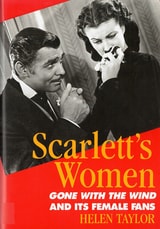
Scarlett's Women
Gone With the Wind and Its Female FansTaylor, Helen
Rutgers University Press, 1989
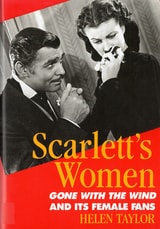
Scarlett's Women
Gone With the Wind and Its Female FansTaylor, Helen
Rutgers University Press, 1969
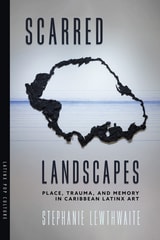
Scarred Landscapes
Place, Trauma, and Memory in Caribbean Latinx ArtStephanie Lewthwaite
University of Arizona Press, 2025
The book combines formal analysis with artist testimony, exhibition histories, and theoretical frameworks from trauma, memory, and archipelagic studies, to offer a multifaceted examination of Caribbean Latinx art. Lewthwaite explores how these artists practice “archipelagic memory,” a generative, decolonial, and coalitional form of memory work that envisions alternative modes of belonging in difference and solidarity with others. By connecting different people, pasts, and places, Caribbean Latinx artists expose the reverberations of trauma while imagining other worlds beyond it.
This work puts Caribbean Latinx artists at the center of debates about the exclusions of dominant memory narratives and contemporary art worlds, highlighting their contributions to a wider decolonial project of remembrance. By revealing the interconnectedness of traumatic histories and the potential for art to foster empathy and justice, Lewthwaite’s work underscores the importance of relational and decolonial thought for imagining a better society.

Scattered
The Forced Relocation of Poland’s Ukrainians after World War IIDiana Howansky Reilly
University of Wisconsin Press, 2013
Born in the Lemko region of southeastern Poland, Petro, Melania, and Hania Pyrtej survived World War II only to be separated by political decisions over which they had no control. Petro relocated with his wife to Soviet Ukraine during the population exchange of 1944–46, while his sisters Melania and Hania were resettled to western Poland through Operation Vistula in 1947. As the Ukrainian Insurgent Army fought resettlement, the Polish government meanwhile imprisoned suspected sympathizers within the Jaworzno concentration camp. Melania, Reilly's maternal grandmother, eventually found her way to the United States during Poland's period of liberalization in the 1960s.
Drawing on oral interviews and archival research, Reilly tells a fascinating, true story that provides a bottom-up perspective and illustrates the impact of extraordinary historical events on the lives of ordinary people. Tracing the story to the present, she describes survivors' efforts to receive compensation for the destruction of their homes and communities.
Silver Medal for World History, Independent Publisher Book Awards
Finalist, Housatonic Book Awards
Finalist in History, Foreword Books of the Year

Scepticism and Hope in Twentieth Century Fantasy Literature
Kath Filmer
University of Wisconsin Press, 1992
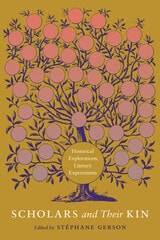
Scholars and Their Kin
Historical Explorations, Literary ExperimentsEdited by Stéphane Gerson
University of Chicago Press, 2025
Historians have often been discouraged from writing about their relatives, subjects who are deemed too close for objective analysis. But new work by scholars interested in their own families raises fascinating questions about subjectivity—and how historians might put it to use. It also invites historians to abandon traditional aspects of academic writing and draw, instead, on literary forms more equipped to highlight the relationships between scholar and material, feeling and reason.
Scholars and Their Kin embraces diverse approaches to such writing, bringing into the open the personal, professional, and historiographic complexities that ensue when scholars write intimate yet self-aware histories about their families. The first book devoted to this genre, which editor Stéphane Gerson terms “personal family history,” this anthology features ten essays and an afterword by scholars working in this vein. The contributors—varied in their disciplines, themes, and nationalities—reflect on their motivations and methodological choices, the politics of family history, and the institutional constraints they have sometimes faced. Making full use of the creative possibilities of voice and form, they expand the literary ambitions of personal family history, provide readers with narrative models, and address questions of shame, responsibility, love, gendered and racial violence, family archives, as well as the tall tales, myths, misrepresentations, memories, and omissions that suffuse family lives. Scholars and Their Kin will interest historians, scholars in other disciplines, and readers interested in family histories that open broader worlds.
School, Society, and State
A New Education to Govern Modern America, 1890-1940Tracy L. Steffes
University of Chicago Press, 2012
“Democracy has to be born anew every generation, and education is its midwife,” wrote John Dewey in his classic work The School and Society. In School, Society, and State, Tracy Steffes places that idea at the center of her exploration of the connections between public school reform in the early twentieth century and American political development from 1890 to 1940.
American public schooling, Steffes shows, was not merely another reform project of the Progressive Era, but a central one. She addresses why Americans invested in public education and explains how an array of reformers subtly transformed schooling into a tool of social governance to address the consequences of industrialization and urbanization. By extending the reach of schools, broadening their mandate, and expanding their authority over the well-being of children, the state assumed a defining role in the education—and in the lives—of American families.
In School, Society, and State, Steffes returns the state to the study of the history of education and brings the schools back into our discussion of state power during a pivotal moment in American political development.
Schools Betrayed
Roots of Failure in Inner-City EducationKathryn M. Neckerman
University of Chicago Press, 2007
The problems commonly associated with inner-city schools were not nearly as pervasive a century ago, when black children in most northern cities attended school alongside white children. In Schools Betrayed, her innovative history of race and urban education, Kathryn M. Neckerman tells the story of how and why these schools came to serve black children so much worse than their white counterparts.
Focusing on Chicago public schools between 1900 and 1960, Neckerman compares the circumstances of blacks and white immigrants, groups that had similarly little wealth and status yet came to gain vastly different benefits from their education. Their divergent educational outcomes, she contends, stemmed from Chicago officials’ decision to deal with rising African American migration by segregating schools and denying black students equal resources. And it deepened, she shows, because of techniques for managing academic failure that only reinforced inequality. Ultimately, these tactics eroded the legitimacy of the schools in Chicago’s black community, leaving educators unable to help their most disadvantaged students.
Schools Betrayed will be required reading for anyone who cares about urban education.

Schools into Fields and Factories
Anarchists, the Guomindang, and the National Labor University in Shanghai, 1927–1932Ming K. Chan and Arif Dirlik
Duke University Press, 1991
During its five years of existence, Labor University was the most impressive institutional embodiment in twentieth-century China of the labor-learning ideal, which was introduced by anarchists in the first decade of the century and came to be shared by a diverse group of revolutionaries in the 1920s. This detailed study places Labor University within the broad context of anarchist social ideals and educational experiments that inspired it directly, as well as comparable socialist experiments within labor education in Europe that Labor University’s founders used as models. The authors bring to bear the perspectives of institutional and intellectual history on their examination of the structure and operation of the University, presenting new material on its faculty, curriculum, physical plant, and history.
Schools of Our Own
Chicago's Golden Age of Black Private EducationWorth Kamili Hayes
Northwestern University Press, 2020
Winner, 2020 American Educational Studies Association Critics' Choice Award
As battles over school desegregation helped define a generation of civil rights activism in the United States, a less heralded yet equally important movement emerged in Chicago. Following World War II, an unprecedented number of African Americans looked beyond the issue of racial integration by creating their own schools. This golden age of private education gave African Americans unparalleled autonomy to avoid discriminatory public schools and to teach their children in the best ways they saw fit. In Schools of Our Own, Worth Kamili Hayes recounts how a diverse contingent of educators, nuns, and political activists embraced institution building as the most effective means to attain quality education. Schools of Our Own makes a fascinating addition to scholarly debates about education, segregation, African American history, and Chicago, still relevant in contemporary discussions about the fate of American public schooling.
Science Fusion in Contemporary Mexican Literature
Brian T. Chandler
Bucknell University Press, 2024