Results by title
56 books match the query 'Adaptations' and 8 start with s
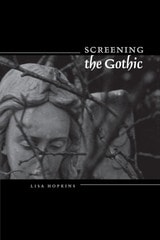
Screening the Gothic
By Lisa Hopkins
University of Texas Press, 2005
Filmmakers have long been drawn to the Gothic with its eerie settings and promise of horror lurking beneath the surface. Moreover, the Gothic allows filmmakers to hold a mirror up to their own age and reveal society's deepest fears. Franco Zeffirelli's Jane Eyre, Francis Ford Coppola's Bram Stoker's Dracula, and Kenneth Branagh's Hamlet are just a few examples of film adaptations of literary Gothic texts. In this ground-breaking study, Lisa Hopkins explores how the Gothic has been deployed in these and other contemporary films and comes to some surprising conclusions. For instance, in a brilliant chapter on films geared to children, Hopkins finds that horror resides not in the trolls, wizards, and goblins that abound in Harry Potter, but in the heart of the family.
Screening the Gothic offers a radical new way of understanding the relationship between film and the Gothic as it surveys a wide range of films, many of which have received scant critical attention. Its central claim is that, paradoxically, those texts whose affiliations with the Gothic were the clearest became the least Gothic when filmed. Thus, Hopkins surprises readers by revealing Gothic elements in films such as Sense and Sensibility and Mansfield Park, as well as exploring more obviously Gothic films like The Mummy and The Fellowship of the Ring. Written in an accessible and engaging manner, Screening the Gothic will be of interest to film lovers as well as students and scholars.
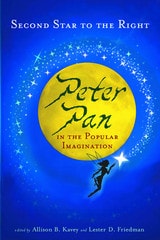
Second Star to the Right
Peter Pan in the Popular ImaginationFriedman, Lester D
Rutgers University Press, 2008
Since 2003 the characters from this story have had a highly visible presence in nearly every genre of popular culture: two major films, a literary sequel to the original adventures, a graphic novel featuring a grown-up Wendy Darling, and an Argentinean novel about a children's book writer inspired by J. M. Barrie. Simultaneously, Barrie surfaced as the subject of two major biographies and a feature film. The engaging essays in Second Star to the Right approach Pan from literary, dramatic, film, television, and sociological perspectives and, in the process, analyze his emergence and preservation in the cultural imagination.
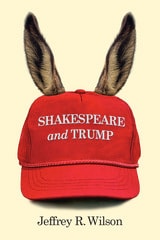
Shakespeare and Trump
Jeffrey R. Wilson
Temple University Press, 2020
Should we draw an analogy between Shakespeare’s tyrants—Richard III, Julius Caesar, Macbeth, and King Lear—and Donald Trump? In Shakespeare and Trump, Jeffrey Wilson applies literary criticism to real life, examining plot, character, villainy, soliloquy, tragedy, myth, and metaphor to identify the formal features of the Trump phenomenon, and its hidden causes, structure, and meanings.
Wilsonapproaches his comparison prismatically. He first considers two high-concept (read: far-fetched) Shakespeare adaptations penned by Trump’s former chief political strategist Steve Bannon. He looks at University of Pennsylvania students protesting Trump by taking down a monument to Shakespeare. He reads Trump’s first 100 days in office against Netflix’s House of Cards. Wilson also addresses the summer 2017 Shakespeare in the Park production of Julius Caesar wherein an assassination of a Trump-ian leader caused corporations to withdraw sponsorship.
These stories reveal a surprising—and bizarre—relationship between the provincial English playwright and the billionaire President of the United States, ostensibly a medieval king living in a modern world. The comparison reveals a politics that blends villainy and comedy en route to tragedy.
Shakespeare and the Problem of Meaning
Norman Rabkin
University of Chicago Press, 1981
"Norman Rabkin's new book is a very different kind of good book. Elegantly spare, sharp, undogmatic. . . . The relationship between the perception of unity and the perception of artistic achievement is a basic conundrum, and it is one that Mr. Rabkin has courageously placed at the center of his discussion." –G. K. Hunter, Sewanee Review
"Rabkin's book is brilliant, taut, concise, beautifully argued, and sensitively responsive to the individuality of particular Shakespeare plays." –Anne Barton, New York Review of Books
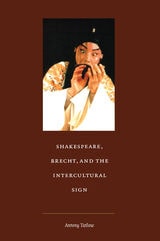
Shakespeare, Brecht, and the Intercultural Sign
Antony Tatlow
Duke University Press, 2001
Reflecting on how, why, and to what effect knowledges and styles of performance pollinate across cultures, Tatlow demonstrates that the employment of one culture’s material in the context of another defamiliarizes the conventions of representation in an act that facilitates access to what previously had been culturally repressed. By reading the intercultural, Tatlow shows, we are able not only to historicize the effects of those repressions that create a social unconscious but also gain access to what might otherwise have remained invisible.
This remarkable study will interest students of cultural interaction and aesthetics, as well as readers interested in theater, Shakespeare, Brecht, China, and Japan.
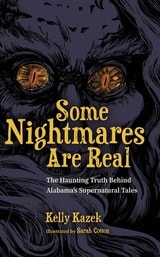
Some Nightmares Are Real
The Haunting Truth Behind Alabama’s Supernatural Talesby Kelly Kazek, illustrated by Sarah Cotton
University of Alabama Press, 2024
Southern writer and folklorist Kelly Kazek’s collection of eerie and enigmatic Alabama ghost stories
Dark secrets lurk beneath the sleepy surface of Alabama. Ghosts and grisly creatures haunt the towns and forests. In the great Southern ghost-story tradition, famed Alabama storyteller Kelly Kazek weaves a gothic tapestry of ten stories drawn from real people and legendary creatures, cursed places, and harrowing events.
Each story or legend takes readers to a different place in Alabama. Read about the bestial Wolf Woman who terrified Mobilians in the haunted old port city. In the northern city of Huntsville, visit the Dead Children’s Playground in gloomy Maple Hill Cemetery. In Jacksonville, feel the cold grip of the Old Mill Witch, rumored to protect the workers at the rickety cotton yarn mill. Hear about the mysterious green light that drifts along the Alabama River in the Black Belt hamlet of Gee’s Bend and learn about the role the Gee’s Bend Ferry played in the Civil Rights Movement.
Unlike most ghost-story collections, Some Nightmares Are Real includes an appendix of facts, historical resources, and information about how to visit the locations. These contemporary stories embrace a beloved Southern folkloric tradition for a new generation of young readers. The tales will terrify and ensnare ghost-story lovers of all ages. So settle in, pull the covers up tight, and maybe turn on the light, because the truth is: Some Nightmares Are Real.
Sovereign Traces, Volume 1
Not (Just) (An)OtherGordon D. Henry Jr.
Michigan State University Press, 2018
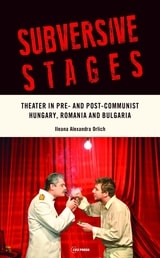
Subversive Stages
Theater in Pre- and Post-Communist Hungary, Romania and BulgariaIleana Alexandra Orlich
Central European University Press, 2017