Results by title
104 books match the query 'Animals & Nature' and 5 start with s
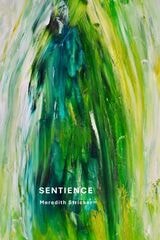
SENTIENCE
Meredith Stricker
Omnidawn, 2026
Poetry that invites us to transform our sense of kinship, mutuality, and reciprocity.
With this collection, poet and artist Meredith Stricker considers questions about personhood, belonging, property, and ownership within interdependent living cultural systems. Looking beyond humans alone, she considers whether animals dream, who our relations are, what interior lives are held within words, and whether the world is truly alive to us today or if it is simply something we experience through screens. The poems track bee swarms and hazardous waste, separation walls, and diatoms. They are intently visual, aural, and spatial, tracing the dendritic forms of trees and fractal coastlines and the symmetries of biomorphic animal patterns. They highlight non-artificial, non-extractive intelligences in sharp contrast to the rise of AI. Informed by biosemiotics, SENTIENCE arises from Stricker's continuing multidisciplinary work and architectural habitat restoration in Big Sur and her performance collaborations with musicians, composers, artists, and beekeepers.

Saint October
PoemsLindsey Warren
University of Nevada Press, 2026
Saint October is a collection of title-less poems that create a network throughout the season of autumn. With challenging language and surprising imagery, these poems lift the rock of superficial autumnal beauty and examine the finer details of death and transformation, often daring the reader to leave their comfort zone. Saint October begins by taking an objective look at the last gleams of summer and quickly re-grounds itself by participating in the dynamic processes of a new season. Loss and rebirth weave these poems together as the speaker listens to the earth’s last words before she passes into death and stalks the secrets she took to her grave.
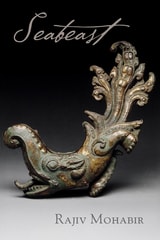
Seabeast
Rajiv Mohabir
Four Way Books, 2025
Mohabir's language ingeniously plumbs the depths, illustrating how the objectification fundamental to the construction and preservation of animal taxonomy mirrors the internecine violence of humankind on both a broad and intimate scale. "We were misnamed / again and again: first Hindu, / then Hindoo, then Indian, then / Coolie, all subhuman / much like this precursory cetacean / of the Eocene, named / in Latin great lizard— / anguilliform, what to make / of twist and tear, teeth / gnashing sharks and durodons / into pulp, judged by fossilized / gouges in enamel and finger / holes on skulls?"
Through the invention of race, the conquest and consumption of land, and the cultural amnesia enforced on the subaltern, imperialism threatens human survival on this planet just as we have misunderstood, taken captive, and hunted whales nearly to extinction. Meditating on the results of genetic testing, Mohabir details how, like his white ex-spouse's "ancestors / from northern Germany / played bone flutes / for their dead at gravesites," a lab "one day exhumed" them all "in perfect pentatonic scales." Meanwhile, he wonders what of his Indo-Caribbean heritage, complicated by the obfuscating forces of indenture, ethnic oppression, and frequent relocation, "can be revived" from this "wastebasket taxon, / us unnamed hoard of no future?" Of the Irrawaddy Dolphin once "known for / herding shoals of fish / for fisherfolk / in whose nets / they now drown," Mohabir observes that "learning human / language opens you // to betrayal." "Trust me," he urges, "though I am no // hairless dolphin— / I once had a husband." Standing at the confluence of these prehistoric, mythological, and contemporary tributaries feeding our attitude toward whales, Mohabir asks, who is the seabeast, really? The namer or the named? The answer prompts us to see that, if we recognize the legacy of human barbarism in the whale's long history with us, we can also locate a new reserve of resilience and survival. It is their example Mohabir uses, not the "bright honey" of their blubber that once would "fuel lanterns," to power his own spiritual refortification. "Maybe I will, from filling my lungs, blood / rushing to my core, / into a finned thing, / transform."
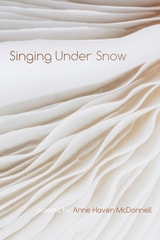
Singing Under Snow
Anne Haven McDonnell
Michigan State University Press, 2026
These are poems of queer ecology—poetry that “exults in the grit and texture of the natural world, in the unassuming and overlooked wonders beneath our feet and beyond our doors—in lichen and snow, in martens and mushrooms.” In reckoning with a mother’s aging, a breakup, or grief and disorientation in the face of the climate crisis, these poems seek a spiritual meaning in ecological belonging. Central to the collection is a series of poems exploring science, ceremony, and personal encounters with fungi. Fungi and lichen blur what we consider biological, what we think of as an individual, and how we understand death, and these poems reflect this complexity through imagery, juxtaposition, leaps of imagination, and sonic spells.
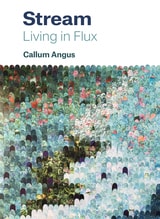
Stream
Living in FluxCallum Angus
Northwestern University Press, 2027
A nonfiction work examining a confluence of bodily and worldwide transition
Stream is an exploration of the large- and small-scale changes taking place in a single body and on our planet as a whole. Using a stream as a biological, technological, and psychological metaphor, Angus layers lyric essay, journal entries, and the detritus of a life spent writing about the climate within and without to consider how we remain fluid in a time of constant change. Each section of Stream flows into the next, weaving through thaws, floods, cataracts, and eddies while asking how a melting of rigid categories, from seasons to gender, might help us approach a changing world anew. From winery workers dying in the fields to endangered desert tortoises unable to outrun the flames, Stream is an outpouring of climatological grief toward those who perpetuate inaction, an elegy for those we’ve lost to the heat, and a tribute to the tributaries that help us see the world from other perspectives.