Results by title
54 books match the query 'Anthropologists' and 5 start with s
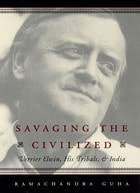
Savaging the Civilized
Verrier Elwin, His Tribals, and IndiaRamachandra Guha
University of Chicago Press, 1999
Verrier Elwin (1902-1964) was unquestionably the most colorful and influential non-official Englishman to live and work in twentieth-century India. A prolific writer, Elwin's ethnographic studies and popular works on India's tribal customs, art, myth and folklore continue to generate controversy.
Described by his contemporaries as a cross between Albert Schweitzer and Paul Gauguin, Elwin was a man of contradictions, at times taking on the role of evangelist, social worker, political activist, poet, government worker, and more. He rubbed elbows with the elite of both Britain and India, yet found himself equally at home among the impoverished and destitute. Intensely political, the Oxford-trained scholar tirelessly defended the rights of the indigenous and, despite the deep religious influences of St. Francis and Mahatma Gandhi on his early career, staunchly opposed Hindu and Christian puritans in the debate over the future of India's tribals. Although he was ordained as an Anglican priest, Elwin was married twice to tribal women and enthusiastically (and publicly) extolled the tribals' practice of free sex. Later, as prime minister Nehru's friend and advisor in independent India, his compelling defense of tribal hedonism made him at once hugely influential, extremely controversial, and the polemical focal point of heated discussions on tribal policy and economic development.
Savaging the Civilized is both biography and history, an exploration through Elwin's life of some of the great debates of the twentieth century: the future of development, cultural assimilation versus cultural difference, the political practice of postcolonial as opposed to colonial governments, and the moral practice of writers and intellectuals.
[more]

Scenes from the High Desert
JULIAN STEWARD'S LIFE AND THEORYVirginia Kerns
University of Illinois Press, 2002
If a religion cannot attract and instruct young people, it will struggle to survive, which is why recreational programs were second only to theological questions in the development of twentieth-century Mormonism. In this book, Richard Ian Kimball explores how Mormon leaders used recreational programs to ameliorate the problems of urbanization and industrialization and to inculcate morals and values in LDS youth. As well as promoting sports as a means of physical and spiritual excellence, Progressive Era Mormons established a variety of institutions such as the Deseret Gymnasium and camps for girls and boys, all designed to compete with more "worldly" attractions and to socialize adolescents into the faith. Kimball employs a wealth of source material including periodicals, diaries, journals, personal papers, and institutional records to illuminate this hitherto underexplored aspect of the LDS church. In addition to uncovering the historical roots of many Mormon institutions still visible today, Sports in Zion is a detailed look at the broader functions of recreation in society.
[more]

Schneider on Schneider
The Conversion of the Jews and Other Anthropological StoriesDavid M. Schneider, as told to Richard Handler
Duke University Press, 1995
To listen to David M. Schneider is to hear the voice of American anthropology. To listen at length is to hear much of the discipline’s history, from the realities of postwar practice and theory to Schneider’s own influence on the development of symbolic and interpretive anthropology in the 1970s and 1980s. Schneider on Schneider offers readers this rare opportunity, and with it an engrossing introduction into a world of intellectual rigor, personal charm, and wit.
In this work, based on conversations with Richard Handler, Schneider tells the story of his days devoted to anthropology—as a student of Clyde Kluckhohn and Talcott Parsons and as a writer and teacher whose work on kinship and culture theory revolutionized the discipline. With a master’s sense of the telling anecdote, he describes his education at Cornell, Yale, and Harvard, his fieldwork on the Micronesian island of Yap and among the Mescalero Apache, and his years teaching at the London School of Economics, Berkeley, and the University of Chicago. Musing on the current state and the future of anthropology, Schneider’s cast of characters reads like a who’s who of postwar social science. His reflections on anthropological field research and academic politics address some of the most pressing ethical and epistemological issues facing scholars today, while yielding tales of unexpected amusement.
With its humor and irony, its wealth of information and searching questions about the state of anthropology, Schneider on Schneider not only provides an important resource for the history of twentieth-century social science, but also brings to life the entertaining voice of an engaging storyteller.
[more]

Sex, Sexuality, and the Anthropologist
Edited by Fran Markowitz and Michael Ashkenazi
University of Illinois Press, 1999
Sex in the field—the dilemma of whether to cover up or display sexual identities and desires during the course of anthropological fieldwork—is one of the best-kept secrets in the discipline. Contending that the conventional pose of a genderless, asexual, ethnographic researcher is impossible to sustain, this volume brings sex and sexuality into the open as essential components of ethnographic study that must be overtly recognized and proactively addressed.
Sex, Sexuality, and the Anthropologist recounts the real-life experiences of anthropologists who are forced to acknowledge that their hosts in the field view them as gendered beings in a social context, not as asexual, objective observers. Far from controlling the research environment and defining the terms of interviewer-informant relationships, these researchers find they must engage in a process of negotiating their position—including their sexual position—within the communities they study.
Ranging from public baths in Austria to lesbian bars in Taiwan and from Mexico to Nigeria to Finland to Japan, Sex, Sexuality, and the Anthropologist raises critical questions about ethnographers' reflexivity, subjectivity, and detachment, confronting the challenge of a holistic approach to the anthropological enterprise.
[more]

Significant Others
Interpersonal and Professional Commitments in AnthropologyEdited by Richard Handler
University of Wisconsin Press, 2004
Anthropology is by definition about "others," but in this volume the phrase refers not to members of observed cultures, but to "significant others"—spouses, lovers, and others with whom anthropologists have deep relationships that are both personal and professional. The essays in this volume look at the roles of these spouses and partners of anthropologists over the late nineteenth and early twentieth centuries, especially their work as they accompanied the anthropologists in the field. Other relationships discussed include those between anthropologists and informants, mentors and students, cohorts and partners, and parents and children. The book closes with a look at gender roles in the field, demonstrated by the "marriage" in the late nineteenth century of the male Anthropological Society of Washington to the Women’s Anthropological Society of America. Revealing relationships that were simultaneously deeply personal and professionally important, these essays bring a new depth of insight to the history of anthropology as a social science and human endeavor.
[more]