Results by title
133 books match the query 'Artists' and 8 start with s
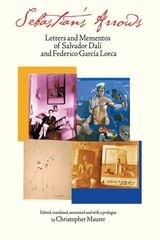
Sebastian's Arrows
Letters and Mementos of Salvador Dali and Federico Garcia LorcaSalvador Dali and Federico Garcia Lorca
Swan Isle Press, 2005
“In my ‘Saint Sebastian’ I remember you,” Salvador Dali replied to Garcia Lorca, referring to the essay on aesthetics that Dali had just written, “. . . and sometimes I think he is you. Let’s see whether Saint Sebastian turns out to be you.”
This exchange is but a glimpse into the complex relationship between two renowned and highly influential twentieth-century artists. On the centennial of Dali's birth, Sebastian’s Arrows presents a never-before-published collection of their letters, lectures, and mementos.
Written between 1925 and 1936, the letters and lectures bring to life a passionate friendship marked by a thoughtful dialogue on aesthetics and the constant interaction between poetry and painting. From their student days in Madrid's Residencia de Estudiantes, where the two waged war against cultural “putrefaction” and mocked the sacred cows of Spanish art, Dali and Garcia Lorca exchanged thoughts on the act of creation, modernity, and the meaning of their art. The volume chronicles how in their poetic skirmishes they sharpened and shaped each other’s work—Garcia Lorca defending his verses of absence and elegy and his love of tradition while Dali argued for his theories of “Clarity” and “Holy Objectivity” and the unsettling logic of Surrealism.
Christopher Maurer’s masterful prologue and selection of letters, texts, and images (many generously provided by the Fundacion Gala-Salvador Dali and Fundacion Federico Garcia Lorca), offer compelling and intimate insights into the lives and work of two iconic artists. The two men had a “tragic, passionate relationship,” Dali once wrote—a friendship pierced by the arrows of Saint Sebastian.
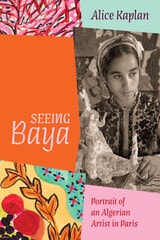
Seeing Baya
Portrait of an Algerian Artist in ParisAlice Kaplan
University of Chicago Press, 2024
On a flower farm in colonial Algeria, a servant and field worker known as Baya escaped the drudgery of her labor by coloring the skirts in fashion magazines. Three years later, in November 1947, her paintings and fanciful clay beasts were featured in a solo show in Paris. She wasn’t yet sixteen years old. In this first biography of Baya, Alice Kaplan tells the story of a young woman seemingly trapped in subsistence who becomes a sensation in the French capital, then mysteriously fades from the history of modern art—only to reemerge after independence as an icon of Algerian artistic heritage.
The toast of Paris for the 1947 season, Baya inspired colonialist fantasies about her “primitive” genius as well as genuine appreciation. She was featured in newspapers, on the radio, and in a newsreel; her art was praised by Breton and Camus, Marchand and Braque. At the dawn of Algerian liberation, her appearance in Paris was used to stage the illusion of French-Algerian friendship, while horrific French massacres in Algeria were still fresh in memory.
Kaplan uncovers the central figures in Baya’s life and the role they played in her artistic career. Among the most poignant was Marguerite Caminat-McEwen-Benhoura, who took Baya from her sister’s farm to Algiers, where Baya worked as Marguerite’s maid and was given paint and brushes. A complex and endearing character, Marguerite—and her Pygmalion ambitions—was decisive in shaping Baya’s destiny. Kaplan also looks closely at Baya’s earliest paintings with an eye to their themes, their palette and design, and their enduring influence.
In vivid prose that brings Baya’s story into the present, Kaplan’s book, the fruit of scrupulous research in Algiers, Blida, Paris, and Provence, allows us to see in a whole new light the beloved artist who signed her paintings simply “Baya.”
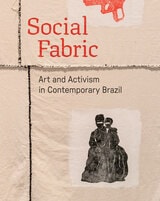
Social Fabric
Art and Activism in Contemporary BrazilEdited by Maria Emilia Fernandez, Adele Nelson, and MacKenzie Stevens
University of Texas Press, 2023
Social Fabric: Art and Activism in Contemporary Brazil brings together the work of ten artists who reflect upon the long-standing histories of oppressive power structures in the territory now known as Brazil. Blurring the line between art and activism and spanning installation, painting, performance, photography, sculpture, and video, these artists contribute to local and global conversations about the state of democracy, racial injustice, and the violence inflicted by the nation-state. This first English-language, book-length study of contemporary Brazilian art in relationship to activism assembles artist-authored texts, interviews, essays, and a conceptual mapping of Brazilian history to illuminate the function of art as a platform for critical engagement with the historical, political, and cultural configurations of a particular place. By refusing to remain neutral, these artists create spaces of vibrant and vital community and self-construction to explore how healing and justice may be possible, especially in the Black, LGBTQIA+, and Indigenous communities to which many of them belong.
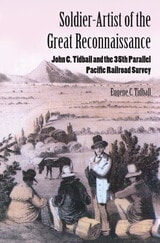
Soldier-Artist of the Great Reconnaissance
John C. Tidball and the 35th Parallel Pacific Railroad SurveyEugene C. Tidball
University of Arizona Press, 2004
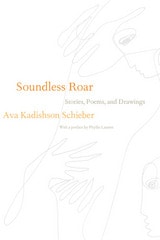
Soundless Roar
Stories, Poems, and DrawingsAva Kadishson Schieber
Northwestern University Press, 2002
Schieber's drawings, paintings, poetry, and prose are all intimate reflections of one another. Her experience forged the unusual sense of time that shapes Schieber's stories. In her preface, Phyllis Lassner writes: "The timetable of Ava's stories often consists of circles within circles, of patterns of an intertwined past, the past present of hiding, and the present looking back at those distinctly separate but inseparable pasts."
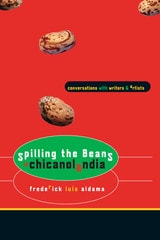
Spilling the Beans in Chicanolandia
Conversations with Writers and ArtistsBy Frederick Luis Aldama
University of Texas Press, 2006
Since the 1980s, a prolific "second wave" of Chicano/a writers and artists has tremendously expanded the range of genres and subject matter in Chicano/a literature and art. Building on the pioneering work of their predecessors, whose artistic creations were often tied to political activism and the civil rights struggle, today's Chicano/a writers and artists feel free to focus as much on the aesthetic quality of their work as on its social content. They use novels, short stories, poetry, drama, documentary films, and comic books to shape the raw materials of life into art objects that cause us to participate empathetically in an increasingly complex Chicano/a identity and experience.
This book presents far-ranging interviews with twenty-one "second wave" Chicano/a poets, fiction writers, dramatists, documentary filmmakers, and playwrights. Some are mainstream, widely recognized creators, while others work from the margins because of their sexual orientations or their controversial positions. Frederick Luis Aldama draws out the artists and authors on both the aesthetic and the sociopolitical concerns that animate their work. Their conversations delve into such areas as how the artists' or writers' life experiences have molded their work, why they choose to work in certain genres and how they have transformed them, what it means to be Chicano/a in today's pluralistic society, and how Chicano/a identity influences and is influenced by contact with ethnic and racial identities from around the world.
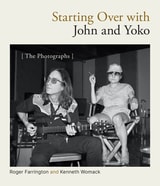
Starting Over with John and Yoko
The PhotographsRoger Farrington
Rutgers University Press, 2026
“This is one to linger over.” —Publishers Weekly
On August 7, 1980, John Lennon and Yoko Ono made their triumphant return to the recording studio after a self-imposed five-year absence. Roger Farrington, an up-and-coming photographer from Boston, was hired to get “the shot” that would announce their comeback. It would be Lennon’s most intense press scrutiny since the heady days of the Beatles’ maiden voyage to America in 1964, and for Farrington, it would be the assignment of a lifetime. Just four months later, Lennon’s assassination would plunge the world into mourning.
Reproducing, for the first time, the entire run of Farrington’s iconic photographs from that day, Starting Over transports readers back to 1980 and into Manhattan’s Hit Factory, where Lennon and Ono recorded their acclaimed LP Double Fantasy. With supporting photos and other ephemera, Farrington and renowned Beatles historian Kenneth Womack capture a poignant moment in music history and provide an insider’s look at celebrity photography in the pre-digital age.
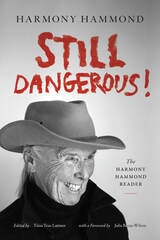
Still Dangerous!
The Harmony Hammond ReaderHarmony Hammond. Edited by Tirza True Latimer.
Duke University Press, 2026