Results by title
490 books match the query 'Asian' and 32 start with s
Sacred Mandates
Asian International Relations since Chinggis KhanEdited by Timothy Brook, Michael van Walt van Praag, Miek Boltjes
University of Chicago Press, 2018
This book argues that understanding the diversity of past legal orders helps explain the forms of contemporary conflict, as well as the conflicting historical narratives that animate tensions. Rather than proceed sequentially by way of dynasties, the editors identify three “worlds”—Chingssid Mongol, Tibetan Buddhist, and Confucian Sinic—that represent different forms of civilization authority and legal order. This novel framework enables us to escape the modern tendency to view the international system solely as the interaction of independent states, and instead detect the effects of the complicated history at play between and within regions. Contributors from a wide range of disciplines cover a host of topics: the development of international law, sovereignty, state formation, ruler legitimacy, and imperial expansion, as well as the role of spiritual authority on state behavior, the impact of modernization, and the challenges for peace processes. The culmination of five years of collaborative research, Sacred Mandates will be the definitive historical guide to international and intrastate relations in Asia, of interest to policymakers and scholars alike, for years to come.
Salvage
PoemsCynthia Dewi Oka
Northwestern University Press, 2018
Throughout it insistently interrogates what it means to reach for our humanity through the guises of nation, race, and gender. Oka’s language transports us through the many bodies of fluid poetics that inhabit our migrating senses and permeate across generations into a personal diaspora. Salvage invites us to be without borders.
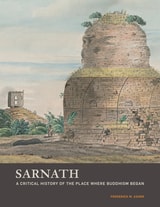
Sarnath
A Critical History of the Place Where Buddhism BeganFrederick M Asher
J. Paul Getty Trust, The, 2020
Sarnath has long been regarded as the place where the Buddha preached his first sermon and established the Buddhist monastic order. Excavations at Sarnath have yielded the foundations of temples and monastic dwellings, two Buddhist reliquary mounds (stupas), and some of the most important sculptures in the history of Indian art. This volume offers the first critical examination of the historic site.
Frederick M. Asher provides a longue durée (long-term) analysis of Sarnath—including the plunder, excavation, and display of antiquities and the Archaeological Survey of India’s presentation—and considers what lies beyond the fenced-in excavated area. His analytical history of Sarnath’s architectural and sculptural remains contains a significant study of the site’s sculptures, their uneven production, and their global distribution. Asher also examines modern Sarnath, which is a living establishment replete with new temples and monasteries that constitute a Buddhist presence on the outskirts of Varanasi, the most sacred Hindu city.
Searching for Mr. Chin
Constructions of Nation and the Chinese in West Indian LiteratureAuthored by Anne-Marie Lee-Loy
Temple University Press, 2010
What do twentieth-century fictional images of the Chinese reveal about the construction of nationhood in the former West Indian colonies? In her groundbreaking interdisciplinary work, Searching for Mr. Chin, Anne-Marie Lee-Loy seeks to map and understand a cultural process of identity formation: “Chineseness” in the West Indies.
Reading behind the stereotypical image of the Chinese in the West Indies, she compares fictional representations of Chinese characters in Jamaica, Trinidad, and Guyana to reveal the social and racial hierarchies present in literature by popular authors such as V.S. Naipaul and Samuel Selvon, as well as lesser known writers and hard to access literary texts.
Using historical, discursive, and theoretical frameworks for her literary analysis, Lee-Loy shows how the unstable and ambiguous “belonging” afforded to this “middleman minority” speaks to the ways in which narrative boundaries of the nation are established. In addition to looking at how Chinese have been viewed as “others,” Lee-Loy examines self-representations of “Chineseness” and how they complicate national narratives of belonging.
Secondhand China
Spain, the East, and the Politics of TranslationCarles Prado-Fonts
Northwestern University Press, 2022
Uncovering an eclectic and surprising archive, Prado-Fonts draws on diverse cultural artifacts from popular literature, journalism, and early cinema to offer a rich account of how China was seen across the West between 1880 and 1930. Enrique Gaspar, Luis de Oteyza, Vicente Blasco Ibáñez, and lesser-known authors writing in Spanish and Catalan put themselves in dialogue with Leo Tolstoy, John Dewey, W. Somerset Maugham, Bertrand Russell, Pearl Buck, and André Malraux, as well as stereotypical figures from popular culture like Fu Manchu and Charlie Chan. Throughout, Prado-Fonts exposes translation as a technology of cultural hegemony and China as an appealing object for representation. A timely contribution to our understanding of how we create and consume knowledge about the world, Secondhand China is essential reading for scholars and students of Orientalism, postcolonial studies, translation studies, comparative literature, and cultural studies.

Secrets Need Words
Indonesian Poetry, 1966–1998Harry Aveling
Ohio University Press, 2001
Short listed for the 2007 New South Wales Premier's Translation Prize
The period from 1966 to 1999 represents a distinct era in Indonesian history. Throughout the “New Order” regime of President Suharto, the policies of economic development and political stability were dominant. However, the public opinion of personal expression was consistently under suspicion, and indeed dissent was severely punished.
Secrets Need Words traces the development of Indonesian poetry throughout this entire period. Texts are presented both in the original Indonesian and in careful, stylistically sensitive English translations.
In this anthology of contemporary work by Indonesian poets, the renowned translator and editor Harry Aveling presents a series of ongoing analyses detailing the political and social shifts that have influenced the work of particular poets.
Professor Aveling's analyses, along with the poems themselves, demonstrate how the poets responded to the power of the state in a variety of ways ranging from direct confrontation to withdrawal into personal and private realms characterized by fantasy and the use of heavily rhythmic language.
Secrets Need Words will be of interest to scholars of Indonesia and comparative literature, and will be for many years to come a basic text for scholarship and teaching. But it also offers all readers of poetry an opportunity to explore a new, complex, and exciting body of literature from one of the world's largest nations.
Seeds of Mobilization
The Authoritarian Roots of South Korea's DemocracyJoan E. Cho
University of Michigan Press, 2024
By using original subnational protest event datasets, government publications, oral interviews, and publications from labor and student movement organizations, Joan E. Cho takes a long view of democratization that incorporates the decades before and after South Korea’s democratic transition. She demonstrates that Korea’s democratization resulted from a combination of factors from below and from above, and that authoritarian development itself was a hidden root cause of democratic development in South Korea. Seeds of Mobilization shows how socioeconomic development did not create a steady pressure toward democracy but acted as a “double-edged sword” that initially stabilized autocratic regimes before destabilizing them over time.
Selected Writings of Lu Zhi
Zhi Lu
Hong Kong University Press, 2026
A Chinese-language collection of writing from Lu Zhi, who devoted his life to the revolutionary cause and published numerous articles in Jiefang Daily,People’s Daily, and other newspapers.
Selected Writings of Lu Zhi is divided into three parts, featuring the author’s views on the construction of the Shaan-Gan-Ning Border Region, political and cultural work in the army, and the economic development of the new China. Lu Zhi’s writings not only embody the “Yan’an Spirit” but also allow readers to gain insight into his personal experiences and the revolutionary atmosphere in China during the 1940s and 1950s. This collection also provides scholars with valuable primary historical materials and serves as an important reference for the study of China’s revolutionary history and the development of socialist economic construction.
Service Economies
Militarism, Sex Work, and Migrant Labor in South KoreaJin-kyung Lee
University of Minnesota Press, 2010
Making surprising and revelatory connections, Jin-kyung Lee analyzes South Korean military labor in the Vietnam War, domestic female sex workers, South Korean prostitution for U.S. troops, and immigrant/migrant labor from Asia in contemporary South Korea. Foregrounding gender, sexuality, and race, Lee reimagines the South Korean economic "miracle" as a global and regional articulation of industrial, military, and sexual proletarianization.
Lee not only addresses these under-studied labors individually but also integrates and unites them to reveal an alternative narrative of a changing South Korean working class whose heterogeneity is manifested in its objectification. Delving into literary and popular cultural sources as well as sociological work, Lee locates South Korean development in its military and economic interactions with the United States and other Asian nation-states, offering a unique perspective on how these practices have shaped and impacted U.S.-South Korea relations.
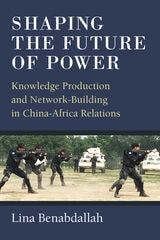
Shaping the Future of Power
Knowledge Production and Network-Building in China-Africa RelationsLina Benabdallah
University of Michigan Press, 2020
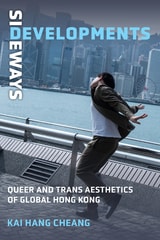
Sideways Developments
Queer and Trans Aesthetics of Global Hong KongKai Hang Cheang
University of Michigan Press, 2026
In this moment of multiple crises, Sideways Developments offers a timely hermeneutic and theory of solidarity and sustainability. The book tracks how sideways aesthetics have evolved from a feature of LGBTQ+ plots, performance, and nonlinear approaches to space-time to a form of togetherness that links postcolonial Hong Kong with struggles worldwide. Using what Cheang terms intersectional formalism as an analytical tool, the book provides a multilayered examination of the alternative pathways exemplified by queer and trans resilience and regeneration.
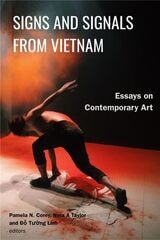
Signs and Signals from Vietnam
Essays on Contemporary ArtEdited by Pamela N. Corey, Nora A. Taylor, and Do Tuong Linh
National University of Singapore Press, 2026
The first English-language volume on Vietnamese contemporary art.
Contemporary art in Vietnam is a dynamic field shaped by memory, history, and experimentation. Over the last thirty years, Vietnamese artists have come to command international recognition, even as a growing domestic market for contemporary art fosters alternative infrastructures of collection and exhibition. Signs and Signals from Vietnam brings together artists, curators, and academics to examine artistic practice and contemporary art histories in Vietnam today.
Moving beyond familiar North-South or diasporic-national divides, the essays represent the perspectives of Vietnamese, Vietnamese diasporic, and non-Vietnamese writers of different generations, affiliations, and positionalities. Contributors trace the inventive ways artists work with language, narrative, performance, and archival practice to communicate through their art. Key themes running through the volume represent the predominant concerns of Vietnamese artists over the past three decades, including the enduring impact of socialist paradigms in contemporary art, gender, diaspora, memory, and the environment. Together, these essays demonstrate how contemporary art can convey lesser-known histories, contested narratives, and personal perspectives.
Sinoglossia
Edited by Andrea Bachner, Howard Chiang, and Yu-Lin Lee
Hong Kong University Press, 2023
Sinoglossia places embodiment, mediality, and translation at the center of this analytical inquiry into Chinese and Sinophone cultures. This book introduces a theory defined by cultural formations not overdetermined by Sinitic linguistic ties. The concept of sinoglossia combines a heteroglossic and heterotopian approach to the critical study of mediated discourses of China and “Chineseness.” From the history of physical examinations and queer subalternity to the cinematic inscription of “Chineseness-as-landscape,” and from Sinopop to the translational writings of Eileen Chang and Syaman Rapongan, this book argues for a flexible conceptualization of cultural objects, conditions, and contexts that draws attention to an array of polyphonic, multi-discursive, and multilingual articulations. In this new horizon of understanding, place or theme create a source of friction and innovation.

Sleep Journeys
Azra Abbas, Translated by Daisy Rockwell
University of Wisconsin Press, 2026
When Sleep Journeys first appeared in 1981, it took the Urdu poetry world by storm. Now considered one of the finest contemporary Urdu poets, Azra Abbas was among the first to embrace experimental, free verse poetry. A single book-length poem, divided into three cantos, Sleep Journeys is a dreamlike rumination that explores faith, female desire, and the subconscious mind. Abbas’s language is simple and austere, the complexity of the work emerging through repetition, interweaving, and juxtaposition. The result is a gossamer thread that leads the reader through a labyrinth of metaphor, imagery, and awe.
Award-winning translator Daisy Rockwell expertly captures the rhythm and flow of the original. The result is a book that ushers us into a state between sleeping and waking, the world of hidden thoughts and desires. This edition brings one of the most celebrated Urdu poems of the latter twentieth century to a broader, worldwide readership.
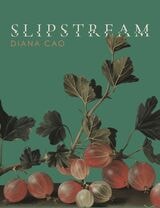
Slipstream
Diana Cao
Tupelo Press, 2026
The poems in Slipstream deal with the slippery concept of home, with robots and the internet and other human inventions, and with what we can learn from the natural world around us.
Winner of the Berkshire Prize, Slipstream is a bracing, intimate, and formally adventurous debut that moves with equal grace through personal memory, inherited history, myth, and the ambient technologies of contemporary life. Diana Cao’s poems braid ancient Chinese legend, family migration, illness, love, and grief with moon landers, algorithms, privacy policies, and online ritual, creating a lyric field where the ancestral and the digital speak fluently to one another. The book is formally restless and assured. Sonnets, sestinas, villanelles, fables, and linked sequences feel conversational rather than ornate, their intelligence worn lightly, their music precise and unforced. Throughout, Cao writes with a clarity that never flattens complexity: humor and vulnerability coexist with philosophical rigor. Tenderness is sharpened, not softened, by attention to politics, history, and care.
What emerges is a voice attuned to relational life in all its registers—daughterhood, friendship, desire, citizenship, species—asking how to live, love, and remain lucid inside systems that both sustain and estrange us. Slipstream is a book of uncommon range and emotional intelligence, one that feels fully of this moment while remaining in deep, living conversation with the past.
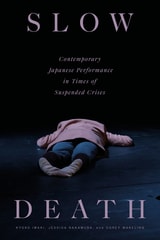
Slow Death
Contemporary Japanese Performance in Times of Suspended CrisesKyoko Iwaki, Jessica Nakamura, Corey Wakeling
Northwestern University Press, 2027
Bringing together performance studies, critical theory, and contemporary Japanese cultural studies to offer an unsettling glimpse into a global future of crisis already arriving
Slow Death examines contemporary artistic practice as a form of active engagement with the condition of “slow death”: the diffused feeling of decline with no end in sight. The theater and performance artists discussed here confront the realities of a state that is no longer tenable, rehearsing slow death’s modalities, probing its implications, and imagining possible endpoints through dramaturgy. As these artists show, the very notion of progress—whether framed as a march toward a hopeful future or a retreat into the comforts of a nostalgic past—carries an inescapable irony. Both trajectories seem equally unsustainable, rendering any prospect of radical transformation elusive. This sense of endless suspendedness emerges as a pervasive motif across the artworks discussed, such as the anticapitalist performance spaces created by Tanino Kurō and the queer feminist dramaturgy of Ichihara Satoko. Yet, as coauthors Kyoko Iwaki, Jessica Nakamura, and Corey Wakeling identify throughout, to enact slow death in performance is not to capitulate to despair but to expose its structure and, in doing so, uncover latent forms of everyday resistance.
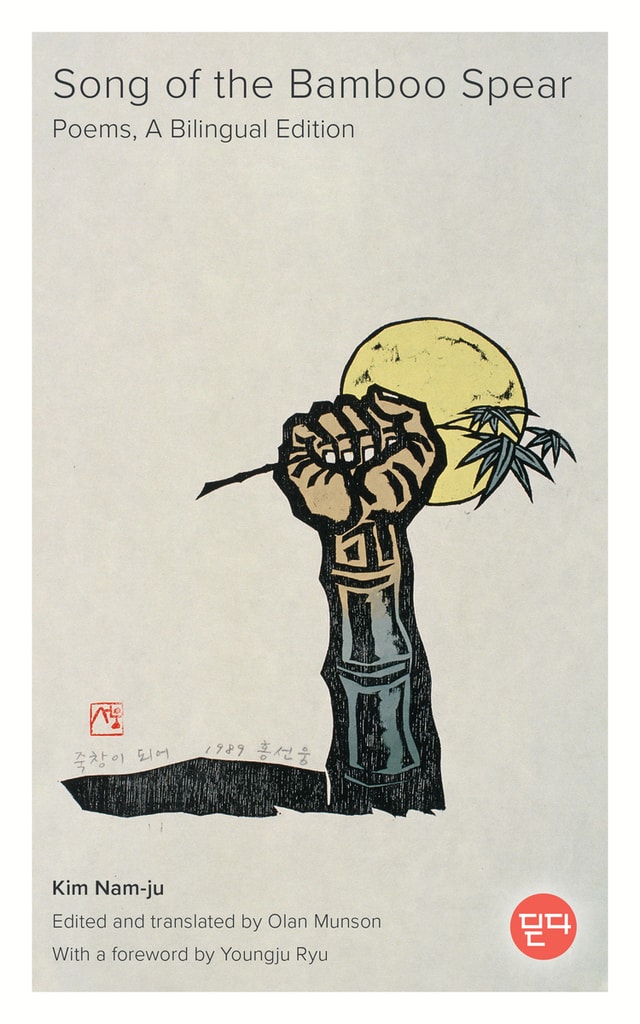
Song of the Bamboo Spear
Poems, A Bilingual EditionNam-ju Kim (1945–1994)
Rutgers University Press, 2027
This book debuts selected poetry by Kim Nam-ju (1946–1994) in English translation, along with the original Korean. Referred to as the “Che Guevara of South Korea,” and self-described a “warrior poet,” Kim Nam-ju remains, to this day, an enduring voice of the 1970s and 80s cultures of anti-authoritarian resistance in South Korea. Kim was arrested in 1979 for his involvement with the “South Josǒn” National Liberation Front, a leftist underground group organizing against the Yushin regime. Kim wrote prolifically while in prison (1979-1988), at times by etching his poems into scraps of foil, milk carton, or cigarette packages. The work he produced in prison alone totals around 360 poems. This bilingual volume selects 65 poems from Kim's oeuvre, sampling across many different chapters of the poet’s career. Readers will find autobiographical reflections on his childhood, love poems, missives from the prison cell, commemorations of the Kwangju Uprising, the poet’s calls to arms, and more.
이 책은 김남주 시인(1946~1994)의 시 65편을 한국어 원문과 함께 영문 번역으로 처음 선보인다. ‘한국의 체 게바라’로 불리며 스스로를 ‘전사 시인’이라 칭했던 김남주는 오늘날까지도 한국의 1970·80년대 반독재 저항운동을 대표하는 사라지지 않는 목소리로 남아 있다. 김남주는 유신정권에 맞서 결성된 좌파 지하조직 ‘남조선민족해방전선준비위원회’에 가담한 혐의로 1979년에 체포되었다. 1979년부터 1988년에 이르는 수감 기간에도 꾸준히 창작 활동을 이어갔으며, 때로는 은박지 조각이나 우유곽, 담뱃갑 등에 시를 새겨 집필하기도 하였다. 이 시기에 쓴 작품만 해도 360여 편에 이른다. 이 영역시집은 시인의 전체 작품 중에서 65편의 시를 엄선하여 시인의 생애와 창작 활동의 다양한 시기를 아우르는 시적 여정을 한눈에 보여준다. 독자들은 시인의 어린 시절에 대한 자전적인 회고, 사랑의 시, 옥중 서한, 5·18 광주항쟁을 추모하는 시, 민중의 투쟁을 촉구하는 시 등 다양한 작품을 만나볼 수 있을 것이다.
English-Korean Bilingual Edition
영-한 이중언어판
This book is published with the support of the Literature Translation Institute of Korea (LTI Korea)
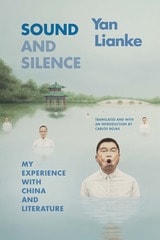
Sound and Silence
My Experience with China and LiteratureYan Lianke
Duke University Press, 2024

Sovereignty and Survival
Power, Conflict and Climate Change in BurmaAshley South
National University of Singapore Press, 2027
Evaluates Burma at a pivotal tipping point after the 2021 military coup.
The 2021 military coup in Burma/Myanmar triggered popular resistance and a spreading civil war, reigniting long-standing struggles for ethnic self-determination. The chaos has enabled a huge rise in transnational criminal activities, including drug trafficking and the emergence of scam centers. The country's geopolitical importance, not least as a source of rare earths, is also heightening the struggle for power. At the same time, accelerating climate change is destabilizing local ecologies and livelihoods, driving food production, socio-economic systems, and civil society towards collapse or massive change. Together, these forces have undermined the coherence of Burma as a centralized state. However, new forms of resistance and political organization have emerged in liberated areas across the country. At this critical juncture, rather than “state failure,” Burma demonstrates novel forms of complex, asymmetrical, and sometimes messy state-building, a “bottom-up” federalism based on the agency and resilience of Indigenous communities and anti-junta forces.
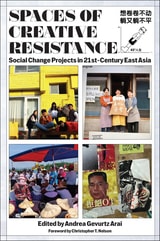
Spaces of Creative Resistance
Social Change Projects in Twenty-First-Century East AsiaAndrea Gevurtz Arai
Rutgers University Press, 2025
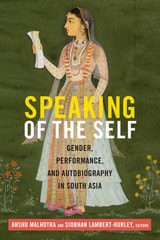
Speaking of the Self
Gender, Performance, and Autobiography in South AsiaAnshu Malhotra and Siobhan Lambert-Hurley, editors
Duke University Press, 2015
Contributors: Asiya Alam, Afshan Bokhari, Uma Chakravarti, Kathryn Hansen, Siobhan Lambert-Hurley, Anshu Malhotra, Ritu Menon, Shubhra Ray, Shweta Sachdeva Jha, Sylvia Vatuk
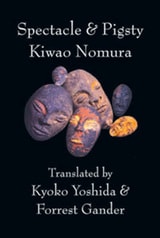
Spectacle & Pigsty
Kiwao Nomura
Omnidawn, 2011
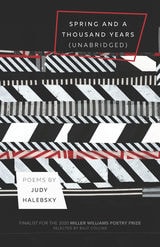
Spring and a Thousand Years (Unabridged)
PoemsJudy Halebsky
University of Arkansas Press, 2020
A translator’s notebook, an almanac, an ecological history, Judy Halebsky’s Spring and a Thousand Years (Unabridged) moves between multiple intersections and sign systems connected in a long glossary poem that serves as the book’s guide to what is lost, erased, or disrupted in transition both from experience to written word and from one language, location, and time period to another.
Writers Li Bai, Matsuo Bashō, Sei Shōnagon, and Du Fu make frequent appearances in centuries ranging from the eighth to the twenty-first, and appear in conversation with Grace Paley, Donald Hall, and Halebsky herself, as the poet explores subjects ranging from work and marriage to environmental destruction. Asking what would happen if these poets—not just their work—appeared in California, the poems slip between different geographies, syntaxes, times, and cultural frameworks.
The role of the literary translator is to bring text from one language into another, working to at once shift and retain the context of the original—from one alphabet to another, one point in time to another. These are poems in homage to translation; they rely on concepts that can bridge time and space, and as a result are as likely to find meaning in donuts or Zumba as they are to find it in the ocean. Spring and a Thousand Years (Unabridged) finds reasons for hope not in how the world should be, but in how it has always been.

Staffing the State
Bureaucratic Politics in Pakistan's Hybrid RegimeSameen A. Mohsin Ali
University of Michigan Press, 2027
Bureaucrats play a critical role in managing governance and delivering public services, whether in democratic and authoritarian contexts. Leaders are responsible for managing bureaucrats—from assigning posts to evaluating performance—to ensure that state resources and services are directed to key constituencies. Focusing on Pakistan, a hybrid regime where military interventions often disrupt electoral politics and civilian governance, Staffing the State shows how controlling bureaucratic appointments allows politicians and civil servants to manage political uncertainty. At the same time, such control entrenches arbitrary patterns of governance such that democratic transitions stall and hybrid regimes persist.
Drawing on interviews, semi-participant observation, and newspaper archives, this book’s analysis reveals the significance of bureaucratic politics to political power, public sector performance and reform, and in determining democratic or autocratic trajectories. The findings extend discussions around indicators of democratic decay into more nuanced, complex explorations of the consequences of these politics for the permanent institutions of the state. Staffing the State will interest political scientists, scholars of South Asian politics and especially Pakistan, and those working at the intersection of politics and public administration.
State Institutions, Civic Associations, and Identity Demands
Regional Movements in Greater Southeast AsiaAmy H. Liu and Joel Sawat Selway, Editors
University of Michigan Press, 2024
State Institutions, Civic Associations, and Identity Demands examines over a dozen regions, comparing and contrasting successful cases to abandoned, unsuccessful, or dormant cases. The cases range from successful secession (East Timor, Singapore) and ongoing secessionist movements (Southern Philippines), to internally divided regional movements (Kachin State), low-level regionalist stirrings (Lanna, Taiwan), and local but not regional mobilization of identity (Bali, Minahasan), all the way to failed movements (Bataks, South Maluku) and regions that remain politically inert (East and North Malaysia, Northeast Thailand). While each chapter is written by a country expert, the contributions rely on a range of methods, from comparative historical analysis, to ethnography, field interviews, and data from public opinion surveys. Together, they contribute important new knowledge on little-known cases that nevertheless illuminate the history of regions and ethnic groups in Southeast Asia. Although focused on Southeast Asia, the book identifies the factors that can explain why movements emerge and successfully develop and concludes with a chapter by Henry Hale that illustrates how this can be applied globally.
State of Translation
Turkey in Interlingual RelationsEinar Wigen
University of Michigan Press, 2018
International politics often requires two or more languages. The resulting interlingual relations mean translation, either by interpreters who are quite literally in the middle of conversations, or by bilingual statesmen who negotiate internationally in one language and then legitimize domestically in another. Since no two languages are the same, what can be argued in one language may be impossible in another. Political concepts can thus be significantly reformulated in the translation process. State of Translation examines this phenomenon using the case of how 19th-century Ottoman and later Turkish statesmen struggled to reconcile their arguments in external languages (French, then English) with those in their internal language (Ottoman, later Turkish), and in the process further entangled them. Einar Wigen shows how this process structured social relations between the Ottoman state and its interlocutors, both domestically and internationally, and shaped the dynamics of Turkish relations with Europe.
Stories That Bind
Political Economy and Culture in New IndiaMadhavi Murty
Rutgers University Press, 2022
Moving between mediascapes to create an archive of popular culture, Murty advances our understanding of political economy through material that is often seen as inconsequential, namely the popular cultural story. These stories stoke our desires (e.g. for wealth), scaffold our instincts (e.g. for a strong leadership) and shape our values.
Storytelling in Cambodia
Willa Schneberg
Calyx, 2006
Subversions of the American Century
Filipino Literature in Spanish and the Transpacific Transformation of the United StatesAdam Lifshey
University of Michigan Press, 2016
Supernatural Japan
Izumi Kyoka and the Global FantasticPedro Thiago Ramos Bassoe
University of Michigan Press, 2026
Pedro Bassoe considers how Kyōka’s stories have been produced by a meeting of global influences—including Apuleius, The Arabian Nights, Hans Christian Andersen, the Brothers Grimm, Prosper Mérimée, Guy de Maupassant, Gerhart Hauptmann, and Jules Verne—combined with traditional Japanese genres. Bassoe develops the notion of “the scholarly fantastic” to describe how a set of realistic epistemologies reinforce the fantastic in Kyōka’s writings. Supernatural Japan offers an up-to-date introduction to Izumi Kyōka and his writing for students, scholars, or fans of Japanese fantasy literature and media.
Surrealism from Paris to Shanghai
Lauren Walden
Hong Kong University Press, 2024
Surrealism from Paris to Shanghai is the first English language book dedicated to introducing Chinese Surrealism, enlarging the geographical authority of Surrealist studies beyond a Eurocentric prism of analysis. The book reveals the mutual cultural influence between China and the Western avant-garde, moving beyond notions of “copying from the West.” Utilizing primary source materials, particularly periodicals, Lauren Walden reveals the underexplored dissemination of Surrealism in Shanghai. Highlighting how Surrealism was applied across a broad political spectrum in Shanghai including anti-colonialism, communism, and nationalism, Walden also demonstrates why Shanghai’s former French concession became the birthplace of Surrealism in China.
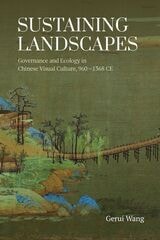
Sustaining Landscapes
Governance and Ecology in Chinese Visual Culture, 960–1368 CEGerui Wang
Hong Kong University Press, 2025
Sustaining Landscapes: Governance and Ecology in Chinese Visual Culture, 960–1368 CE examines ecological thought contested amid the rise of the Chinese landscape genre, tracing its intersections with infrastructure governance, natural resource management, and geospatial knowledge. It traces the pre-industrial notion of “sustainability” in policy debates, legal regulations, and arts. Landscape imagery on paintings, maps, as well as mass-produced artifacts such as fans and ceramic pillows documented both appropriate and exploitative use of natural resources, and critiqued on social inequity and political turmoil. This book breaks new ground by bringing together research on visual and material culture with analysis of politics and ecology. Wang argues that the Chinese landscape genre embodied a holistic approach to negotiating debates on human-nature interdependence and people-state relationships. It joins the increasing literature on ecocriticism and offers alternative perspectives to address contemporary challenges, ranging from environmental crisis to global governance.