Results by title
264 books match the query 'Asian Studies' and 21 start with s
SARS Stories
Affect and Archive of the 2003 PandemicBelinda Kong
Duke University Press, 2024
Screening Precarity
Hindi Cinema and Neoliberal Crisis in Twenty-first Century IndiaMegha Anwer and Anupama Arora
University of Michigan Press, 2025
Secularism as Misdirection
Critical Thought from the Global SouthNivedita Menon
Duke University Press, 2024
Seeking a Future for the Past
Space, Power, and Heritage in a Chinese CityPhilipp Demgenski
University of Michigan Press, 2024

Settler Attachments and Asian Diasporic Film
Beenash Jafri
University of Minnesota Press, 2025
A cinematic study of Asian–Indigenous relationality
Settler Attachments and Asian Diasporic Film is an interdisciplinary examination of the stubborn attachment of Asian diasporas to settler-colonial ideals and of the decolonial possibilities Asian diasporic films imagine. Beenash Jafri uniquely addresses the complexities of Asian–Indigenous relationality through film and visual media, urging film scholars to approach their subjects with an eye to the entanglements of race, diaspora, and Indigeneity.
Highlighting how Asian diasporic attachments to settler colonialism are structural, she explores how they are manifested through melancholic yearning within the figure of the Asian cowboy in films such as Cowgirl and Wild West and through the aesthetic and representational politics of body and land in experimental films by Shani Mootoo and Vivek Shraya. While recognizing the pervasive violence of settler colonialism, Jafri maintains a hopeful outlook, showcasing how Asian diasporic filmmakers persistently work toward decolonial worldmaking. This emerging vision can be seen in the radical friendship between Ali Kazimi and Onondaga artist Jeffrey Thomas in Kazimi’s film Shooting Indians, in the queer relational survivance depicted in films such as This Place and Scarborough, and in the sensory disruptions of Jin-me Yoon’s interactive art project Untunnelling Vision.
From film and media studies to diaspora studies and critical ethnic studies, Indigenous studies to queer theory, Settler Attachments and Asian Diasporic Film provides a critical framework for engaging cinematic media to understand and imagine beyond the entrenched settler-colonial dynamics within Asian diasporic communities.
Retail e-book files for this title are screen-reader friendly with images accompanied by short alt text and/or extended descriptions.
Sexuality and the Rise of China
The Post-1990s Gay Generation in Hong Kong, Taiwan, and Mainland ChinaTravis S. K. Kong
Duke University Press, 2023

Shooting for Change
Korean Photography after the WarJung Joon Lee
Duke University Press, 2024
Sideways Developments
Queer and Trans Aesthetics of Global Hong KongKai Hang Cheang
University of Michigan Press, 2026
In this moment of multiple crises, Sideways Developments offers a timely hermeneutic and theory of solidarity and sustainability. The book tracks how sideways aesthetics have evolved from a feature of LGBTQ+ plots, performance, and nonlinear approaches to space-time to a form of togetherness that links postcolonial Hong Kong with struggles worldwide. Using what Cheang terms intersectional formalism as an analytical tool, the book provides a multilayered examination of the alternative pathways exemplified by queer and trans resilience and regeneration.

Singing Paths
The Nomadic Sensibility of Mongolian Urtyn duuSunmin Yoon
University of Illinois Press, 2027
Enlightening and evocative, Singing Paths offers an eyewitness look at a rarely explored musical tradition.

Soda Science
Making the World Safe for Coca-ColaSusan Greenhalgh
University of Chicago Press, 2024
The 1990s were tough times for the soda industry. In the United States, obesity rates were exploding. Public health critics pointed to sugary soda as a main culprit and advocated for soda taxes that might decrease the consumption of sweetened beverages—and threaten the revenues of the giant soda companies.
Soda Science tells the story of how industry leader Coca-Cola mobilized allies in academia to create a soda-defense science that would protect profits by advocating exercise, not dietary restraint, as the priority solution to obesity, a view few experts accept. Anthropologist and science studies specialist Susan Greenhalgh discovers a hidden world of science-making—with distinctive organizations, social networks, knowledge-making practices, and ethical claims—dedicated to creating industry-friendly science and keeping it under wraps. By tracing the birth, maturation, death, and afterlife of the science they made, Greenhalgh shows how corporate science has managed to gain such a hold over our lives.
Spanning twenty years, her investigation takes her from the US, where the science was made, to China, a key market for sugary soda. In the US, soda science was a critical force in the making of today’s society of step-counting, fitness-tracking, weight-obsessed citizens. In China, this distorted science has left its mark not just on national obesity policies but on the apparatus for managing chronic disease generally. By following the scientists and their ambitious schemes to make the world safe for Coke, Greenhalgh offers an account that is more global—and yet more human—than the story that dominates public understanding today.
Coke’s research isn’t fake science, Greenhalgh argues; it was real science, conducted by real and eminent scientists, but distorted by its aim. Her gripping book raises crucial questions about conflicts of interest in scientific research, the funding behind familiar messages about health, and the cunning ways giant corporations come to shape our diets, lifestyles, and health to their own needs.
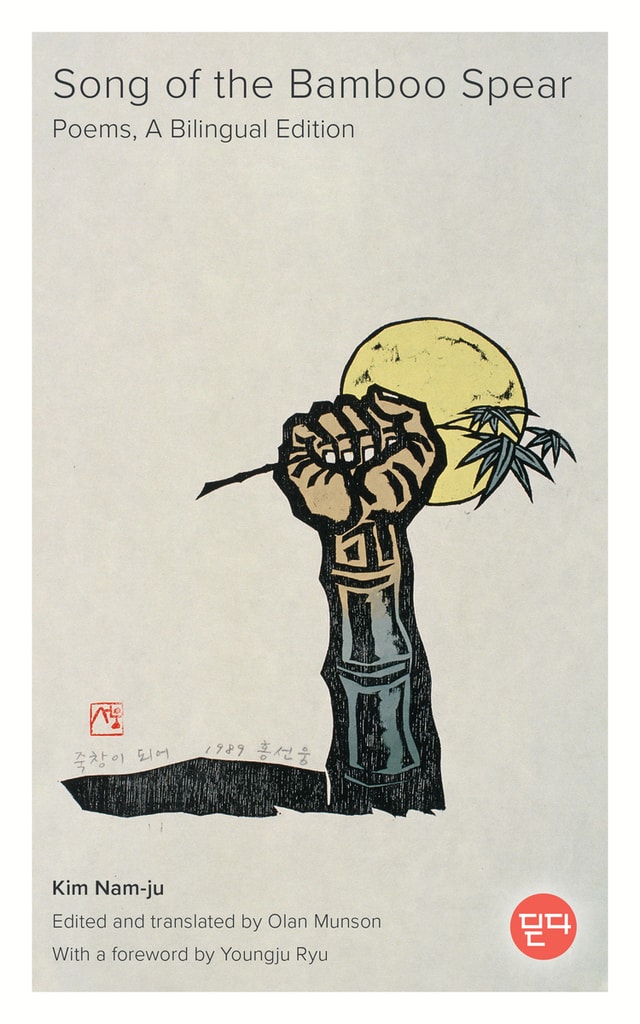
Song of the Bamboo Spear
Poems, A Bilingual EditionNam-ju Kim (1945–1994)
Rutgers University Press, 2027
This book debuts selected poetry by Kim Nam-ju (1946–1994) in English translation, along with the original Korean. Referred to as the “Che Guevara of South Korea,” and self-described a “warrior poet,” Kim Nam-ju remains, to this day, an enduring voice of the 1970s and 80s cultures of anti-authoritarian resistance in South Korea. Kim was arrested in 1979 for his involvement with the “South Josǒn” National Liberation Front, a leftist underground group organizing against the Yushin regime. Kim wrote prolifically while in prison (1979-1988), at times by etching his poems into scraps of foil, milk carton, or cigarette packages. The work he produced in prison alone totals around 360 poems. This bilingual volume selects 65 poems from Kim's oeuvre, sampling across many different chapters of the poet’s career. Readers will find autobiographical reflections on his childhood, love poems, missives from the prison cell, commemorations of the Kwangju Uprising, the poet’s calls to arms, and more.
이 책은 김남주 시인(1946~1994)의 시 65편을 한국어 원문과 함께 영문 번역으로 처음 선보인다. ‘한국의 체 게바라’로 불리며 스스로를 ‘전사 시인’이라 칭했던 김남주는 오늘날까지도 한국의 1970·80년대 반독재 저항운동을 대표하는 사라지지 않는 목소리로 남아 있다. 김남주는 유신정권에 맞서 결성된 좌파 지하조직 ‘남조선민족해방전선준비위원회’에 가담한 혐의로 1979년에 체포되었다. 1979년부터 1988년에 이르는 수감 기간에도 꾸준히 창작 활동을 이어갔으며, 때로는 은박지 조각이나 우유곽, 담뱃갑 등에 시를 새겨 집필하기도 하였다. 이 시기에 쓴 작품만 해도 360여 편에 이른다. 이 영역시집은 시인의 전체 작품 중에서 65편의 시를 엄선하여 시인의 생애와 창작 활동의 다양한 시기를 아우르는 시적 여정을 한눈에 보여준다. 독자들은 시인의 어린 시절에 대한 자전적인 회고, 사랑의 시, 옥중 서한, 5·18 광주항쟁을 추모하는 시, 민중의 투쟁을 촉구하는 시 등 다양한 작품을 만나볼 수 있을 것이다.
English-Korean Bilingual Edition
영-한 이중언어판
This book is published with the support of the Literature Translation Institute of Korea (LTI Korea)

Sonic Mobilities
Producing Worlds in Southern ChinaAdam Kielman
University of Chicago Press, 2022
Guangzhou is a large Chinese city like many others. With a booming economy and abundant job opportunities, it has become a magnet for rural citizens seeking better job prospects as well as global corporations hoping to gain a foothold in one of the world’s largest economies. This openness and energy have led to a thriving popular music scene that is every bit the equal of Beijing’s. But the musical culture of Guangzhou expresses the city’s unique cosmopolitanism. A port city that once played a key role in China’s maritime Silk Road, Guangzhou has long been an international hub. Now, new migrants to the city are incorporating diverse Chinese folk traditions into the musical tapestry.
In Sonic Mobilities, ethnomusicologist Adam Kielman takes a deep dive into Guangzhou's music scene through two bands, Wanju Chuanzhang (Toy Captain) and Mabang (Caravan), that express ties to their rural homelands and small-town roots while forging new cosmopolitan musical connections. These bands make music that captures the intersection of the global and local that has come to define Guangzhou, for example by writing songs with a popular Jamaican reggae beat and lyrics in their distinct regional dialects mostly incomprehensible to their audiences. These bands create a sound both instantly recognizable and totally foreign, international and hyper-local. This juxtaposition, Kielman argues, is an apt expression of the demographic, geographic, and political shifts underway in Guangzhou and across the country. Bridging ethnomusicology, popular music studies, cultural geography, and media studies, Kielman examines the cultural dimensions of shifts in conceptualizations of self, space, publics, and state in a rapidly transforming the People’s Republic of China.
Sounds from the Other Side
Afro–South Asian Collaborations in Black Popular MusicElliott H. Powell
University of Minnesota Press, 2020
A sixty-year history of Afro–South Asian musical collaborations
From Beyoncé’s South Asian music–inspired Super Bowl Halftime performance, to jazz artists like John and Alice Coltrane’s use of Indian song structures and spirituality in their work, to Jay-Z and Missy Elliott’s high-profile collaborations with diasporic South Asian artists such as the Panjabi MC and MIA, African American musicians have frequently engaged South Asian cultural productions in the development of Black music culture. Sounds from the Other Side traces such engagements through an interdisciplinary analysis of the political implications of African American musicians’ South Asian influence since the 1960s.
Elliott H. Powell asks, what happens when we consider Black musicians’ South Asian sonic explorations as distinct from those of their white counterparts? He looks to Black musical genres of jazz, funk, and hip hop and examines the work of Miles Davis, John Coltrane, Rick James, OutKast, Timbaland, Beyoncé, and others, showing how Afro–South Asian music in the United States is a dynamic, complex, and contradictory cultural site where comparative racialization, transformative gender and queer politics, and coalition politics intertwine. Powell situates this cultural history within larger global and domestic sociohistorical junctures that link African American and South Asian diasporic communities in the United States.
The long historical arc of Afro–South Asian music in Sounds from the Other Side interprets such music-making activities as highly political endeavors, offering an essential conversation about cross-cultural musical exchanges between racially marginalized musicians.
Southeast Asian Anthropologies
National Traditions and Transnational PracticesEdited by Eric C. Thompson and Vineeta Sinha
National University of Singapore Press, 2019
Southeast Asian Anthropologies outlines the practices and paradigms of anthropologists working from and within Southeast Asia. It addresses three overlapping issues: the historical development of unique traditions of research, scholarship, and social engagement across diverse anthropological communities of the region; the opportunities and challenges faced by Southeast Asian anthropologists as they practice their craft in different institutional and political contexts; and the emergence of locally grounded, intraregional, transnational linkages and practices undertaken by Southeast Asian-based anthropologists. It is a much-needed assessment of the state of the discipline that will be an invaluable tool for anthropologists navigating a new era of development and challenges.
Spaces of Creative Resistance
Social Change Projects in Twenty-First-Century East AsiaAndrea Gevurtz Arai
Rutgers University Press, 2025

Spectropolis
The Enchantment of Capital in SingaporeJoshua Comaroff
University of Minnesota Press, 2025
How economic transformation and the spirit world collide in hypermodern Singapore
In Singapore, the financial center of Southeast Asia, hyperurbanization and commercial development exist alongside enduring belief in the economic power of ghosts: in their ability to control the flows of money and value and to determine the outcome of investments and wagers. Spectropolis explores the unlikely collusion of these two systems, demonstrating both the productive role of popular beliefs in the modern world and the surprising correlations between “late” capitalism and the workings of the spirit realm.
Detailing the logic and practices of Singapore’s ghost economy—from performing exorcisms on real estate development sites to offering money and commodities to the dead as a hedge against precarious real-world transactions—Joshua Comaroff shows how speculative finance, largely governed by chance and volatility, is understood via its inherently spectral qualities. Through the influence of Chinese Buddhist-Taoist thought, the movement of capital is placed under the sway of cosmology and geomancy, resulting in a built environment that is both technologically advanced and quite literally enchanted.
Based on detailed case studies and years of extensive fieldwork, Spectropolis argues for the power of popular belief systems to theorize contemporary socioeconomic conditions and to give form to collective affect as well as shared aspirations and anxieties. As Comaroff demonstrates, the uniquely all-consuming nature of Singapore’s tightly compressed urban economy is such that it may subsume even that which lies beyond the threshold of life itself.
Retail e-book files for this title are screen-reader friendly with images accompanied by short alt text and/or extended descriptions.
State of Fear
Policing a Postcolonial CityJoshua Barker
Duke University Press, 2024
Stories That Bind
Political Economy and Culture in New IndiaMadhavi Murty
Rutgers University Press, 2022
Moving between mediascapes to create an archive of popular culture, Murty advances our understanding of political economy through material that is often seen as inconsequential, namely the popular cultural story. These stories stoke our desires (e.g. for wealth), scaffold our instincts (e.g. for a strong leadership) and shape our values.
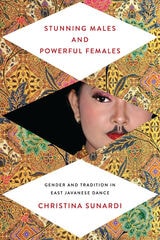
Stunning Males and Powerful Females
Gender and Tradition in East Javanese DanceChristina Sunardi
University of Illinois Press, 2015
Christina Sunardi ventures into the regency of Malang in east Java to study and perform with dancers. Through formal interviews and casual conversation, Sunardi learns about their lives and art. Her work shows how performers continually transform dance traditions to negotiate, and renegotiate, the boundaries of gender and sex--sometimes reinforcing lines of demarcation, sometimes transgressing them, and sometimes doing both simultaneously. But Sunardi's investigation moves beyond performance. It expands notions of the spiritual power associated with female bodies and feminine behavior, and the ways women, men, and waria (males who dress and live as female) access the magnetic power of femaleness.
A journey into understudied regions and ideas, Stunning Males and Powerful Females reveals how performances seemingly fixed by tradition are instead dynamic environments for cultural negotiation and change surrounding questions of sex and gender.
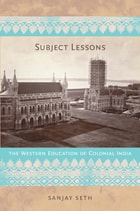
Subject Lessons
The Western Education of Colonial IndiaSanjay Seth
Duke University Press, 2007
Drawing on history, political science, anthropology, and philosophy, Seth interprets the debates and controversies that came to surround western education. Central among these were concerns that Indian students were acquiring western education by rote memorization—and were therefore not acquiring “true knowledge”—and that western education had plunged Indian students into a moral crisis, leaving them torn between modern, western knowledge and traditional Indian beliefs. Seth argues that these concerns, voiced by the British as well as by nationalists, reflected the anxiety that western education was failing to produce the modern subjects it presupposed. This failure suggested that western knowledge was not the universal epistemology it was thought to be. Turning to the production of collective identities, Seth illuminates the nationalists’ position vis-à-vis western education—which they both sought and criticized—through analyses of discussions about the education of Muslims and women.
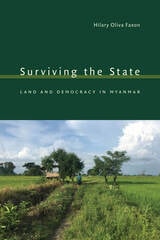
Surviving the State
Land and Democracy in MyanmarHilary Oliva Faxon
Duke University Press, 2026