Results by title
109 books match the query 'Astronomy' and 11 start with s
Satellites
Edited by Joseph A. Burns and Mildred Shapley Mathews
University of Arizona Press, 1986
Secrets of the Universe
How We Discovered the CosmosPaul Murdin
University of Chicago Press, 2009
Discoveries in astronomy challenge our fundamental ideas about the universe. Where the astronomers of antiquity once spoke of fixed stars, we now speak of whirling galaxies and giant supernovae. Where we once thought Earth was the center of the universe, we now see it as a small planet among millions of other planetary systems, any number of which could also hold life. These dramatic shifts in our perspective hinge on thousands of individual discoveries: moments when it became clear to someone that some part of the universe—whether a planet or a supermassive black hole—was not as it once seemed.
Secrets of the Universe invites us to participate in these moments of revelation and wonder as scientists first experienced them. Renowned astronomer Paul Murdin here provides an ambitious and exciting overview of astronomy, conveying for newcomers and aficionados alike the most important discoveries of this science and introducing the many people who made them. Lavishly illustrated with more than 400 color images, the book outlines in seventy episodes what humankind has learned about the cosmos—and what scientists around the world are poised to learn in the coming decades. Arranged by types of discovery, it also provides an overarching narrative throughout that explains how the earliest ideas of the cosmos evolved into the cutting-edge astronomy we know today. Along the way, Murdin never forgets that science is a human endeavor, and that every discovery was the result of inspiration, hard work, or luck—usually all three.
The first section of Secrets explores discoveries made before the advent of the telescope, from stars and constellations to the position of our own sun. The second considers discoveries made within our own solar system, from the phases of Venus and the moons of Jupiter to the comets and asteroids at its distant frontier. The next section delves into discoveries of the dynamic universe, like gravitation, relativity, pulsars, and black holes. A fourth examines discoveries made within our own galaxy, from interstellar nebulae and supernovae to Cepheid variable stars and extrasolar planets. Next Murdin turns to discoveries made within the deepest recesses of the universe, like quasars, supermassive black holes, and gamma ray bursters. In the end, Murdin unveils where astronomy still teeters on the edge of discovery, considering dark matter and alien life.

Selected Papers, Volume 2
Radiative Transfer and Negative Ion of HydrogenS. Chandrasekhar
University of Chicago Press, 1989
Chandrasekhar has selected papers that trace the development of his ideas and that present aspects of his work not fully covered in the books he has periodically published to summarize his research in each area.
Volume 2 covers primarily the period 1940-50 and includes papers on the theory of radiative transfer and on the physics and astrophysics of the negative ion of hydrogen. Of particular note are Chandrasekhar's Gibbs Lecture to the American Mathematical Society in 1946 and his "Personal Account" presented at a conference at Erevan in the U.S.S.R. in 1981. A foreword by T. W. Mullikin, a distinguished scholar in the area of radiative transfer, and an author's note provide a historical context for the papers.
Selected Papers, Volume 7
The Non-Radial Oscillations of Stars in General Relativity and Other WritingsS. Chandrasekhar
University of Chicago Press, 1997
world through the eyes of one of the twentieth century's most brilliant
and sensitive scientists. Conceived by Chandrasekhar as a supplement to
his Selected Papers, this volume begins with eight papers he
wrote with Valeria Ferrari on the non-radial oscillations of stars. It
then explores some of the themes addressed in Truth and Beauty,
with meditations on the aesthetics of science and the world it examines.
Highlights include: "The Series Paintings of Claude Monet and the
Landscape of General Relativity," "The Perception of Beauty and the
Pursuit of Science," "On Reading Newton's Principia at Age Past
Eighty," and personal recollections of Indira Gandhi, Jawaharlal Nehru,
and others.
Selected Papers, Volume 7 paints a picture of Chandra's universe,
filled with stars and galaxies, but with space for poetics, paintings,
and politics.
The late S. Chandrasekhar was best known for his discovery of the upper
limit to the mass of a white dwarf star, for which he received the Nobel
Prize in Physics in 1983. He was the author of many books, including
The Mathematical Theory of Black Holes and, most recently,
Newton's Principia for the Common Reader.
Sidereus Nuncius, or The Sidereal Messenger
Galileo Galilei
University of Chicago Press, 1989
"[Sidereus nunclus] has never before been made available in its entirety in a continuous form, with full notes and comment. The introduction, translation and notes by Van Helden are a splendid example of the best scholarship and fullest accessibility. . . . we can now truly get to grips with the phenomenon of Galileo and what his life and work should mean to us today."—Robert Temple, Nature
Sidereus Nuncius, or The Sidereal Messenger
Galileo Galilei
University of Chicago Press, 2015
Albert Van Helden’s beautifully rendered and eminently readable translation is based on the Venice 1610 edition’s original Latin text. An introduction, conclusion, and copious notes place the book in its historical and intellectual context, and a new preface, written by Van Helden, highlights recent discoveries in the field, including the detection of a forged copy of Sidereus Nuncius, and new understandings about the political complexities of Galileo’s work.
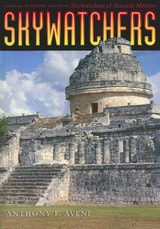
Skywatchers
A Revised and Updated Version of Skywatchers of Ancient MexicoBy Anthony F. Aveni
University of Texas Press, 2001
Skywatchers of Ancient Mexico helped establish the field of archaeoastronomy, and it remains the standard introduction to this subject. Combining basic astronomy with archaeological and ethnological data, it presented a readable and entertaining synthesis of all that was known of ancient astronomy in the western hemisphere as of 1980.
In this revised edition, Anthony Aveni draws on his own and others' discoveries of the past twenty years to bring the Skywatchers story up to the present. He offers new data and interpretations in many areas, including:
- The study of Mesoamerican time and calendrical systems and their unprecedented continuity in contemporary Mesoamerican culture
- The connections between Precolumbian religion, astrology, and scientific, quantitative astronomy
- The relationship between Highland Mexico and the world of the Maya and the state of Pan-American scientific practices
- The use of personal computer software for computing astronomical data
With this updated information, Skywatchers will serve a new generation of general and scholarly readers and will be useful in courses on archaeoastronomy, astronomy, history of astronomy, history of science, anthropology, archaeology, and world religions.
Solar Interior and Atmosphere
Edited by A. N. Cox, W. C. Livingston, and M. S. Matthews
University of Arizona Press, 1991
Star Day
A Story of 24 Hours and 24 Stellar LivesMarcia Bartusiak and Stephen Lowe
University of Chicago Press, 2027
An hourly guide that tracks twenty-four stars, stellar clusters, and constellations across the sky to reveal their luminous lives and lore.
Over the course of a day, the constellations slowly shift, rising in the east and setting in the west, due to Earth’s rotation. A full turn of the celestial sphere, that bowl above us where the stars seemingly appear fixed to the surface, is completed once every twenty-four hours. In fact, the stars inspired the twenty-four-hour day, and one star, our Sun, rules the circadian rhythms of all life on our planet. This short book sweeps through the celestial sphere hour by hour, introducing a remarkable cast of stellar characters with each chapter. Celebrated science writer Marcia Bartusiak and mathematician Stephen Lowe blend practical astronomy with fascinating history to share unique cosmological stories.
This husband and wife team explain that observers have long split the sky into twenty-four hours of right ascension—a celestial equivalent of longitude and a universal scheme for locating cosmological objects. Each chapter of Star Day presents a single right ascension hour, from the stellar death of S Andromedae (zeroth hour)—an explosion that helped reveal the size of the universe—to Scheat (twenty-third hour), an aging red giant. Twice the mass of the Sun and some 1,500 times as bright, Scheat sometimes guides amateur astronomers to distant galaxies. In between, we learn about humans’ pole star, Polaris (second hour), and meet the supermassive black hole at the center of our Milky Way galaxy (seventeenth hour). By the end of our star day, we will appreciate both our own stellar origins and the fragile and deep connections between human civilizations and the ever-changing heavens. Star Day reminds us that wonder and discovery are easily available, all for the simple price of looking up.
For each chapter, artist Matthew Green has depicted these stellar scenes with entrancing pen-and-ink drawings. Working together to narrate and illustrate these stars' stories, Bartusiak, Lowe, and Green have created an engaging read that is a perfect way to spend an hour or two—and a true gift to both seasoned skywatchers and curious beginners.
Star Gazers
Finding Joy in the Night SkyDavid H. Levy
University of Arizona Press, 2025
Bringing together writing from across two decades of stargazing, Levy explores the different aspects of the night sky, from the simple star-studded vault that appears every clear night, to insight into how some amateur astronomers use advanced equipment to image details of the night sky. He writes about the James Webb Space Telescope and the Northern Lights, offering commentary on astronomical events and the profound questions they inspire. While there are books that describe how to observe the sky, this book explains why.
Star Gazers is a celebration of the joy and mystery found in the stars, with the author’s personal experiences serving as a continuous thread throughout. Whether you are a seasoned astronomer or a curious newcomer, Star Gazers will inspire you to look up and embrace the night sky with renewed passion and curiosity.
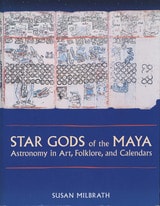
Star Gods of the Maya
Astronomy in Art, Folklore, and CalendarsBy Susan Milbrath
University of Texas Press, 2000
Observations of the sun, moon, planets, and stars played a central role in ancient Maya lifeways, as they do today among contemporary Maya who maintain the traditional ways. This pathfinding book reconstructs ancient Maya astronomy and cosmology through the astronomical information encoded in Precolumbian Maya art and confirmed by the current practices of living Maya peoples.
Susan Milbrath opens the book with a discussion of modern Maya beliefs about astronomy, along with essential information on naked-eye observation. She devotes subsequent chapters to Precolumbian astronomical imagery, which she traces back through time, starting from the Colonial and Postclassic eras. She delves into many aspects of the Maya astronomical images, including the major astronomical gods and their associated glyphs, astronomical almanacs in the Maya codices [painted books], and changes in the imagery of the heavens over time. This investigation yields new data and a new synthesis of information about the specific astronomical events and cycles recorded in Maya art and architecture. Indeed, it constitutes the first major study of the relationship between art and astronomy in ancient Maya culture.