Results by title
354 books match the query 'Authors, American' and 28 start with s
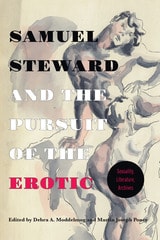
Samuel Steward and the Pursuit of the Erotic Sexuality, Literature, Archives
Sexuality, Literature, ArchivesEdited by Debra A. Moddelmog and Martin Joseph Ponce
The Ohio State University Press, 2017
With work by prominent scholars in queer, transgender, and sexuality studies, and with topics such as the queer archive, hoarding, masochism, the queer mystery, race and desire, sexology, and gay pornography, Samuel Steward and the Pursuit of the Erotic will appeal to a wide range of readers across a variety of disciplines invested in queer experience. Closing on a personal recollection from one of Steward’s last close friends, the volume will also appeal to readers interested in the personal aspects of this fascinating, idiosyncratic figure’s multifaceted life.
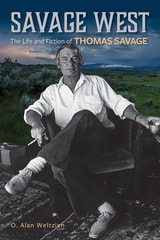
Savage West
The Life and Fiction of Thomas SavageO. Alan Weltzien
University of Nevada Press, 2022
O. Alan Weltzien's insightful and detailed literary biography chronicles the life and work of this neglected but deeply talented novelist. Savage, a closeted gay family man, was both an outsider and an insider, navigating an intense conflict between his sexual identity and the claustrophobic social restraints of the rural West. Unlike many other Western writers, Savage avoided the formula westerns— so popular in his time— and offered instead a realistic, often subversive version of the region. His novels tell a hard, harsh story about dysfunctional families, loneliness, and stifling provincialism in the small towns and ranches of the northern Rockies, and his minority interpretation of the West provides a unique vision and caustic counternarrative contrary to the triumphant settler-colonialism themes that have shaped most Western literature. Savage West seeks to claim Thomas Savage's well-deserved position in American literature and to reintroduce twenty-first-century readers to a major Montana writer.
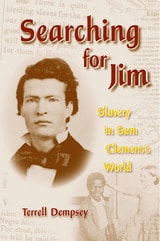
Searching for Jim
Slavery in Sam Clemens's WorldTerrell Dempsey
University of Missouri Press, 2005
During Sam’s earliest years, his father, John Marshall Clemens, had significant interaction with slaves. Newly discovered court records show the senior Clemens in his role as justice of the peace in Hannibal enforcing the slave ordinances. With the death of his father, young Sam was apprenticed to learn the printing and newspaper trade. It was in the newspaper that slaves were bought and sold, masters sought runaways, and life insurance was sold on slaves. Stories the young apprentice typeset helped Clemens learn to write in black dialect, a skill he would use throughout his writing, most notably in Huckleberry Finn.
Missourians at that time feared abolitionists across the border in Illinois and Iowa. Slave owners suspected every traveling salesman, itinerant preacher, or immigrant of being an abolition agent sent to steal slaves. This was the world in which Sam Clemens grew up. Dempsey also discusses the stories of Hannibal’s slaves: their treatment, condition, and escapes. He uncovers new information about the Underground Railroad, particularly about the role free blacks played in northeast Missouri.
Carefully reconstructed from letters, newspaper articles, sermons, speeches, books, and court records, Searching for Jim offers a new perspective on Clemens’s writings, especially regarding his use of race in the portrayal of individual characters, their attitudes, and worldviews. This fascinating volume will be valuable to anyone trying to measure the extent to which Clemens transcended the slave culture he lived in during his formative years and the struggles he later faced in dealing with race and guilt. It will forever alter the way we view Sam Clemens, Hannibal, and Mark Twain.
Sex Talks to Girls
A MemoirMaureen Seaton
University of Wisconsin Press, 2008
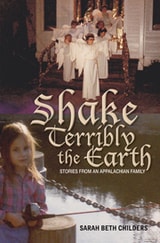
Shake Terribly the Earth
Stories from an Appalachian FamilySarah Beth Childers
Ohio University Press, 2013
In a thoughtful, humorous voice born of Appalachian storytelling, Childers brings to life in these essays events that affected the entire region: large families that squeezed into tiny apartments during the Great Depression, a girl who stepped into a rowboat from a second-story window during Huntington’s 1937 flood, brothers who were whisked away to World War II and Vietnam, and a young man who returned home from the South Pacific and worked his life away as a railroad engineer.
Childers uses these family tales to make sense of her personal journey and find the joy and clarity that often emerge after the earth shakes terribly beneath us.

Shared Secrets
The Queer World of Newbery Medalist Charles J. FingerElizabeth Findley Shores
University of Arkansas Press, 2021
Winner, 2023 Booker Worthern Literary Prize
For nearly a century, British expatriate Charles Joseph Finger (1867–1941) was best known as an award-winning author of children’s literature. In Shared Secrets, Elizabeth Findley Shores relates Finger’s untold story, exploring the secrets that connected the author to an international community of twentieth-century queer literati.
As a young man, Finger reveled in the easy homosociality of his London polytechnical school, where he launched a student literary society in the mold of the city’s private men’s clubs. Throughout his life, as he wandered from England to Patagonia to the United States, he tried to recreate similarly open spaces—such as Gayeta, his would-be art colony in Arkansas. But it was through his idiosyncratic magazine All’s Well that he constructed his most successful social network, writing articles filled with coded signals and winking asides for an inner circle of understanding readers.
Capitalizing on the publishing opportunities of the day, Finger used every means available to express his twin loves—literature and men. He produced an enormous body of work, and his short, semiautobiographical fiction won some critical acclaim. Ultimately, the children’s book that won Finger a Newbery Medal ushered him into the public eye, ending his development as an author of serious queer literature.
Shared Secrets is both the story of Finger’s remarkable, adventurous life and a rare look at a community of gay writers and artists who helped shaped twentieth-century American culture, even as they artfully concealed their own identities.
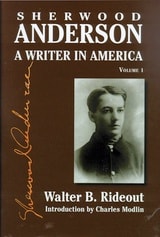
Sherwood Anderson
A Writer in America, Volume 1Walter B. Rideout
University of Wisconsin Press, 2006
Sherwood Anderson: A Writer in America is the definitive biography of this major American writer of novels and short stories, whose work includes the modern classic Winesburg, Ohio. In the first volume of this monumental two-volume work, Walter Rideout chronicles the life of Anderson from his birth and his early business career through his beginnings as a writer and finally to his move in the mid-1920s to “Ripshin,” his house near Marion, Virginia. The second volume will cover Anderson’s return to business pursuits, his extensive travels in the South touring factories, which resulted in his political involvement in labor struggles and several books on the topic, and finally his unexpected death in 1941.
No other existing Anderson biography, the most recent of which was published nearly twenty years ago, is as thoroughly researched, so extensively based on primary sources and interviews with a range of Anderson friends and family members, or as complete in its vision of the man and the writer. The result is an unparalleled biography—one that locates the private man, while astutely placing his life and writings in a broader social and political context.
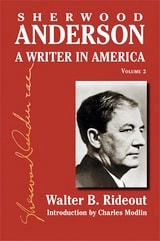
Sherwood Anderson
A Writer in America, Volume 2Walter B. Rideout
University of Wisconsin Press, 2006
Walter Rideout’s Sherwood Anderson: A Writer in America is a seminal work that reintroduces us to this important, yet recently neglected, American writer, giving him long overdue attention. This second volume of the monumental two-volume work covers Anderson’s life after his move in the mid-1920s to “Ripshin,” his house near Marion, Virginia (where Volume 1 ended.) The second volume covers his return to business pursuits; his extensive travels in the South touring factories, which resulted in his political involvement in labor struggles and several books on the topic; and finally his unexpected death in 1941.
No other existing Anderson biography, the most recent of which was published nearly twenty years ago, is as thoroughly researched, so extensively based on primary sources and interviews with a range of Anderson’s friends and family members, or as complete in its vision of the man and the writer. Rideout uncovers much new information about events and people in Anderson’s life and provides a new perspective on many of his works. This two-volume biography presents Anderson’s many remarkable attributes more clearly than ever before, while astutely placing his life and writings in the broader social, political, and artistic movements of his times.
Outstanding Book, selected by the American Association of School Librarians, and Best Books for General Audiences, selected by the Public Library Association
Outstanding Academic Title, Choice Magazine
Winner, Biography Award, Society of Midland Authors
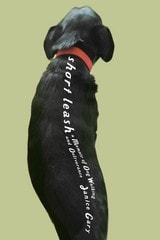
Short Leash
A Memoir of Dog Walking and DeliveranceJanice Gary
Michigan State University Press, 2013
Janice Gary never walked alone without a dog - a big dog. Once, she was an adventurer, a girl who ran off to California with big dreams and hopes of leaving her past behind. But after a brutal rape, her youthful bravado vanished, replaced by a crippling need for safety. When she rescues a gangly Lab-Rottweiler pup,Gary is sure she’s found her biggest protector yet. But after Barney is attacked by a vicious dog, he becomes a clone of his attacker, trying to kill any dog that comes near him. Walking with Barney is impossible. Yet walking without him is unthinkable.
After years of being exiled by her terror and Barney’s defensiveness, Janice risks taking her dog to a park near the Chesapeake Bay. There, she begins the messy, lurching process of walking into her greatest fears. As the leash of the past unravels, Barney sheds the defensive behaviors that once shackled him and Gary steps out of the self-imposed isolation that held her captive for three decades. Beautifully written, Short Leash is much more than a “dog story” or a book about recovering from trauma. It is a moving tale of love and loss, the journey of a broken soul finding itsway toward wholeness.
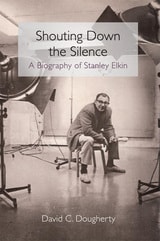
Shouting Down the Silence
A Biography of Stanley ElkinDavid C. Dougherty
University of Illinois Press, 2010
Soldiers of the Pen
The Writers' War Board in World War IIThomas Howell
University of Massachusetts Press, 2019
The WWB received federal money while retaining its status as a private organization that could mount campaigns without government oversight. Historian Thomas Howell argues that this unique position has caused its history to fall between the cracks, since it was not recognized as an official part of the government's war effort. Yet the WWB's work had a huge impact on the nation's wartime culture, and this fascinating history will inform contemporary thinking on propaganda, the media, and American society.

Some Catholic Writers
Ralph McInerny
St. Augustine's Press, 2007

Sophia Peabody Hawthorne
A Life, Volume 2, 1848-1871Patricia Dunlavy Valenti
University of Missouri Press, 2015
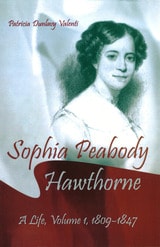
Sophia Peabody Hawthorne
A Life, Volume I, 1809-1847Patricia Dunlavy Valenti
University of Missouri Press, 2004
Sophia was born into an expansive, somewhat chaotic home in which women provided financial as well as emotional sustenance. She was a precocious, eager student whose rigorous education, in her mother’s and her sisters’ schools, began her association with the children of New England’s elite. Sophia aspired to become a professional, self-supporting painter, exhibiting her art and seeking criticism from established mentors. She relished an eighteen-month sojourn in Cuba. Nathaniel’s reclusive family, his reluctant early education, his anonymous pursuit of a career, and his relatively circumscribed life contrast markedly with the experience of the woman who became his wife and the mother of his children. Those differences resulted in a creative abrasion that ignited his fiction during the first years of their marriage.
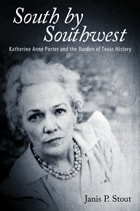
South by Southwest
Katherine Anne Porter and the Burden of Texas HistoryJanis P. Stout
University of Alabama Press, 2013
An interdisciplinary study of Katherine Anne Porter’s troubled relationship to her Texas origins and southern roots, South by Southwest offers a fresh look at this ever-relevant author.
Today, more than thirty years after her death, Katherine Anne Porter remains a fascinating figure. Critics and biographers have portrayed her as a strikingly glamorous woman whose photographs appeared in society magazines. They have emphasized, of course, her writing— particularly the novel Ship of Fools, which was made into an award-winning film, and her collection Pale Horse, Pale Rider, which cemented her role as a significant and original literary modernist. They have highlighted her dramatic, sad, and fragmented personal life. Few, however, have addressed her uneasy relationship to her childhood in rural Texas.
Janis P. Stout argues that throughout Porter’s life she remained preoccupied with the twin conundrums of how she felt about being a woman and how she felt about her Texas origins. Her construction of herself as a beautiful but unhappy southerner sprung from a plantation aristocracy of reduced fortunes meant she construed Texas as the Old South. The Texas Porter knew and re-created in her fiction had been settled by southerners like her grandparents, who brought slaves with them. As she wrote of this Texas, she also enhanced and mythologized it, exaggerating its beauty, fertility, and gracious ways as much as the disaffection that drove her to leave. Her feelings toward Texas ran to both extremes, and she was never able to reconcile them.
Stout examines the author and her works within the historical and cultural context from which she emerged. In particular, Stout emphasizes four main themes in the history of Texas that she believes are of the greatest importance in understanding Porter: its geography and border location (expressed in Porter’s lifelong fascination with marginality, indeterminacy, and escape); its violence (the brutality of her first marriage as well as the lawlessness that pervaded her hometown); its racism (lynchings were prevalent throughout her upbringing); and its marginalization of women (Stout draws a connection between Porter’s references to the burning sun and oppressive heat of Texas and her life with her first husband).
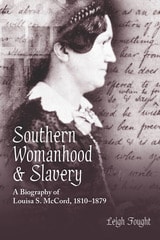
Southern Womanhood and Slavery
A Biography of Louisa S. McCord, 1810-1879Leigh Fought
University of Missouri Press, 2018
Southern Womanhood and Slavery is the first full-length biography of Louisa S. McCord, one of the most intriguing intellectuals in antebellum America. The daughter of South Carolina planter and politician Langdon Cheves, and an essayist in her own right, McCord supported unregulated free trade and the perpetuation of slavery and opposed the advancement of women’s rights. This study examines the origins of her ideas.
Leigh Fought constructs an exciting narrative that follows McCord from her childhood as the daughter of a state representative and president of the Bank of the United States through her efforts to accept her position as wife and mother, her career as an author and plantation mistress, and the Union invasion of South Carolina during the Civil War, to the end of her life in the emerging New South. Fought analyzes McCord’s poetry, letters, and essays in an effort to comprehend her acceptance of slavery and the submission of women. Fought concludes that McCord came to a defense of slavery through her experience with free labor in the North, which also reinforced her faith in the paternalist model for preserving social order.
McCord’s life as a writer on “unfeminine” subjects, her reputation as strong-minded and masculine, her late marriage, her continued ownership of her plantation after marriage, and her position as the matron of a Civil War hospital contradicted her own philosophy that women should remain the quiet force behind their husbands. She lived during a time of social flux in which free labor, slavery, and the role of women underwent dramatic changes, as well as a time that enabled her to discover and pursue her intellectual ambitions. Fought examines the conflict that resulted when those ambitions clashed with McCord’s role as a woman in the society of the South.
McCord’s voice was an interesting, articulate, and necessary feminine addition to antebellum white ideology. Moreover, her story demonstrates the ways in which southern women negotiated through patriarchy without surrendering their sense of self or disrupting the social order. Engaging and very readable, Southern Womanhood and Slavery will be of special interest to students of southern history and women’s studies, as well as to the general reader.
Space
A MemoirJesse Lee Kercheval
University of Wisconsin Press, 2014
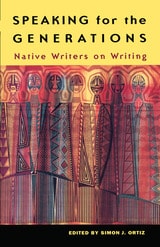
Speaking for the Generations
Native Writers on WritingEdited by Simon J. Ortiz
University of Arizona Press, 1997
Of varied backgrounds, the writers represent Indian heritages and cultures from the Pacific Northwest to the northern plains, from Canada to Guatemala. They are poets, novelists, and playwrights. And although their backgrounds are different and their statements intensely personal, they share common themes of their relationship to the land, to their ancestors, and to future generations of their people. From Gloria Bird's powerful recounting of personal and family history to Esther Belin's vibrant tale of her urban Native homeland in Los Angeles, these writers reveal the importance of place and politics in their lives. Leslie Marmon Silko calls upon the ancient tradition of Native American storytelling and its role in connecting the people to the land. Roberta J. Hill and Elizabeth Woody ponder some of the absurdities of contemporary Native life, while Guatemalan Victor Montejo takes readers to the Mayan world, where a native culture had writing and books long before Europeans came.
Together these pieces offer an inspiring portrait of what it means to be a Native writer in the twentieth century. With passion and urgency, these writers are speaking for themselves, for their land, and for the generations.
Speaking of America
Great Conversations at the Library of CongressDavid M. Rubenstein
Duke University Press, 2026
Featuring interviews with eminent historians, journalists, and writers, Speaking of America brings together nineteen wide-ranging conversations from philanthropist and financier David M. Rubenstein’s long-running Congressional Dialogues series of interviews at the Library of Congress. Highlights include Ken Burns on documenting American history, Stacy Schiff on Samuel Adams, Manisha Sinha on Reconstruction, and David McCullough on the American frontier.
Published in association with the Library of Congress
Featuring interviews with eminent historians, journalists, and writers, Speaking of America brings together nineteen wide-ranging conversations from philanthropist and financier David M. Rubenstein’s long-running Congressional Dialogues series of interviews at the Library of Congress. Rubenstein and his guests bring to life notable figures, events, and trends drawn from American history and culture and beyond.
Highlights include Ken Burns on bringing American history to life, Stacy Schiff on Samuel Adams, Manisha Sinha on Reconstruction, David McCullough on the American frontier, Beverly Gage on J. Edgar Hoover, Chris Wallace on the presidential election of 1960, Evan Thomas on Justice Sandra Day O’Connor, Eric Schmidt on artificial intelligence, Arthur Brooks on happiness, and David Grann on The Wager, his best-selling story of shipwreck and mutiny. Taken together, the conversations in Speaking of America all build toward the same shared message of dialogue, cooperation, and the importance of knowledge and reflection, highlighting how the study of history can enrich our understanding of current-day challenges in politics and policy.

Spinning Tea Cups
A Mythical American MemoirAlexandra Teague
Oregon State University Press, 2023
How did people who prided themselves on making everything from scratch manage to afford annual trips to Disney World? Did her mother really have psychic abilities? Why did her sensitive youngest nephew speak in a voice that wasn’t his own? How do family legacies of grief and dysfunction and creativity intersect? How can she escape her circumstances without replicating the escapist fantasies with which she was raised?
Teague attempts to understand and contextualize her family in terms of trauma and mental health, but also with deep love and humor. Carefully attuned to the vagaries of geographical cultures, she weaves her family’s history with explorations of pop culture and the specific cultures of the places she and her family pass through: a Texas city, an Victorian tourist town in Arkansas, a Southwest ghost town, Central Florida, the Bay Area, Kansas City, and a college town in the Inland Northwest.
Spinning Tea Cups will appeal to readers interested in American cultural studies, those concerned with the ongoing crisis of mental illness in this country, and anyone seeking to explore the dangerous and recuperative powers of fantasy.
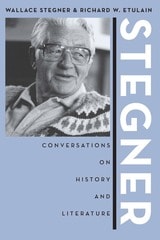
Stegner
Conversations On History And LiteratureWallace Stegner
University of Nevada Press, 1996
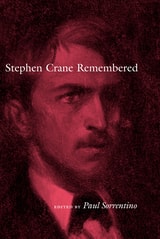
Stephen Crane Remembered
Edited by Paul Sorrentino
University of Alabama Press, 2006
Revealing episodes in the life of the elusive writer, as told by acquaintances
This book collects reminiscences by contemporaries, friends, and associates of Stephen Crane that illuminate the life of this often misunderstood and misrepresented writer. Although Crane is widely regarded as a major American author, conclusions about his life, work, and thought remain obscure due to the difficulties in separating fact from fiction. His first biographer recorded mostly vague impressions and, to mythologize his subject, invented a multitude of the episodes and letters used in his account of Crane’s life. Subsequent biographies were either cursory summations or compendiums of verifiable facts. Crane himself was both reclusive and mercurial, protective of his inner life while projecting a variety of personae to suit others.
A flamboyant personality and close friend of writers such as William Dean Howells, Henry James, and Joseph Conrad, Crane made telling impressions on his contemporaries. They often constitute the best assessments of Crane’s own personality and work. The 90 reminiscences gathered here offer a much-needed account of Crane’s life from a variety of viewpoints, as well as important information about the contributors themselves.
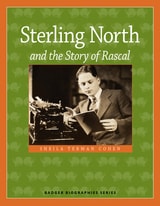
Sterling North and the Story of Rascal
Sheila Terman Cohen
Wisconsin Historical Society Press, 2015
This Badger Bio shares the story of author Sterling North – his adventures and misadventures as a young boy growing up in Edgerton, Wisconsin. Young readers will learn how North’s early experience in Wisconsin influenced him in writing some of his best loved children’s books – such as Rascal and So Dear To My Heart.
The story gives readers a glimpse of early 20th century customs and lifestyles in the rural Midwest. It also includes global issues of the time, including World War I and the Spanish flu pandemic, which greatly affected Sterling’s boyhood. As examples, his admired older brother Hershel served overseas in WWI as Sterling was growing up, bringing world events to the North family’s doorstep. His mother Gladys died when Sterling was only 7 years old because of the lack of medical advances in the early 1900s. And, as a young man, Sterling was hit by polio, a common epidemic scourge that left many children with paralysis.
Readers will learn of Sterling North’s successes, not only as a beloved author of children’s books, but as a columnist for the Chicago Daily News, an editor of North Star children’s history books, and a well-respected critic of other children’s literature.
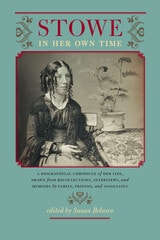
Stowe in Her Own Time
A Biographical Chronicle of Her Life, Drawn from Recollections, Interviews, and Memoirs by Family, FSusan Belasco
University of Iowa Press, 2009
One of the first celebrity authors, Harriet Beecher Stowe (1811–1896) became famous almost overnight when Uncle Tom’s Cabin—which sold more than 300,000 copies in its first year of publication—appeared in 1852. Known by virtually all famous writers in the United States and many in England and regarded by many women writers as a role model because of her influence in the literary marketplace, Stowe herself was the subject of many books, articles, essays, and poems during her lifetime.
This volume brings together for the first time a range of primary materials about Stowe’s private and public life written by family members, friends, and fellow writers who knew or were influenced by her before and after Uncle Tom’s Cabin catapulted her to fame. Included are periodical articles by Fanny Fern and Charles Dudley Warner; biographical essays by Sarah Josepha Hale and Rose Terry Cooke; letters by Oliver Wendell Holmes, Elizabeth Barrett Browning, and Harriet Jacobs; recollections by Frederick Douglass, Annie Adams Fields, Isabella Beecher Hooker, and Charles Beecher; and poems by Paul Laurence Dunbar and John Greenleaf Whittier. An introduction at the beginning of each essay connects it to its historical and cultural context, explanatory notes provide information about people and places, and the book includes a detailed introduction and a chronology of Stowe’s life.
The thirty-eight recollections gathered in Stowe in Her Own Time form a biographical narrative designed to provide several perspectives on the famous author, sometimes in conflict and sometimes in agreement but always perceptive. The figure who emerges from this insightful, analytical collection is far more complex than the image she helped construct in her lifetime.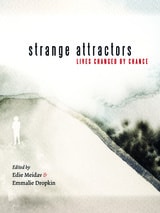
Strange Attractors
Lives Changed by ChanceEdie Meidav
University of Massachusetts Press, 2019
Has a stunning surprise or lucky encounter ever propelled you in an unanticipated direction? Are you doing what you always thought you would be doing with your life or has some unseen magnetism changed your course? And has that redirection come to seem inevitable? Edie Meidav and Emmalie Dropkin asked leading contemporary writers to consider these questions, which they characterize through the metaphor of “the strange attractor,” a scientific theory describing an inevitable occurrence that arises out of chaos. Meidav's introduction and the thirty-five pieces collected here offer imaginative, arresting, and memorable replies to this query, including guidance from a yellow fish, a typewriter repairman, a cat, a moose, a bicycle, and a stranger on a train. Absorbing and provocative, this is nonfiction to be read in batches and bursts and returned to again and again.
Straw in the Sun
A MemoirCharlie May Simon
University of Arkansas Press, 2025
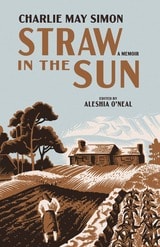
These opening lines of Charlie May Simon’s Straw in the Sun invite readers on a personal journey of remembrance as Simon recounts her homesteading experiment in Depression-era Arkansas. Years before she established herself as a regional author of national renown, she chose a spot near Cove Creek, now part of Ouachita National Forest, to forge a home from rugged land, meeting both a backbreaking series of challenges and a vivid cast of characters in the process.
Nationally popular upon its release in 1945, Simon’s lyrical memoir was praised from the outset for its warmth and charm. At once an ethnographic narrative of a hill community and an accessible portrait of Ozarks memories at their most idyllic, Straw in the Sun, offered here with a robust introduction from Simon scholar Aleshia O’Neal, is a classic ready for rediscovery by a new generation of readers.
Subjects and Citizens
Nation, Race, and Gender from Oroonoko to Anita HillMichael Moon and Cathy N. Davidson, eds.
Duke University Press, 1995
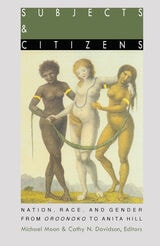
Defining the landscape of the New American literary history, these essays are united by three interrelated concerns: ideas of origin (where does "American literature" begin?), ideas of nation (what does "American literature" mean?), and ideas of race and gender (what does "American literature" include and exclude and how?). Work by writers as diverse as Aphra Behn, James Fenimore Cooper, Edgar Allan Poe, Frances Harper, Harriet Beecher Stowe, Herman Melville, William Faulkner, Harriet Jacobs, Frederick Douglass, Abraham Lincoln, Bharati Mukherjee, Booker T. Washington, Mark Twain, Kate Chopin, Américo Paredes, and Toni Morrison are discussed from several theoretical perspectives, using a variety of methodologies. Issues of the "frontier" and the "border" as well as those of coloniality and postcoloniality are explored. In each case, these essays emphasize the ideological nature of national identity and, more specifically, the centrality of race and gender to our concept of nationhood.
Collected from recent issues of American Literature, with three new essays added, Subjects and Citizens charts the new directions being taken in American literary studies.
Contributors. Daniel Cooper Alarcón, Lori Askeland, Stephanie Athey, Nancy Bentley, Lauren Berlant, Michele A. Birnbaum, Kristin Carter-Sanborn, Russ Castronovo, Joan Dayan, Julie Ellison, Sander L. Gilman, Karla F. C. Holloway, Annette Kolodny, Barbara Ladd, Lora Romero, Ramón Saldívar, Maggie Sale, Siobhan Senier, Timothy Sweet, Maurice Wallace, Elizabeth Young
Susan Sontag
A BiographyDaniel Schreiber; Translated from the German by David Dollenmayer
Northwestern University Press, 2014
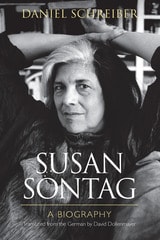
While known primarily as a cultural critic and novelist, Sontag was also a filmmaker, stage director, and dramatist. It was her status as a pop icon that was unusual for an American intellectual: she was filmed by Andy Warhol and Woody Allen, photographed by Annie Leibovitz and Diane Arbus, and her likeness adorned advertisements for Absolut vodka. Drawing on newly available sources, including interviews with Nadine Gordimer, Robert Wilson, and Sontag’s son, David Rieff, as well as on myriad interviews given by Sontag and her extensive correspondence with her friend and publisher Roger Straus, Schreiber explores the roles that Sontag played in influencing American public cultural and political conversations.