Results by title
58 books match the query 'Basketball' and 5 start with s
Schools for Scandal
The Dysfunctional Marriage of Division I Sports and Higher EducationSheldon Anderson
University of Missouri Press, 2024
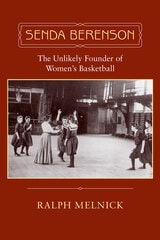
Senda Berenson
The Unlikely Founder of Women's BasketballRalph Melnick
University of Massachusetts Press, 2007
In the winter of 1892 the new instructor of physical training at Smith College, a diminutive young woman with a heavy accent, introduced her students to an adaptation of James Naismith's new game of Basket Ball. An immediate if unexpected success, the game spread to other women's schools across the country, and soon its founder, Senda Berenson (1868–1954), was called upon to codify its distinctive set of gender-specific rules. Emphasizing team passing and position over individual play, the version she instituted defined women's basketball for seventy years and eventually earned her the honor of being the first female elected to the Basketball Hall of Fame.
Yet as Ralph Melnick points out, Berenson's pioneering role in the history of women's athletics was more a matter of accident than destiny. A Jewish immigrant from Lithuania, prone to ill health throughout her childhood, she enrolled in the Boston Normal School for Gymnastics in the fall of 1890 with the hope of strengthening herself so that she could pursue a career as a pianist, dancer, or painter. Instead she soon became both a practitioner and a proponent of a new approach to women's physical education, one aimed at providing a “natural outlet of the play instinct,” developing “endurance and physical courage” as well as “quickness of thought and action,” and promoting through teamwork the “power of organization” women needed to achieve full social equality.
Extending her work into the factories and blighted urban tenements of America, Berenson later won the recognition of Jane Addams, Margaret Sanger, and other progressive reformers. Believing that “Americans have forgotten how to play,” she wanted to teach others to live “joyfully—beautifully.” For Berenson, the physical culture of exercise and games, played not for competition but for personal and social development as well as sheer enjoyment, was but another form of art.
This convergence of athletics and aesthetics was hardly surprising, Melnick explains, because the single most important influence on Senda Berenson's life was her brother, the renowned art critic and connoisseur Bernard Berenson. The two siblings wrote frequently to each other over the course of their lives, and the author draws heavily on their correspondence throughout the book to create an intimate and insightful portrait of a remarkable American woman.
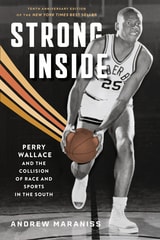
Strong Inside
Perry Wallace and the Collision of Race and Sports in the SouthAndrew Maraniss
Vanderbilt University Press, 2024
2015 RFK Book Awards Special Recognition
2015 Lillian Smith Book Award
2015 AAUP Books Committee "Outstanding" Title
When Strong Inside was first published ten years ago, no one could have predicted the impact the book would have on Vanderbilt University, Nashville, and communities across the nation. What began as a biography of Perry Wallace—the first African American basketball player in the Southeastern Conference (SEC)—became a catalyst for meaningful change and reconciliation between Wallace and the city that had rejected him. In this tenth-anniversary edition, scholars of race and sports Louis Moore and Derrick E. White provide a new foreword that places the story in the context of the study of sports and society, and author Andrew Maraniss adds a concluding chapter filling readers in on how events unfolded between Strong Inside’s publication in 2014 and Perry Wallace’s death in 2017 and exploring Wallace’s continuing legacy.
Wallace entered kindergarten the year that Brown v. Board of Education upended “separate but equal.” As a twelve-year-old, he sneaked downtown to watch the sit-ins at Nashville’s lunch counters. A week after Martin Luther King Jr.’s “I Have a Dream” speech, Wallace entered high school, and later saw the passage of the Civil Rights and Voting Rights acts. On March 19, 1966, his Pearl High School basketball team won Tennessee’s first integrated state tournament—the same day Adolph Rupp’s all-white Kentucky Wildcats lost to the all-Black Texas Western Miners in an iconic NCAA title game.
The world seemed to be opening up at just the right time, and when Vanderbilt recruited him, Wallace courageously accepted the assignment to desegregate the SEC. His experiences on campus and in the hostile gymnasiums of the Deep South turned out to be nothing like he ever imagined.
Strong Inside
Perry Wallace and the Collision of Race and Sports in the SouthAndrew Maraniss
Vanderbilt University Press, 2014
2015 RFK Book Awards Special Recognition
2015 Lillian Smith Book Award
2015 AAUP Books Committee "Outstanding" Title
Based on more than eighty interviews, this fast-paced, richly detailed biography of Perry Wallace, the first African American basketball player in the SEC, digs deep beneath the surface to reveal a more complicated and profound story of sports pioneering than we've come to expect from the genre. Perry Wallace's unusually insightful and honest introspection reveals his inner thoughts throughout his journey.
Wallace entered kindergarten the year that Brown v. Board of Education upended "separate but equal." As a 12-year-old, he sneaked downtown to watch the sit-ins at Nashville's lunch counters. A week after Martin Luther King Jr.'s "I Have a Dream" speech, Wallace entered high school, and later saw the passage of the Civil Rights and Voting Rights acts. On March 16, 1966, his Pearl High School basketball team won Tennessee's first integrated state tournament--the same day Adolph Rupp's all-white Kentucky Wildcats lost to the all-black Texas Western Miners in an iconic NCAA title game.
The world seemed to be opening up at just the right time, and when Vanderbilt recruited him, Wallace courageously accepted the assignment to desegregate the SEC. His experiences on campus and in the hostile gymnasiums of the Deep South turned out to be nothing like he ever imagined.
On campus, he encountered the leading civil rights figures of the day, including Stokely Carmichael, Martin Luther King Jr., Fannie Lou Hamer, and Robert Kennedy--and he led Vanderbilt's small group of black students to a meeting with the university chancellor to push for better treatment.
On the basketball court, he experienced an Ole Miss boycott and the rabid hate of the Mississippi State fans in Starkville. Following his freshman year, the NCAA instituted "the Lew Alcindor rule," which deprived Wallace of his signature move, the slam dunk.
Despite this attempt to limit the influence of a rising tide of black stars, the final basket of Wallace's college career was a cathartic and defiant dunk, and the story Wallace told to the Vanderbilt Human Relations Committee and later The Tennessean was not the simple story of a triumphant trailblazer that many people wanted to hear. Yes, he had gone from hearing racial epithets when he appeared in his dormitory to being voted as the university's most popular student, but, at the risk of being labeled "ungrateful," he spoke truth to power in describing the daily slights and abuses he had overcome and what Martin Luther King had called "the agonizing loneliness of a pioneer."
Sweet Charlie, Dike, Cazzie, and Bobby Joe
HIGH SCHOOL BASKETBALL IN ILLINOISTaylor H. A. Bell
University of Illinois Press, 2004
Far from the jaded professionals, the stories in Taylor Bell's Sweet Charlie, Dike, Cazzie, and Bobby Joe are of hungry young men playing their hearts out, where high-tops and high hopes inspire "hoop dreams" from Peoria to Pinckneyville, and Champaign to Chicago. Bell, a life-long fan and authority on high school basketball in Illinois, brings together for the first time the stories of the great players, teams, and coaches from the 1940s through the 1990s.
The book is titled for four players who reflect the unique quality of high school basketball, and whose first names are enough to trigger memories in fans who love the sport -- Sweet Charlie Brown, Dike Eddleman, Cazzie Russell, and Bobby Joe Mason. Bell offers exciting accounts of their exploits, told with a journalistic flair.
Beyond a lifetime spent covering the sport, Bell's research includes three hundred and fifty personal interviews with coaches, administrators, family members, and fans. He has attended the Elite Eight finals of every boys' state basketball tournament since 1958, and met and written about many of the most outstanding teams, coaches, and players who helped to make Illinois one of the most exciting arenas for high school basketball in the United States. Sixty photographs add depth to the accounts.
By a fan, for the fans, Sweet Charlie, Dike, Cazzie, and Bobby Joe is the authoritative book on high school basketball in Illinois, and will elate anyone who has thrilled to the poignant highs and shattering lows of high school sports.