Results by title
53 books match the query 'Bodies' and 5 start with s
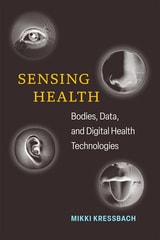
Sensing Health
Bodies, Data, and Digital Health TechnologiesMikki Kressbach
University of Michigan Press, 2024
To capture and analyze digital health experiences, Kressbach develops a method that combines descriptive practices from Film and Media Studies and Phenomenology. After examining the design and feedback structures of digital health platforms and devices, the author uses her own first-person accounts to analyze the impact of the technology on her body, behaviors, and perception of health. Across five chapters focused on different categories of digital health—menstrual trackers, sexual wellness technologies, fitness trackers, meditation and breathing technologies, and posture and running wearables—Sensing Health demonstrates a method of analysis that acknowledges and critiques the biomedical structures of digital health technology while remaining attentive to the lived experiences of users. Through a focus on the intersection of technological design and experience, this method can be used by researchers, scholars, designers, and developers alike.

Sexing Empire
Bodies, Gender, and Desire in Colonial and Postcolonial Power RelationsBen Cowan, Nicole M. Guidotto-Hernández, and Jason Ruiz, special issue editors
Duke University Press, 0
From steamships to steam rooms and sweat lodges to sweatshops, processes of pleasures and desire have shaped the regulation and classification of bodies in a wide variety of colonial settings. On beaches and online, and in boardrooms, temples, and taverns, sexual practices have always influenced imperial power relations. In the many places and relationships where colonialism still affects economics, sex and sexuality remain a driving—if sometimes hidden—force. The contributors to this provocative issue contemplate empire as a global process involving sexualized subjects and objects, with essays that consider the history of sex and (or in) empire across several disciplines. Their topics include a "bewitched" nun in colonial Peru, contemporary call-center workers in the Philippines, and General Douglas MacArthur’s mixed-race Filipina mistress, among many others.
Ben Cowan is assistant professor of world history at George Mason University. Nicole M. Guidotti-Hernández is associate professor of American studies at the University of Texas at Austin and the author of Unspeakable Violence: Remapping U.S. and Mexican National Imaginaries, also published by Duke University Press. Jason Ruiz is assistant professor of American studies at the University of Notre Dame and the author of Americans in the Treasure House: Travel to Porfirian Mexico and the Cultural Politics of Empire.
Contributors: Laura Briggs, Keith Camacho, Ben Cowan, Emmanuel David, Vernadette Vicuña Gonzalez, Nicole M. Guidotti-Hernández, Elizabeth Mesok, Rachel Sarah O’Toole, Katrina Phillips, Jason Ruiz
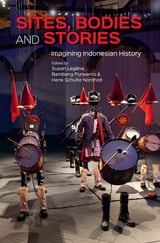
Sites, Bodies and Stories
Imagining Indonesian HistoryEdited by Susan Legêne, Bambang Purwanto, and Henk Schulte Nordholt
National University of Singapore Press, 2015
Contemporary heritage formation in Indonesia is intrinsically linked to a canon of Indonesian art and culture developed during Dutch colonial rule, institutionalized within Indonesia’s heritage infrastructure and in the Netherlands, and echoed in museums and exhibitions throughout the world. The authors in this volume acknowledge colonial legacies but argue against a colonial determinism, considering instead how contemporary heritage initiatives can lead to new interpretations of the past.
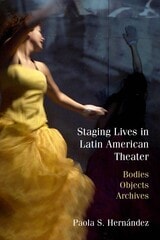
Staging Lives in Latin American Theater
Bodies, Objects, ArchivesPaola S. Hernández
Northwestern University Press, 2021
Richly detailed, nuanced, and theoretically wide-ranging, Staging Lives in Latin American Theater reveals a range of interpretations about how documentary theater can conceptualize the idea of self while also proclaiming a new mode of testimony through theatrical practices.
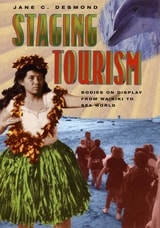
Staging Tourism
Bodies on Display from Waikiki to Sea WorldJane C. Desmond
University of Chicago Press, 1999
Gathering together written accounts, postcards, photographs, advertisements, films, and oral histories as well as her own interpretations of these displays, Desmond gives us a vibrant account of U.S. tourism in Waikiki from 1900 to the present. She then juxtaposes cultural tourism with "animal tourism" in the United States, which takes place at zoos, aquariums, and animal theme parks. In each case, Desmond argues, the relationship between the viewer and the viewed is ultimately based on concepts of physical difference harking back to the nineteenth century.