Results by title
122 books match the query 'Business Aspects' and 10 start with s
Schools for Scandal
The Dysfunctional Marriage of Division I Sports and Higher EducationSheldon Anderson
University of Missouri Press, 2024
Solo
The Everything Guide to Writing, Performing, and Producing Your One-Person ShowArlene Malinowski and Julie Ganey
Northwestern University Press, 2026
The art of solo performance has exploded in the last twenty years as an immediate and accessible art form. The number of solo festivals grows every year, and artists are hungry for the opportunity to center their own voices and experiences. Solo is designed to feed that hunger.
Seasoned theater educators and performers Arlene Malinowski and Julie Ganey have compiled an invaluable guide for students and practitioners alike. Topics include high-stakes narratives, compelling characters, and the role of narrators, as well as practical exercises, interviews with performers at every stage of their careers, and examples from real one-person shows. Performers will also find advice on collaborating with directors, incorporating technical elements, and producing and marketing strategies.
Whether you’re just starting out or are a seasoned professional looking to refine your show-in-progress, Solo is an essential volume for anyone ready to bring their story to life onstage.

Sound System
The Political Power of MusicDave Randall
Pluto Press, 2017
Sound System is the story of one musician's journey to discover what makes music so powerful. Dave Randall uses his insider's knowledge of the industry to shed light on the secrets of celebrity, commodification and culture.
This is a book of raves, riots and revolution. From the Glastonbury Festival to the Arab Spring, Pop Idol to Trinidadian Carnival, Randall finds political inspiration across the musical spectrum and poses the question: how can we make music serve the interests of the many, rather than the few?
Published in partnership with the Left Book Club.
Sounds of the Citizens
Dancehall and Community in JamaicaAnne M. Galvin
Vanderbilt University Press, 2014
Galvin highlights the unique alliance between the dancehall industry and community development efforts. As the central role of the state in supporting communities has diminished, the rise of private efforts such as dancehall becomes all the more crucial. The tension, however, between those involved in the industry and those within the neighborhoods is palpable and often dangerous. Amidst all this, individual Jamaicans interact with the dancehall industry and its culture to find their own paths of employment, social identity, and sexual mores.
As Sounds of the Citizens illustrates, the world of entertainment in Jamaica is serious business and uniquely positioned as a powerful force within the community.

Sponsorship for Sport Managers
John L. Crompton
FiT Publishing, 2014
Securing financial resources through sponsorships is a prominent element in the job descriptions of many sport managers and the importance of that task has increased exponentially in recent years. Sponsorship for Sport Managers provides readers with an understanding of how companies use sponsorship in their marketing programs and how sport managers can leverage that knowledge into greater sponsorship opportunities.
Widely acclaimed author John Crompton masterfully integrates the conceptual with the applied as Sponsorship for Sport Managers helps readers:
• understand how companies use sponsorship in their marketing programs,
• be responsive to sponsors' needs,
• charge an equitable fee for providing sponsors with leveraging opportunities,
• be active partners with the sponsors to help them meet their objectives, and
• measure the extent to which the objectives were accomplished.
Sport Facility Management
Organizing Events and Mitigating Risks, Fourth EditionRobert E. Ammon
FiT Publishing, 2023
The success of facilities and events in a multi-billion dollar sport industry requires that sport and event facility managers understand the complex relationships between the events, facilities, the players and the public and the risks involved in organizing events.
Sport Facility Management: Organizing Events and Mitigating Risks, 4th Edition, examines what it takes to successfully operate and manage a sport facility. Veteran authors Robin Ammon, Richard Southall, and Mark Nagel provide a framework for the successful operation of sport and event venues through proven strategies and techniques, as highlighted through salient industry examples.
Chapters in this edition explore the complex rules and relationships of public and private financing and ownership, the management of facility revenues and expenses, pricing strategies at the box office, approaches to booking and scheduling, best practices in leveraging human resources, as well as an understanding of and adherence to laws and regulations governing and affecting facilities, employees, and the public through venue contracts, risks, liability, negligence, crowd and alcohol management, as well as emergency planning.
Sport Facility Management: Organizing Events and Mitigating Risks, 4th Edition, builds understanding of this important segment of the global sport industry to prepare undergraduate and graduate students for the challenges, the risks, and the rewards inherent in operating sport and event facilities.

SportsWorld
An American DreamlandLipsyte, Robert
Rutgers University Press, 2018
In the America of 2017—where the SuperBowl is worth billions, athletes are penalized or forced out of sports for political and anti-racist activism, and Title IX is constantly questioned and undermined—Robert Lipsyte’s 1975 critique remains startlingly and intensely relevant.
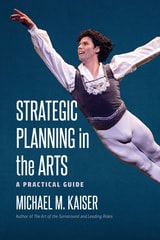
Strategic Planning in the Arts
A Practical GuideMichael M. Kaiser
Brandeis University Press, 2018
Streaming Music, Streaming Capital
Eric Drott
Duke University Press, 2024
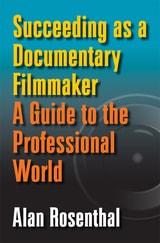
Succeeding as a Documentary Filmmaker
A Guide to the Professional WorldAlan Rosenthal
Southern Illinois University Press, 2011
From the basics of the current film business environment and how to navigate it, to tips on how to maximize distribution and sales for a finished film, Rosenthal leads novice filmmakers step-by-step through the professional arena of documentary moviemaking. Included here are recommendations for how to make the most of a film school education; the best ways to find financing for a film and the realities of working with a budget; how to develop a successful proposal for a project; the intricacies of working both as an independent filmmaker and for others; and insight into the often complicated arenas of contracts and markets. Throughout the volume, Rosenthal shares the expertise of actual filmmakers on such subjects as film school and starting a career; pitching and funding projects; contract negotiation; effective marketing; and commissioning editors and legal help. Not limiting himself to merely the documentary world, the author also offers valuable information and advice for filmmakers interested in other genres of nonfiction movies - such as industrial, public relations, travel, and educational films - to provide a truly comprehensive and one-of-a-kind guide for readers.
Packed with useful tips for novices, film students, and practitioners alike, Succeeding as a Documentary Filmmaker is an indispensable addition to the library of anyone involved in the world of nonfiction filmmaking.