Results by title
332 books match the query 'Canada' and 29 start with s
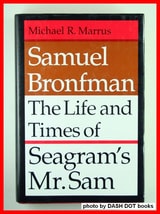
Samuel Bronfman
The Life and Times of Seagram’s Mr. SamMichael R. Marrus
Brandeis University Press, 1991
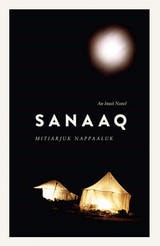
Sanaaq
An Inuit NovelMitiarjuk Nappaaluk
University of Manitoba Press, 2014

Scholarship In The Sandbox
Amy Jackson
Assoc of College & Research Libraries, 2019

School Yearbook
The Untold Story of a Cringey Tradition and Its Digital AfterlifeKate Eichhorn
University of Chicago Press, 2025
We’re all familiar with the embarrassment that washes over us when recalling our high school yearbooks. Questionable fashion choices, gravity-defying hair, a melodramatic quote—what were we thinking? Even as school yearbooks decline in popularity among contemporary teens, they continue to impact our lives in shocking ways. Collected, digitized, aggregated, and recombined in ways that would have been impossible to imagine just a few decades ago, yearbooks are no longer bound personal archives of adolescent memories. In the twenty-first century, they are shaping our lives in surprising and sometimes disturbing ways. And what could be a more fitting afterlife for these cringey books?
In School Yearbook, cultural critic Kate Eichhorn investigates this ubiquitous object. On the surface, school yearbooks are easily dismissed as innocuous collections of embarrassing photographs and cheesy affirmations, but as Eichhorn reveals, there has never been anything innocent about the school yearbook tradition. Since the early twentieth century, yearbooks have circulated as forms of public relations, propaganda, and hate speech. They have been routinely used by police detectives, private investigators, and even the FBI to identify and profile suspects. With over half a million yearbooks now available online, these books have also acquired the power to continue shaping our lives long after graduation. Would-be landlords, employers, and even creditors can now turn to data culled from their embarrassing pages to make judgments about who we are and what we merit.
In a digital era, school yearbooks have acquired the ability to keep judging us in perpetuity. Both timely and insightful, School Yearbook explores how these books have always been used to rank and judge us.

Second Scroll
A.M. Klein
Northwestern University Press, 1985
The Second Scroll, Klein’s only novel, combines the lyric genius of his poetic works with compelling reportage to create one of the most eloquent and original works in Canadian fiction.

Security. Cooperation. Governance.
The Canada-United States Open Border ParadoxChristian Leuprecht and Todd Hataley, Editors
University of Michigan Press, 2023
The book’s findings show that border governance straddles multiple regional, sectoral, and security scales in ways rarely documented in such detail. These developments have precipitated an Open Border Paradox: extensive, regionally varied flows of trade and people have resulted in a series of nested but interdependent security regimes that function on different scales and vary across economic and policy sectors. These realities have given rise to regional and sectoral specialization in related security regimes. For instance, just-in-time automotive production in the Great Lakes region varies considerably from the governance of maritime and intermodal trade (and port systems) on the Atlantic and Pacific coasts, which in turn is quite different from commodity-based systems that manage diverse agricultural and food trade in the Canadian Prairies and US Great Plains.
The paradox of open borders and their legitimacy is a function of robust bilateral and multilevel governance based on effective partnerships with substate governments and the private sector. Effective policy accounts for regional variation in integrated binational security and trade imperatives. At the same time, binational and continental policies are embedded in each country’s trade and security relationships beyond North America.
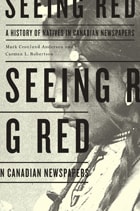
Seeing Red
A History of Natives in Canadian NewspapersMark Cronlund Anderson
University of Manitoba Press, 2011
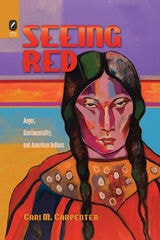
Seeing Red
Anger, Sentimentality, and American IndiansCari M. Carpenter
The Ohio State University Press, 2008
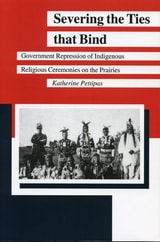
Severing the Ties that Bind
Government Repression of Indigenous Religious Ceremonies on the PrairiesKatherine Pettipas
University of Manitoba Press, 1994

Sexual Assault
The Dilemma of Disclosure, The Question of ConvictionRita F. Gunn
University of Manitoba Press, 1988
Sharing the Land, Sharing a Future
The Legacy of the Royal Commission on Aboriginal PeoplesKatherine Graham
University of Manitoba Press, 2021
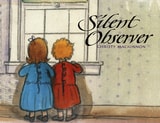
Silent Observer
Christy MacKinnon
Gallaudet University Press, 1993
Silent Observer is an affectionate, poignant memoir of childhood as seen through the eyes of a vivacious young girl. Teachers, parents, and children will share in their enjoyment of this beautiful, sensitive story of a harder but wonderful time that has passed.

Sir Robert Borden
CanadaMartin Thornton
Haus Publishing, 2010
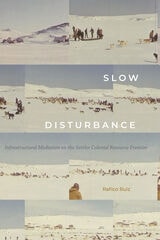
Slow Disturbance
Infrastructural Mediation on the Settler Colonial Resource FrontierRafico Ruiz
Duke University Press, 2021
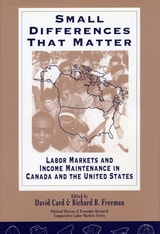
Small Differences That Matter
Labor Markets and Income Maintenance in Canada and the United StatesEdited by David Card and Richard B. Freeman
University of Chicago Press, 1993
For example:
-Canada's social safety net, more generous than the American one, produced markedly lower poverty rates in the 1980s.
-Canada saw a smaller increase in earnings inequality than the United States did, in part because of the strength of Canadian unions, which have twice the participation that U.S. unions do.
-Canada's unemployment figures were much higher than those in the United States, not because the Canadian economy failed to create jobs but because a higher percentage of nonworking time was reported as unemployment.
These disparities have become noteworthy as policy makers cite the experiences of the other country to support or oppose particular initiatives.

Small-Town Heroes
Images of Minor League BaseballHank Davis
University of Iowa Press, 1997
For many baseball fans, a major league game is a flickering image on a television screen or a story in a newspaper. Real baseball is played in their hometown, in a ballpark that seats 5,000 fans, not 50,000. The players wear uniforms like the ones seen on television, but their names are not household words—unless it happens to be summer and you are living in Bluefield, West Virginia, or Cedar Rapids, Iowa, or Batavia, New York.
In 1993, ex-New Yorker Hank Davis put a successful career in psychology and music journalism on hold and went off on a loving odyssey through twenty-eight host towns in search of minor league baseball. Writing with beguiling charm and a firm knowledge of the game, he traveled the back roads of small-town Canada and America and found more than he bargained for: a wondrous cast of characters on the field, in the stands, and on the way to the ballpark. Davis recorded them with his splendid, incisive prose and his remarkable photographs. Along the way he encountered not only the baseball stars of the future, like Derek Jeter, Terrell Wade, and Tim Crabtree, but also a host of fascinating unknowns and longshots. They, too, have stories to tell that will not appear on the stat sheets.
With infectious energy, Davis also looked beyond the players. There are coaches, men in their forties and beyond, making arduous bus trips with players half their age. There are assistant general managers happy to scrub toilets and paint dugouts just to be close to the game. Kids sell Cracker Jacks in Bluefield, and grown-ups operate the mechanical bull at Durham Athletic Park.
Davis finds the small-town setting a universe unto itself. Within it, minor league baseball is lost in a time warp. Unabashedly unsophisticated, it has all the quirky charm of a traveling carnival—full of hawkers and gawkers and the unaffected simplicity of a concert in the park on a hot July night. Davis' full account of his baseball journey is rich with detail inside and outside the ballpark.

Snacks
A Canadian Food StoryJanis Thiessen
University of Manitoba Press, 2017
Social Democracy in Manitoba
A History of the CCF/NDPNelson Wiseman
University of Manitoba Press, 1983

Sovereign Traces, Volume 1
Not (Just) (An)OtherGordon D. Henry Jr.
Michigan State University Press, 2018

Sports Illusion, Sports Reality
A Reporter's View of Sports, Journalism, and SocietyLeonard Koppett
University of Illinois Press, 1994
ever written, I'd like to see the book that beats it. . . . Should be
read by every sports fan or -- for that matter -- social critic."
--From a five-star review, West Coast Review of Books.
"Explores its subject so thoroughly and demolishes so many commonly
held assumptions that after reading it even the most knowledgeable fans
(and some journalists) should feel like drunks who have suddenly been
forced to sober up."
-- Chicago Tribune
"Required reading for anyone who calls himself a fan."
-- Chicago Sun-Times
"An invaluable contribution to sports literature."
-- Howard Cosell

St. John's College
Faith and Education in Western CanadaJ.M. Bumsted
University of Manitoba Press, 2006
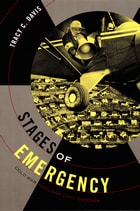
Stages of Emergency
Cold War Nuclear Civil DefenseTracy C. Davis
Duke University Press, 2007
Stages of Emergency covers public education campaigns and school programs—such as the ubiquitous “duck and cover” drills—meant to heighten awareness of the dangers of a possible attack, the occupancy tests in which people stayed sequestered for up to two weeks to simulate post-attack living conditions as well as the effects of confinement on interpersonal dynamics, and the British first-aid training in which participants acted out psychological and physical trauma requiring immediate treatment. Davis also brings to light unpublicized government exercises aimed at anticipating the global effects of nuclear war. Her comparative analysis shows how the differing priorities, contingencies, and social policies of the three countries influenced their rehearsals of nuclear catastrophe. When the Cold War ended, so did these exercises, but, as Davis points out in her perceptive afterword, they have been revived—with strikingly similar recommendations—in response to twenty-first-century fears of terrorists, dirty bombs, and rogue states.
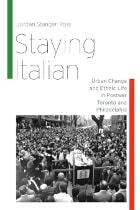
Staying Italian
Urban Change and Ethnic Life in Postwar Toronto and PhiladelphiaJordan Stanger-Ross
University of Chicago Press, 2009
Despite their twin positions as two of North America’s most iconic Italian neighborhoods, South Philly and Toronto’s Little Italy have functioned in dramatically different ways since World War II. Inviting readers into the churches, homes, and businesses at the heart of these communities, Staying Italian reveals that daily experience in each enclave created two distinct, yet still Italian, ethnicities.
As Philadelphia struggled with deindustrialization, Jordan Stanger-Ross shows, Italian ethnicity in South Philly remained closely linked with preserving turf and marking boundaries. Toronto’s thriving Little Italy, on the other hand, drew Italians together from across the wider region. These distinctive ethnic enclaves, Stanger-Ross argues, were shaped by each city’s response to suburbanization, segregation, and economic restructuring. By situating malleable ethnic bonds in the context of political economy and racial dynamics, he offers a fresh perspective on the potential of local environments to shape individual identities and social experience.
Stored in the Bones
Safeguarding Indigenous Living HeritagesAgnieszka Pawłowska-Mainville
University of Manitoba Press, 2023
Storied Landscapes
Ethno-Religious Identity and the Canadian PrairiesFrances Swyripa
University of Manitoba Press, 2010

Stories in a New Skin
Approaches to Unuit LiteratureKeavy Martin
University of Manitoba Press, 2012
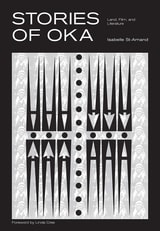
Stories of Oka
Land, Film, and LiteratureIsabelle St-Amand
University of Manitoba Press, 2018
Succeeding as an International Student in the United States and Canada
Charles Lipson
University of Chicago Press, 2008
Succeeding is designed to help students navigate the myriad issues they will encounter—from picking a program to landing a campus job. Based on Lipson’s work with international students as well as extensive interviews with faculty and advisers, Succeeding includes practical suggestions for learning English, participating in class, and meeting with instructors. In addition it explains the rules of academic honesty as they are understood in U.S. and Canadian universities.
Life beyond the classroom is also covered, with handy sections on living on or off campus, obtaining a driver’s license, setting up a bank account, and more. The comprehensive glossary addresses both academic terms and phrases heard while shopping or visiting a doctor. There is even a chapter on the academic calendar and holidays in the United States and Canada.

Sui Sin Far / Edith Maude Eaton
A Literary BiographyAnnette White-Parks; Foreward by Roger Daniels
University of Illinois Press, 1995
Annette White-Parks offers the first full-length biography of the woman now remembered as North America's first published Asian writer. White-Parks reveals an author who defied the in vogue style of "yellow peril" literature to show Chinatowns and their inhabitants as complex, feeling human beings. Her insider's sympathy focused in particular on Chinese American women and children. Confronted with social divisions and discrimination, Sui Sin Far experimented with trickster characters and irony, sharing the coping mechanisms used by other writers who struggled to overcome the marginalization forced on them because of their race, gender, or class.