Results by title
99 books match the query 'Censorship' and 3 start with s
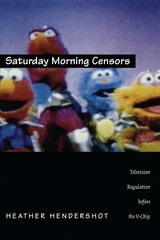
Saturday Morning Censors
Television Regulation before the V-ChipHeather Hendershot
Duke University Press, 1999
Drawing on archival studio material, interviews with censors and animators, and social science research, Hendershot analyzes media activist strategies, sexism and racism at the level of cartoon manufacture, and the product-linked cartoons of the 1980s, such as Strawberry Shortcake and Transformers. But in order to more fully examine adult reception of children’s TV, she also discusses “good” programs like Sesame Street and Fat Albert and the Cosby Kids. Providing valuable historical context for debates surrounding such current issues as the V-chip and the banning of Power Rangers toys in elementary schools, Saturday Morning Censors demonstrates how censorship can reveal more fears than it hides.
Saturday Morning Censors will appeal to educators, parents, and media activists, as well as to those in cultural studies, television studies, gender studies, and American social history.
Sound and Silence
My Experience with China and LiteratureYan Lianke
Duke University Press, 2024
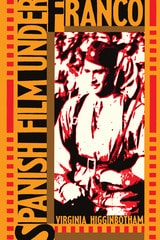
Spanish Film Under Franco
By Virginia Higginbotham
University of Texas Press, 1988
How does a totalitarian government influence the arts, and how do the arts respond? Spanish Film Under Franco raises these important questions, giving English speakers a starting point in their study of Spanish cinema.
After a brief overview of Spanish film before Franco, the author proceeds to a discussion of censorship as practiced by the Franco regime. The response of directors to censorship—the “franquista aesthetic,” or “aesthetic of repression,” with its highly metaphorical, oblique style—is explored in the works of Luis Buñuel, Carlos Saura, Juan Antonio Bardem, Luis García Berlanga, and other important directors.
Virginia Higginbotham combines historical perspective with detailed critical analysis and interpretation of many famous Franco-era films. She shows how directors managed to evade the censors and raise public awareness of issues relating to the Spanish Civil War and the repressions of the Franco regime.
Film has always performed an educational function in Spain, reaching masses of poor and uneducated citizens. And sometimes, as this study also reveals, Spanish film has been ignored when the questions it raised became too painful or demanding.
The author concludes with a look at post-Franco cinema and the directions it has taken. For anyone interested in modern Spanish film, this book will be essential reading.