Results by title
66 books match the query 'Challenges' and 5 start with s
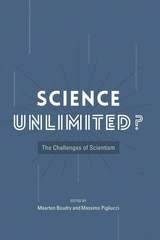
Science Unlimited?
The Challenges of ScientismEdited by Maarten Boudry and Massimo Pigliucci
University of Chicago Press, 2017
In this wide-ranging collection, contributors ask whether the term scientism in fact (or in belief) captures an interesting and important intellectual stance, and whether it is something that should alarm us. Is scientism a well-developed position about the superiority of science over all other modes of human inquiry? Or is it more a form of excessive confidence, an uncritical attitude of glowing admiration? What, if any, are its dangers? Are fears that science will marginalize the humanities and eradicate the human subject—that it will explain away emotion, free will, consciousness, and the mystery of existence—justified? Does science need to be reined in before it drives out all other disciplines and ways of knowing? Both rigorous and balanced, Science Unlimited? interrogates our use of a term that is now all but ubiquitous in a wide variety of contexts and debates. Bringing together scientists and philosophers, both friends and foes of scientism, it is a conversation long overdue.

Screening the Transition
Spanish Cinema and the Challenges of DemocracyFederico Bonaddio
Intellect Books, 2026
A timely study of Spanish cinema during the country’s transition to democracy, including how popular and auteur films grappled with the authoritarian past.
Screening the Transition examines how Spanish cinema produced in the years immediately following Francisco Franco’s death articulated—through its narratives and characterizations—the social and cultural challenges encountered during the country’s transition to democracy. These films reflect emergent post-dictatorship realities, including increased openness toward sexuality and nudity; the erosion of traditional family structures; persistent attachments to, and reckonings with, the Francoist past; the development of political plurality and expanded freedom of expression; and various forms of marginalization, whether economic or based on gender and sexuality. In doing so, the analysis conceptualizes Spain’s transition not solely in political terms, as is commonly the case, but as a profoundly personal and affective process.
Federico Bonaddio demonstrates the limitations of cinema in this period, which at times revealed an inability to transcend deep-seated prejudices and forms of reticence cultivated over nearly four decades of authoritarian rule. These limitations surface in the prurient treatment of female nudity and sexual violence; in the deployment of comedy to belittle or trivialize democratic change; in a preference for metaphor and allegory over direct political engagement; and in the restricted investigative ambitions of historical dramas.
Considering both popular and auteur cinema, the book is primarily concerned with how filmmaking registered the difficulties of consigning the dictatorship fully to the past, despite the so-called pact of forgetting promoted by political elites to facilitate national reconciliation.

Shakespearean Cultures
Latin America and the Challenges of Mimesis in Non-Hegemonic CircumstancesJoão Cezar de Castro Rocha
Michigan State University Press, 2019
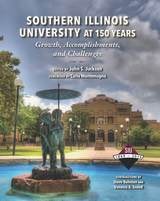
Southern Illinois University at 150 Years
Growth, Accomplishments, and ChallengesEdited by John S. Jackson with a Foreword by Carlo Montemagno and Contributions by Steve Buhman and Vanessa A. Sneed
Southern Illinois University Press, 2019
Chapters reflect on SIU’s successful athletics program, the various colleges and departments within the university, the diverse holdings and collections of the library, the unique innovative research enterprises, and special programs such as the Paul Simon Public Policy Institute and Touch of Nature Environmental Center.
Although SIU may be a typical large public university in many ways, its unique location, history, and culture have made it a distinct institution of higher education. Located close to the Shawnee National Forest and Giant City State Park, the landscape is an indelible part of SIU, contributing to both the beauty of the university grounds and the campus culture.
The university’s sesquicentennial provides a wonderful opportunity to revisit all that makes SIU amazing. Illustrated with 306 photographs of theater and music performances, art, sports, past and present students, faculty, staff, administration, politicians, community members, successful alums, distinguished visitors, and patrons of the university buildings, and landscapes, Southern Illinois University at 150 Years captures the university’s story in all its vivid color.
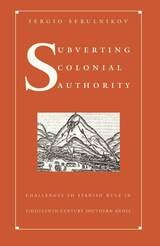
Subverting Colonial Authority
Challenges to Spanish Rule in Eighteenth-Century Southern AndesSergio Serulnikov
Duke University Press, 2003
Drawing on court records, government papers, personal letters, census documents, and other testimonies from Bolivian and Argentine archives, Subverting Colonial Authority addresses issues that illuminate key aspects of indigenous rebellion, European colonialism, and Andean cultural history. Serulnikov analyzes long-term patterns of social conflict rooted in local political cultures and regionally based power relations. He examines the day-to-day operations of the colonial system of justice within the rural villages as well as the sharp ideological and political strife among colonial ruling groups. Highlighting the emergence of radical modes of anticolonial thought and ethnic cooperation, he argues that Andean peasants were able to overcome entrenched tendencies toward internal dissension and fragmentation in the very process of marshaling both law and force to assert their rights and hold colonial authorities accountable. Along the way, Serulnikov shows, they not only widened the scope of their collective identities but also contradicted colonial ideas of indigenous societies as either secluded cultures or pliant objects of European rule.