208 books match the query 'Christian Church' and 12 start with s
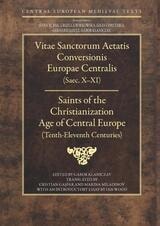
cover of Saints of the Christianization Age of Central Europe: Tenth to Eleventh Centuries

Saints of the Christianization Age of Central Europe

Tenth to Eleventh Centuries

Cristian Gaspar

Central European University Press, 2012
This volume is the first of two containing hagiographical narratives from medieval Central Europe. The lives of the saints in this volume, from the tenth to eleventh centuries, written not much later, are telling witnesses for the process of Christianization of Bohemia, Poland, Hungary and Dalmatia. Most of them became patrons of their region and highly venerated throughout the Middle Ages. The volume presents the first English translation of a legend of each of these saints with the most recent critical edition of the Latin original and prefaces discussing the textual tradition. In an appendix the extensive hagiographical literature of the saints is being critically surveyed.
[more]
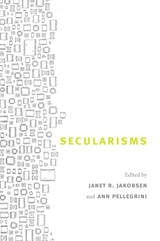
cover of Secularisms

Secularisms

Janet R. Jakobsen and Ann Pellegrini, eds.

Duke University Press, 2008

At a time when secularism is put forward as the answer to religious fundamentalism and violence, Secularisms offers a powerful, multivoiced critique of the narrative equating secularism with modernity, reason, freedom, peace, and progress. Bringing together essays by scholars based in religious studies, gender and sexuality studies, history, science studies, anthropology, and political science, this volume challenges the binary conception of “conservative” religion versus “progressive” secularism.

With essays addressing secularism in India, Iran, Turkey, Great Britain, China, and the United States, this collection crucially complicates the dominant narrative by showing that secularism is multifaceted. How secularism is lived and experienced varies with its national, regional, and religious context. The essays explore local secularisms in relation to religious traditions ranging from Islam to Judaism, Hinduism to Christianity. Several contributors explicitly take up the way feminism has been implicated in the dominant secularization story. Ultimately, by dislodging secularism’s connection to the single (and singular) progress narrative, this volume seeks to open spaces for other possible narratives about both secularism and religion—as well as for other possible ways of inhabiting the contemporary world.

Contributors: Robert J. Baird, Andrew Davison, Tracy Fessenden, Janet R. Jakobsen, Laura Levitt,
Molly McGarry, Afsaneh Najmabadi, Taha Parla, Geeta Patel, Ann Pellegrini, Tyler Roberts,
Ranu Samantrai, Banu Subramaniam, Rajeswari Sunder Rajan, Angela Zito
[more]
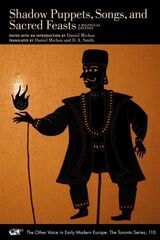
cover of Shadow Puppets, Songs, and Sacred Feasts: Celebrations of the Indo-Portuguese Nuns in the Eighteenth-Century Real Convento de Santa Mónica, Goa, India. A Bilingual Edition

Shadow Puppets, Songs, and Sacred Feasts

Celebrations of the Indo-Portuguese Nuns in the Eighteenth-Century Real Convento de Santa Mónica, Goa, India. A Bilingual Edition

Edited by Daniel Michon

Iter Press, 2025

The two eighteenth-century texts translated here offer a rare glimpse into the creative lives of cloistered nuns in Asia, providing a valuable example of early modern "other voices" in a colonial context. 

The Entrada de Bonifrate para Festa dos Reis, a shadow puppet play for the feast of the Kings, and the Cartepaço da Muzica, a songbook for the feast of St. John, showcase the imaginative minds of the nuns at the Indo-Portuguese Real Convento de Santa Mónica, Goa, India. Composed for private convent audiences, these texts blend Portuguese and Spanish baroque elements with local Goan traditions. The uncensored verses celebrate convent life, critique local social norms, and affirm the nuns’ community identity, exhibiting the Mónicas’ musical talents and literary sensibilities.
[more]
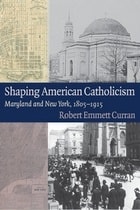
cover of Shaping American Catholicism: Maryland and New York, 1805-1915

Shaping American Catholicism

Maryland and New York, 1805-1915

Robert Emmett Curran

Catholic University of America Press, 2012
Distinguished historian Robert Emmett Curran presents an informed and balanced study of the American Catholic Church's experience in its two most important regions in the nineteenth and twentieth centuries
[more]
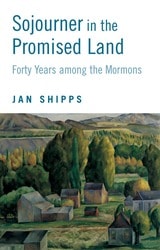
cover of Sojourner in the Promised Land: Forty Years among the Mormons

Sojourner in the Promised Land

Forty Years among the Mormons

Jan Shipps

University of Illinois Press, 2001
Infused with Jan Shipps’s lively curiosity, scholarly rigor, and contagious fascination with a significant subculture, Sojourner in the Promised Land presents a distinctive parallel history in which Shipps surrounds her professional writings about the Latter-day Saints with an ongoing personal description of her encounters with them. By combining a portrait of the dynamic evolution of contemporary Mormonism with absorbing intellectual autobiography, Shipps illuminates the Mormons and at the same time shares with the reader what it has been like to be on the outside of a culture that remains both familiar and strange.
[more]
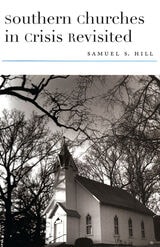
cover of Southern Churches in Crisis Revisited

Southern Churches in Crisis Revisited

Samuel S. Hill

University of Alabama Press, 1999

Hill’s landmark work in southern religious history returns to print updated and expanded—and compellingly relevant.

In 1966, Samuel S. Hill’s Southern Churches in Crisis argued that southern Protestantism, a cornerstone of white southern society and culture, was shirking its moral duty by refusing to join in the fight for racial justice. Hill predicted that the church was risking its standing in southern society and that it would ultimately decline in influence and power. A groundbreaking study at the time, Hill’s book helped establish southern religious history as a field of scholarly inquiry. Three decades later, Southern Churches in Crisis continues to be widely read, quoted, and cited.

In Southern Churches in Crisis Revisited, which reprints the 1966 text in full, Hill reexamines his earlier predictions in an introductory essay that also describes how the study of religion in the South has become a major field of scholarly inquiry. Hill skillfully engages his critics by integrating new perspectives and recent scholarship. He suggests new areas for exploration and provides a selected bibliography of key studies in southern religious history published in the three decades subsequent to the original appearance of this groundbreaking work.
[more]
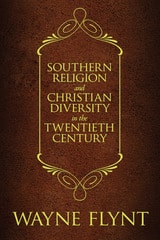
cover of Southern Religion and Christian Diversity in the Twentieth Century

Southern Religion and Christian Diversity in the Twentieth Century

Wayne Flynt, Foreword by Charles A. Israel and John Giggie

University of Alabama Press, 2016

Essays by the distinguished historian of southern religion Wayne Flynt, that illuminate the often overlooked complexity among southern Protestants.

Throughout its dramatic history, the American South has wrestled with issues such as poverty, social change, labor reform, civil rights, and party politics, and Flynt’s writing reaffirms religion as the lens through which southerners understand and attempt to answer these contentious questions. In Southern Religion and Christian Diversity in the Twentieth Century, however, Flynt gently but persuasively dispels the myth—comforting to some and dismaying to others—of religion in the South as an inert cairn of reactionary conservatism.

Flynt introduces a wealth of stories about individuals and communities of faith whose beliefs and actions map the South’s web of theological fault lines. In the early twentieth century, North Carolinian pastor Alexander McKelway became a relentless crusader against the common practice of child labor. In 1972, Rev. Dr. Ruby Kile, in a time of segregated churches led by men, took the helm of the eight-member Powderly Faith Deliverance Center in Jefferson County, Alabama and built the fledgling group into a robust congregation with more than 700 black and white worshippers. Flynt also examines the role of religion in numerous pivotal court cases, such as the US Supreme Court school prayer case Engel v. Vitale, whose majority opinion was penned by Justice Hugo Black, an Alabamian. These fascinating case studies and many more illuminate a religious landscape of far more varied texture and complexity than is commonly believed.

Southern Religion and Christian Diversity in the Twentieth Century offers much to readers and scholars interested in the South, religion, and theology. Writing with his hallmark wit, warmth, and erudition, Flynt’s Southern Religion and Christian Diversity in the Twentieth Century is a vital record of gospel-inspired southerners whose stories revivify sclerotic assumptions about the narrow conformity of southern Christians. 
[more]
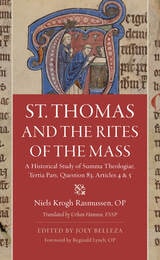
cover of St. Thomas and the Rites of Man: A Historical Study of the Summa Theologiae, Tertia Pars, Question 83, Articles 4 & 5

St. Thomas and the Rites of Man

A Historical Study of the Summa Theologiae, Tertia Pars, Question 83, Articles 4 & 5

Niels Krogh Rasmussen

Catholic University of America Press, 2026
Long buried in the archives of the Dominican studium at Le Saulchoir, the lectorate dissertation of Fr. Niels Krogh Rasmussen, OP, is now made available to a wider English-speaking audience interested in Saint Thomas Aquinas’s contribution to liturgical theology. Originally written in 1966, just after the Second Vatican Council, Rasmussen’s work is a witness to the intense liturgical ferment of those years and expresses an early attempt to appropriate the then-new postconciliar mode of liturgical reflection, bolstered by attentive historical-critical work, in the spirit of Saint Thomas. Treating the saint’s reflection on the Mass rites in the Summa Theologiae, Rasmussen shows how Aquinas, while writing in the disputed question format, nevertheless presents his readers with an expositio Missae, placing him within the tradition of great medieval Mass expositors, from Amalarius of Metz and Florus of Lyon in the ninth century, Saint Albert the Great and Durandus of Mende in the thirteenth century. By isolating this distinctly liturgical content (without, however, completely eschewing its original quaestio format), Rasmussen is able to highlight the distinctiveness of Thomas’s liturgical thought against that of his predecessors and contemporaries. Even if certain insights or expressions of Rasmussen’s may sound dated to the contemporary reader—since this work was composed in that interim period between Inter Oecumenici (1964) and the promulgation of the Missal of Paul VI (1969)—such insights in fact add to the historical value of this dissertation, offering a snapshot of a time when the reform of the liturgy was very much a living process with a terminus yet to be determined. 60 years later, students of Thomism, liturgical theology, and medieval studies can continue to benefit from this work.
[more]
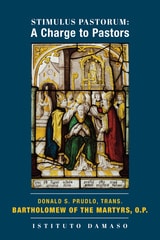
cover of Stimulus Pastorum: A Charge to Pastors

Stimulus Pastorum

A Charge to Pastors

Bartholomew of the Martyrs, O.P.

St. Augustine's Press, 2022
The work of St. Bartholomew of Braga, O.P. (1514–1590) appears here in English for the first time despite its long and enduring influence in ecclesiastical circles. His meditations on the office of pastor have provided critical insight bishops since their initial circulation and have helped form the most famous among them, including Bartholomew's proteges Charles Borromeo. Pope Paul VI ordered a copy of Bartholomew's work to be distributed among the Catholic bishops at the Second Vatican Council. Donald Prudlo's translation situates St. Bartholomew of the Martyrs in his historical context as a lynchpin of Catholic Reform and affirms him as a figurehead of pastoral administration even in our own times. 
[more]
cover of Summa Theologiae, Prima Pars: Volume 1, The One God, QQ 1-26: With the Commentary of Cardinal Cajetan

Summa Theologiae, Prima Pars

Volume 1, The One God, QQ 1-26: With the Commentary of Cardinal Cajetan

Thomas Aquinas

Catholic University of America Press, 2023
When Leo XII promulgated Aeterni Patris in 1879, he stipulated that the “Leonine,” or official, edition of the Summa should always be printed in conjunction with Cajetan’s Commentary. For five hundred years they were studied together. Generations were trained by reading through the Summa article by article with Cajetan’s commentaries in hand. Early printed editions of the Summa typically included them in a Talmudic arrangement, as marginal text running around each article by Aquinas. This edition imitates that example. Recently, serious thinkers of all denominations – and none – have found new reasons to be interested in St. Thomas. His text is deceptively simple, yet important issues are handled in every article, sometimes below the surface. Cajetan extracts these hidden issues, and explains and elaborates on them with remarkable affinity to modern analytical philosophy. Part of that affinity lies in the use of modal logic, a tool whose importance was overlooked between the Renaissance and the twentieth century. The time is ripe for an analytically-inspired translation of Thomas: hence this volume. Never until now has Cajetan’s Commentary been put into English in its entirety. William Marshner’s translation is consistent with fidelity to the technical force of the original. The translator’s footnotes acknowledge what empirical science has made obsolete in the work of St. Thomas, and also make clear how much today’s science would have saved Thomas useless labor. This volume will, for the first time, make Cajetan’s help available to the modern reader.
[more]
cover of Summa Theologiae, Prima Pars: Volume 2, On the Holy Trinity and Creation in General, QQ 27-74: With the Commentary of Cardinal Cajetan

Summa Theologiae, Prima Pars

Volume 2, On the Holy Trinity and Creation in General, QQ 27-74: With the Commentary of Cardinal Cajetan

Thomas Aquinas

Catholic University of America Press, 2023
When Leo XII promulgated Aeterni Patris in 1879, he stipulated that the “Leonine,” or official, edition of the Summa should always be printed in conjunction with Cajetan’s Commentary. For five hundred years they were studied together. Generations were trained by reading through the Summa article by article with Cajetan’s commentaries in hand. Early printed editions of the Summa typically included them in a Talmudic arrangement, as marginal text running around each article by Aquinas. This edition imitates that example. Recently, serious thinkers of all denominations – and none – have found new reasons to be interested in St. Thomas. His text is deceptively simple, yet important issues are handled in every article, sometimes below the surface. Cajetan extracts these hidden issues, and explains and elaborates on them with remarkable affinity to modern analytical philosophy. Part of that affinity lies in the use of modal logic, a tool whose importance was overlooked between the Renaissance and the twentieth century. The time is ripe for an analytically-inspired translation of Thomas: hence this volume. Never until now has Cajetan’s Commentary been put into English in its entirety. William Marshner’s translation is consistent with fidelity to the technical force of the original. The translator’s footnotes acknowledge what empirical science has made obsolete in the work of St. Thomas, and also make clear how much today’s science would have saved Thomas useless labor. This volume will, for the first time, make Cajetan’s help available to the modern reader.
[more]
cover of Summa Theologiae, Prima Pars: Volume 3, Human Beings and God's Governance of Creation, QQ 75-119: With the Commentary of Cardinal Cajetan

Summa Theologiae, Prima Pars

Volume 3, Human Beings and God's Governance of Creation, QQ 75-119: With the Commentary of Cardinal Cajetan

Thomas Aquinas

Catholic University of America Press, 2023

When Leo XII promulgated Aeterni Patris in 1879, he stipulated that the “Leonine,” or official, edition of the Summa should always be printed in conjunction with Cajetan’s Commentary. For five hundred years they were studied together. Generations were trained by reading through the Summa article by article with Cajetan’s commentaries in hand. Early printed editions of the Summa typically included them in a Talmudic arrangement, as marginal text running around each article by Aquinas. This edition imitates that example. Recently, serious thinkers of all denominations – and none – have found new reasons to be interested in St. Thomas. His text is deceptively simple, yet important issues are handled in every article, sometimes below the surface. Cajetan extracts these hidden issues, and explains and elaborates on them with remarkable affinity to modern analytical philosophy. Part of that affinity lies in the use of modal logic, a tool whose importance was overlooked between the Renaissance and the twentieth century. The time is ripe for an analytically-inspired translation of Thomas: hence this volume. Never until now has Cajetan’s Commentary been put into English in its entirety. William Marshner’s translation is consistent with fidelity to the technical force of the original. The translator’s footnotes acknowledge what empirical science has made obsolete in the work of St. Thomas, and also make clear how much today’s science would have saved Thomas useless labor. This volume will, for the first time, make Cajetan’s help available to the modern reader.
[more]