Results by title
303 books match the query 'Church history' and 25 start with s

SILENT REVOLUTION MAKING OF VICTORIAN
HERBERT SCHLOSSBERG
The Ohio State University Press, 2000
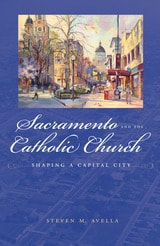
Sacramento and the Catholic Church
Shaping a Capital CitySteven Avella
University of Nevada Press, 2008
Besides the numerous institutions that the Church sponsored, it brought together a wide spectrum of the city’s diverse ethnic populations and offered them several routes to assimilation. Catholic Sacramentans have always played an active role in government and in the city’s economy, and Catholic institutions provided a matrix for the creation of new communities as the city spread into neighboring suburbs. At the same time, the Church was forced to adapt itself to the needs and demands of its various ethnic constituents, particularly the flood of Spanish-speaking newcomers in the late twentieth century.
Sacred Boundaries
Religious Coexistence and Conflict in Early-Modern FranceKeith P. Luria
Catholic University of America Press, 2005

Sainted Women of the Dark Ages
Jo Ann McNamara, John E. Halborg, and Gordon Whatley, eds.
Duke University Press, 1992
Three of these holy women were queens who turned to religion only after a period of intense worldly activity. Others were members of the Carolingian family, deeply implicated in the political ambitions of their male relatives. Some were partners in the great Irish missions to the pagan countryside and others worked for the physical salvation of the poor. From the peril and suffering of their lives they shaped themselves as paragons of power and achievement. Beloved by their sisters and communities for their spiritual gifts, they ultimately brought forth a new model of sanctity.
These biographies are unusually authentic. At least two were written by women who knew their subjects, while others reflect the direct testimony of sisters within the cloister walls. Each biography is accompanied by an introduction and notes that clarify its historical context. This volume will be an excellent source for students and scholars of women's studies and early medieval social, religious, and political history.
Saints of the Christianization Age of Central Europe
Tenth to Eleventh CenturiesCristian Gaspar
Central European University Press, 2012
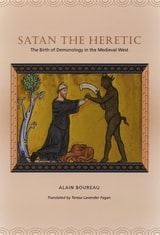
Satan the Heretic
The Birth of Demonology in the Medieval WestAlain Boureau
University of Chicago Press, 2006
Depicting this new demonology, Satan the Heretic considers the period between the mid-thirteenth and mid-fourteenth centuries when demons, in the eyes of Church authorities, suddenly burst forth, more real and more terrifying than ever before in the history of Christianity. Boureau argues that the rise in this obsession with demons occurs at the crossroads of the rise of sovereignties and of the individual, a rise that, tellingly, also coincides with the emergence of the modern legal system in the European West.
Teeming with original insights and lively anecdotes, Satan the Heretic is a significant contribution to the history of Christian demonology from one of the most original minds in the field of medieval studies today.
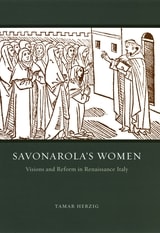
Savonarola's Women
Visions and Reform in Renaissance ItalyTamar Herzig
University of Chicago Press, 2007
In their quest to stay true to their leader’s teachings, Savonarola’s female followers faced hostile superiors within their orders, local political pressures, and the deep-rooted misogynistic assumptions of the Church establishment. This unprecedented volume demonstrates how reform circles throughout the Italian peninsula each tailored Savonarola’s life and works to their particular communities’ regionally specific needs. Savonarola’s Women is an important reconstruction of women’s influence on one of the most important and controversial religious movements in premodern Europe.
Sea la Luz
The Making of Mexican Protestantism in the American Southwest, 1829-1900Juan Francisco Martínez
University of North Texas Press, 2006
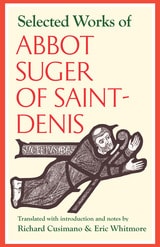
Selected Works of Abbot Suger of Saint Denis
Richard Abbot Suger of Saint-Denis
Catholic University of America Press, 2018
Suger, the twelfth century abbot of Saint-Denis, has not received the respect and attention that he deserves. Bernard of Clairvaux and Peter the Venerable have garnered more attention, and students of medieval history know their names well. In one respect, however, Suger has earned due praise, for his architectural innovations to the church of Saint-Denis made it truly one of the most beautiful churches in Europe.
Students of history and architecture know Suger best for his work on Saint-Denis, the burial site of medieval French kings, queens, and nobility. The abbot enlarged, decorated, improved, and redesigned the building so beautifully that it is safe to say that he became the foremost church architect of twelfth-century France.
The man, however, was so much more than an architect. He served as a counselor and member of the courts of King Louis VI and VII, who sent him across Europe on diplomatic missions. He represented those kings at the papal curia and imperial diets. He was also a close friends and confidante of King Henry I of England, whom he often visited on behalf of French royal interests.
Never shy, Suger seems almost obsessed that his works and deeds not be forgotten. He acquired numerous properties and estates for his abbey, as well as improved the ones it already possessed. He built new buildings, barns, walls for villages, and increased the return of grain from all the abbey’s lands. Readers interested in the medieval agricultural system and way of life will also enjoy these texts.
Suger’s texts also provide a wealth of information about the events of his era as well as a large amount of biographical material on his accomplishments. This translation of his writings intends to enhance his reputation and make his name better known by students at all levels and among those interested in medieval topics.
Serbian Orthodox Fundamentals
The Quest for an Eternal IdentityChristos Mylonas
Central European University Press, 2003
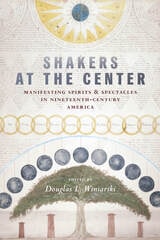
Shakers at the Center
Manifesting Spirits & Spectacles in Nineteenth-Century AmericaEdited by Douglas L. Winiarski
University of Massachusetts Press, 2026
Exploring the theological, social, and cultural dimensions of one of America’s most ambitious prophetic movements
The Shakers’ Era of Manifestations ranks among the most astounding events in American religious history. During the 1840s, members of the United Society of Believers in Christ’s Second Appearing embarked on an audacious project of receiving visions, revelations, and other manifestations from the spirit world and convincing both themselves and the world’s people of their reality. Gifted Shakers known as “instruments” surrendered their bodies to possessing spirits and celestial beings who, in turn, provided the Believers with an unimaginable number of revelatory communications that collapsed time and space, rewrote the Bible, and vastly expanded traditional Protestant beliefs and practices. The fruits of Shaker spiritualism would gain a permanent place in America’s public consciousness.
Hundreds of volumes and thousands of pages of inspired writings, music, and art from the New Era or period of Mother's Work, as the Shakers called it, crowd the shelves of a half dozen major research libraries. The archive is so vast, so extraordinary, so seemingly bizarre that few scholars have dared tackle it in its totality. The authors of this volume, specialists in nineteenth-century American religious studies, have collaborated to produce an extensive analysis of Mother Ann’s Work. They examine a fascinating range of topics: speaking with the dead; the spectacle of Shaker rituals; race, gender, and family life; and the material culture of physical and spiritual things; as well as manuscripts, books, songs, objects, and art produced during the New Era.
Shakers at the Center brings the sprawling elements of the Era of Manifestations together in a single volume. Written for students, scholars, and general readers alike, it will stand for years as the definitive history of the Shakers’ most fascinating and vexing historical period.
Contributors include the volume editor as well as Emily Suzanne Clark, Brett Malcolm Grainger, Sonia Hazard, Dana Logan, Carol Medlicott, Sally M. Promey, Erik R. Seeman, Ryan K. Smith, and David Walker.
Shaping American Catholicism
Maryland and New York, 1805-1915Robert Emmett Curran
Catholic University of America Press, 2012
Singing the Lord's Song in a Strange Land
Hymnody in the History of North American ProtestantismEdith L. Blumhofer
University of Alabama Press, 2008
Music and song are important parts of worship, and hymns have long played a central role in Protestant cultural history. This book explores the ways in which Protestants have used and continue to use hymns to clarify their identity and define their relationship with America and to Christianity. Representing seven groups—Baptists, Presbyterians, Lutherans, Mennonites, Holiness, Hispanics, and Evangelicals—the nine essays reveal how hymns have helped immigrants to establish new identities, contributed to the body of worship resources, and sustained ethnic identity.
Individual essays address the music of the Old-Fashioned Revival Hour, America’s longest running and most successful independent radio program; singing among Swedish evangelicals in America; the German hymn tradition as transformed by Mennonite immigrants; the ways hymnody reinforces themes of the Wesleyan holiness movement; the history of Mercer’s Cluster (1810), a southern hymnal that gave voice to slaves, women, and native Americans; and the Presbyterian hymnal tradition in Canada formed by Scottish immigrants.
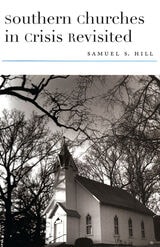
Southern Churches in Crisis Revisited
Samuel S. Hill
University of Alabama Press, 1999
Hill’s landmark work in southern religious history returns to print updated and expanded—and compellingly relevant.
In 1966, Samuel S. Hill’s Southern Churches in Crisis argued that southern Protestantism, a cornerstone of white southern society and culture, was shirking its moral duty by refusing to join in the fight for racial justice. Hill predicted that the church was risking its standing in southern society and that it would ultimately decline in influence and power. A groundbreaking study at the time, Hill’s book helped establish southern religious history as a field of scholarly inquiry. Three decades later, Southern Churches in Crisis continues to be widely read, quoted, and cited.
In Southern Churches in Crisis Revisited, which reprints the 1966 text in full, Hill reexamines his earlier predictions in an introductory essay that also describes how the study of religion in the South has become a major field of scholarly inquiry. Hill skillfully engages his critics by integrating new perspectives and recent scholarship. He suggests new areas for exploration and provides a selected bibliography of key studies in southern religious history published in the three decades subsequent to the original appearance of this groundbreaking work.
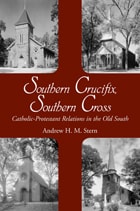
Southern Crucifix, Southern Cross
Catholic-Protestant Relations in the Old SouthAndrew Henry Stern
University of Alabama Press, 2012
In sharp contrast to many long-standing presumptions about mistrust or animosity between these two groups, this study proposes that Catholic and Protestant interactions in the South were characterized more by cooperation than by conflict.
Southern Religion and Christian Diversity in the Twentieth Century
Wayne Flynt, Foreword by Charles A. Israel and John Giggie
University of Alabama Press, 2016
Essays by the distinguished historian of southern religion Wayne Flynt, that illuminate the often overlooked complexity among southern Protestants.
Throughout its dramatic history, the American South has wrestled with issues such as poverty, social change, labor reform, civil rights, and party politics, and Flynt’s writing reaffirms religion as the lens through which southerners understand and attempt to answer these contentious questions. In Southern Religion and Christian Diversity in the Twentieth Century, however, Flynt gently but persuasively dispels the myth—comforting to some and dismaying to others—of religion in the South as an inert cairn of reactionary conservatism.
Flynt introduces a wealth of stories about individuals and communities of faith whose beliefs and actions map the South’s web of theological fault lines. In the early twentieth century, North Carolinian pastor Alexander McKelway became a relentless crusader against the common practice of child labor. In 1972, Rev. Dr. Ruby Kile, in a time of segregated churches led by men, took the helm of the eight-member Powderly Faith Deliverance Center in Jefferson County, Alabama and built the fledgling group into a robust congregation with more than 700 black and white worshippers. Flynt also examines the role of religion in numerous pivotal court cases, such as the US Supreme Court school prayer case Engel v. Vitale, whose majority opinion was penned by Justice Hugo Black, an Alabamian. These fascinating case studies and many more illuminate a religious landscape of far more varied texture and complexity than is commonly believed.
Southern Religion and Christian Diversity in the Twentieth Century offers much to readers and scholars interested in the South, religion, and theology. Writing with his hallmark wit, warmth, and erudition, Flynt’s Southern Religion and Christian Diversity in the Twentieth Century is a vital record of gospel-inspired southerners whose stories revivify sclerotic assumptions about the narrow conformity of southern Christians.
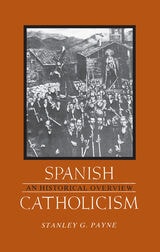
Spanish Catholicism
An Historical OverviewStanley G. Payne
University of Wisconsin Press, 1984
“This is the first complete history of Spanish Catholicism in English. The history of the Spanish church is rich, complex, and controversial, and this enormous undertaking by Stanley Payne is all the more praiseworthy in view of his determination not to limit his study to the church alone, but to investigate the relationship between the Catholic Church and Spanish culture and nationhood in general.”—Isaac Aviv, Mediterranean Historical Review
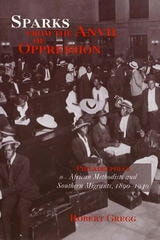
Sparks from the Anvil of Oppression
Philadelphia's African Methodists and Southern Migrants, 1890-1940Robert Gregg
Temple University Press, 1998
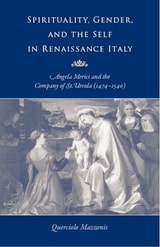
Spirituality, Gender, and the Self in Renaissance Italy
Angela Merici and the Company of St. Ursula (1474–1540)Querciolo Mazzonis
Catholic University of America Press, 2007
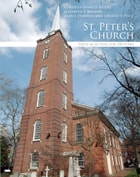
St. Peter's Church
Faith in Action for 250 YearsCornelia Frances Biddle
Temple University Press, 2011
Celebrating 250 years, St. Peter's Episcopal Church in the Society Hill neighborhood of Philadelphia, has witnessed a rich mixture of people and events that reflect critical periods of American political and cultural history. George Washington worshiped here as did abolitionists and slave holders, Whigs, Democrats, and Republicans. St. Peter's was a point of first contact for thousands of immigrants, and the church opened schools for immigrants to help them to acculturate to life in Philadelphia.
Opening a window onto colonial Philadelphia and the nation's histories, St. Peter's Church is a glorious testament to this National Historic Landmark. In addition to the stories and hundreds of black-and-white and color photographs, this handsome volume provides a history of the grounds, the churchyard, and the church itself-a classic example of eighteenth-century Philadelphia design that later incorporated the work of renown architects William Strickland, Thomas U. Walter, and Frank Furness.
State of Virginity
Gender, Religion, and Politics in an Early Modern Catholic StateUlrike Strasser
University of Michigan Press, 2006
Winner: 2005 Book Award from the Society for the Study of Early Modern Women; Selected by the German Studies Association as one of the top five books of 2004 in early modern history
"A fresh, original study of gender roles and religious ideology in the early modern Catholic state. . . . Using a rich array of archival sources, Strasser explores ways in which an increasingly centralized Bavarian government in Munich inaugurated marriage and convent reforms and a civil religion based on the veneration of the Virgin Mary. Her carefully selected case studies show how church and state collaborated to produce a shared discourse and consistent policies proscribing extramarital sex, and excluding those without property from marriage. "
Ulrike Strasser is Associate Professor of History, Affiliate Faculty in Women's Studies, and Core Faculty in Religious Studies at the University of California, Irvine.
Stations of the Cross
Adorno and Christian Right RadioPaul Apostolidis
Duke University Press, 2000
Public ideology and institutional tendencies clash, the author argues, in the restructuring of the welfare state, the financing of the electoral system, and the backlash against women and minorities. These frictions are nowhere more apparent than on Christian right radio. Reinvigorating the intellectual tradition of the Frankfurt School, Apostolidis shows how ideas derived from early critical theory—in particular that of Theodor W. Adorno—can illuminate the political and social dynamics of this aspect of contemporary American culture. He uses and reworks Adorno’s theories to interpret the nationally broadcast Focus on the Family, revealing how the cultural discourse of the Christian right resonates with recent structural transformations in the American political economy. Apostolidis shows that the antidote to the Christian right’s marriage of religious and market fundamentalism lies not in a reinvocation of liberal fundamentals, but rather depends on a patient cultivation of the affinities between religion’s utopian impulses and radical, democratic challenges to the present political-economic order.
Mixing critical theory with detailed analysis, Stations of the Cross provides a needed contribution to sociopolitical studies of mass movements and will attract readers in sociology, political science, philosophy, and history.
Stones, Bones, and the Sacred
Essays on Material Culture and Ancient Religion in Honor of Dennis E.Alan H. Cadwallader
SBL Press, 2016
A crucial text for any university course on the interaction of archaeology and the Bible
The world of early Christians was not a world lived in texts; it was a world saturated with material reality and concerns: what, where and when to eat or drink; how to present oneself in the space of bodily life and that of death; how to move from one place to another; what impacted status or the adjudication of legal charges. All these and more controlled so much of life in the ancient world. The Christians were not immune from the impact of these realities. Sometimes they absorbed their surrounds; sometimes they quite explicitly rejected the material practices bearing in on them; frequently they modified the practice and the rationale to create a significant Christian alternative. The collection of essays in this volume come from a range of international scholars who, for all their different interests and critical commitments, are yet united in treasuring research into the Greek and Roman worlds in which Christians sought to make their way. They offer these essays in honor of one who has made a lifetime's work in mining ancient material culture to extract nuggets of insight into early Christian dining practices: Dennis E. Smith.
Features
- Rich examples of method in the utilization of ancient material culture for biblical interpretation.
- Thirteen essays with a response from Dennis E. Smith
- Maps, diagrams, and plates
Streets of Glory
Church and Community in a Black Urban NeighborhoodOmar M. McRoberts
University of Chicago Press, 2003
McRoberts finds, for example, that most of the churches in Four Corners are attended and run by people who do not live in the neighborhood but who worship there because of the low overhead. These churches, McRoberts argues, are communities in and of themselves, with little or no attachment to the surrounding area. This disconnect makes the churches less inclined to cooperate with neighborhood revitalization campaigns and less likely to respond to the immediate needs of neighborhood residents. Thus, the faith invested in inner-city churches as beacons of local renewal might be misplaced, and the decision to count on them to administer welfare definitely should be revisited.
As the federal government increasingly moves toward delivering social services through faith-based organizations, Streets of Glory must be read for its trenchant revisionist view of how churches actually work in depressed urban areas.
Syriac Christian Culture
Beginnings to RenaissanceAaron Michael Butts
Catholic University of America Press, 2021